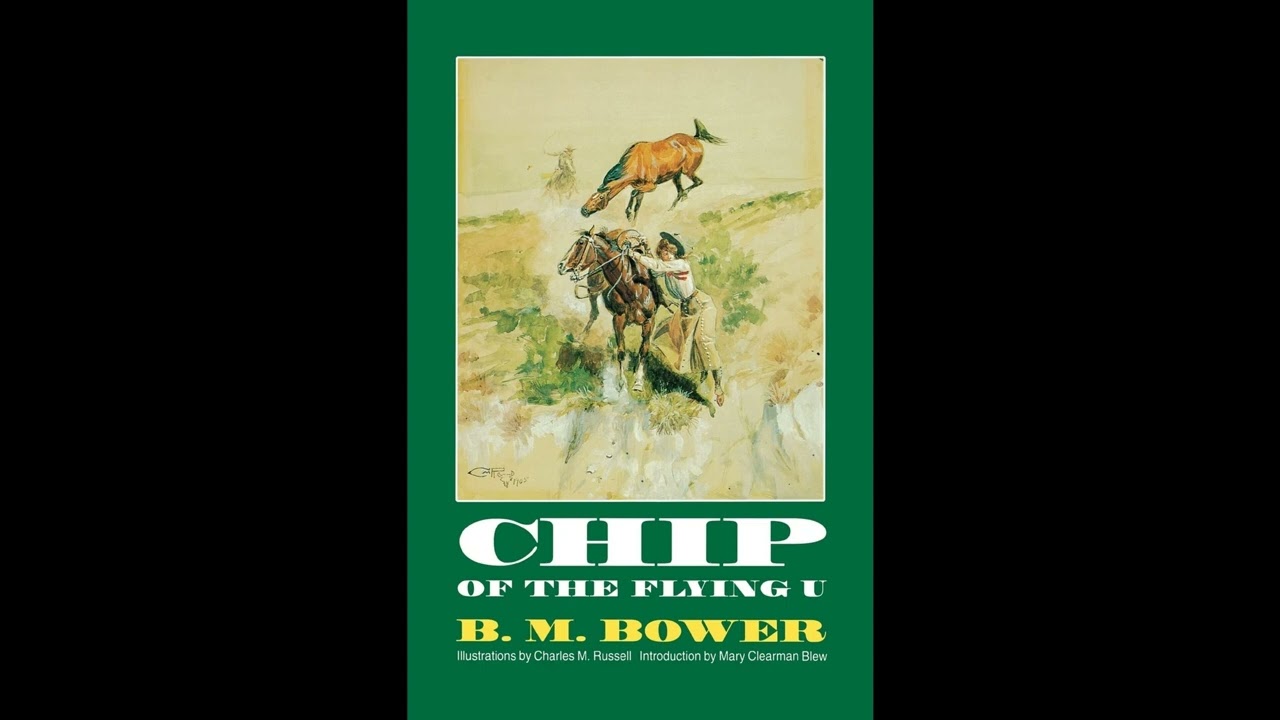
Chip of the Flying U
Step back in time to the sprawling, untamed plains of the American West, a landscape that has long captured the imagination and defined a particular strain of American spirit. “Chip of the Flying U” by B. M. Bower isn't just another Western; it is a foundational text of the genre, an early and remarkably insightful portrayal of cowboy life penned by a woman who lived it. It invites listeners to shed the modern world and immerse themselves in the quiet rhythms of a Montana cattle ranch at the turn of the twentieth century, offering not only adventure and romance but also a surprisingly nuanced look at gender roles and the clash of cultures in a rapidly changing world. For those seeking authentic historical fiction, a touch of pioneering spirit, or simply a well-crafted story of love blooming in an unexpected place, this story continues to resonate, reminding us of the enduring allure of the frontier and the human connections forged within it. The story unfolds on the picturesque yet demanding Flying U ranch in Montana, a haven for a spirited, close-knit group of cowboys whose lives are governed by the demands of the cattle industry and the vast, open sky. Among them is James Ogden, better known as "Chip," a cowboy with a secret passion: he is an aspiring artist who sketches the everyday scenes and characters of his world with a keen eye and a gentle hand. His existence, along with that of his fellow ranch hands—colorful characters like "Weary" Willie, Andy Green, and Pink—is disrupted by the arrival of Dr. Della Whitmore. An educated, independent young woman from the East, Della comes to the Flying U to recover her health and finds herself plunged into a world utterly alien to her sophisticated sensibilities. Della's initial interactions with the cowboys are a humorous and often awkward collision of worlds. She is refined and professional; they are rough-hewn and initially bewildered by her presence, unsure how to behave around a woman, let alone a doctor, in their male-dominated domain. Yet, as the seasons turn and Della becomes an inadvertent part of ranch life, she begins to see beyond the dirt and the crude humor, discovering the loyalty, kindness, and inherent dignity beneath their rugged exteriors. Simultaneously, Chip finds himself increasingly drawn to Della, fascinated by her intelligence and spirit, while struggling to reconcile his cowboy identity with his artistic aspirations and his growing feelings for this unexpected visitor. Their budding affection navigates misunderstandings, the watchful eyes of the other cowboys, and the inherent differences in their backgrounds, leading to a gentle, developing romance that forms the beating heart of the narrative. Bertha Muzzy Sinclair Cowan, writing under the pseudonym B. M. Bower, was a groundbreaking figure in American literature, born in 1871 in Minnesota. Her unique insight into the American West came from firsthand experience; she moved to Montana as a young woman and lived on a ranch, deeply absorbing the culture and landscapes that would define her literary output. This direct connection to the cowboy life allowed her to craft stories with an authenticity that many of her contemporaries lacked, distinguishing her early contributions to the burgeoning Western genre. She was incredibly prolific, producing over sixty novels during her lifetime, establishing herself as one of the most successful and influential authors of Western fiction, particularly remarkable given she was a woman writing in a field largely dominated by men. Bower's literary career flourished in the early twentieth century, and she became known for creating memorable characters and vivid portrayals of ranch life, often infused with humor and a keen understanding of human nature. Works like "The Lonesome Trail," "The Range Dwellers," and "Casey Ryan" followed "Chip of the Flying U," cementing her reputation. Her prose was accessible and engaging, making her novels immensely popular with a broad readership. Bower's place in the literary canon is significant not only for her pioneering role in developing the Western genre but also for demonstrating that a woman's voice could capture the rugged beauty and complex social dynamics of the frontier with as much authority and skill as any male writer. She passed away in 1940, leaving behind a vast body of work that continues to influence perceptions of the American West. At its core, "Chip of the Flying U" adeptly addresses the fascinating theme of the clash of cultures, contrasting the perceived sophistication of the East with the raw pragmatism of the West. Della Whitmore, with her medical knowledge and refined manners, initially struggles to understand the cowboys' rough-and-tumble existence, finding their ways alien. An early scene depicts her discomfort with their unvarnished speech and lack of social graces, while the cowboys, in turn, are comically flummoxed by her presence and her insistence on sanitation. Yet, through shared experiences and mutual respect, these two worlds gradually bridge, highlighting how superficial differences can give way to genuine connection. Another powerful theme woven throughout the narrative is that of identity and self-discovery. Chip, torn between his cowboy duties and his artistic aspirations, quietly grapples with who he is and who he wants to be. His sketchbook becomes a symbol of his inner life, a private world he guards fiercely, while Della, too, sheds her Eastern preconceptions, finding strength and purpose in the challenges of the frontier and redefining her own independence away from societal expectations. The story also offers a gentle deconstruction of the myth of the American West, portraying cowboys not as one-dimensional heroes but as complex individuals with humor, flaws, and surprising depths. The camaraderie among the Flying U ranch hands, their practical jokes, and their loyalty to one another illustrate a human side often overlooked in more bombastic Western narratives. Furthermore, the novel quietly champions independent womanhood, a progressive stance for its time. Della Whitmore is a professional woman, unafraid to assert her knowledge and opinions in a male-dominated environment, proving her capabilities through action rather than deference. Her presence challenges the traditional roles of women on the frontier, asserting that intellect and agency are as vital as physical endurance. When "Chip of the Flying U" was first published in 1906, America stood at a fascinating cultural crossroads. The physical frontier was officially considered "closed," yet the spirit of the West continued to capture the national imagination, fueled by an almost nostalgic longing for a simpler, wilder past. Theodore Roosevelt's presidency, which emphasized rugged individualism, conservation, and the "strenuous life," further propelled public interest in the West as a crucible of American character. In the literary world, Owen Wister's "The Virginian," published just four years prior, had cemented the Western as a distinct and popular genre, establishing many of its enduring tropes. Bower, however, brought a fresh perspective. As one of the few women writing Westerns at this time, she offered a view of ranch life that was less about grand heroic quests and more about the daily routines, the personal relationships, and the nuanced interactions between different kinds of people. Her work emerged in a period when popular fiction was rapidly expanding, and her accessible style and engaging stories found a vast audience eager for tales of adventure, romance, and the challenges of carving out a life on the edge of civilization. Listening to "Chip of the Flying U" as an audiobook truly enhances the experience, allowing the story's unique atmosphere and period charm to wash over you. A skilled narrator can bring the distinct personalities of the Flying U cowboys to life, from the dry wit of Weary Willie to the earnestness of Chip, while also capturing Della's quiet determination and intelligence. The pace of the narration mirrors the rhythms of ranch life—sometimes slow and observational, sometimes quick and spirited during moments of action or humorous dialogue. You can almost feel the vastness of the Montana plains through the narrative's unhurried descriptions and the way the voices interact with the spaciousness of the setting. The authentic cowboy slang and dialect become even more immersive when heard aloud, painting a vivid soundscape of the frontier. This format provides an ideal companion for long drives, quiet evenings, or any moment when you wish to escape into a story that is both historically significant and simply a delight to hear.
Enjoyed Chip of the Flying U? A few ways to support us
Audible & Amazon links are affiliate; we may earn a small commission at no extra cost.
About this production
Human narration by a volunteer reader from LibriVox.org, the public-domain audiobook project. LibriVox volunteers record literary works whose copyright has expired in the United States, releasing the resulting recordings into the public domain.
Chip of the Flying U by B. M. Bower. The underlying text is in the U.S. public domain. We do not republish any modern copyrighted edition, translation, or commentary.
The 4K cinematic visuals accompanying this audiobook are generated by an AI image model from prompts derived from the source text. No copyrighted photos, paintings, or stock footage are used. AI generation is disclosed on every video on our YouTube channel as required by YouTube's altered/synthetic content policy.
English subtitles are transcribed from the LibriVox recording with OpenAI Whisper. Translations into the 11 other supported languages are produced by Meta's NLLB-200 neural translation model. No human translator's copyrighted translation is used.
Questions about sourcing or rights? See our DMCA & Sourcing policy or contact us.
Enjoyed this audiobook?
If you'd like to own a copy of Chip of the Flying U or hear a professionally produced edition, the links below help support free audiobook production at no extra cost to you.
As an Amazon Associate we earn from qualifying purchases. Audible / print links are affiliate.