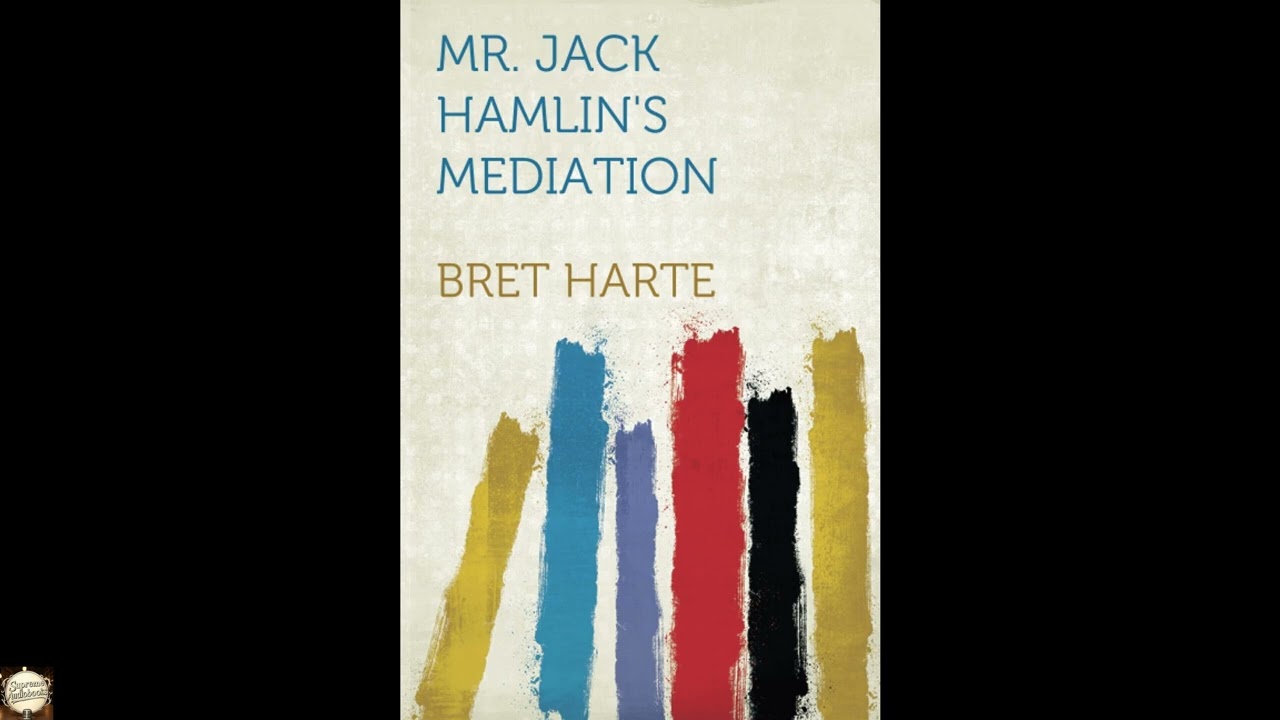
Mr. Jack Hamlin's Mediation
Step into the dusty, sun-baked world of the California Gold Rush with Bret Harte's "Mr. Jack Hamlin's Mediation," a short novel that brings to life the wild frontier through the eyes of one of American literature's most compelling figures: the gambler, gentleman, and unlikely moral compass, Jack Hamlin. Harte’s celebrated creation is a man of contradictions—elegant yet dangerous, cynical yet surprisingly principled—who navigates the rough-and-tumble society of the American West with a wit as sharp as his sartorial style. This story isn't just a historical snapshot; it’s a keen observation of human nature under pressure, where conventional rules blur, and a man’s reputation, or lack thereof, can be his greatest asset or most profound liability. For listeners seeking a tale where honor is found in unexpected corners and quick thinking often trumps brute force, Hamlin’s peculiar brand of justice remains as engaging and relevant today as it was in the late nineteenth century. "Mr. Jack Hamlin's Mediation" transports listeners to the boom-and-bust settlements of California, a few decades after the initial frenzy of the Gold Rush has settled into a more established, if still volatile, society. The story centers on a delicate situation that arises within a small, tight-knit community, one that threatens to unravel the reputations and perhaps the very lives of its inhabitants. Jack Hamlin, known for his refined manners, deadly skill with a pistol, and unparalleled talent at the card table, finds himself drawn into a conflict that is far removed from his usual dealings of stakes and bluffs. It is a matter of social decorum, hidden secrets, and the fragile standing of a woman in a world where judgment can be swift and unforgiving. The central conflict revolves around a perceived slight and a challenge to honor, requiring a deft hand to prevent outright disaster. Hamlin is not asked to deal cards or settle a monetary dispute, but rather to use his unique understanding of human vanity, pride, and the unwritten rules of the frontier to mediate a potentially explosive situation. He must cleverly maneuver through a landscape of rumor and pretense, uncovering truths and manipulating perceptions to secure a peaceful, if unconventional, resolution. The narrative follows Hamlin as he applies his keen observation and psychological insight, demonstrating that sometimes the most effective weapon is not a bullet, but an astute manipulation of appearances and expectations, all while maintaining his characteristic composure and sardonic charm. Bret Harte, born Francis Bret Harte in Albany, New York, in 1836, left an indelible mark on American literature by defining the literary landscape of the American West. His early life was marked by frequent moves and a lack of formal education, but a voracious appetite for reading compensation for this. At the age of eighteen, he moved to California, a decision that would shape his entire literary career. There, he worked a variety of jobs—miner, express messenger, teacher, journalist—all of which provided him with firsthand experience of the diverse characters and dramatic settings that would populate his stories. This direct engagement with the frontier life gave his writing an authenticity that captivated readers across the nation. Harte’s literary fame solidified with the publication of "The Luck of Roaring Camp" in 1868, a story that shocked and delighted readers with its unsentimental yet deeply human portrayal of rough miners caring for an orphaned infant. As the founding editor of Overland Monthly, a literary magazine of the highest caliber on the West Coast, Harte provided a platform for new American voices and set the standard for regional realism. His short stories, including "The Outcasts of Poker Flat" and "Miggles," quickly became iconic, establishing the conventions of the "Western" genre and influencing generations of writers. Though he later moved to the East Coast and then to Europe, serving as a U.S. consul, his literary identity remained firmly rooted in the California he portrayed with such vivid detail, securing his place as a pioneer of American Local Color writing until his death in 1902 in England. "Mr. Jack Hamlin's Mediation" is a prime example of Harte's skill in dissecting complex human motivations within a seemingly simple frontier narrative. One prominent theme is the concept of the gentleman rogue—a character like Hamlin who operates outside conventional morality but adheres to a personal code of honor that is often more rigorous than society's official dictates. Hamlin, despite his profession, exhibits a profound sense of justice and fairness, using his unconventional skills not for personal gain but to restore order and protect the vulnerable. The story showcases how a man of questionable repute can possess a deeper moral compass than those who outwardly uphold societal norms, often revealing the hypocrisy inherent in superficial judgments. Another significant theme is the clash between rigid social conventions and the fluid realities of the frontier. In the burgeoning towns of the West, the established rules of Eastern society often proved inadequate or irrelevant. Reputation, once a carefully guarded asset, could be irrevocably damaged by a single rumor, yet forgiveness and fresh starts were also more readily available than in older, more structured societies. Harte adeptly illustrates how the pressure of these new environments reshaped moral boundaries and forced individuals to adapt, creating a unique social dynamic where appearances could be deceptive and hidden virtues often surfaced under duress. The mediation itself serves as a metaphor for this ongoing negotiation between old world expectations and new world necessities. Harte wrote "Mr. Jack Hamlin's Mediation" and his most famous stories during a pivotal period in American history, following the Civil War and during the rapid expansion westward. The nation was healing from division and simultaneously forging a new identity, one heavily influenced by the promises and challenges of the frontier. The California Gold Rush, though fading, had left a lasting legacy, attracting a diverse mix of dreamers, outcasts, and entrepreneurs to the West. This environment was ripe for literary interpretation, offering dramatic contrasts between sophisticated newcomers and hardened pioneers, and creating a unique social laboratory where American character was being redefined. Literarily, this was the era of Regionalism and Local Color writing, a movement that sought to capture the distinct customs, dialects, and landscapes of particular American regions. Harte was at the forefront of this trend, giving voice to characters and settings previously overlooked by mainstream literature. His stories provided readers across the country with a vivid, often romanticized yet fundamentally realistic, glimpse into the raw energy and peculiar humor of the Western frontier, helping to solidify the mythos of the Old West in the national imagination and laying groundwork for what would become a quintessential American genre. Listening to "Mr. Jack Hamlin's Mediation" as an audiobook offers a unique opportunity to fully immerse oneself in Harte's evocative world. The narrative voice brings to life the specific rhythms and cadences of Harte's prose, making the listener feel as though they are right there in a smoky frontier saloon or a hushed, tension-filled parlor. A skilled narrator can deftly differentiate between the diverse array of characters—from the suave, calculating Hamlin himself, to the earnest, often bewildered townsfolk, to the gruff, unpolished miners and prospectors—each with their own distinct mannerisms and speech patterns. The several-hour run length is ideal for a focused session of listening, allowing the plot to unfold gradually, building suspense and showcasing Harte's careful character development. Pay attention to the subtle shifts in tone and the unspoken implications in the dialogue; these are key to appreciating Hamlin's clever strategies and Harte's keen observations of human nature, all of which are amplified when conveyed through a compelling vocal performance.
Enjoyed Mr. Jack Hamlin's Mediation? A few ways to support us
Audible & Amazon links are affiliate; we may earn a small commission at no extra cost.
About this production
Human narration by a volunteer reader from LibriVox.org, the public-domain audiobook project. LibriVox volunteers record literary works whose copyright has expired in the United States, releasing the resulting recordings into the public domain.
Mr. Jack Hamlin's Mediation by Bret Harte. The underlying text is in the U.S. public domain. We do not republish any modern copyrighted edition, translation, or commentary.
The 4K cinematic visuals accompanying this audiobook are generated by an AI image model from prompts derived from the source text. No copyrighted photos, paintings, or stock footage are used. AI generation is disclosed on every video on our YouTube channel as required by YouTube's altered/synthetic content policy.
English subtitles are transcribed from the LibriVox recording with OpenAI Whisper. Translations into the 11 other supported languages are produced by Meta's NLLB-200 neural translation model. No human translator's copyrighted translation is used.
Questions about sourcing or rights? See our DMCA & Sourcing policy or contact us.
Enjoyed this audiobook?
If you'd like to own a copy of Mr. Jack Hamlin's Mediation or hear a professionally produced edition, the links below help support free audiobook production at no extra cost to you.
As an Amazon Associate we earn from qualifying purchases. Audible / print links are affiliate.