Children's Rights: A Book of Nursery Logic
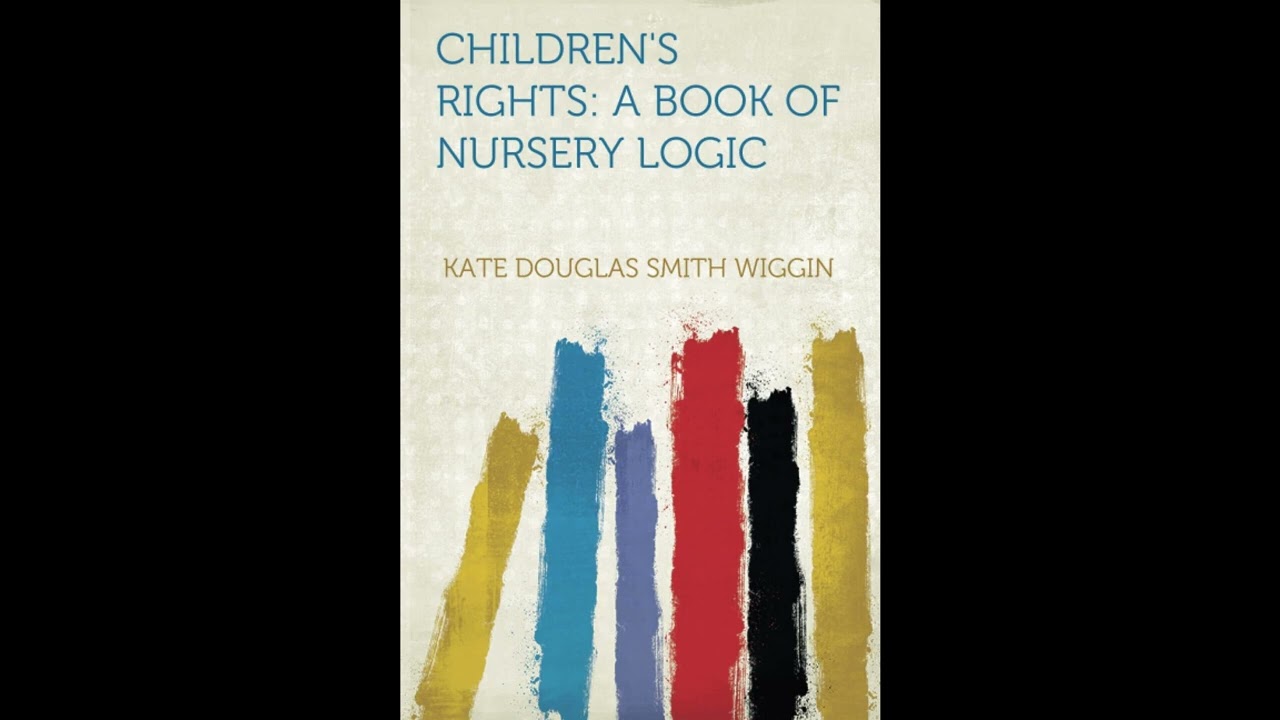
"Children's Rights: A Book of Nursery Logic" offers a unique invitation to see the world anew, filtered through the clear, often startling, lens of a child's mind. While the title suggests lighthearted observations, Kate Douglas Smith Wiggin delivers a profound and subtly incisive social commentary, remarkably relevant today. This is not merely a book about children; it's a philosophical exercise, giving voice to the innocent yet unerring logic of the nursery. It often reveals the fundamental illogicalities and hypocrisies embedded within the adult world, championing childhood's unique perspective as a source of unvarnished truth. The concerns it raises—about justice, fairness, and the right to be understood—remain pertinent in our discourse on education, parenting, and societal values. The narrative landscape of "Children's Rights" isn't one of grand adventures, but rather a series of intimate, finely observed moments from children's everyday lives. Wiggin places us squarely within the young protagonists' perspectives, allowing us to eavesdrop on their internal monologues and witness their unadulterated reactions to adult rules and customs. We meet various young minds, from earnest questioners grappling with arbitrary decrees to budding philosophers attempting to reconcile adult double standards. Each vignette, whether a brief exchange or contemplation, illuminates the distinct rationality—the "nursery logic"—children employ to make sense of their surroundings. The book's central dynamic arises from the clash between a child's simple, direct understanding and the often convoluted, inconsistent reasoning of adults. A child might meticulously follow a rule, only to find an adult flouting it, leading to a probing inquiry into justice that an adult might dismiss. We observe a child's precise, unwavering gaze dissecting pronouncements on everything from sharing toys to truth-telling, consistently finding weaknesses in arguments adults accept. Wiggin’s genius lies in presenting these small, often humorous, moments to magnify their deeper implications, gently pushing us to reconsider our assumptions. The "story" here is the quiet revelation of how children perceive the world, and how their unburdened clarity often reveals truths adults have forgotten or ignored. Kate Douglas Smith Wiggin, born in Philadelphia, Pennsylvania, in 1856, carved out a distinguished place in American literature and education during the late nineteenth and early twentieth centuries. Her early life was marked by a commitment to kindergarten advocacy and pedagogy, a passion that deeply informed her literary output. After studying under educator Emma Marwedel, Wiggin established the first free kindergarten on the West Coast, in San Francisco. This practical experience provided unparalleled insight into children’s thinking and behavior, imbuing her writing with authenticity and warmth. Wiggin's literary career truly blossomed with "The Birds' Christmas Carol" in 1887, a heartwarming tale. However, it was her creation of the irrepressible heroine in "Rebecca of Sunnybrook Farm" in 1903 that cemented her reputation. This novel presented a spirited, imaginative girl navigating rural life and strict relatives. Wiggin's works often blended engaging narratives with a gentle yet firm moral compass, championing the underdog, celebrating individuality, and advocating for empathetic approaches to child-rearing. She passed away in Harrow, England, in 1923, leaving a legacy that continues to shape our understanding of children's inner lives. At the core of "Children's Rights: A Book of Nursery Logic" lies the powerful theme of the unique wisdom of childhood. Wiggin demonstrates how a child's unclouded perspective can cut through adult pretense. A parent explaining a custom as "just the way things are," for instance, might be met by a child highlighting its illogic with simple, irrefutable reasoning. The text illustrates how innocence often possesses a pure reason uncorrupted by societal conditioning. This highlights a second theme: social critique through innocence. By presenting adult rules through a child's unfiltered lens, Wiggin subtly exposes the absurdities and arbitrary nature of grown-up conventions. A child's literal interpretation of a figure of speech often underscores inconsistencies in adult communication. The book also champions the importance of empathetic understanding for children. It argues that children are individuals with their own rational systems deserving of respect. Moments where a child’s curiosity or confusion about an adult’s decision is dismissed exemplify this. Wiggin encourages viewing these interactions as opportunities for genuine dialogue. Finally, underpinning the work is a call for more enlightened parenting and education. The "nursery logic" shows how children learn and develop their sense of justice, suggesting that fostering critical thinking begins with understanding the unique minds before us. "Children's Rights: A Book of Nursery Logic" emerged during a pivotal period, spanning the late nineteenth and early twentieth centuries, characterized by profound shifts in how society viewed children. This was the heart of America's Progressive Era, a time of widespread social reform movements aimed at improving living conditions, workers' rights, and significantly, public education and child welfare. Before this, children were often seen as miniature adults, expected to contribute labor and adhere to adult standards with little consideration for their development. Pioneers like Friedrich Froebel and Kate Douglas Smith Wiggin herself championed the kindergarten movement. This progressive educational philosophy emphasized play, observation, and understanding a child's natural learning processes. Wiggin's work reflects this ethos, extending kindergarten principles into broader cultural consciousness. The book's very title, "Children's Rights," was a bold assertion when children had few recognized social rights, capturing the zeitgeist of growing awareness that children were not merely dependents, but individuals with inherent value and unique ways of perceiving the world, deserving of thoughtful engagement. "Children's Rights: A Book of Nursery Logic" truly comes alive in its audiobook format. The essence of "nursery logic"—that earnest, often literal, and unfailingly honest perspective of a child—is perfectly conveyed through skilled narration. A thoughtful performer imbues the children's observations with the right blend of innocence, questioning wonder, and subtle humor, allowing listeners to grasp profound insights within simple words. Over its several hours, a good narrator creates an immersive atmosphere, inviting you directly into the nursery where significant ideas are pondered with childlike directness. Listen for subtle shifts in pacing that highlight a poignant realization or a witty deduction, and how the voice artist renders implied dialogues, bringing each philosophical moment into sharp focus. It becomes an experience to absorb, letting childhood's wisdom resonate directly.
Enjoyed Children's Rights: A Book of Nursery Logic? A few ways to support us
Audible & Amazon links are affiliate; we may earn a small commission at no extra cost.
About this production
Human narration by a volunteer reader from LibriVox.org, the public-domain audiobook project. LibriVox volunteers record literary works whose copyright has expired in the United States, releasing the resulting recordings into the public domain.
Children's Rights: A Book of Nursery Logic by Kate Douglas Smith Wiggin. The underlying text is in the U.S. public domain. We do not republish any modern copyrighted edition, translation, or commentary.
The 4K cinematic visuals accompanying this audiobook are generated by an AI image model from prompts derived from the source text. No copyrighted photos, paintings, or stock footage are used. AI generation is disclosed on every video on our YouTube channel as required by YouTube's altered/synthetic content policy.
English subtitles are transcribed from the LibriVox recording with OpenAI Whisper. Translations into the 11 other supported languages are produced by Meta's NLLB-200 neural translation model. No human translator's copyrighted translation is used.
Questions about sourcing or rights? See our DMCA & Sourcing policy or contact us.
Enjoyed this audiobook?
If you'd like to own a copy of Children's Rights: A Book of Nursery Logic or hear a professionally produced edition, the links below help support free audiobook production at no extra cost to you.
As an Amazon Associate we earn from qualifying purchases. Audible / print links are affiliate.