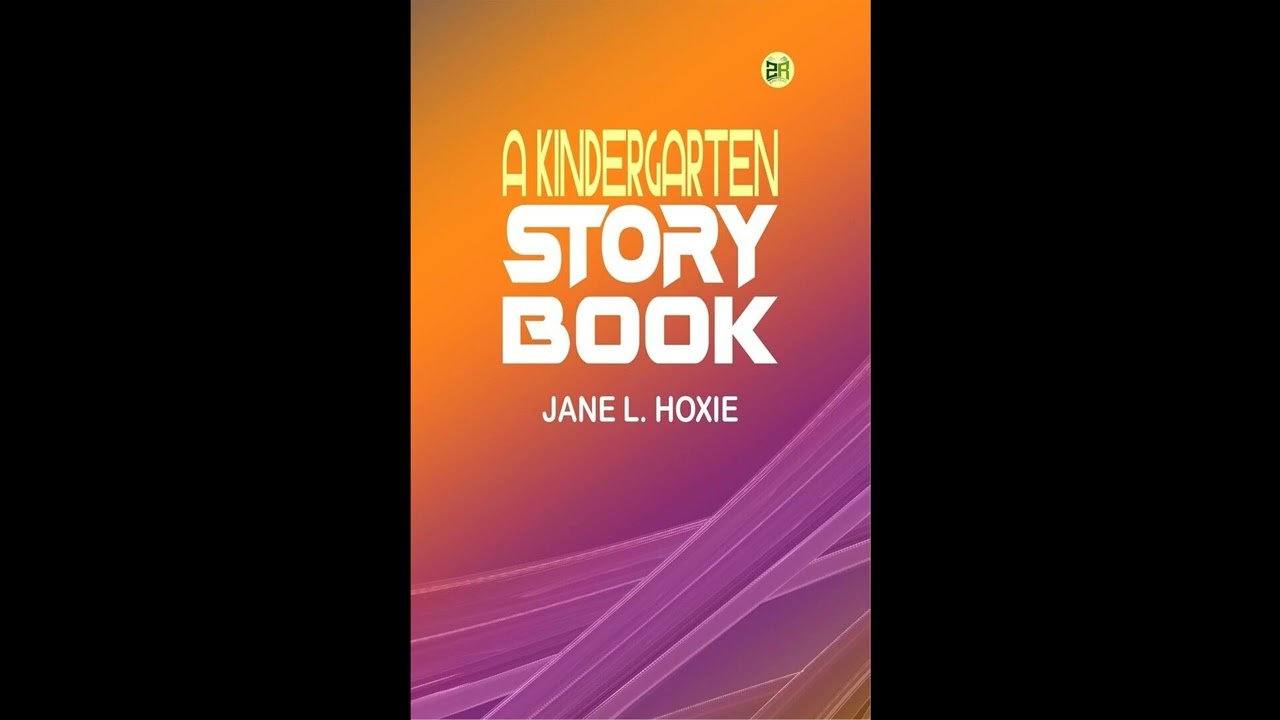
A Kindergarten Story Book
For those seeking a return to the foundational narratives of childhood, "A Kindergarten Story Book" by Jane L. Hoxie offers a gentle, illuminating passage back in time. This collection of simple tales, originally designed to nurture the minds and hearts of young children, speaks to enduring truths about character, community, and the natural world. It isn't merely a book of stories; it is a carefully curated educational tool, a quiet testament to a bygone era's understanding of childhood development and moral instruction. For today's listener, whether a parent, an educator, or simply someone drawn to the authentic voices of the past, this audiobook provides not just entertainment, but a window into the origins of modern pedagogy and the timeless power of storytelling. Within its pages, or rather, its hours of narration, listeners will find a series of self-contained vignettes rather than a single overarching plot. Each short story unfolds in settings familiar to young imaginations: bustling gardens, cozy homes, sun-dappled fields, and quiet classrooms. The characters are often personified animals—a diligent squirrel preparing for winter, a brave little robin learning to fly—or children navigating the everyday dilemmas of early life. There are no grand quests or dramatic confrontations; instead, the central conflict in each tale is a minor misunderstanding, a budding impatience, or a small challenge requiring a simple act of kindness or perseverance. The arc of the book, as a whole, is one of quiet growth and understanding. Each story, brief and focused, serves to illustrate a particular virtue or a facet of the natural world, resolving gently with a lesson learned or a friendship strengthened. Listeners might encounter a tale where a group of children learns the value of sharing their toys, or an account of woodland creatures discovering the importance of helping a neighbor in need. The stories flow one into another, creating a sustained atmosphere of warmth and instruction, inviting young minds to observe, reflect, and internalize the positive behaviors and attitudes they encounter. Jane L. Hoxie was a prominent figure in the American kindergarten movement during the late nineteenth and early twentieth centuries. Born in 1864, she dedicated her professional life to early childhood education, becoming a leading voice in developing methods and materials for young learners. Her career frequently took her to institutions at the forefront of educational reform, including roles at the Speyer School and Teachers College, Columbia University, both vital centers for progressive educational thought in New York City. Hoxie's practical experience in the classroom, coupled with her academic background, gave her a unique perspective on the needs of both children and their teachers. She authored several books beyond this collection, including "A Little Play Book" and "Children's Games and Stories," all reflecting her commitment to the educational principles of the kindergarten system. Her works were not merely sentimental children's tales; they were carefully crafted resources designed to engage children's imaginations while simultaneously fostering their cognitive and social development. Hoxie's place in the literary canon is not that of a novelist or a poet, but rather as an essential contributor to educational literature, helping to shape the very foundation of early childhood education in America and providing practical, effective tools for educators of her generation. She passed away in 1934, leaving behind a legacy of thoughtful, child-centered educational philosophy. One of the central themes woven throughout "A Kindergarten Story Book" is the fundamental importance of moral instruction and character building. Many tales present scenarios where young protagonists, be they children or anthropomorphic animals, face choices that require honesty, compassion, or patience. For example, a story might depict a child struggling with the temptation to keep a lost item, eventually deciding to return it, thereby illustrating the virtue of integrity. Another recurring theme is the profound connection to nature. Hoxie frequently uses the changing seasons, the habits of small creatures, or the growth of plants to teach broader lessons about life cycles, interdependence, and observation. A story about a caterpillar transforming into a butterfly might not only delight but also subtly instill a sense of wonder and the understanding of change. Furthermore, the book consistently emphasizes community and cooperation. Many narratives highlight characters working together to achieve a common goal, demonstrating the power of collaboration and mutual support. A scene where various farm animals pool their efforts to prepare for a coming storm stands as a clear example, showing young listeners the benefits of working alongside others. The theme of empathy and understanding also runs through the stories, encouraging children to consider the feelings and perspectives of those around them. A tale about a new child feeling shy in a group, and how others help them feel welcome, directly addresses this, fostering a sense of kindness and inclusion. "A Kindergarten Story Book" emerged during a pivotal period in American history—the late nineteenth and early twentieth centuries—an era characterized by rapid industrialization, urbanization, and significant social reform movements. It was a time when the concept of structured early childhood education, particularly the German-originated kindergarten movement introduced to America by figures like Friedrich Froebel, gained widespread acceptance and expansion. Educators like Jane L. Hoxie saw kindergarten as crucial not only for academic readiness but also for instilling moral values, social skills, and civic virtues in children, particularly within increasingly diverse urban populations, including many immigrant communities. This work reflects the progressive educational ideals of the time, which moved away from purely rote learning towards more child-centered, play-based, and experiential methods. The stories served as a gentle curriculum, designed to cultivate curiosity, self-expression, and a sense of belonging in young learners. They were part of a broader shift in the literary world, where children's literature began to evolve into a distinct genre, moving beyond purely didactic religious texts to encompass stories that were both instructive and engaging, reflecting a growing understanding of child psychology and developmental stages. To experience "A Kindergarten Story Book" as an audiobook is to receive these timeless narratives in their purest, most intended form—as stories told aloud. The narration offers a steady, comforting presence, perfectly suited for quiet listening, whether during a child's bedtime, a family car trip, or a moment of personal reflection. The several hours of run time allow for an unhurried unfolding of each tale, with a pacing that permits absorption and contemplation of the gentle lessons. A good narrator will bring to life the simple dialogues of children and the distinctive voices of personified animals, enhancing the atmosphere of warmth and reassurance. The listening experience deepens the inherent charm of these stories, allowing their original purpose—to soothe, teach, and inspire—to resonate with new generations.
Enjoyed A Kindergarten Story Book? A few ways to support us
Audible & Amazon links are affiliate; we may earn a small commission at no extra cost.
About this production
Human narration by a volunteer reader from LibriVox.org, the public-domain audiobook project. LibriVox volunteers record literary works whose copyright has expired in the United States, releasing the resulting recordings into the public domain.
A Kindergarten Story Book by Jane L. Hoxie. The underlying text is in the U.S. public domain. We do not republish any modern copyrighted edition, translation, or commentary.
The 4K cinematic visuals accompanying this audiobook are generated by an AI image model from prompts derived from the source text. No copyrighted photos, paintings, or stock footage are used. AI generation is disclosed on every video on our YouTube channel as required by YouTube's altered/synthetic content policy.
English subtitles are transcribed from the LibriVox recording with OpenAI Whisper. Translations into the 11 other supported languages are produced by Meta's NLLB-200 neural translation model. No human translator's copyrighted translation is used.
Questions about sourcing or rights? See our DMCA & Sourcing policy or contact us.
Enjoyed this audiobook?
If you'd like to own a copy of A Kindergarten Story Book or hear a professionally produced edition, the links below help support free audiobook production at no extra cost to you.
As an Amazon Associate we earn from qualifying purchases. Audible / print links are affiliate.
![Children's Classics in Dramatic Form, Book Two. [1909] by Augusta Stevenson — free full audiobook](https://img.youtube.com/vi/h4bTKUeuO7U/maxresdefault.jpg)