Pee-Wee Harris
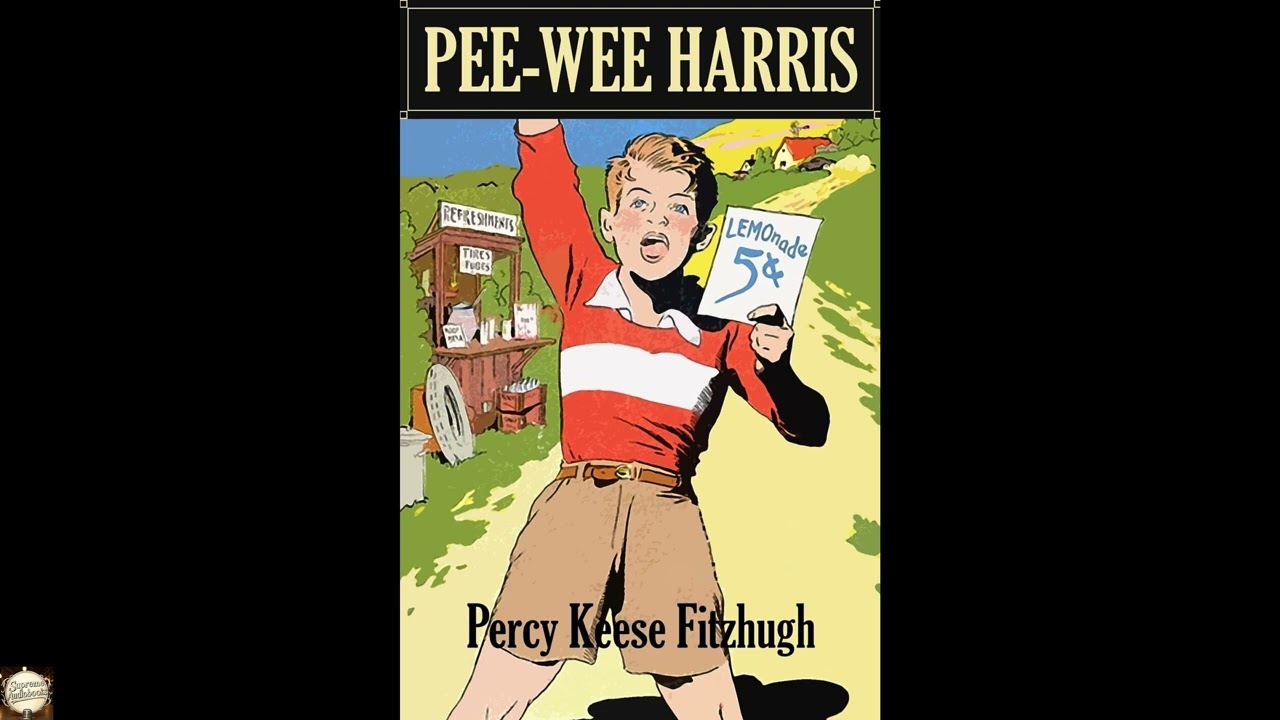
For anyone who remembers the thrill of childhood ambition, the sting of a well-intentioned failure, or the joy of belonging to a group, Pee-Wee Harris offers a delightful return to a simpler era. This classic of juvenile fiction, penned by the prolific Percy Keese Fitzhugh, introduces us to a character whose spirit is far larger than his physical stature, a boy whose unwavering enthusiasm often outstrips his common sense. It’s a story steeped in the camaraderie and outdoor adventures of the early Boy Scout movement, providing both a humorous account of one boy’s earnest attempts to prove himself and a gentle, nostalgic look at the values of self-reliance, good sportsmanship, and the enduring power of friendship. Even today, Pee-Wee’s predicaments and triumphs resonate, reminding us that true character is often forged not in effortless success, but in the persistent trying, the comical missteps, and the unexpected moments of genuine heroism that define growing up. The world of Pee-Wee Harris unfolds primarily within the bustling, often chaotic, setting of a Boy Scout camp. From the moment we meet him, we understand Pee-Wee is not like the other boys, at least not outwardly. He is the smallest, the youngest, and perhaps the most impetuous member of Troop One, a detail that constantly fuels his desire to demonstrate his worth. His grand schemes and pronouncements – whether about building the best campfire, tracking a phantom creature, or leading a daring expedition – are almost always followed by a series of comically disastrous events. He might boast of his unparalleled cooking skills only to produce a smoke-filled tent and inedible char, or declare himself a master tracker before stumbling into a bog. Yet, despite his constant blunders, Pee-Wee possesses an indomitable spirit. He’s surrounded by a cast of fellow scouts and patient scoutmasters who, while often exasperated by his antics, recognize the pure heart and good intentions beneath his bumbling exterior. His struggles to be taken seriously by the older, more experienced boys, particularly his friendly rivals or those who initially mock him, form the bedrock of the narrative. The story arcs through a series of episodes where Pee-Wee, in his fervent attempts to prove his scout mettle and earn badges, invariably creates more trouble than he solves, often inadvertently achieving a minor triumph or learning a valuable lesson in the process. He might fail spectacularly at a planned task but stumble upon a solution to a greater problem, or his misguided efforts might unexpectedly bring the troop closer together, making him, in his own unique way, an indispensable part of their adventures. Percy Keese Fitzhugh, the author behind Pee-Wee Harris, was a cornerstone of American juvenile fiction during the first half of the twentieth century. Born in Brooklyn, New York, in 1876, Fitzhugh dedicated much of his writing career to crafting wholesome, adventurous stories for young readers. He became synonymous with the burgeoning Boy Scout movement, penning numerous series that captured the spirit and ideals of the organization. Beyond Pee-Wee Harris, his most prominent contributions include the popular "Tom Slade" series and the "Roy Blakeley" series, all of which focused on the exploits and character development of young boys in scout settings. Fitzhugh’s work was more than just simple adventure; it often served as a fictionalized instruction manual for good citizenship and moral conduct, reflecting the educational values of the era. He held a deep belief in the transformative power of outdoor life and structured activities for boys, a conviction that shone through every page of his stories. During his lifetime, which spanned until his passing in 1950, Fitzhugh was an incredibly prolific writer, producing dozens of books that sold millions of copies, shaping the imaginations and ethical frameworks of generations of American youth. His place in the literary canon is secure as a foundational figure in early 20th-century children's literature, a writer who expertly blended entertainment with instruction, cementing the image of the earnest, adventurous Boy Scout in popular culture. At its core, Pee-Wee Harris articulates several enduring themes. One central idea is the importance of ambition and resilience in youth, particularly when facing the challenges of fitting in and proving oneself. Pee-Wee, despite his frequent setbacks, never gives up. For instance, after a disastrous attempt at cooking which leaves his tent smoked out and his meal inedible, he doesn’t retreat. Instead, he might immediately hatch a new, equally ambitious plan to distinguish himself, perhaps by attempting to track a notoriously elusive wild animal, always pushing forward with an unshakeable belief in his own abilities, however misplaced they might seem to others. This persistent optimism in the face of repeated failure serves as a testament to the spirited nature of youth. Another significant theme is the power of friendship and peer acceptance. While Pee-Wee often finds himself the target of good-natured teasing or skepticism from his fellow scouts, especially older boys who see him as a pest, the underlying current of the narrative is one of camaraderie. The troop, as a unit, learns to tolerate, then appreciate, and finally depend on Pee-Wee’s unique contributions. A scene where the boys, initially annoyed by one of his hare-brained schemes, ultimately pull together to help him out of a sticky situation – perhaps a miscalculated shortcut through a swamp – effectively demonstrates how bonds are forged not just through shared triumphs, but also through mutual support during each other's follies. Finally, the story celebrates the idealism of scouting and the development of self-reliance. Through every badge attempted and every camp task undertaken, Pee-Wee, and by extension the listener, is shown the practical and ethical principles of the Boy Scout movement: preparedness, courage, and a commitment to helping others. Pee-Wee Harris emerged during a fascinating period in American history, specifically the early decades of the twentieth century. This was an era of rapid industrialization and urbanization, which paradoxically led to a cultural emphasis on reconnecting youth with nature, fostering traditional virtues, and preparing boys for responsible citizenship. The Boy Scouts of America, founded in 1910, quickly grew into a massive cultural phenomenon, offering structured outdoor activities and moral instruction as an antidote to perceived societal ills and the perceived softness of modern life. Fitzhugh’s books were an integral part of this movement, serving not just as entertainment but also as promotional material and exemplars for the Boy Scout ideals. Literary trends of the time saw a boom in juvenile adventure fiction that was wholesome, educational, and often overtly patriotic. Authors like Fitzhugh filled a demand for "safe" reading material that would inspire courage, honesty, and resourcefulness without venturing into morally ambiguous territory. Pee-Wee Harris, with its lighthearted approach to character building and its setting firmly rooted in the scout camp, perfectly captured the spirit of this moment, reflecting a cultural desire to instill strong values in young boys through engaging narratives that celebrated the great outdoors and the virtues of collective endeavor. Listening to Pee-Wee Harris as an audiobook offers a unique and charming experience, transporting you directly into the heart of a bustling Boy Scout camp. The narrator's performance is crucial here, as it brings to life the distinct voices and personalities of the boys – the earnest bluster of Pee-Wee himself, the dry wit of his scoutmasters, and the varied tones of his fellow troop members. You’ll find yourself smiling at the quick-paced dialogue and the escalating absurdity of Pee-Wee’s predicaments, all enhanced by a narrator who understands the comedic timing and underlying warmth of Fitzhugh’s writing. The several-hour run length makes it an ideal companion for a long drive, a weekend of chores, or simply unwinding with a classic tale. Pay close attention to the expressive tones that capture the youthful exuberance and the occasional sighs of exasperation, allowing the atmosphere of innocent adventure, campfire tales, and good-natured mischief to fully envelop you.
Enjoyed Pee-Wee Harris? A few ways to support us
Audible & Amazon links are affiliate; we may earn a small commission at no extra cost.
About this production
Human narration by a volunteer reader from LibriVox.org, the public-domain audiobook project. LibriVox volunteers record literary works whose copyright has expired in the United States, releasing the resulting recordings into the public domain.
Pee-Wee Harris by Percy Keese Fitzhugh. The underlying text is in the U.S. public domain. We do not republish any modern copyrighted edition, translation, or commentary.
The 4K cinematic visuals accompanying this audiobook are generated by an AI image model from prompts derived from the source text. No copyrighted photos, paintings, or stock footage are used. AI generation is disclosed on every video on our YouTube channel as required by YouTube's altered/synthetic content policy.
English subtitles are transcribed from the LibriVox recording with OpenAI Whisper. Translations into the 11 other supported languages are produced by Meta's NLLB-200 neural translation model. No human translator's copyrighted translation is used.
Questions about sourcing or rights? See our DMCA & Sourcing policy or contact us.
Enjoyed this audiobook?
If you'd like to own a copy of Pee-Wee Harris or hear a professionally produced edition, the links below help support free audiobook production at no extra cost to you.
As an Amazon Associate we earn from qualifying purchases. Audible / print links are affiliate.


![Children's Classics in Dramatic Form, Book Two. [1909] by Augusta Stevenson — free full audiobook](https://img.youtube.com/vi/h4bTKUeuO7U/maxresdefault.jpg)