Heidi
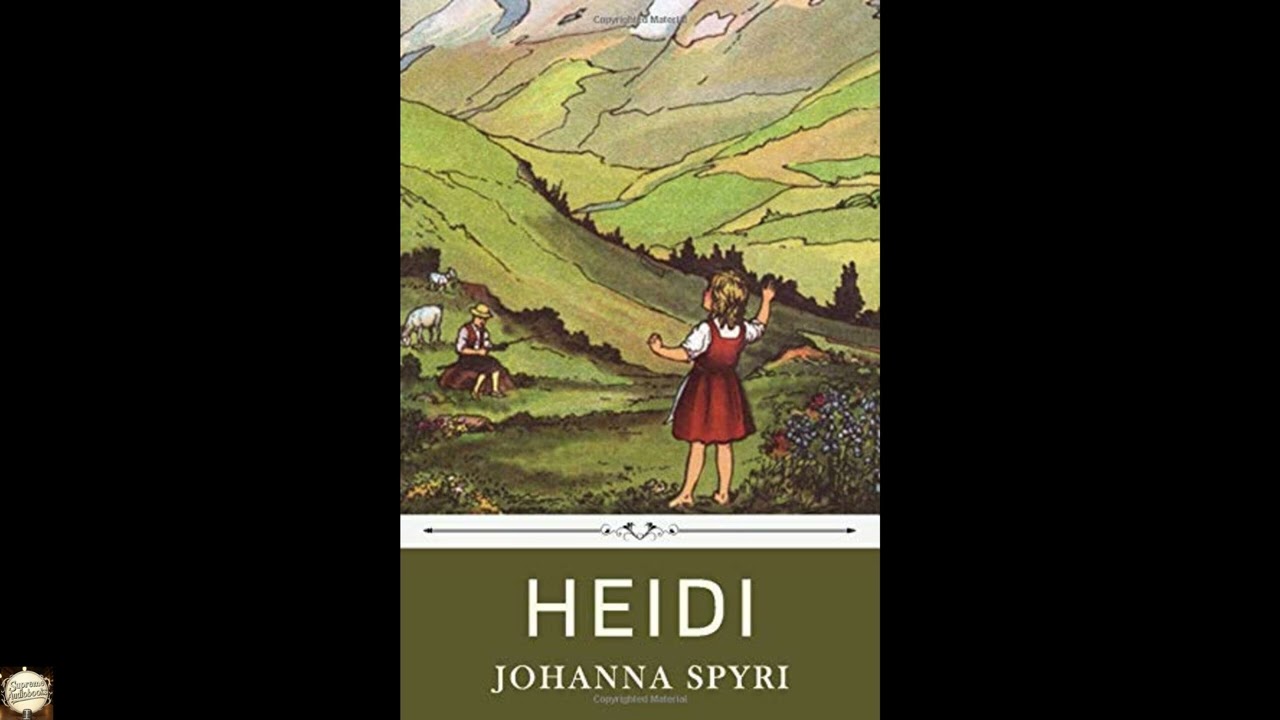
For over a century, Johanna Spyri’s Heidi has charmed generations, a story whose gentle spirit belies its profound influence. This is more than a simple tale of an orphaned girl in the Swiss Alps; it is an affirmation of the human need for connection, for home, and for the restorative power of nature. In an era marked by rapid change and often overwhelming complexity, the enduring appeal of Heidi lies in its clarity, its unwavering belief in the goodheartedness of people, and its quiet celebration of a life lived close to the earth. It offers a soothing balm, a reminder of fundamental truths that resonate as deeply today as they did upon its initial publication. The narrative opens high in the Swiss Alps, introducing five-year-old Heidi, an orphan who has been cared for by her aunt Dete. When Dete finds employment in Frankfurt, she unceremoniously delivers Heidi to her reclusive grandfather, known as the Alm-Uncle, who lives an isolated existence in a small mountain hut, shunned by the villagers below. Initially gruff and unwelcoming, the old man finds his defenses crumbling under Heidi’s innocent charm and genuine affection. Heidi quickly adapts to her new, simple life, delighting in the crisp mountain air, the taste of fresh goat’s milk, and the companionship of Peter, the young goatherd, and his flock. Her days are filled with the majesty of the peaks, the scent of wildflowers, and the freedom of open spaces, fostering in her a deep spiritual and physical well-being. Just as Heidi and her grandfather forge an unbreakable bond, her idyllic life is disrupted once more. Dete returns to take Heidi to Frankfurt, where she is to be a companion to Clara Sesemann, a wealthy invalid girl confined to a wheelchair. The bustling city, the grand house, and the strict household of Fraulein Rottenmeier, Clara’s governess, present a stark contrast to the freedom of the Alps. Heidi struggles with the rigid rules, the enclosed spaces, and her profound homesickness for her beloved mountains and grandfather. Despite the kindness of Clara and her wise grandmother, Heidi finds herself yearning for the simple existence she left behind, her spirit dimming in the oppressive urban environment. The story then carefully details Heidi's struggle to reconcile these two very different worlds, revealing the quiet strength of her character and her profound longing for the place she truly belongs. Johanna Spyri, born Johanna Heusser in 1827 in Hirzel, Switzerland, came from a background that subtly shaped her literary sensibilities. Her father was a physician, and her mother, a poet, instilled in her a love for stories and the natural world. Spyri spent her childhood in the pastoral Swiss countryside, a connection to the landscape that would later become a hallmark of her most famous work. After marrying attorney Bernhard Spyri and moving to Zurich, she experienced the more structured, urban life that she would later contrast so vividly with rural simplicity. It was only in her late forties, following a period of personal sorrow including the loss of several family members, that Spyri turned to writing. Her early works were primarily didactic stories for children, often focusing on themes of kindness, faith, and the moral education of young people. Heidi, first published in two parts in 1880 and 1881 as Heidi's Years of Learning and Travel and Heidi Makes Use of What She Has Learned, quickly became a phenomenon. Though Spyri wrote many other stories—over forty in total, frequently published under her initial "J.S."—none achieved the widespread, enduring fame of Heidi. She holds a significant place in the canon of Swiss literature, not only for her ability to capture the unique spirit of her homeland but also for her pioneering role in developing children’s literature that balanced entertainment with gentle moral instruction, influencing subsequent generations of writers across Europe. One of the central themes that permeate Heidi is the transformative power of nature versus the stifling effects of urban confinement. Spyri repeatedly illustrates how Heidi’s physical and emotional health are intricately tied to the environment. High in the mountains, Heidi thrives; she is rosy-cheeked, energetic, and spiritually content. When she is transplanted to Frankfurt, the lack of fresh air, the rigid schedule, and the absence of natural beauty cause her to sicken, manifesting as sleepwalking and a profound melancholia. Her eventual return to the Alps acts as a powerful restorative, almost immediately revitalizing her spirit and body, a vivid demonstration of how essential wild spaces are for human well-being. Another vital theme is the profound influence of love and innocent joy. Heidi, despite her young age and lack of worldly experience, possesses an innate capacity for unconditional love and a simple, unadulterated joy that impacts everyone she encounters. Her grandfather, who had become a misanthropic recluse, is softened and redeemed by her unwavering affection and presence. She brings him back into the community and even back to faith. Similarly, in Frankfurt, Heidi’s presence brightens Clara’s otherwise lonely and constrained existence, inspiring hope and courage in the ailing girl. Through these interactions, Spyri suggests that genuine human connection, nurtured by a loving heart, holds the power to heal old wounds and transform lives. The narrative also underscores the importance of finding a true sense of belonging and home, both physically and spiritually. The late 19th century, when Heidi was written and published, was a period of immense change across Europe. Rapid industrialization and urbanization were drawing people from rural areas into burgeoning cities, leading to a sense of longing for simpler, more natural ways of life. Spyri’s portrayal of the idyllic Swiss Alps, untouched by modern complexities, resonated deeply with readers who felt increasingly disconnected from nature. The book emerged at a time when children's literature was also gaining distinct recognition as a genre, moving beyond purely didactic texts to stories that engaged young imaginations while still imparting moral lessons. Heidi beautifully blended these emerging trends, offering a romanticized yet grounded vision of childhood, set against a backdrop of breathtaking natural beauty that spoke to the era’s burgeoning appreciation for landscape and national identity. It became a cultural touchstone, cementing an idealized image of Switzerland in the global imagination. Listening to Heidi as an audiobook transforms a beloved classic into an immersive experience. Over several hours of narration, the listener can truly sink into the rhythms of mountain life, hearing the crackle of a fire in the Alm-Uncle’s hut, the bleating of Peter’s goats, and the distinct hush of the snow-covered peaks. A skilled narrator brings each character to vivid life—from Heidi’s bright, eager voice to the Alm-Uncle’s initial gruffness and eventual tender tones, to Fraulein Rottenmeier’s precise and often exasperated pronouncements. The spoken word allows for a deeper appreciation of Spyri's detailed descriptions of the Alpine landscape and the stark contrast with the sounds and strictures of the Sesemann household. This format encourages a slower, more reflective engagement with the text, making it an ideal companion for quiet moments, walks, or even shared family listening, allowing the story’s warmth and wisdom to unfold gracefully and naturally.
Enjoyed Heidi? A few ways to support us
Audible & Amazon links are affiliate; we may earn a small commission at no extra cost.
About this production
Human narration by a volunteer reader from LibriVox.org, the public-domain audiobook project. LibriVox volunteers record literary works whose copyright has expired in the United States, releasing the resulting recordings into the public domain.
Heidi by Johanna Spyri. The underlying text is in the U.S. public domain. We do not republish any modern copyrighted edition, translation, or commentary.
The 4K cinematic visuals accompanying this audiobook are generated by an AI image model from prompts derived from the source text. No copyrighted photos, paintings, or stock footage are used. AI generation is disclosed on every video on our YouTube channel as required by YouTube's altered/synthetic content policy.
English subtitles are transcribed from the LibriVox recording with OpenAI Whisper. Translations into the 11 other supported languages are produced by Meta's NLLB-200 neural translation model. No human translator's copyrighted translation is used.
Questions about sourcing or rights? See our DMCA & Sourcing policy or contact us.
Enjoyed this audiobook?
If you'd like to own a copy of Heidi or hear a professionally produced edition, the links below help support free audiobook production at no extra cost to you.
As an Amazon Associate we earn from qualifying purchases. Audible / print links are affiliate.



![Children's Classics in Dramatic Form, Book Two. [1909] by Augusta Stevenson — free full audiobook](https://img.youtube.com/vi/h4bTKUeuO7U/maxresdefault.jpg)