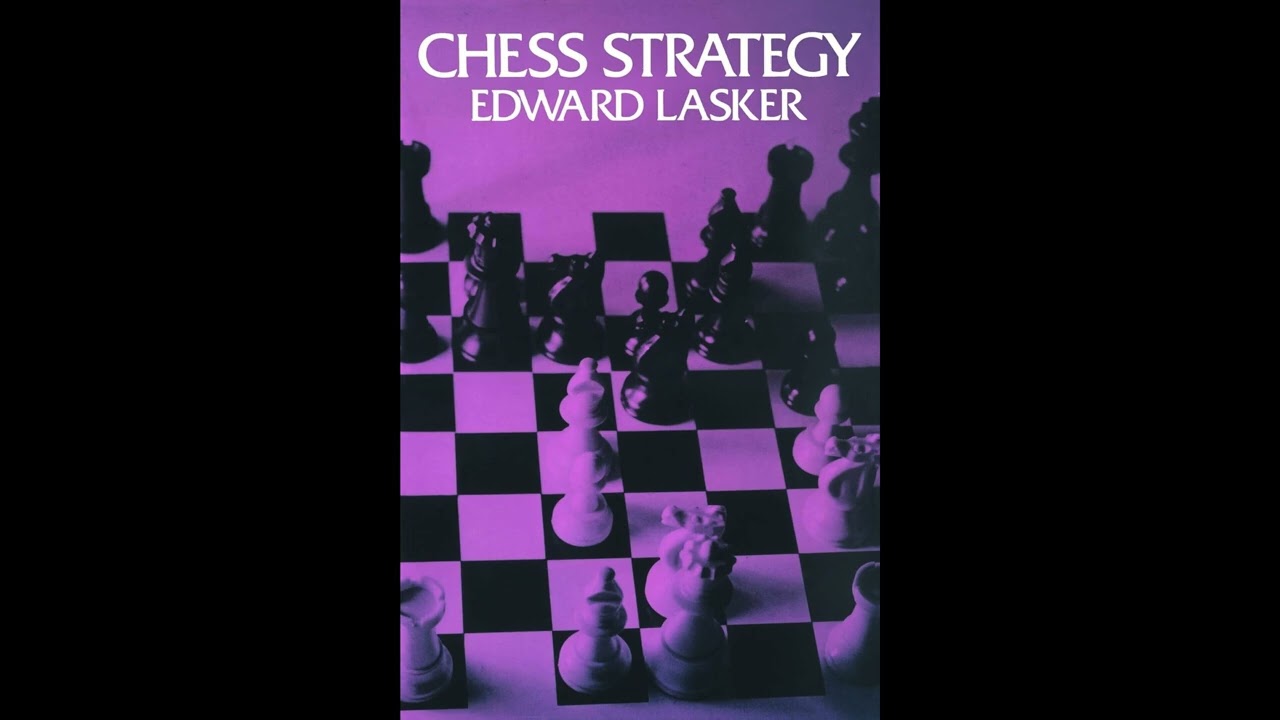
Chess Strategy
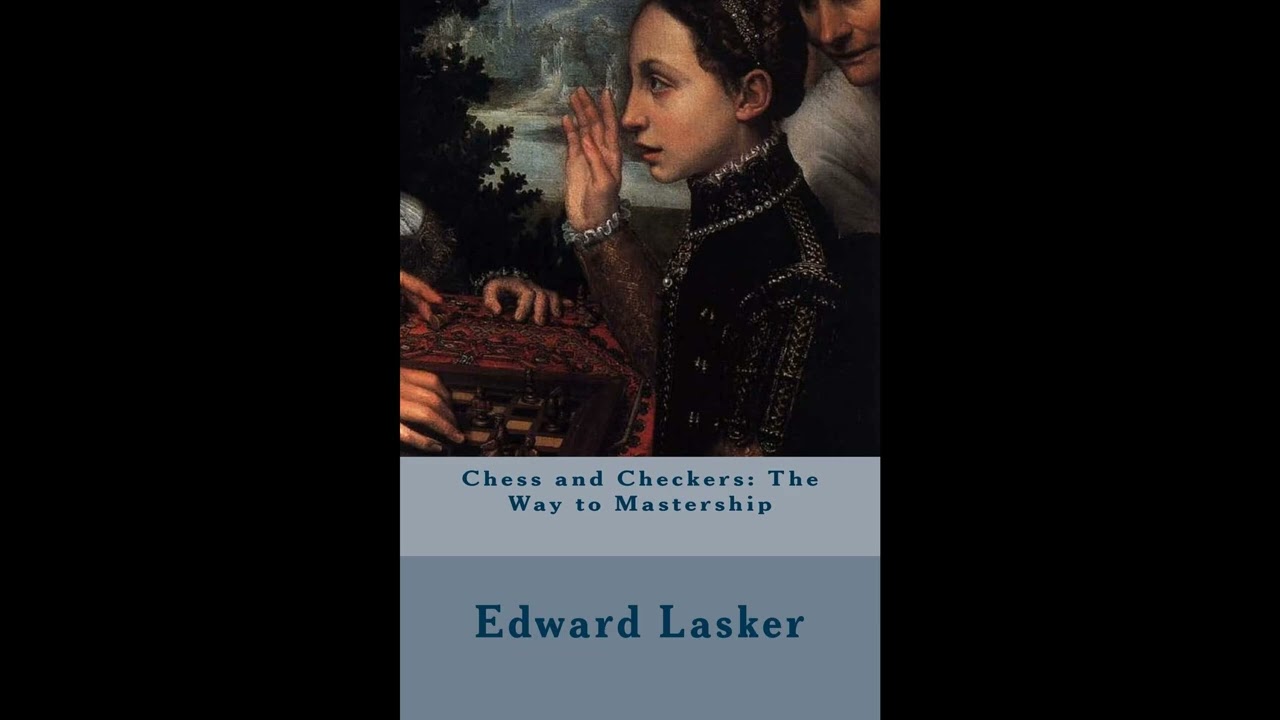
Edward Lasker’s "Chess Strategy" stands as a foundational text in the understanding of the game, a landmark that continues to shape how enthusiasts and serious players approach the chessboard. More than a mere instruction manual, this work offers a systematic philosophical outlook on chess, dissecting the complex interplay of pieces and positions into understandable principles. In an age where digital distractions often pull our focus, the clarity and methodical thinking presented here offer a powerful antidote, refining not just one’s chess game but also one’s capacity for strategic foresight, logical deduction, and patient planning. It reminds us that mastery, in any field, stems from a deep grasp of underlying principles, not just memorized tactics. For anyone seeking to sharpen their intellect through the venerable game of kings, or simply to appreciate the elegance of its strategic core, this classic remains as relevant and illuminating today as when it first appeared. This seminal book guides the listener through the conceptual landscape of chess, illuminating the strategic battles that define a match long before a king is checkmated. The "setting" is, naturally, the 64 squares of the chessboard, but the true arena is the mind of the player, where plans are forged and positions are evaluated. Edward Lasker introduces the pieces not just as physical entities with defined moves, but as dynamic participants in a larger strategic drama, each with inherent strengths and weaknesses, and roles that evolve with every move. The central "conflict" of the book is the struggle for positional advantage: how to control key squares, how to develop pieces efficiently, how to create threats while safeguarding one's own king. It is a guide to the silent war waged across the board, where every pawn move, every knight's maneuver, is part of a grander design. Lasker begins by laying the groundwork of general principles, such as the importance of controlling the center, the value of active pieces, and the necessity of sound pawn structures. He then moves into more advanced concepts, illustrating through examples how to build an attack, how to defend against one, and how to exploit an opponent's weaknesses. The arc of this instructional "story" is one of increasing sophistication, gradually revealing the layers of thought required to play chess well. He doesn't just show what to do, but why specific moves or plans are strategically superior. The listener learns to perceive the board not as a static arrangement of pieces, but as a fluid system of forces, constantly shifting, demanding keen observation and thoughtful response. The book concludes with insights into endgame play and the psychological elements of competition, equipping the listener with a comprehensive framework for strategic excellence without giving away every secret, leaving room for personal discovery and application. Edward Lasker, born in Kempen, Prussia (now Kępno, Poland) in 1885, was a towering figure in the chess world who seamlessly blended a career as an engineer with his passion for the game. Although often confused with his distant cousin, the formidable World Champion Emanuel Lasker, Edward carved out his own significant legacy as an International Master, author, and popularizer of chess. He studied engineering in Berlin and later moved to the United States in 1914, eventually becoming a naturalized citizen. His life spanned much of the 20th century, witnessing profound changes in both technology and the theory of chess. Edward Lasker's engineering background arguably informed his approach to chess, instilling in him a systematic, logical method of analysis and explanation that made his writings exceptionally clear and accessible. Beyond "Chess Strategy," Lasker authored several other influential books that helped shape generations of players. "Lasker's Manual of Chess," first published in 1925, stands as another enduring classic, covering all aspects of the game from tactics to openings and endgames. He also wrote "Chess and Checkers: The Way to Mastership" and "Go and Go-Moku," demonstrating a broader interest in strategic board games. Edward Lasker was not just a theoretician; he was also a strong practical player, participating in several international tournaments and scoring impressive victories against leading grandmasters. His commitment to making complex strategic ideas understandable to a wider audience firmly established his place in the chess canon as one of the most important educators and communicators the game has ever known, a legacy that continues through his written works. "Chess Strategy" effectively demonstrates several core themes that resonate far beyond the chessboard. Foremost is the theme of strategic thinking and methodical problem-solving. Lasker shows how complex situations can be broken down into smaller, manageable parts, each requiring careful evaluation. For instance, he details how controlling the "center" of the board is not merely an abstract goal, but a concrete objective that directly impacts the mobility and influence of one's pieces. He illustrates how a well-placed pawn structure can create a defensive shield and launchpad for attack, while a weak structure can become a liability. The text offers a systematic way to approach decision-making under pressure, where every choice carries consequences and requires foresight. Another significant theme is the interplay of patience and aggression. Lasker’s teachings emphasize that while dynamic, attacking play is vital, it must be built upon a foundation of solid, patient positioning. He provides examples where an impulsive attack leads to ruin, contrasted with situations where a slow, deliberate build-up of forces culminates in a decisive breakthrough. This highlights the virtue of discipline and the long game—the ability to resist immediate gratification for a greater, more profound advantage later. The book also underscores adaptability, showing how a player must constantly reassess the board, adjusting plans in response to an opponent's moves. Lasker’s concrete advice on managing different phases of the game—opening, middlegame, and endgame—illustrates how one must shift gears, applying different strategic lenses depending on the evolving circumstances of the match. "Chess Strategy" emerged during a particularly fertile period for chess, both culturally and theoretically, in the early 20th century. Published in 1915, the book arrived at a time when the game was experiencing a surge in popular interest, moving from a niche pastime to a more widely recognized intellectual pursuit. Chess clubs were flourishing, and international tournaments were becoming more formalized and frequent, drawing significant public attention. World Champion Emanuel Lasker, who held the title for an astonishing 27 years (1894-1921), had elevated the game's profile to unprecedented heights, sparking widespread curiosity and a desire for deeper understanding. This was also a period of significant theoretical development in chess. Players and thinkers were beginning to move beyond purely tactical, combinational play, which dominated the Romantic era of chess, toward a more systematic and scientific approach to positional understanding. Thinkers like Wilhelm Steinitz, the first World Champion, and later Aaron Nimzowitsch, were laying the groundwork for modern chess strategy, emphasizing concepts like pawn structure, prophylaxis, and the control of key squares. Edward Lasker's work fit perfectly into this burgeoning tradition, crystallizing these evolving ideas into an accessible format for a broader audience. The societal values of the era, which often prized logical reasoning, intellectual rigor, and self-improvement, further contributed to the book’s resonance and its sustained popularity. Listening to "Chess Strategy" as an audiobook offers a unique and highly effective way to absorb its profound lessons. A clear, articulate narration brings Edward Lasker’s systematic explanations to life, allowing the listener to focus entirely on the concepts being presented without the distraction of following diagrams or text. The several hours of content make it ideal for focused listening sessions, perhaps while commuting or engaging in a contemplative activity, allowing the strategic principles to sink in gradually. A steady, measured pacing in the narration allows ample time for the listener to mentally visualize the board and contemplate the strategic implications of each concept discussed, making it an almost meditative experience. The voice becomes a guide, an authoritative yet encouraging presence, imparting decades of chess wisdom directly into the mind. It’s an opportunity to truly hear the architecture of strategic thought unfold, gaining a deeper appreciation for the subtle brilliance and enduring appeal of chess.
Enjoyed Chess Strategy? A few ways to support us
Audible & Amazon links are affiliate; we may earn a small commission at no extra cost.
About this production
Human narration by a volunteer reader from LibriVox.org, the public-domain audiobook project. LibriVox volunteers record literary works whose copyright has expired in the United States, releasing the resulting recordings into the public domain.
Chess Strategy by Edward Lasker. The underlying text is in the U.S. public domain. We do not republish any modern copyrighted edition, translation, or commentary.
The 4K cinematic visuals accompanying this audiobook are generated by an AI image model from prompts derived from the source text. No copyrighted photos, paintings, or stock footage are used. AI generation is disclosed on every video on our YouTube channel as required by YouTube's altered/synthetic content policy.
English subtitles are transcribed from the LibriVox recording with OpenAI Whisper. Translations into the 11 other supported languages are produced by Meta's NLLB-200 neural translation model. No human translator's copyrighted translation is used.
Questions about sourcing or rights? See our DMCA & Sourcing policy or contact us.
Enjoyed this audiobook?
If you'd like to own a copy of Chess Strategy or hear a professionally produced edition, the links below help support free audiobook production at no extra cost to you.
As an Amazon Associate we earn from qualifying purchases. Audible / print links are affiliate.