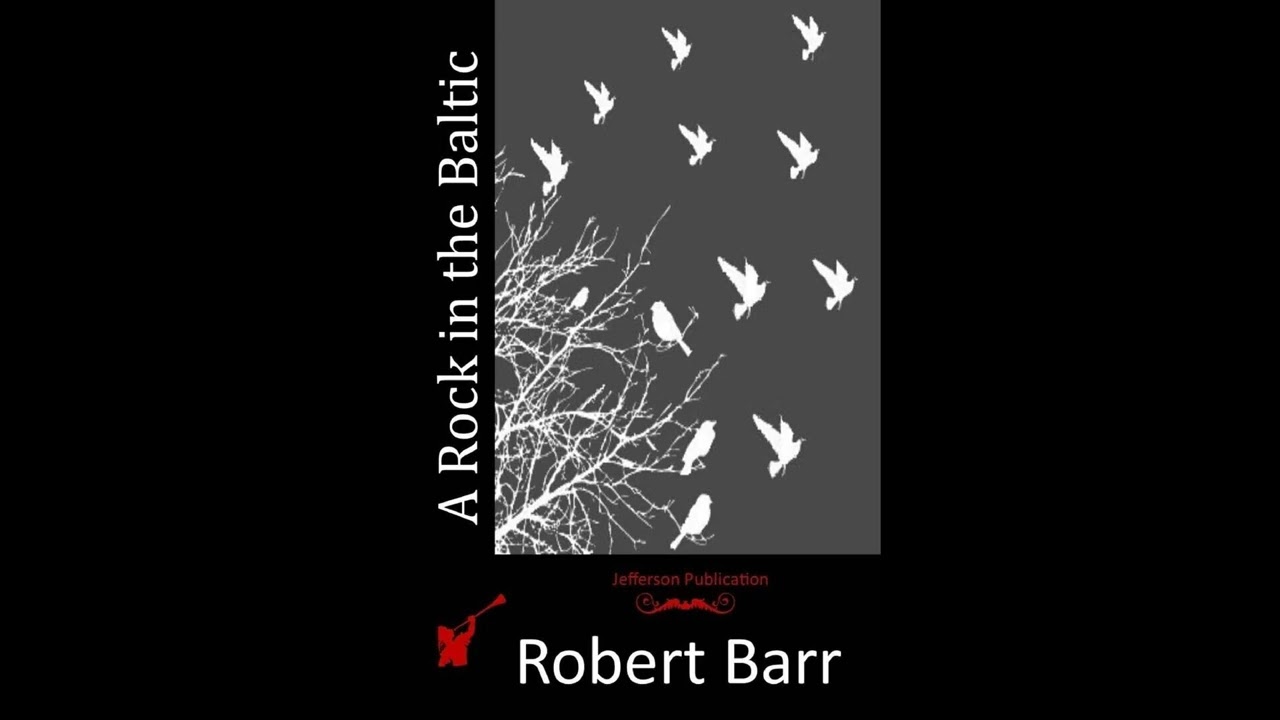
A Rock in the Baltic
Amid the vast, shifting geopolitical currents of the late nineteenth and early twentieth centuries, where empires vied for dominance and the map of Europe seemed to redraw itself with every passing year, adventure stories served as a thrilling mirror to the age. Robert Barr’s A Rock in the Baltic stands as a testament to this era, a pulse-quickening tale that plunges headfirst into a world of espionage, hidden agendas, and the enduring human quest for something beyond the ordinary. It’s a narrative that reminds us how a single individual, seemingly insignificant, can become the fulcrum upon which the fate of nations, or at least a considerable fortune, balances. This isn't merely a historical curiosity; it’s an urgent, taut thriller whose themes of national security, personal courage, and the murky ethics of international power resonate just as strongly today. The story drops us unceremoniously into the chilling waters of the Baltic Sea, a region of strategic importance and often murky international relations, even in the era in which this tale unfolds. Our central figure is Arthur Penhaligon, a man of quiet intelligence and an unassuming demeanor, who finds himself drawn into a labyrinthine plot far grander and more dangerous than he could ever have imagined. He arrives on a small, windswept island—the titular "rock"—ostensibly for a period of recuperation and quiet contemplation, seeking refuge from the demands of London life. However, the island, with its ancient fortifications and its close proximity to the heavily militarized coastlines of burgeoning European powers, proves anything but tranquil. Penhaligon soon discovers that the seemingly serene landscape harbors a deep secret, a clandestine operation involving a forgotten naval code and a network of shadowy figures who will stop at nothing to secure their prize. The central conflict quickly escalates as Penhaligon, initially an unwitting observer, becomes an active participant in the unfolding drama. He encounters a disparate cast of characters: the enigmatic Baron von Strassburg, whose urbane charm conceals a ruthless ambition; the resourceful and mysterious Lena, whose loyalties seem to shift like the Baltic tides; and a host of local fishermen and isolated villagers, each with their own hidden knowledge or desperate plights. The struggle revolves around a set of strategic plans—perhaps for a new type of submarine, or the layout of an impregnable fortress—that, if fallen into the wrong hands, could ignite a wider conflict or irrevocably alter the balance of power. Penhaligon, using his wits rather than brute force, must navigate treacherous alliances, decipher cryptic messages, and outmaneuver dangerous adversaries, all while the isolation of the "rock" intensifies the claustrophobic tension. The narrative skillfully builds toward a perilous confrontation, leaving the ultimate fate of the characters and the critical secret hanging precariously in the balance as alliances shatter and betrayals surface. Robert Barr, the author behind this gripping narrative, was a fascinating figure whose life mirrored the international scope of his stories. Born in Glasgow, Scotland, in 1849, Barr emigrated to Canada with his family during his youth, where he began his career as a journalist. His experiences in the burgeoning newspaper industry in North America honed his ability to craft concise, engaging prose and to observe the quirks and ambitions of human nature. Returning to England in the late 1880s, Barr quickly established himself as a prominent writer and editor during a golden age of popular fiction. He co-founded The Idler magazine with Jerome K. Jerome, a publication that quickly gained renown for its lively mix of humor, adventure, and serious literary contributions, often featuring works by the era's most celebrated authors, including Rudyard Kipling and Arthur Conan Doyle. Barr's prolific output spanned novels and a vast collection of short stories, many of which showcased his talent for suspense and intricate plotting. He was known for his clever detectives, his keen sense of international politics, and a certain wry humor that often peppered even his most serious tales. Beyond A Rock in the Baltic, his notable works include The Triumphs of Eugène Valmont, a series featuring a French detective, often seen as a contemporary counterpoint to Sherlock Holmes, and The Countess Tekla, another tale of European intrigue. Barr's place in the literary canon is that of a highly skilled craftsman of popular fiction, a writer whose work, while often overlooked in favor of more "literary" contemporaries, perfectly captured the imagination of a reading public hungry for adventure, mystery, and a glimpse into the clandestine world of international affairs. He passed away in 1912, leaving behind a legacy of entertainment and thoughtful observation. Several compelling themes weave through the narrative of A Rock in the Baltic, lending it a depth beyond mere adventure. One prominent idea is the fragility of peace and the constant threat of international conflict. The setting itself, a small island strategically positioned in a contested sea, serves as a microcosm of larger geopolitical tensions. The clandestine operations involving secret codes and national security plans vividly illustrate how, even in peacetime, nations are constantly maneuvering for advantage, with potential consequences far beyond the immediate players. The story suggests that what appears to be calm on the surface often conceals dangerous undercurrents of ambition and rivalry. Another significant theme is the nature of courage and ingenuity in the face of overwhelming odds. Arthur Penhaligon is not a swashbuckling hero; he is an ordinary man thrust into extraordinary circumstances. His bravery isn't physical prowess but rather his sharp intellect, his ability to deduce and infer, and his moral fortitude when confronted with deceit and danger. For instance, when he finds himself trapped in a disused lighthouse, surrounded by adversaries, his ability to improvise a signal or to decipher a coded message becomes his only weapon, demonstrating how quick thinking and an indomitable spirit can be more potent than any weapon. The book celebrates the triumph of the individual's mind over brute force and systemic threats. The era in which A Rock in the Baltic was written and published, roughly the turn of the twentieth century, was a time of immense change and burgeoning anxieties. Culturally, there was a widespread fascination with progress and technology, but also a growing apprehension about the future, particularly concerning international relations. Imperial powers were aggressively expanding their reach, creating intricate networks of alliances and rivalries that would eventually lead to global conflict. Naval power, in particular, was seen as the ultimate arbiter of national strength, making tales involving maritime espionage and strategic strongholds incredibly resonant with contemporary concerns. In the literary world, this period was a golden age for serialized fiction and adventure stories published in magazines. Authors like Robert Barr catered to a voracious public appetite for tales of mystery, exotic locales, and heroes who could navigate complex puzzles. The rise of "New Journalism," which favored direct, impactful prose, influenced many writers, including Barr, leading to narratives that were brisk, engaging, and often highly topical. A Rock in the Baltic emerged from this fertile ground, a product of its time that captured both the thrill of adventure and the underlying unease about Europe's shifting political landscape, offering readers both escapism and a reflection of their own world. To experience A Rock in the Baltic as an audiobook offers a unique gateway into its suspenseful heart. The spoken word breathes life into Robert Barr's intricate plotting, allowing listeners to fully immerse themselves in the chilly atmosphere of the Baltic and the high stakes of the central conflict. A skilled narrator can deftly differentiate between the varied characters—from Penhaligon's quiet resolve to Baron von Strassburg's smooth menace—making their motivations and exchanges feel immediate and visceral. The several hours of listening time provide ample opportunity for the story's carefully constructed tension to build, giving listeners space to consider each clue and red herring alongside the protagonist. Listen for the subtle shifts in pacing, the dramatic inflections during moments of discovery, and the nuanced delivery of dialogue that illuminates the characters' true intentions. This format transforms the reading experience into a truly sensory one, drawing you deeply into the isolated island, the whispered secrets, and the ticking clock of a brewing crisis.
Enjoyed A Rock in the Baltic? A few ways to support us
Audible & Amazon links are affiliate; we may earn a small commission at no extra cost.
About this production
Human narration by a volunteer reader from LibriVox.org, the public-domain audiobook project. LibriVox volunteers record literary works whose copyright has expired in the United States, releasing the resulting recordings into the public domain.
A Rock in the Baltic by Robert Barr. The underlying text is in the U.S. public domain. We do not republish any modern copyrighted edition, translation, or commentary.
The 4K cinematic visuals accompanying this audiobook are generated by an AI image model from prompts derived from the source text. No copyrighted photos, paintings, or stock footage are used. AI generation is disclosed on every video on our YouTube channel as required by YouTube's altered/synthetic content policy.
English subtitles are transcribed from the LibriVox recording with OpenAI Whisper. Translations into the 11 other supported languages are produced by Meta's NLLB-200 neural translation model. No human translator's copyrighted translation is used.
Questions about sourcing or rights? See our DMCA & Sourcing policy or contact us.
Enjoyed this audiobook?
If you'd like to own a copy of A Rock in the Baltic or hear a professionally produced edition, the links below help support free audiobook production at no extra cost to you.
As an Amazon Associate we earn from qualifying purchases. Audible / print links are affiliate.