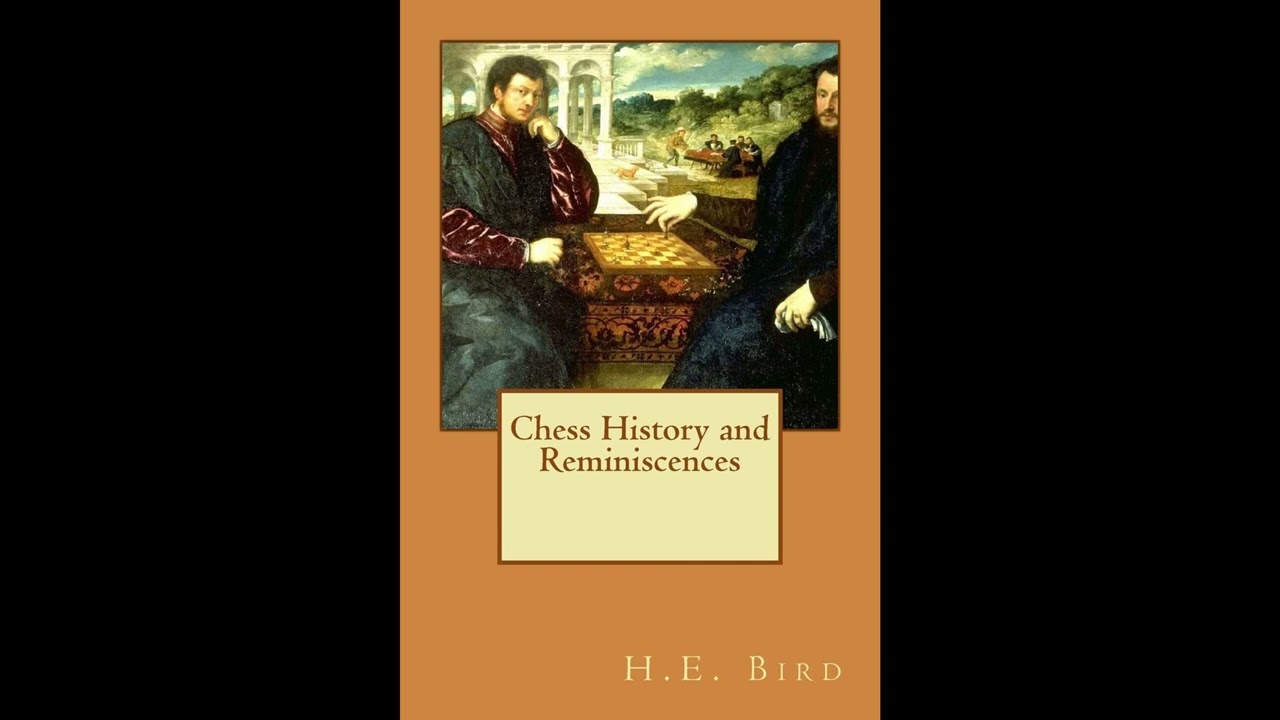
Chess History and Reminiscences
Step into a world where strategy meets legend, where the clash of intellects defined an era, and where a single game could immortalize a player. H.E. Bird's Chess History and Reminiscences is far more than a mere record of moves and matches; it is an intimate and often spirited conversation with the past, delivered by one of the game's most engaging characters. This is a portal not just to the annals of chess, but to the very spirit of Victorian-era intellectualism and the personal stories of the men who shaped the game. For anyone who has ever pondered the elegant complexities of the chessboard, or simply yearned for a glimpse into a bygone age of dedicated pursuit, Bird offers a unique and personal invitation to discover the triumphs, eccentricities, and enduring legacies of chess grandees. Bird sets his stage not in a single location, but across the intellectual battlefields of the world—from the hushed drawing-rooms of London to the bustling coffee houses of continental Europe, where the smoke of cigars mingled with the tension of high stakes. The main players are not fictional constructs, but flesh-and-blood grandmasters and strategists: the formidable Philidor, whose theories laid foundational stones; the meteoric Paul Morphy, who blazed across the chess firmament with unparalleled brilliance; and the indefatigable Wilhelm Steinitz, whose scientific approach revolutionized the game. Bird himself serves as both narrator and a central, active participant, guiding listeners through this grand assembly of minds. The central narrative thread follows the evolution of chess thought, from its more romantic and aggressive early forms to the analytical depths that emerged in Bird’s own time. Listeners are privy to the gripping accounts of major tournaments, the subtle psychological duels between titans, and the slow, inexorable march of strategic understanding. It is a story of rivalries both fierce and friendly, of innovations that shifted paradigms, and of the sheer, often obsessive, dedication required to excel at the highest levels. We witness the game's transformation from an aristocratic pastime to a globally recognized intellectual sport, all through the sharp, anecdotal lens of someone who lived and breathed every moment of it. The "arc" is the sweeping historical progression of chess itself, punctuated by unforgettable individual personalities and their contributions, right up to the doorstep of the twentieth century. Henry Edward Bird, born in 1830, was an English chess master whose career spanned an astonishing six decades, making him one of the most enduring figures of his age. A contemporary of the greatest minds in chess, including Morphy, Steinitz, and later Lasker, Bird was not only a formidable player—known for his original, aggressive, and often unorthodox style, immortalized by the "Bird's Opening" (1. f4)—but also a prolific writer and commentator. His contributions extended beyond the board; he was an accountant by profession, a detail that perhaps lent a certain methodical clarity to his observations of the often-chaotic chess world. Bird participated in some of the earliest international chess tournaments, including the legendary London 1851 event, witnessing firsthand the pivotal moments and personal dramas that shaped the game's modern era. Bird's literary output included instructional manuals and collections of games, but it is in works like Chess History and Reminiscences where his voice truly comes alive as a chronicler of his time. He was a keen observer of human nature, blending incisive analysis with personal anecdotes and witty asides. Bird's place in the canon of chess literature is secure not just for his technical contributions, but for his singular ability to render the history of the game vibrant and accessible, reflecting a period when chess was becoming a highly visible public spectacle. He passed away in 1908, leaving behind a legacy as a true gentleman of the game, admired for his courage on the board and his candor in print. One of the prominent themes woven throughout Bird's narrative is the relentless pursuit of excellence. He repeatedly illustrates the sheer dedication and intellectual rigor demanded by the highest echelons of chess. For instance, he recounts the almost monastic devotion of players like Paul Morphy, who, despite his brief career, studied and played with an intensity that few could match, embodying a singular focus that led to unparalleled mastery. Bird’s observations on Morphy’s intuitive grasp of combinations, or Steinitz’s painstaking development of positional principles, serve as concrete examples of this theme, demonstrating how individual geniuses pushed the boundaries of strategic understanding. Another crucial theme Bird brings to light is the power of legacy and memory. The very act of writing his reminiscences is an act of preserving the past, ensuring that the games, theories, and personalities of bygone eras are not forgotten. He recalls specific games or brilliant moves, like Anderssen’s "Immortal Game," not just for their technical merit, but for how they resonated through subsequent generations, inspiring new players and shaping the game's aesthetic. Bird himself, as a living link to multiple generations of players, acts as a guardian of this intellectual heritage, ensuring that the lessons and triumphs of the past continue to instruct and entertain. The period in which Bird was most active and when he likely compiled these recollections—the latter half of the nineteenth century—was a golden age for chess. It coincided with the Victorian era’s flourishing interest in intellectual pursuits, the rise of popular science, and a growing public sphere for competitive events. Chess clubs proliferated, international tournaments became more frequent and prestigious, and dedicated chess columns and journals gained wide readership. This cultural backdrop meant that grandmasters were often public figures, their games analyzed and discussed with fervor. Bird’s work emerged from this environment, a product of a time when chess was rapidly professionalizing and its history was seen as a vital component of its identity, creating a demand for such personal accounts and historical overviews. Listening to Chess History and Reminiscences as an audiobook offers a unique intimacy with Bird's world. The run length, several hours, allows for an unhurried appreciation of his detailed accounts and leisurely pacing. A skilled narrator can capture the nuanced tone of Bird's prose—his informed expertise, his occasional flashes of wit, and his profound affection for the game and its champions. The spoken word brings Bird's anecdotes to life, transforming what might be a historical text into a direct address from a seasoned veteran sharing his wisdom and stories. One can particularly listen for the narrator's interpretation of Bird's voice when he describes a crucial game, or offers a personal observation on a fellow master, providing a sense of conversational presence that perfectly complements the book’s anecdotal structure and literary merit.
Enjoyed Chess History and Reminiscences? A few ways to support us
Audible & Amazon links are affiliate; we may earn a small commission at no extra cost.
About this production
Human narration by a volunteer reader from LibriVox.org, the public-domain audiobook project. LibriVox volunteers record literary works whose copyright has expired in the United States, releasing the resulting recordings into the public domain.
Chess History and Reminiscences by H.E. Bird. The underlying text is in the U.S. public domain. We do not republish any modern copyrighted edition, translation, or commentary.
The 4K cinematic visuals accompanying this audiobook are generated by an AI image model from prompts derived from the source text. No copyrighted photos, paintings, or stock footage are used. AI generation is disclosed on every video on our YouTube channel as required by YouTube's altered/synthetic content policy.
English subtitles are transcribed from the LibriVox recording with OpenAI Whisper. Translations into the 11 other supported languages are produced by Meta's NLLB-200 neural translation model. No human translator's copyrighted translation is used.
Questions about sourcing or rights? See our DMCA & Sourcing policy or contact us.
Enjoyed this audiobook?
If you'd like to own a copy of Chess History and Reminiscences or hear a professionally produced edition, the links below help support free audiobook production at no extra cost to you.
As an Amazon Associate we earn from qualifying purchases. Audible / print links are affiliate.