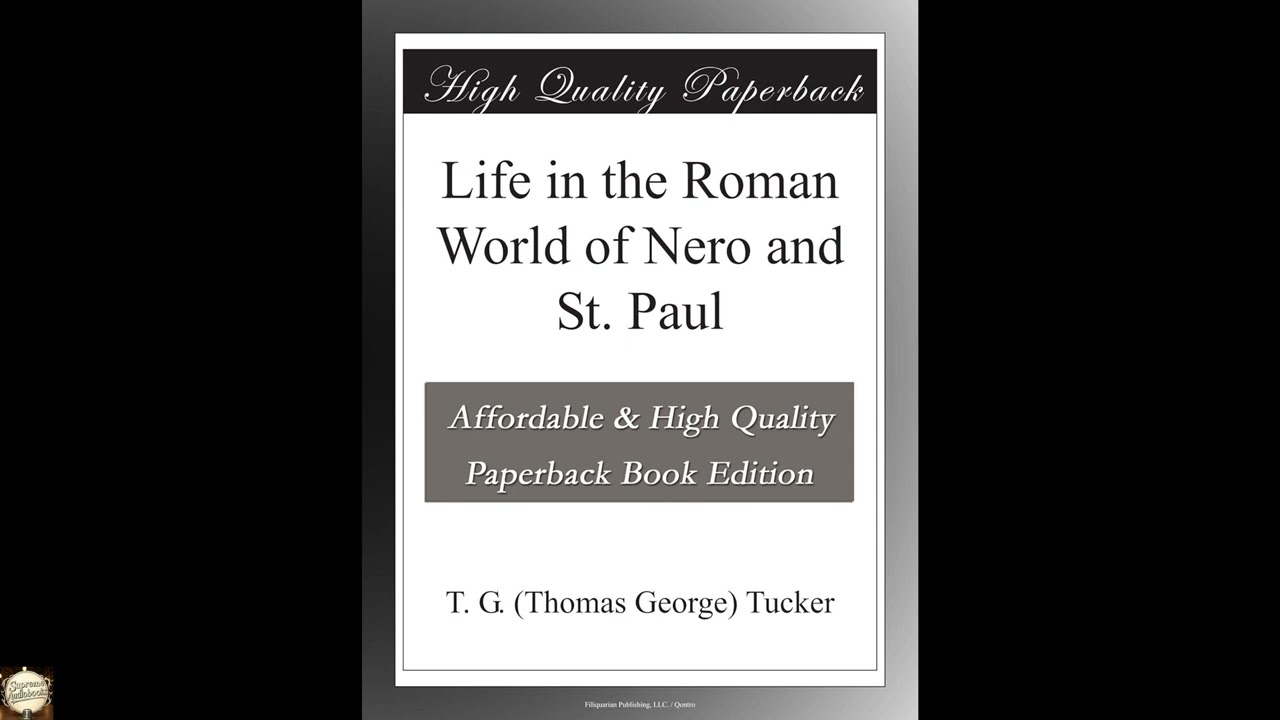
Life in the Roman World of Nero and St. Paul
Step back in time to an era that shaped the very foundations of Western civilization, a tumultuous period where absolute power clashed with burgeoning faith, and the destiny of millions hung in the balance. T. G. Tucker's "Life in the Roman World of Nero and St. Paul" offers more than a dry recounting of historical facts; it presents a vivid panorama of life as it was lived in the heart of the Roman Empire during one of its most pivotal and dramatic chapters. This compelling narrative resurrects a world both grand and squalid, scholarly and deeply human, allowing listeners today to grasp the epic scope of events that still resonate in our laws, our cultures, and our spiritual beliefs. To understand the origins of so many aspects of our modern world, one must understand Rome under Nero, and the powerful, subversive message that St. Paul carried through its sprawling domains. Tucker sets his stage in the mid-first century CE, a period dominated by the capricious and often cruel reign of Emperor Nero. From his ascent to power, marked by the murder of his own mother, Agrippina, Nero’s rule is depicted as a spectacle of immense luxury, artistic pretension, and brutal suppression. We witness the opulence of his Golden House, the grandeur of gladiatorial games, and the dark shadow cast by his paranoia and self-indulgence. The city of Rome itself is a central character, a bustling metropolis of over a million souls, a melting pot of cultures, religions, and social strata, where senators and slaves, philosophers and soldiers, all navigate the complex web of imperial authority and daily survival. Against this backdrop of imperial might and moral decay, Tucker introduces another equally potent, yet vastly different, force: the nascent movement of Christianity. Simultaneously, the narrative follows the extraordinary odyssey of Saul of Tarsus, soon to be known as St. Paul, a figure whose missionary zeal would transform a small, localized sect into a global religion. Paul’s journeys take listeners across the Mediterranean, from the synagogues of Antioch and the marketplaces of Athens, where he debates Stoic and Epicurean philosophers, to the bustling ports of Ephesus and the nascent Christian communities in Corinth and Philippi. Tucker skillfully contrasts the visible, overwhelming power of Rome with the quiet, persistent spread of Paul’s message—a message of hope, equality, and a new covenant that challenges the very structure of the pagan world. The central conflict thus emerges: the collision of an ancient, established empire, embodying worldly power and polytheistic tradition, with a revolutionary monotheistic faith that champions spiritual values and communal love, setting the stage for a dramatic struggle for the hearts and minds of the empire's populace. Thomas George Tucker, born in Ireland in 1859, dedicated his distinguished career to the rigorous study and vivid interpretation of classical antiquity. Educated at Trinity College, Cambridge, he was a brilliant classicist whose academic acumen quickly earned him renown. In 1885, at a relatively young age, Tucker accepted the prestigious Chair of Classical Philology at the University of Melbourne, a position he held for an impressive thirty-three years. His relocation to Australia did not diminish his scholarly output; rather, it seemed to fuel a prolific period of writing and teaching, solidifying his reputation as one of the preeminent classical scholars of his generation. Tucker’s contributions extended beyond the lecture hall. He was a prodigious author, translating and commenting on a wide array of Greek and Latin texts, from Aeschylus’s tragedies to Plutarch’s biographies and Thucydides’ histories. His scholarship was characterized by a meticulous attention to linguistic detail combined with a broad, empathetic understanding of ancient cultures. Beyond his academic texts, he also authored more accessible works aimed at a general educated public, such as "Life in the Roman World of Nero and St. Paul," making the complex world of antiquity understandable and engaging. His work played a significant role in popularizing classical studies and ensuring their continued relevance in the English-speaking world during the late 19th and early 20th centuries, before his passing in 1946. Among the salient themes Tucker brings to light, the abuse of power and its corrupting influence stands out dramatically through the figure of Nero. We see this not just in his notorious cruelties—such as his suspected role in the Great Fire of Rome and the subsequent scapegoating of Christians—but also in the everyday corruption and sycophancy that permeates his court. Tucker provides details of how advisors, senators, and even family members are either complicit or fall victim to Nero’s escalating paranoia and narcissism. Contrasting this is the theme of unwavering faith and resilience in the face of persecution. Paul’s steadfast commitment to his mission, despite numerous arrests, beatings, shipwrecks, and imprisonment, exemplifies the nascent Christian community’s tenacity. For example, his powerful letters, often penned from prison, serve not only as theological treatises but as testaments to enduring hope amidst profound adversity. Another profound theme Tucker explores is the clash of civilizations and belief systems. The Roman world, steeped in its pantheon of gods, emperor worship, and a sophisticated legal and administrative structure, frequently misunderstands and demonizes the monotheistic, communal, and often secretive practices of the Christians. Paul’s preaching in different cities often highlights this cultural dissonance, as he navigates Jewish synagogues, Greek philosophical schools, and Roman legal systems, attempting to articulate a message that transcends these existing frameworks. Finally, the book underscores the profound and lasting legacy of this brief historical moment. Tucker meticulously illustrates how the actions of Nero and the apostles—however disparate—collectively laid foundations for the political and religious landscape of Europe for centuries to come, proving how even seemingly small events and individual choices can echo through millennia. This work emerged during a fascinating period in the late nineteenth and early twentieth centuries, a time when classical scholarship was undergoing significant advancements, particularly in archaeology and textual criticism. There was a widespread public appetite for accessible historical narratives, a desire to understand the origins of Western civilization, and a keen interest in the historical roots of Christianity, often in dialogue with evolving scientific and philosophical thought. Scholars like Tucker were responding to this demand by synthesizing vast amounts of classical knowledge into engaging prose, bridging the gap between rigorous academic research and the educated lay reader. This era, characterized by grand imperial ambitions in Britain and elsewhere, likely also fostered a particular fascination with the Roman Empire as a historical analogue, making the study of its rise and fall, its governance and its spiritual shifts, particularly resonant. Listening to "Life in the Roman World of Nero and St. Paul" as an audiobook truly enhances the experience of Tucker's meticulously researched and thoughtfully presented account. The narration brings a distinct intimacy to the historical details, allowing the descriptive passages to unfold with greater immediacy. With several hours of content, it is ideally suited for focused listening over multiple sessions, perhaps during commutes, while exercising, or during quiet evenings. Listen for the narrator’s subtle shifts in tone, particularly when delineating the extravagance of Nero’s court versus the austere determination of St. Paul. The pacing often builds with the historical drama, highlighting moments of high tension—like the Great Fire—or providing a contemplative backdrop for Paul’s theological reflections. This format transforms what could be a dense historical text into a compelling narrative, allowing the listener to truly inhabit the soundscape and social atmosphere of this pivotal ancient world.
Enjoyed Life in the Roman World of Nero and St. Paul? A few ways to support us
Audible & Amazon links are affiliate; we may earn a small commission at no extra cost.
About this production
Human narration by a volunteer reader from LibriVox.org, the public-domain audiobook project. LibriVox volunteers record literary works whose copyright has expired in the United States, releasing the resulting recordings into the public domain.
Life in the Roman World of Nero and St. Paul by T. G. (Thomas George) Tucker. The underlying text is in the U.S. public domain. We do not republish any modern copyrighted edition, translation, or commentary.
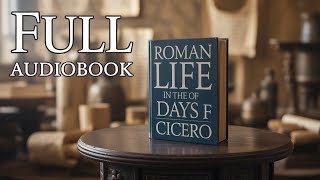
The 4K cinematic visuals accompanying this audiobook are generated by an AI image model from prompts derived from the source text. No copyrighted photos, paintings, or stock footage are used. AI generation is disclosed on every video on our YouTube channel as required by YouTube's altered/synthetic content policy.
English subtitles are transcribed from the LibriVox recording with OpenAI Whisper. Translations into the 11 other supported languages are produced by Meta's NLLB-200 neural translation model. No human translator's copyrighted translation is used.
Questions about sourcing or rights? See our DMCA & Sourcing policy or contact us.
Enjoyed this audiobook?
If you'd like to own a copy of Life in the Roman World of Nero and St. Paul or hear a professionally produced edition, the links below help support free audiobook production at no extra cost to you.
As an Amazon Associate we earn from qualifying purchases. Audible / print links are affiliate.