Bruvver Jim's Baby
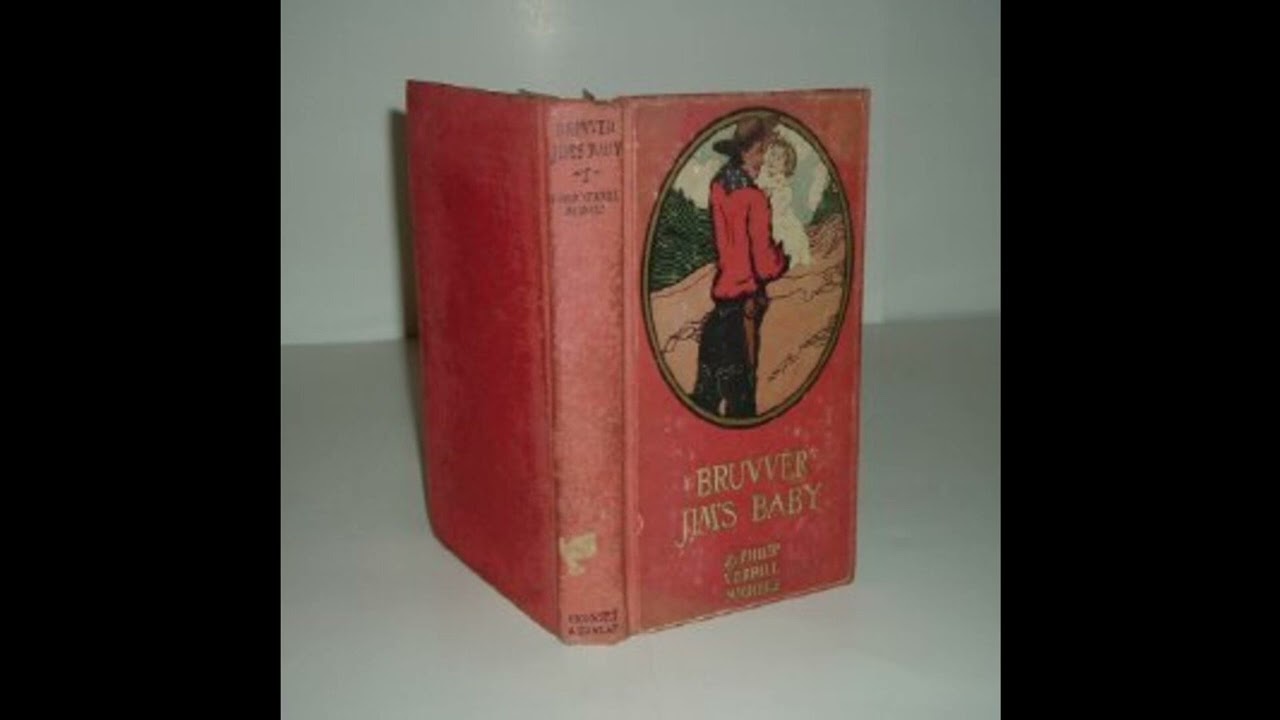
Amidst the vast, untamed expanse of the American West, where rugged individualism was less a philosophy and more a necessity for survival, a singular story of unexpected parenthood and profound personal change unfolds. Philip Verrill Mighels' "Bruvver Jim's Baby" stands as a poignant testament to the human spirit's capacity for tenderness even in the harshest environments, a narrative that deftly peels back the layers of a gruff exterior to reveal a heart capable of immense love. Published in an era captivated by the romance and peril of the frontier, this novel offers more than just adventure; it provides a quiet yet powerful look at how responsibility can transform a man, a theme that resonates deeply with anyone who has faced an unforeseen challenge and found strength they never knew they possessed. This isn't merely a historical curiosity; it is a story about the making of a family under the most improbable circumstances, speaking to the universal capacity for connection and redemption that continues to draw readers in today. The story drops us into a remote, isolated corner of the American West, a landscape as unforgiving as it is beautiful, where life is hard-won and human contact often scarce. Here, we meet "Bruvver Jim," a prospector as rough-hewn and solitary as the mountains he scours for gold. His days are defined by the grind of labor, the silence of the wilderness, and the uncomplicated rhythms of a life lived far from civilization's niceties. Jim is a man who knows how to survive, how to endure the elements, and how to keep to himself. His world is one of self-reliance, where sentiment holds little sway and tenderness is a forgotten concept. This solitary existence shatters with the sudden, inexplicable appearance of a baby – an infant girl, abandoned and utterly dependent. Jim, utterly unprepared for such a profound intrusion, finds his carefully constructed life upended. His initial reaction is one of bewildered resentment; he is a miner, not a nursemaid. The central conflict arises from this stark contrast: a baby's fragile needs pitted against a frontiersman's hardened resolve and complete lack of parental instinct. The story then traces Jim's arduous, often comical, and ultimately deeply moving attempts to care for this tiny, demanding creature. We witness his clumsy efforts to feed, clothe, and soothe her, struggles that slowly but surely begin to chip away at his gruff exterior, exposing a vulnerability he never knew existed. The narrative observes the slow, difficult process by which an unlikely bond forms, challenged by the harsh realities of frontier life and the curious, sometimes judgmental, eyes of the few other residents of the remote camp. Philip Verrill Mighels, born in 1869, was an American author whose life mirrored the very frontier experiences he chronicled. Hailing from Maine, Mighels moved west as a young man, spending significant time in Nevada and California, immersing himself in the landscapes and lives of prospectors, cowboys, and settlers. This firsthand experience lent an undeniable authenticity to his writing, providing him with a rich understanding of the challenges and unique character that defined the American West at the turn of the 20th century. He captured not just the physical environment but also the distinct dialects and hardened philosophies of those who chose, or were compelled, to live on the edge of civilization. Mighels was a prolific writer, contributing numerous short stories and novels to the literary landscape of his time. Beyond "Bruvver Jim's Baby," his works like "Nevada" and "The Crystal Sceptre" often returned to the themes of nature's power, human endurance, and the transformative potential of life in the wilderness. He spent a period living in London, where his stories of the American West found an appreciative audience, but his literary heart remained firmly rooted in the landscapes he had known. Mighels passed away prematurely in 1911, leaving behind a body of work that, while not as widely recognized today as some of his contemporaries, offers a vivid and often humane portrayal of a specific moment in American history and literature. His writings occupy a space where the rugged individualism of the frontier meets a keen observation of human emotion, bridging the gap between adventure tales and more character-driven narratives. At its heart, "Bruvver Jim's Baby" enacts themes of redemption and transformation. Bruvver Jim begins as a character defined by his isolation and rough edges, a man seemingly beyond the reach of tenderness. Yet, the sheer helplessness of the infant girl forces him into a role utterly alien to him, initiating a profound internal shift. We see this in small, telling moments: his calloused hands, accustomed to wielding pickaxes, awkwardly attempting to cradle the baby, or his quiet sacrifices to ensure her comfort and safety in a desolate landscape. This transformation isn't instantaneous; it is a gradual, believable softening, showcasing how compassion can bloom in the most unexpected places. The novel also powerfully explores the theme of the unconventional family. Jim and the baby, united by circumstance rather than blood, create a bond that redefines what a family can be. Their makeshift household, forged in the crucible of necessity, challenges traditional notions of kinship and reveals the strength found in unconditional care. Another significant theme is man versus environment, a perennial concern in frontier literature, but here given a domestic twist. The challenges Jim faces are not merely external—finding food, building shelter—but also deeply personal, as he learns to provide for an infant in a setting utterly unsuited for such fragility. The novel brings into sharp relief the constant struggle against the elements and the sheer practical difficulties of raising a child where every resource is precious. Furthermore, the text touches on the theme of innocence and experience, juxtaposing the baby's utter vulnerability and untainted nature against Jim's hardened past and worldly weariness. This contrast serves as a catalyst for Jim's growth, as he is forced to confront his own limitations and rediscover a sense of purity and purpose through the child's presence. Mighels' literary significance lies in his ability to imbue the frontier narrative with such deep psychological observation, moving beyond mere adventure to a nuanced examination of human nature. When "Bruvver Jim's Baby" was published in 1904, America was experiencing a moment of profound cultural and societal change. The official closing of the frontier in 1890 had generated a sense of national reflection, leading to a nostalgic yet also realistic appraisal of the West. While the romanticized image of the cowboy and prospector still held sway, there was a growing literary movement toward realism and naturalism, seeking to depict life with greater verisimilitude. Authors were increasingly interested in how human character was shaped by environment and circumstance, moving away from idealized heroism toward more complex portrayals. The Progressive Era was gaining momentum, with its focus on social reform and the human condition, even as the industrial might of the nation continued to grow, creating a stark contrast between urban modernity and the enduring wildness of the West. This novel emerged from a desire to capture the authentic spirit of the frontier, but through a lens that emphasized personal growth and the quiet heroism of everyday life rather than grand exploits. Mighels contributed to a body of work that sought to humanize the figures of the West, showing their vulnerabilities and their capacity for emotional depth alongside their famed toughness. It spoke to an audience still captivated by the allure of the American wilderness, but also one increasingly open to stories that explored the domestic and psychological dimensions of that harsh existence. The book provided a refreshing counterpoint to more bombastic tales, demonstrating that profound drama and transformation could occur within the confines of a simple cabin or a remote mining camp. To experience "Bruvver Jim's Baby" as an audiobook is to invite the unique atmosphere of the American frontier directly into your consciousness. The narrator's voice becomes the medium through which Jim's gruff pronouncements and the baby's plaintive cries resonate, bringing to life the subtle shifts in emotion and the quiet humor embedded in Mighels' prose. With a run length of several hours, this format allows for an immersive listen, perfect for long drives, focused work, or simply settling in for an evening of reflective storytelling. Listen for the pacing; a good narrator will allow the moments of arduous frontier labor to unfold with a deliberate rhythm, contrasting them with the sudden, tender interjections of Jim's burgeoning paternal instinct. The authentic dialogue, rich with the vernacular of the period, gains an added layer of authenticity when spoken aloud, giving each character a distinct presence. The auditory experience deepens the isolation of Jim's world, but also amplifies the warmth and hope that slowly begin to illuminate it, making the bond between "Bruvver Jim" and his unexpected charge all the more vivid and heartwarming.
Enjoyed Bruvver Jim's Baby? A few ways to support us
Audible & Amazon links are affiliate; we may earn a small commission at no extra cost.
About this production
Human narration by a volunteer reader from LibriVox.org, the public-domain audiobook project. LibriVox volunteers record literary works whose copyright has expired in the United States, releasing the resulting recordings into the public domain.
Bruvver Jim's Baby by PHILIP VERRILL MIGHELS. The underlying text is in the U.S. public domain. We do not republish any modern copyrighted edition, translation, or commentary.
The 4K cinematic visuals accompanying this audiobook are generated by an AI image model from prompts derived from the source text. No copyrighted photos, paintings, or stock footage are used. AI generation is disclosed on every video on our YouTube channel as required by YouTube's altered/synthetic content policy.
English subtitles are transcribed from the LibriVox recording with OpenAI Whisper. Translations into the 11 other supported languages are produced by Meta's NLLB-200 neural translation model. No human translator's copyrighted translation is used.
Questions about sourcing or rights? See our DMCA & Sourcing policy or contact us.
View 10 famous quotes from this book →
Enjoyed this audiobook?
If you'd like to own a copy of Bruvver Jim's Baby or hear a professionally produced edition, the links below help support free audiobook production at no extra cost to you.
As an Amazon Associate we earn from qualifying purchases. Audible / print links are affiliate.