His Majesty Baby, And Some Common People (1902)
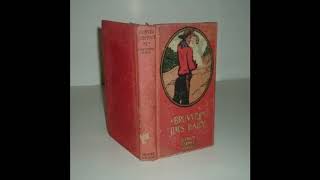
Ian MacLaren’s His Majesty Baby, And Some Common People, first published in 1902, offers a charming, sometimes poignant, and often amusing window into the human spirit, observed through the lens of a particular corner of rural Scotland. This collection of sketches and short narratives manages to be both a warm, nostalgic look at a vanishing way of life and a surprisingly acute study of universal human foibles, affections, and resilience. At its heart, the book asks us to consider where true authority lies—whether in the demanding innocence of a child or the quiet dignity of ordinary folk navigating their daily lives. For listeners today, it provides a gentle counterpoint to the rush of modern existence, reminding us of the enduring power of community, kindness, and the small, often comical, dramas that shape our days. It is a work that champions the unsung heroes of hearth and home, making their struggles and triumphs feel as significant as any grand historical epic. The stories gathered within these pages transport the listener to the fictional village of Drumtochty, a setting which MacLaren had already brought to life in his popular previous works. This is a place where every character, from the stern elder to the mischievous schoolboy, feels intimately known and understood. The title story, "His Majesty Baby," centers on the disruptive, yet utterly beloved, influence of an infant within a household. This tiny, unreasoning ruler, with his imperious demands and innocent charm, turns the lives of his devoted caregivers upside down, exposing their patience, their prejudices, and their profound capacity for love. The surrounding "Common People" are the villagers themselves – a cast of memorable personalities including shrewd farmers, gossipy women, kindly ministers, and earnest children, each grappling with their own small trials and tribulations. Through a series of distinct, self-contained narratives, MacLaren paints a detailed mosaic of village existence. We witness scenes of rural courtship, the subtle tensions of neighborly disagreements, moments of unexpected generosity, and the quiet heroism of individuals facing personal hardship. While there isn't a single overarching plot in the traditional sense, each sketch contributes to a larger understanding of this tightly knit community. The central conflict, if one can call it that, arises from the inherent friction between human desires and the realities of life, between individual eccentricity and communal expectation, all observed with a keen eye for both the comedic and the deeply felt. The arc of the book, therefore, is not linear, but rather a spiraling immersion into the rhythms and rituals of a world where human connection remains paramount. The author behind the pen name Ian MacLaren was, in fact, the Reverend John Watson (1850-1907), a prominent Presbyterian minister born in Manningtree, Essex, but raised and educated in Scotland. Watson studied at Edinburgh University and Tübingen, Germany, before beginning his ecclesiastical career. He served as a minister in Glasgow and then at Sefton Park Presbyterian Church in Liverpool, where he gained renown for his eloquence and social activism. It was during his time in Liverpool that he began writing fiction under the pseudonym Ian MacLaren, a name that combined the surname of his maternal grandmother with the Scottish given name. His literary career took off with the immense success of Beside the Bonnie Brier Bush in 1894, followed by The Days of Auld Lang Syne in 1895. Watson became one of the leading figures of the Kailyard school of Scottish literature, a movement characterized by its nostalgic, often sentimental, portrayals of rural Scottish life. His works were tremendously popular in both Britain and America, selling millions of copies and even inspiring theatrical adaptations. While later generations of critics sometimes dismissed Kailyard writers for their perceived sentimentality and idealized vision of Scotland, Watson's early successes undeniably played a significant role in bringing Scottish regional literature to a wide international audience. He was not merely a popular entertainer, but a figure who, through his ministry and his writing, sought to uplift and connect with people on a deeply human level, often drawing upon his own experiences and observations of Scottish character and dialect. One of the central themes running through His Majesty Baby, And Some Common People is the profound impact of childhood innocence and vulnerability on the adult world. The titular "His Majesty Baby" vividly illustrates this, showing how the arrival of a demanding, yet utterly defenseless, infant can transform the dynamics of a household, forcing adults to confront their own self-interest and rediscover a capacity for selfless devotion and humor in the face of chaos. The child's unvarnished truth and simple needs cut through the layers of adult artifice, revealing the genuine goodness and exasperated affection beneath. Another significant theme is the resilience and quiet dignity of the ordinary individual within a close-knit community. MacLaren frequently presents characters who, despite their humble circumstances or personal struggles—perhaps a farmer facing a harsh winter or a woman enduring a hidden sorrow—face life with courage, practical wisdom, and an unwavering sense of duty to their neighbors. Their interactions, whether through a shared laugh, a whispered comfort, or a simple act of assistance, highlight the enduring strength found in communal bonds. The book also addresses the theme of gentle humor and pathos inherent in everyday life. MacLaren possesses a masterful touch for observing the small absurdities and tender moments that define human interaction. He finds comedy in misunderstandings, in the quirks of local dialect, and in the clash of personalities, often using understated wit rather than broad farce. These humorous instances are frequently balanced by moments of genuine pathos, where the quiet struggles and emotional depths of his characters are revealed, reminding us that even the simplest lives are full of profound joy and sorrow. Together, these elements demonstrate the enduring power of human connection, the understated beauty of a seemingly ordinary existence, and the universal experience of love and loss played out against the backdrop of a distinct cultural landscape. The early 20th century, when His Majesty Baby first saw publication, was a period of immense social and industrial upheaval across Britain. Rapid urbanization was drawing people away from rural areas, fundamentally changing traditional ways of life. Against this backdrop, there was a growing cultural appetite for literature that offered a sense of continuity, nostalgia, and a connection to a perceived simpler, more authentic past. The Kailyard school, with MacLaren as one of its most prominent voices, emerged as a direct response to this yearning. These stories provided comfort and a sense of belonging to readers who were either experiencing these changes firsthand or observing them from afar. They also served to preserve a certain vision of Scottish identity and dialect at a time when national characteristics were being re-evaluated in the face of modernization. MacLaren's particular brand of regional fiction resonated widely because it tapped into universal human emotions and dilemmas, even while rooted in a specific cultural milieu. Listening to His Majesty Baby, And Some Common People as an audiobook offers a unique opportunity to immerse oneself fully in MacLaren's world. The run length of several hours makes it an ideal companion for commutes, extended walks, or quiet evenings at home, allowing ample time for the stories to unfold at their own unhurried pace. A skilled narrator can bring the distinctive voices and dialects of Drumtochty to life, adding layers of authenticity and character to the prose. Pay close attention to the rhythm of the dialogue, which often carries much of the humor and emotional weight, and the way the atmosphere of the Scottish countryside is evoked through descriptive passages. The narrative's pacing, often leisurely and reflective, invites the listener to slow down, to savor the details, and to connect with the deep currents of humanity that flow through these seemingly quiet tales. It is an experience that promises both gentle amusement and quiet reflection, leaving a lasting impression of the enduring warmth of human spirit.
Enjoyed His Majesty Baby, And Some Common People (1902)? A few ways to support us
Audible & Amazon links are affiliate; we may earn a small commission at no extra cost.
About this production
Human narration by a volunteer reader from LibriVox.org, the public-domain audiobook project. LibriVox volunteers record literary works whose copyright has expired in the United States, releasing the resulting recordings into the public domain.
His Majesty Baby, And Some Common People (1902) by Ian MacLaren. The underlying text is in the U.S. public domain. We do not republish any modern copyrighted edition, translation, or commentary.
The 4K cinematic visuals accompanying this audiobook are generated by an AI image model from prompts derived from the source text. No copyrighted photos, paintings, or stock footage are used. AI generation is disclosed on every video on our YouTube channel as required by YouTube's altered/synthetic content policy.
English subtitles are transcribed from the LibriVox recording with OpenAI Whisper. Translations into the 11 other supported languages are produced by Meta's NLLB-200 neural translation model. No human translator's copyrighted translation is used.
Questions about sourcing or rights? See our DMCA & Sourcing policy or contact us.
Enjoyed this audiobook?
If you'd like to own a copy of His Majesty Baby, And Some Common People (1902) or hear a professionally produced edition, the links below help support free audiobook production at no extra cost to you.
As an Amazon Associate we earn from qualifying purchases. Audible / print links are affiliate.