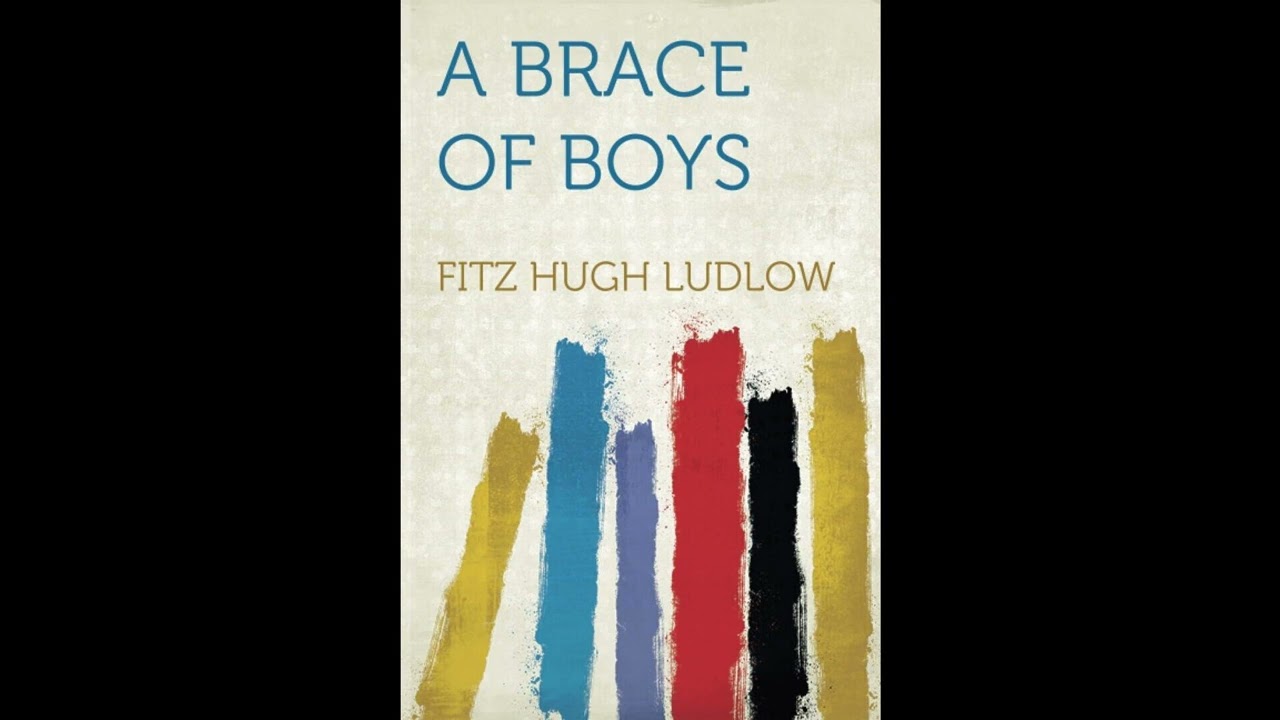
A Brace Of Boys
Step into the bustling, sometimes bewildering, world of mid-19th century American boyhood with Fitz Hugh Ludlow’s remarkable collection, "A Brace Of Boys." This isn't merely a nostalgic glance back; it’s an insightful and often poignant examination of youth, presented through narratives that resonate with universal truths about growing up, forging identity, and navigating the often-complex relationships that define our formative years. Ludlow, an author whose reputation deserves far greater recognition beyond his most famous work, offers listeners a chance to connect with the timeless struggles and triumphs of boyhood, making "A Brace Of Boys" a compelling listen even in our modern era. His keen observation of character and his ability to articulate the inner lives of young protagonists ensure that these stories feel as fresh and relevant today as they did when first penned. This literary collection centers on the experiences of young men—boys on the cusp of understanding themselves and their place in the world. While the specific situations vary between the tales, a consistent thread unites them: the often-awkward, sometimes joyous, path from childhood innocence toward the responsibilities and disappointments of adulthood. One narrative might follow a spirited, perhaps mischievous, youth whose grand plans inevitably lead to unexpected consequences, teaching him hard-won lessons about humility and the true meaning of friendship. Another delves into the profound, often unspoken, bond between siblings, portraying how love, rivalry, and shared experiences shape their characters against the backdrop of a changing America. Ludlow meticulously paints scenes of schoolboy antics, the solemn promises made in childhood forts, the thrill of discovery, and the quiet moments of introspection that define these formative years. The central conflict within these narratives often stems from the clash between youthful idealism and the stark realities of the world. Characters grapple with moral quandaries, face down bullies, endure personal losses, and learn to distinguish genuine affection from superficial admiration. The stories unfold not with a single dramatic climax, but through a series of smaller, cumulative revelations that build a nuanced portrait of growth. Listeners witness the boys as they navigate the shifting landscapes of family expectations, societal norms, and the nascent stirrings of self-awareness. Ludlow excels at showing how small decisions and chance encounters can steer a young life in unexpected directions, always maintaining a deep empathy for his youthful subjects without shying away from their imperfections. The overarching arc reveals a progression from an unblemished, often naive, state to one of greater understanding and resilience, without ever quite abandoning the hope and potential inherent in youth. Fitz Hugh Ludlow, born in New York in 1836, was a truly fascinating and ultimately tragic figure of 19th-century American letters. He began writing at a remarkably young age, publishing his first notable work, "The Hasheesh Eater," in 1857 when he was just 21. This autobiographical account of his experiences with hashish made him an instant, if controversial, sensation and stands today as a pioneering work in drug literature. Far from being a one-hit wonder, Ludlow was a prolific journalist, critic, and author who contributed widely to leading periodicals of his day, including Harper's Monthly and The Atlantic Monthly. His keen intellect and sharp wit were evident in his diverse writings, which ranged from travelogues to fiction to incisive social commentary. Ludlow’s life, however, was marked by personal struggles, including addiction, which undoubtedly informed his empathetic portrayals of human vulnerability and striving. He was a contemporary of literary giants such as Mark Twain and Walt Whitman, and while his broader recognition dimmed after his premature death in Geneva, Switzerland, in 1870 at the age of 33, his influence on American literature, particularly in capturing the nuances of consciousness and the human condition, remains significant. He moved through various literary circles, interacting with transcendentalists and early realists, and his work often blends the romantic individualism of his era with a nascent psychological insight that foreshadowed later literary movements. His untimely passing cut short a promising career, leaving behind a body of work that continues to attract scholarly attention and captivate new generations of readers. "A Brace Of Boys" acts as a vivid enactment of several enduring themes. Foremost among these is the theme of innocence versus experience. We see this, for instance, in the way a character might approach a simple summer adventure with untainted enthusiasm, only to confront an unexpected betrayal or a difficult moral choice that forces a reevaluation of the world. Another significant theme is the power and fragility of friendship. Ludlow frequently illustrates how youthful alliances, whether between two close companions sharing secrets in a secluded clearing or a group of boys navigating the social pecking order of a schoolyard, can offer both immense support and profound heartache. Consider a scene where one boy, eager to impress, might compromise his integrity, leading to a rift with a loyal friend and a painful realization of the value of trust. The collection also touches upon themes of self-discovery and the search for identity, often in the face of societal expectations. Boys in Ludlow’s stories are frequently at a crossroads, trying to understand who they are apart from their families or their peers. There is an undercurrent of developing moral compass, as characters face temptations or are compelled to act in ways that test their emerging sense of right and wrong. These moments are not presented didactically but emerge organically from the narrative, such as when a boy must decide whether to protect a secret that harms others or stand up for what he believes is just, despite potential personal cost. Ludlow’s subtle handling of these ethical dilemmas lends a depth to what might otherwise appear as simple tales of youth. The mid-19th century in America was a period of immense change and introspection, and Ludlow's work emerged directly from this dynamic environment. Culturally, the nation was grappling with the aftermath of the Civil War, industrial expansion, and significant social shifts. There was a burgeoning interest in distinctly American literature, moving away from purely European models, and a growing appreciation for narratives that captured the everyday lives and concerns of ordinary Americans. In the literary world, the Romantic movement, with its emphasis on emotion, individualism, and nature, was beginning to give way to the rising tide of Realism, which sought to depict life with greater accuracy and less idealization. "A Brace Of Boys" fits squarely into this transitional period, blending the romantic sensibilities of its time—an appreciation for the beauty of nature, the purity of youth, and intense emotional experiences—with a nascent realistic impulse in its unflinching portrayal of human foibles and the sometimes harsh realities faced by children. Ludlow was part of a generation of writers who were defining a truly American literary voice, often by focusing on local settings and the psychological nuances of his characters. The work reflects a society keenly interested in the moral development of its youth, viewing them as the future stewards of a rapidly evolving nation, making these stories a valuable cultural artifact as well as a compelling read. Listening to "A Brace Of Boys" as an audiobook offers a unique intimacy with Ludlow's prose and his characters. The narrator's voice becomes the conduit for the era's cadence, bringing to life the distinctive speech patterns and narrative sensibilities of the 19th century. With several hours of listening available, it's a perfect companion for a series of commutes, quiet evenings, or long walks, allowing the stories to unfold gradually and thoughtfully. A skilled narrator can deftly differentiate between the youthful exuberance and moments of quiet contemplation, using pacing and inflection to underscore the subtle humor, the earnest struggles, and the profound emotional shifts experienced by the boys. The spoken word allows the atmosphere to truly settle, immersing listeners in a world of youthful adventure, heartfelt emotion, and the enduring quest for self-understanding that Ludlow so brilliantly captured.
Enjoyed A Brace Of Boys? A few ways to support us
Audible & Amazon links are affiliate; we may earn a small commission at no extra cost.
About this production
Human narration by a volunteer reader from LibriVox.org, the public-domain audiobook project. LibriVox volunteers record literary works whose copyright has expired in the United States, releasing the resulting recordings into the public domain.
A Brace Of Boys by Fitz Hugh Ludlow. The underlying text is in the U.S. public domain. We do not republish any modern copyrighted edition, translation, or commentary.
The 4K cinematic visuals accompanying this audiobook are generated by an AI image model from prompts derived from the source text. No copyrighted photos, paintings, or stock footage are used. AI generation is disclosed on every video on our YouTube channel as required by YouTube's altered/synthetic content policy.
English subtitles are transcribed from the LibriVox recording with OpenAI Whisper. Translations into the 11 other supported languages are produced by Meta's NLLB-200 neural translation model. No human translator's copyrighted translation is used.
Questions about sourcing or rights? See our DMCA & Sourcing policy or contact us.
Enjoyed this audiobook?
If you'd like to own a copy of A Brace Of Boys or hear a professionally produced edition, the links below help support free audiobook production at no extra cost to you.
As an Amazon Associate we earn from qualifying purchases. Audible / print links are affiliate.