Mam' Lyddy's Recognition
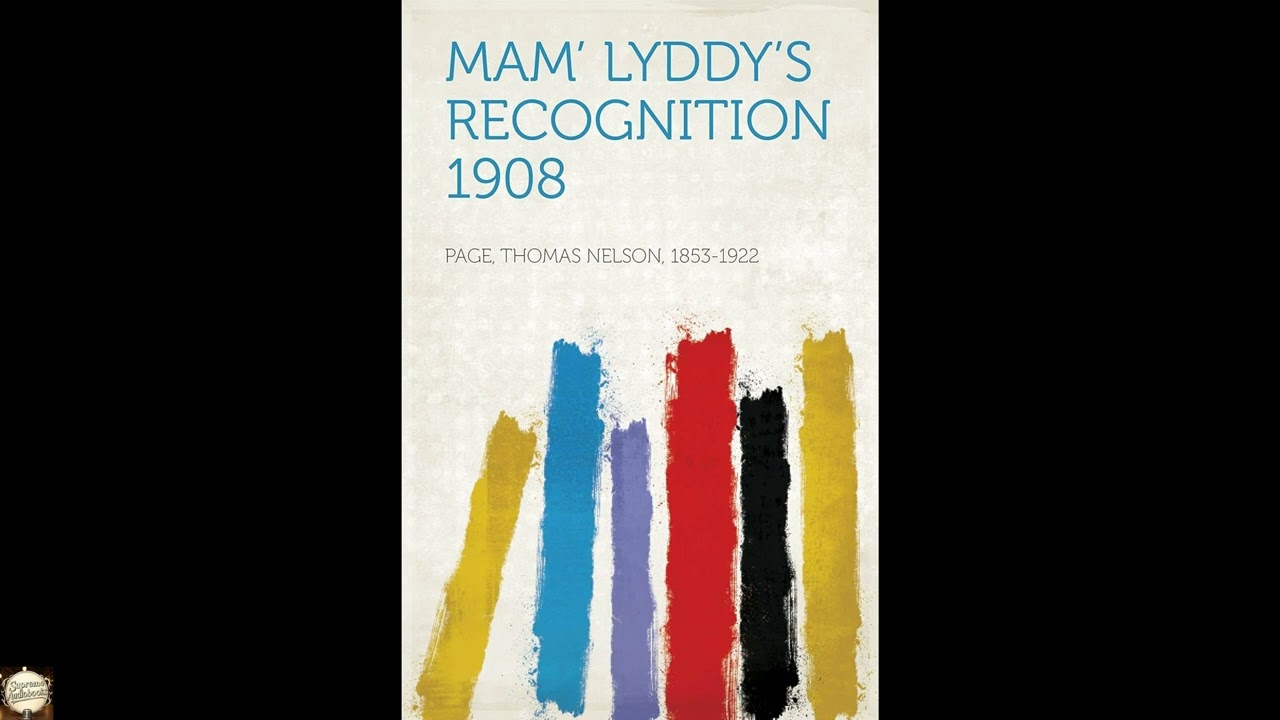
In the aftermath of the American Civil War, the South lay in ruins—its economy shattered, its social structure irrevocably altered, and its people grappling with a new, uncertain future. Amidst this upheaval, human relationships, once defined by the rigid hierarchies of slavery, found themselves tested, transformed, and sometimes, tragically broken. Thomas Nelson Page's "Mam' Lyddy's Recognition" offers a poignant and often challenging look into this particular moment of transition, focusing on the intimate, complex bonds that persisted between formerly enslaved individuals and their former owners. It asks us to consider how dignity is sought and granted, how old loyalties endure in new contexts, and what it truly means for one human being to acknowledge the worth of another, especially when the world around them has collapsed and reformed. This story, though rooted in a specific historical moment, continues to resonate today in its examination of identity, respect, and the often-fraught process of societal change. The narrative transports us to a landscape of faded glory and stark new realities in post-bellum Virginia. We meet Mam' Lyddy, an elderly Black woman, once a central figure in the household of Colonel Dabney, a quintessential Southern gentleman whose fortunes have been utterly reversed by the war. The great plantation that once sustained him is now a shadow of its former self, its lands fallow, its grand house decaying. Colonel Dabney, a man born to privilege, now finds himself in dire poverty, struggling to maintain a semblance of his former life and clinging to a pride that often blinds him to the changing world around him. Mam' Lyddy, for her part, is no longer bound by the chains of slavery, yet she navigates a world where true freedom, economic independence, and social respect remain elusive. The central conflict arises from this dramatically altered power dynamic and the deep-seated expectations inherited from a bygone era. Mam' Lyddy, despite her hardships and the systemic injustices she faces, continues to exhibit a quiet resilience and a steadfast adherence to values of loyalty and duty, albeit now reinterpreted on her own terms. She observes the Colonel's struggles, his prideful resistance to change, and the growing chasm between their respective realities. Her desire is not for material gain, but for something far more fundamental: a recognition of her lifelong devotion, her enduring humanity, and the inherent worth that the old system had often denied. The story traces the subtle interactions, the unspoken tensions, and the deeply ingrained habits of thought that define their relationship, pushing towards a pivotal moment where the true measure of their shared history and individual humanity might finally be taken. Thomas Nelson Page (1853-1922) was a prominent American lawyer, writer, and diplomat, whose literary career significantly shaped perceptions of the American South in the late nineteenth and early twentieth centuries. Born into an old, aristocratic Virginia family, his childhood was steeped in the traditions of the antebellum South and profoundly impacted by the Civil War and Reconstruction. This personal history became the wellspring for much of his writing. After studying law at Washington and Lee University and the University of Virginia, he practiced as a lawyer in Richmond before turning more seriously to literature. Page quickly gained renown for his short stories, often written in the "plantation tradition," which romanticized the Old South and often depicted relations between white landowners and Black enslaved people through a nostalgic, paternalistic lens. His most famous collection, In Ole Virginia (1887), introduced readers to stories like "Marse Chan" and "Meh Lady," which established his distinctive style and themes. Later in life, Page served as the U.S. Ambassador to Italy under President Woodrow Wilson during World War I. While his work provides invaluable insight into the Southern perspective of his time, and his skill in rendering dialect and setting is undeniable, it is also viewed critically today for its idealized portrayal of a deeply unjust social system and its contributions to the "Lost Cause" mythology. "Mam' Lyddy's Recognition" powerfully enacts several enduring themes. One central idea is the dramatic social transformation brought about by the Civil War and the Reconstruction era. We witness the economic ruin of the Southern planter class through Colonel Dabney's destitution and the physical decay of his estate, a stark contrast to the opulence of the past. Simultaneously, the story reveals the complex nature of freedom for formerly enslaved individuals, as Mam' Lyddy, though emancipated, still struggles for basic necessities and true autonomy, her world irrevocably altered but not necessarily improved in all material ways. Her continued presence near her former master, however, speaks to the deeply entwined lives that were abruptly severed and then imperfectly reformed. Another significant theme is the quest for dignity and recognition. Mam' Lyddy's life had been one of service, often unacknowledged beyond the strictures of her status. The story foregrounds her quiet strength and the persistent, unspoken demand for an acknowledgment of her humanity and her contributions. This is not a simple plea for charity, but a profound need for her worth to be seen and respected, a need that becomes the emotional core of the narrative. Her very presence, her continued, subtle acts of care, force the Colonel to confront not only his own reduced circumstances but also the unwritten history between them and the inherent value of her person beyond any institutionalized role. The story subtly suggests that true recognition can only come when the power dynamics are rebalanced, even if imperfectly. The story emerged from the tumultuous period following the American Civil War, generally known as Reconstruction (1865-1877), and the subsequent decades that grappled with its aftermath. During this time, the South was undergoing immense societal, political, and economic upheaval. The end of slavery necessitated a complete restructuring of labor, land ownership, and social relations. Politically, the era was marked by efforts to integrate formerly enslaved people into civic life, often met with fierce resistance from white Southerners. Culturally, there was a widespread desire in the South to interpret the war and its outcomes in a way that preserved a sense of honor and justified their past, leading to the rise of the "Lost Cause" narrative. This narrative, which Thomas Nelson Page significantly contributed to, often romanticized the antebellum South, minimized the brutality of slavery, and portrayed the Old South as a benevolent, stable society undone by external forces. Literary works like "Mam' Lyddy's Recognition" served to articulate this particular regional perspective, often emphasizing themes of loyalty, honor, and the tragic loss of a way of life, while grappling with the new realities of race relations and social change. Page’s writing was part of a larger "local color" movement in American literature, which aimed to capture the distinct customs, dialects, and landscapes of various regions, thereby providing readers across a reunified nation with glimpses into diverse American experiences, albeit often through a particular, nostalgic lens. Listening to "Mam' Lyddy's Recognition" as an audiobook offers a singular opportunity to immerse oneself in this resonant period. With its run length of several hours, the narration allows for a measured, unhurried unfolding of the story's quiet drama, perfectly suited to the contemplative nature of the narrative. A skilled voice actor breathes life into the distinct voices and regional accents, allowing the nuances of Southern speech and the subtle emotional currents between characters to truly register. The pacing of the narration can enhance the sense of a world moving slowly, recovering from profound trauma, emphasizing the weight of history in every interaction. You will hear the echoes of the past in the dialogue, the quiet dignity in Mam' Lyddy’s responses, and the lingering pride in Colonel Dabney’s pronouncements, all contributing to an atmospheric experience that transports you directly to a pivotal moment in American history.
Enjoyed Mam' Lyddy's Recognition? A few ways to support us
Audible & Amazon links are affiliate; we may earn a small commission at no extra cost.
About this production
Human narration by a volunteer reader from LibriVox.org, the public-domain audiobook project. LibriVox volunteers record literary works whose copyright has expired in the United States, releasing the resulting recordings into the public domain.
Mam' Lyddy's Recognition by Thomas Nelson Page. The underlying text is in the U.S. public domain. We do not republish any modern copyrighted edition, translation, or commentary.
The 4K cinematic visuals accompanying this audiobook are generated by an AI image model from prompts derived from the source text. No copyrighted photos, paintings, or stock footage are used. AI generation is disclosed on every video on our YouTube channel as required by YouTube's altered/synthetic content policy.
English subtitles are transcribed from the LibriVox recording with OpenAI Whisper. Translations into the 11 other supported languages are produced by Meta's NLLB-200 neural translation model. No human translator's copyrighted translation is used.
Questions about sourcing or rights? See our DMCA & Sourcing policy or contact us.
Enjoyed this audiobook?
If you'd like to own a copy of Mam' Lyddy's Recognition or hear a professionally produced edition, the links below help support free audiobook production at no extra cost to you.
As an Amazon Associate we earn from qualifying purchases. Audible / print links are affiliate.