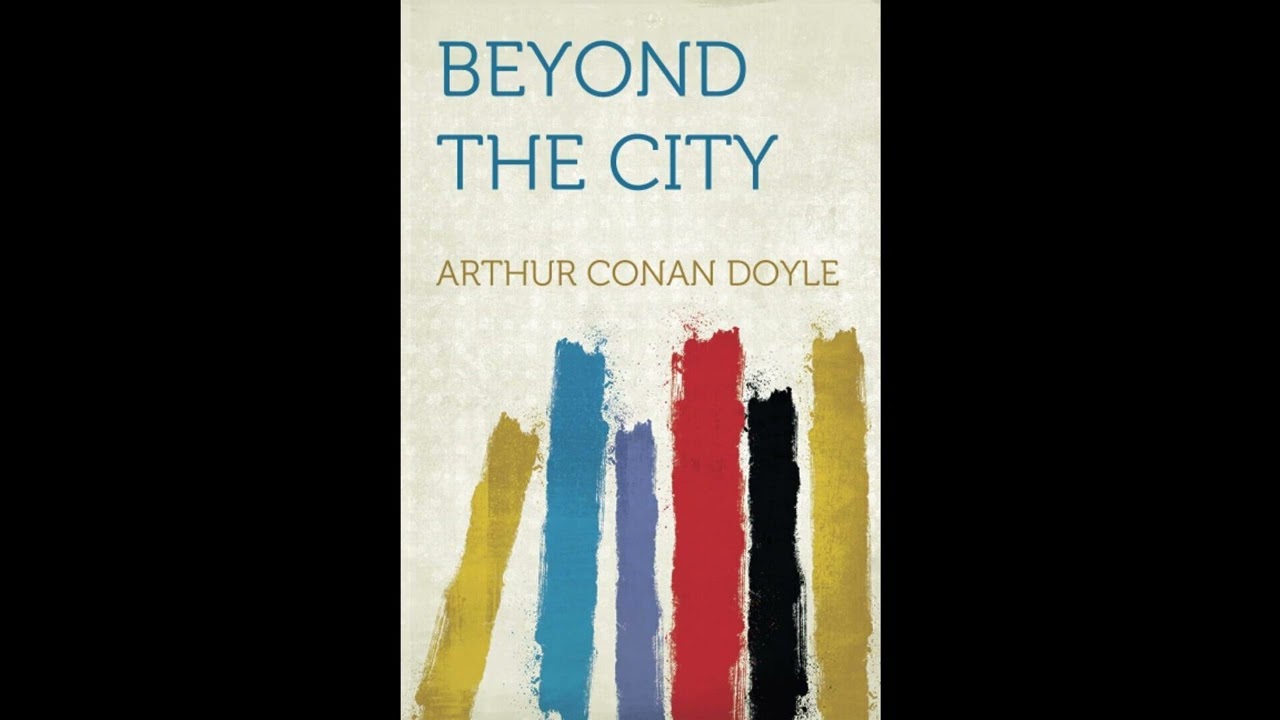
Beyond the City
Step into the bustling world of late Victorian England with Arthur Conan Doyle's Beyond the City, a compelling yet often overlooked novel that offers a different glimpse into the genius behind Sherlock Holmes. While the celebrated detective may be absent, Doyle’s keen observation of human nature, his nuanced understanding of societal pressures, and his ability to craft a story that resonates with both romantic idealism and grounded realism are all on full display. This is a story for anyone who has ever wrestled with ambition versus contentment, the allure of the metropolis versus the peace of the countryside, or the enduring challenges of love under the watchful eye of society. It’s a chance to hear a master storyteller at work, painting a vivid picture of a world both familiar and distinctly removed, asking questions about happiness that remain relevant today. The story introduces us to the tranquil suburban setting of the "Three Gables," a picturesque haven just far enough from the smoke and clamor of London to offer a sense of peaceful retreat. Here, we meet the primarily young protagonists whose lives are intertwined by proximity and nascent affection. Central to the narrative are Clara Rixon and Frank Mellish, a pair whose affections for each other seem to promise a future of quiet domestic bliss. However, their burgeoning romance is quickly complicated by the contrasting pulls of social aspiration and financial reality. Clara, though genuinely fond of Frank, harbors a yearning for a life of greater elegance and influence, a life that Frank, a diligent but not exceptionally wealthy solicitor, cannot immediately provide. This underlying tension between modest means and grander desires forms the crucible of their relationship. As external forces and individual choices begin to test their bond, Frank finds himself drawn into a business venture with a more outwardly ambitious figure, a decision made partly to prove his worth and partly to secure the future Clara appears to envision. Meanwhile, Clara's social circle expands to include figures who represent the very world she yearns for, creating further distance and misunderstanding between the young lovers. The story unfolds as a series of miscommunications, societal judgments, and the slow, often painful process of self-discovery for both Clara and Frank, all set against a backdrop where reputation and social standing hold considerable sway over personal happiness. Arthur Conan Doyle, born in Edinburgh, Scotland, in 1859, remains an enduring figure in literature, primarily known for giving the world its most famous consulting detective. Before finding fame as an author, Doyle trained as a physician, a profession he practiced for several years in Southsea, England. His medical background significantly influenced his writing, instilling in him a methodical approach to observation and deduction, evident not only in his detective stories but also in the psychological insights he brought to characters in his other works. While Sherlock Holmes, introduced in A Study in Scarlet (1887) and starring in classics like The Hound of the Baskervilles, secured his place in literary history, Doyle's literary output was far more diverse. He wrote a wealth of historical novels, often considered by Doyle himself to be his more serious and significant contributions, such as The White Company and Sir Nigel, which showcased his deep interest in medieval history and chivalry. He also pioneered early science fiction with the Professor Challenger series, featuring The Lost World. Towards the end of his life, Doyle became a prominent advocate for spiritualism, a reflection of his own evolving philosophical and religious beliefs. His body of work bridges the Victorian and Edwardian eras, capturing the spirit of a changing age with stories that entertained, educated, and often, probed the moral and social dilemmas of his time. At its core, Beyond the City explores the perennial conflict between different modes of existence: the allure of urban sophistication versus the simple joys of suburban tranquility. This contrast isn't just geographical; it is profoundly psychological. Clara's yearning for "the City" — for London's wealth and social opportunities — pits her against Frank's more contented, if less ambitious, view of life. We see this enacted early on when Clara expresses a subtle dissatisfaction with their modest surroundings, even as Frank cherishes the peace it offers. The novel also carefully examines themes of social class and aspiration, revealing how the invisible lines of Victorian society dictated opportunity and even affection. Frank’s struggles to ascend financially, and Clara’s brief flirtation with more prominent social circles, directly illustrate the pressures placed on individuals to "better" their station. Furthermore, the novel functions as a commentary on love and marriage within the confines of Victorian expectations. Relationships were often seen as a practical alliance as much as a romantic one, with financial stability and social standing playing crucial roles in suitability. The miscommunication and trials faced by Clara and Frank highlight how easily external pressures could fracture even genuine affection. The story also touches upon the differing gender roles of the period; Frank is expected to be the provider and social climber, while Clara is largely confined to domestic and social spheres, her choices limited by her perceived dependence on a man's success. For example, Clara's internal conflict over accepting a suitor with more apparent wealth, even if her heart remains with Frank, speaks volumes about the pragmatic realities women faced. The final years of the nineteenth century, when Beyond the City was published in 1899, were a period of immense change and introspection in Britain. The Victorian era was drawing to a close, marked by rapid industrialization, the exponential growth of cities, and an expanding middle class with new aspirations and anxieties. This was a time of both confidence in imperial power and underlying societal unease, often dubbed the fin de siècle. Culturally, there was a growing fascination with psychology and the complexities of human motivation, moving away from simpler moral tales. In the literary world, realism was gaining ground, and authors like Doyle, while popular, were also engaging with the nuances of contemporary life. The novel reflects this era perfectly, addressing the burgeoning urban sprawl, the societal emphasis on status, and the individual’s search for meaning and happiness amidst these shifts, creating a narrative that speaks to the very soul of a society grappling with its own modernity. Listening to Beyond the City as an audiobook offers a unique and immersive experience, allowing the listener to truly inhabit the world Doyle so carefully constructed. With a runtime of several hours, it's an ideal companion for a long walk, a relaxed afternoon at home, or during a daily commute. The skilled narration brings the distinctive voices of Victorian England to life, giving depth and nuance to each character's speech, from Frank's earnestness to Clara's conflicted aspirations, and the varied tones of their social acquaintances. Pay close attention to the pacing, which allows the story to unfold with the measured elegance of the era, and how the narrator's voice creates the atmosphere — from the bustling energy of brief descriptions of London to the quieter, more intimate scenes at the Three Gables. The subtle changes in vocal expression enhance the emotional resonance of the dialogue and highlight the societal tensions that drive the narrative, making this a truly memorable audio production.
Enjoyed Beyond the City? A few ways to support us
Audible & Amazon links are affiliate; we may earn a small commission at no extra cost.
About this production
Human narration by a volunteer reader from LibriVox.org, the public-domain audiobook project. LibriVox volunteers record literary works whose copyright has expired in the United States, releasing the resulting recordings into the public domain.
Beyond the City by Arthur Conan Doyle. The underlying text is in the U.S. public domain. We do not republish any modern copyrighted edition, translation, or commentary.
The 4K cinematic visuals accompanying this audiobook are generated by an AI image model from prompts derived from the source text. No copyrighted photos, paintings, or stock footage are used. AI generation is disclosed on every video on our YouTube channel as required by YouTube's altered/synthetic content policy.
English subtitles are transcribed from the LibriVox recording with OpenAI Whisper. Translations into the 11 other supported languages are produced by Meta's NLLB-200 neural translation model. No human translator's copyrighted translation is used.
Questions about sourcing or rights? See our DMCA & Sourcing policy or contact us.
Enjoyed this audiobook?
If you'd like to own a copy of Beyond the City or hear a professionally produced edition, the links below help support free audiobook production at no extra cost to you.
As an Amazon Associate we earn from qualifying purchases. Audible / print links are affiliate.