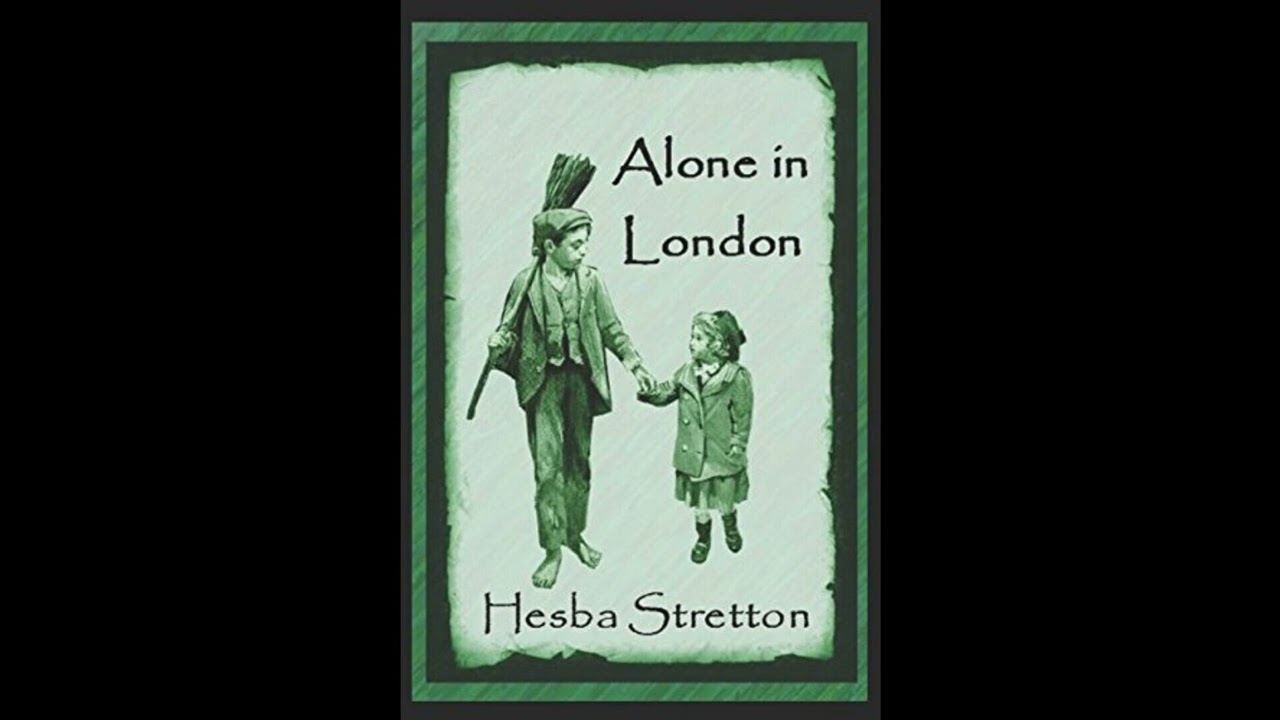
Alone In London
In the sprawling, often indifferent expanse of a city, what becomes of those cast adrift, those whose small lives barely register amidst the grand machinery of commerce and society? Hesba Stretton’s Alone In London confronts this profound question, bringing a poignant lens to the lives of Victorian England’s most vulnerable. More than a century after its initial appearance, this powerful narrative remains a relevant and affecting portrayal of urban alienation, resilience, and the enduring human need for connection. It’s a story that asks us to look beyond the glittering facades of prosperity and consider the struggles unfolding in the shadows, revealing a core truth about compassion that resonates as strongly today as it did when first published. This is not merely a historical curiosity, but a stark, moving reminder of the courage it takes to survive in a world that often forgets its own. The story introduces us to Dolly, a young girl thrust unexpectedly into the bewildering heart of London. Having lost the familiar anchors of her life, she finds herself utterly alone, navigating the cacophony and indifference of the vast metropolis with only her wits and a dwindling sense of hope. From the moment she steps off the train, the sheer scale of the city is overwhelming, its bustling streets a maze of unfamiliar faces and unforgiving pace. Dolly's initial disorientation quickly gives way to a desperate struggle for survival, as the harsh realities of poverty begin to chip away at her innocence. She discovers that London, for all its grandiosity, can be a cold and unforgiving place for those without means or protector. As Dolly attempts to forge a meager existence, she encounters a spectrum of characters who shape her perilous path. Some offer fleeting moments of kindness, brief flashes of warmth in an otherwise bleak landscape, while others embody the predatory nature of a society that often preys upon its weakest members. Her central quest becomes not just one of physical survival, but a yearning for belonging, a desperate search for someone who might offer a guiding hand or a place of safety. Dolly's arc is a harrowing descent into the underbelly of Victorian London, showcasing her remarkable tenacity as she grapples with hunger, exploitation, and the profound ache of loneliness, all while clinging to a fragile hope that she might one day find a place where she is not so utterly alone. The author, Hesba Stretton – the pen name of Sarah Smith – was a remarkably prolific and influential writer of the Victorian era, born in Shropshire, England, in 1832. From a Quaker background, she developed a deep-seated concern for social justice and the welfare of the poor, which would become the driving force behind much of her literary output. Her chosen pseudonym, a combination of her siblings' names, hinted at a personal connection to her work. Stretton's early career saw her contributing to Charles Dickens's journals Household Words and All the Year Round, gaining valuable experience and exposure. She became widely known for her evangelical fiction, particularly for the Religious Tract Society, where her stories were immensely popular and helped to shape the moral landscape for a generation of readers. Stretton's most celebrated work, Jessica's First Prayer (1866), sold over a million copies by the end of the century, establishing her as a household name and solidifying her reputation as a powerful voice for social reform. Other notable books such as Pilgrim Street and The Children of Cloverley further showcased her dedication to highlighting the plight of the working class and the impoverished, often through the eyes of children. Her writing style, characterized by its straightforward prose and emotional directness, made complex social issues accessible to a broad audience. Stretton was not merely telling stories; she was actively campaigning for change, using her narratives to expose societal inequities and to advocate for greater charity and understanding, firmly placing her within the tradition of Victorian social realists who used fiction as a vehicle for moral and social commentary until her death in 1911. Alone In London powerfully enacts several enduring themes, most prominently that of urban isolation. Dolly's experience of being an invisible figure amidst countless strangers illustrates the profound loneliness that can exist even in the most crowded environments. One particular scene, where Dolly stands outside a brightly lit confectioner’s window, watching families share laughter and sweets, starkly contrasts her destitution with the unseen joys of others, underscoring her complete separation from society's comforts. This moment embodies the theme of social inequality, revealing the vast chasm between the lives of the privileged and the struggling, a gap Dolly must confront daily as she scrounges for sustenance while others enjoy abundance. Another significant theme present in the narrative is the fragility of innocence in the face of hardship. Dolly begins her ordeal with a degree of childlike naiveté, but the relentless grind of poverty and the harsh realities she encounters gradually force her to adopt a more wary and hardened perspective. This transformation is not a loss of spirit, but a necessary adaptation, illustrating a poignant coming-of-age wrought by adversity. Yet, amidst the gloom, the story also highlights the enduring power of compassion and the potential for redemption, even in the bleakest circumstances. Brief moments of unexpected kindness from strangers—perhaps a shared crust of bread or a moment of genuine concern—serve as beacons, suggesting that humanity's better instincts can still surface, offering glimmers of hope in an otherwise desolate existence. The publication of Alone In London occurred during a period of intense social change and burgeoning awareness of urban poverty in Victorian England. The mid-to-late nineteenth century was marked by rapid industrialization and an unprecedented migration of people from rural areas to burgeoning cities like London, leading to overcrowding, sanitation crises, and widespread destitution. Writers like Henry Mayhew had already documented the grim realities of "London Labour and the London Poor," bringing previously unseen lives into public consciousness. Politically, there was a growing movement for social reform, though progress was often slow and incremental. Institutions like Ragged Schools and workhouses emerged as responses to child poverty and homelessness, though their effectiveness and humanity were often debated. Hesba Stretton's work emerged directly from this cultural milieu, serving as both a reflection of these societal conditions and a call to action. Her novels were instrumental in popularizing themes of social injustice and advocating for charitable intervention, reaching a broad readership who might otherwise have remained oblivious to the suffering in their own city. By portraying the struggles of children like Dolly with raw emotion and moral conviction, Stretton leveraged the power of narrative to foster empathy and stimulate public discourse about the responsibilities of the wealthy towards the poor. Her writings contributed significantly to the evolving Victorian conscience, pushing for greater social welfare and a more compassionate society, at a time when such reforms were critically needed. Listening to Alone In London as an audiobook offers a uniquely immersive way to experience Hesba Stretton's powerful narrative. The story, running several hours, unfolds with a measured pace that allows the listener to fully absorb Dolly's struggles and the vivid details of Victorian London. A skilled narrator brings Dolly's vulnerability and resilience to life, their voice capturing the stark contrasts between her youthful hope and the harsh realities she confronts. Listen for the subtle shifts in tone that convey the atmosphere of the city—the hurried clamor of busy thoroughfares versus the eerie silence of desolate alleys. The dialogue, often reflecting the social strata of the time, gains an added layer of authenticity when spoken aloud, giving distinct voices to the characters who interact with Dolly. Through expert narration, the listener can truly step into Dolly's shoes, experiencing the emotional weight of her journey and feeling the chill of London's unforgiving streets, making her poignant tale resonate deeply long after the final chapter.
Enjoyed Alone In London? A few ways to support us
Audible & Amazon links are affiliate; we may earn a small commission at no extra cost.
About this production
Human narration by a volunteer reader from LibriVox.org, the public-domain audiobook project. LibriVox volunteers record literary works whose copyright has expired in the United States, releasing the resulting recordings into the public domain.
Alone In London by Hesba Stretton. The underlying text is in the U.S. public domain. We do not republish any modern copyrighted edition, translation, or commentary.
The 4K cinematic visuals accompanying this audiobook are generated by an AI image model from prompts derived from the source text. No copyrighted photos, paintings, or stock footage are used. AI generation is disclosed on every video on our YouTube channel as required by YouTube's altered/synthetic content policy.
English subtitles are transcribed from the LibriVox recording with OpenAI Whisper. Translations into the 11 other supported languages are produced by Meta's NLLB-200 neural translation model. No human translator's copyrighted translation is used.
Questions about sourcing or rights? See our DMCA & Sourcing policy or contact us.
Enjoyed this audiobook?
If you'd like to own a copy of Alone In London or hear a professionally produced edition, the links below help support free audiobook production at no extra cost to you.
As an Amazon Associate we earn from qualifying purchases. Audible / print links are affiliate.