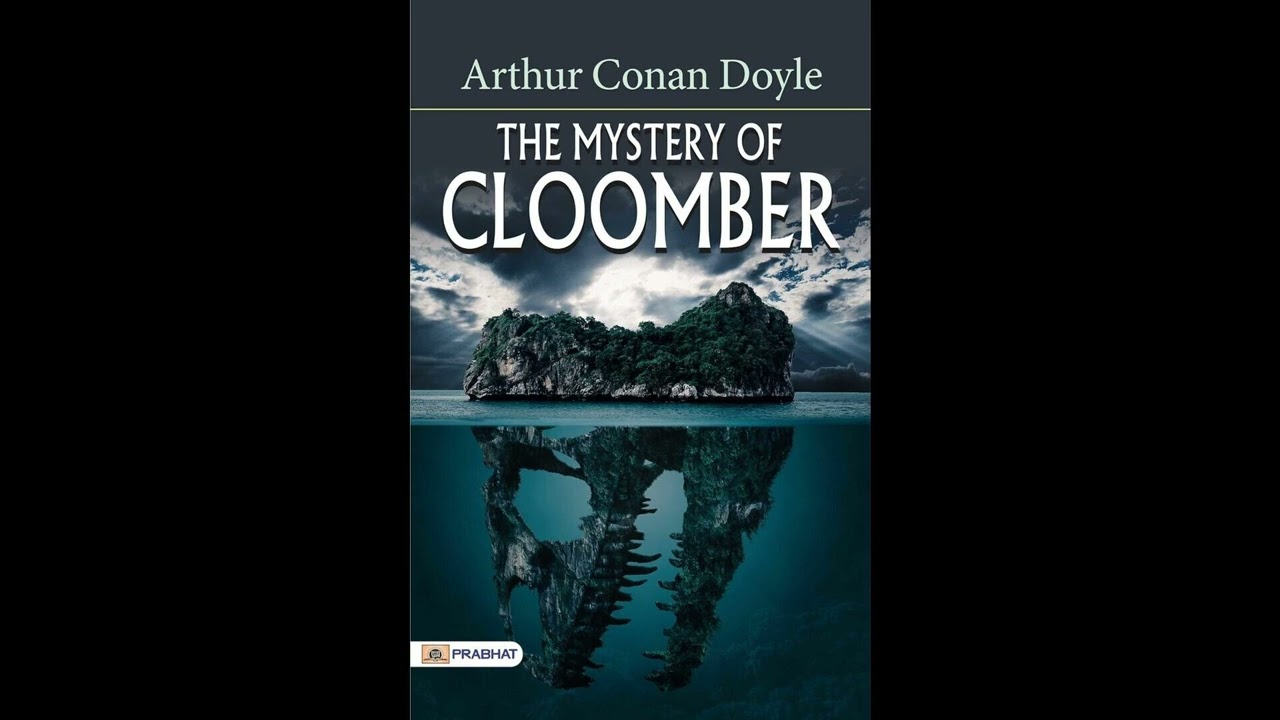
The Mystery of Cloomber: Arthur Conan Doyle's Mysterious Tale
For listeners seeking a tale that marries the chilling unease of the Gothic with the keen observation of early detective fiction, Arthur Conan Doyle’s The Mystery of Cloomber stands as a compelling, often overlooked, early work from a master storyteller. Predating many of his most famous creations, this novel provides a fascinating look at the genesis of Doyle’s literary genius, presenting a narrative steeped in dread, exotic secrets, and a haunting sense of justice. It is a story that prompts questions about responsibility and the enduring weight of the past, themes as resonant today as they were over a century ago. Listeners will discover a unique blend of supernatural speculation and rational inquiry, all wrapped in a wonderfully atmospheric setting that draws you into its cold embrace. The story unfolds in the remote and desolate Scottish Lowlands, where young John Fothergill, a newly qualified doctor, arrives to take up a position as medical assistant to the eccentric Dr. Yellowlees. His practice brings him to the isolated Cloomber Hall, home to the enigmatic Commander Cloomber, a former officer in the British Army who served in India. Cloomber Hall itself is a place of palpable melancholy, its ancient stones seemingly holding their own dark secrets. John soon becomes acquainted with the peculiar household: the Commander, a man burdened by an unspoken terror; his spirited daughter, who longs for understanding; and his son. The household's most disturbing feature is a recurring, annual ritual observed by Commander Cloomber, a day of profound fear and self-imposed isolation that transforms him from a stern military man into a quivering wreck. As John Fothergill attempts to understand the Commander's inexplicable dread, he uncovers fragments of a past connected to British colonial India. Whispers of a secret society, a broken oath, and a sense of impending retribution begin to circulate, hinting at a connection between the Commander's past actions and his present torment. John, with his rational medical training, initially seeks a logical explanation for the Commander's phobia, but as he gathers clues and witnesses increasingly unsettling events, he finds himself confronting phenomena that defy simple scientific understanding. The narrative builds a steady current of suspense, drawing John—and the listener—deeper into the heart of a mystery that blurs the lines between earthly justice and a more ethereal form of reckoning. Arthur Conan Doyle, born in Edinburgh, Scotland, in 1859, grew up in a family of artists and writers. Despite his early artistic inclinations, he pursued a medical degree at the University of Edinburgh, where he met Professor Joseph Bell, a man renowned for his powers of deduction—a clear inspiration for a certain consulting detective. After practicing as a doctor for several years, first as a ship's surgeon and then in Southsea, Portsmouth, Doyle found himself increasingly drawn to writing. His early literary efforts included historical novels like Micah Clarke and The White Company, which demonstrated his knack for historical detail and engaging prose. It was in 1887, with A Study in Scarlet, that Doyle introduced the world to Sherlock Holmes and Dr. Watson, fundamentally reshaping the landscape of detective fiction. While Holmes quickly garnered immense popularity, Doyle never wished to be confined to that genre. He continued to write a wide array of stories, including the Professor Challenger science fiction tales, numerous historical romances, and plays. Later in life, deeply affected by the losses of World War I, Doyle became a prominent proponent of spiritualism, dedicating much of his time to advocating for its beliefs. This personal evolution highlights a fascinating duality within his work, a man both of rigorous scientific training and profound mystical curiosity, a tension often apparent in his fiction. The Mystery of Cloomber particularly showcases several enduring themes that would appear throughout Doyle's writing, though often subtly. One prominent theme is the burden of the past and the concept of retribution. Commander Cloomber's agonizing annual ritual serves as a stark example of a character haunted by earlier actions, suggesting a universal law where deeds, good or ill, eventually return to exact their price. The exotic backdrop of India and the unspoken oath from his military service amplify this, hinting at a karma that transcends geographical boundaries. Another central idea is the clash between rationalism and the supernatural. John Fothergill, as a medical doctor, initially approaches the strange events with a scientific mindset, seeking psychological or physiological explanations. Yet, as the narrative progresses, he is forced to confront phenomena that resist conventional logic, prompting the listener to question the limits of observable reality and whether some forces operate beyond our immediate comprehension. A third significant theme revolves around cultural clash and the consequences of colonialism. Commander Cloomber's past actions in India, though initially veiled, are implicitly tied to a disruption of local customs or spiritual practices. This speaks to a wider Victorian anxiety about the British Empire’s impact on indigenous cultures and the potential for a spiritual or moral blowback from such interactions. The novel taps into a common fascination, and sometimes fear, of the 'exotic East' prevalent in late 19th-century British literature, using it to frame a tale of mystery and consequence. The novel thereby stands as an early testament to Doyle’s ability to weave together a complex web of guilt, fear, and a sense of unavoidable destiny. Published in 1888, The Mystery of Cloomber emerged during a period of considerable cultural and scientific upheaval in Victorian Britain. The British Empire was at its zenith, leading to widespread interest in — and often problematic romanticization of — distant lands like India. Simultaneously, scientific advancements were challenging traditional beliefs, fostering a tension between burgeoning rationalism and a lingering fascination with the occult and spiritualism. This was a time when figures like Sigmund Freud were beginning to articulate theories of the subconscious, and the public was eager for stories that touched on the unseen forces influencing human behavior. Doyle himself, as a medical doctor, was deeply steeped in scientific thought, yet his later life demonstrated a profound interest in spiritual phenomena. Cloomber reflects this broader societal crossroads, playing with the anxieties of an empire bringing its secrets home and a populace grappling with how to reconcile scientific understanding with ancient superstitions. It arrived on the literary scene as detective fiction was gaining traction, yet it purposefully veered into the territory of the Gothic and the fantastic, showcasing Doyle’s willingness to experiment with genre. Listening to The Mystery of Cloomber as an audiobook offers a singular opportunity to experience Doyle’s early narrative genius, unhindered by the page. The narrator’s voice becomes crucial in establishing the pervasive sense of dread and mystery that permeates Cloomber Hall and its surroundings. You can expect the performance to draw out the subtle shifts in atmosphere, from the desolate beauty of the Scottish setting to the mounting terror within the Commander's mind. The pacing of the narration will allow the slow unfolding of the mystery to truly take hold, building suspense as Fothergill uncovers each layer of the family’s dark past. Listen for the distinct character voices, particularly in the dialogue that reveals Commander Cloomber's tormented state and John Fothergill's growing apprehension. The auditory experience transforms this classic tale into an intimate, unsettling encounter with a hidden world.
Enjoyed The Mystery of Cloomber: Arthur Conan Doyle's Mysterious Tale? A few ways to support us
Audible & Amazon links are affiliate; we may earn a small commission at no extra cost.
About this production
Human narration by a volunteer reader from LibriVox.org, the public-domain audiobook project. LibriVox volunteers record literary works whose copyright has expired in the United States, releasing the resulting recordings into the public domain.
The Mystery of Cloomber: Arthur Conan Doyle's Mysterious Tale by Arthur Conan Doyle. The underlying text is in the U.S. public domain. We do not republish any modern copyrighted edition, translation, or commentary.
The 4K cinematic visuals accompanying this audiobook are generated by an AI image model from prompts derived from the source text. No copyrighted photos, paintings, or stock footage are used. AI generation is disclosed on every video on our YouTube channel as required by YouTube's altered/synthetic content policy.
English subtitles are transcribed from the LibriVox recording with OpenAI Whisper. Translations into the 11 other supported languages are produced by Meta's NLLB-200 neural translation model. No human translator's copyrighted translation is used.
Questions about sourcing or rights? See our DMCA & Sourcing policy or contact us.
Enjoyed this audiobook?
If you'd like to own a copy of The Mystery of Cloomber: Arthur Conan Doyle's Mysterious Tale or hear a professionally produced edition, the links below help support free audiobook production at no extra cost to you.
As an Amazon Associate we earn from qualifying purchases. Audible / print links are affiliate.