The Real Diary of a Real Boy
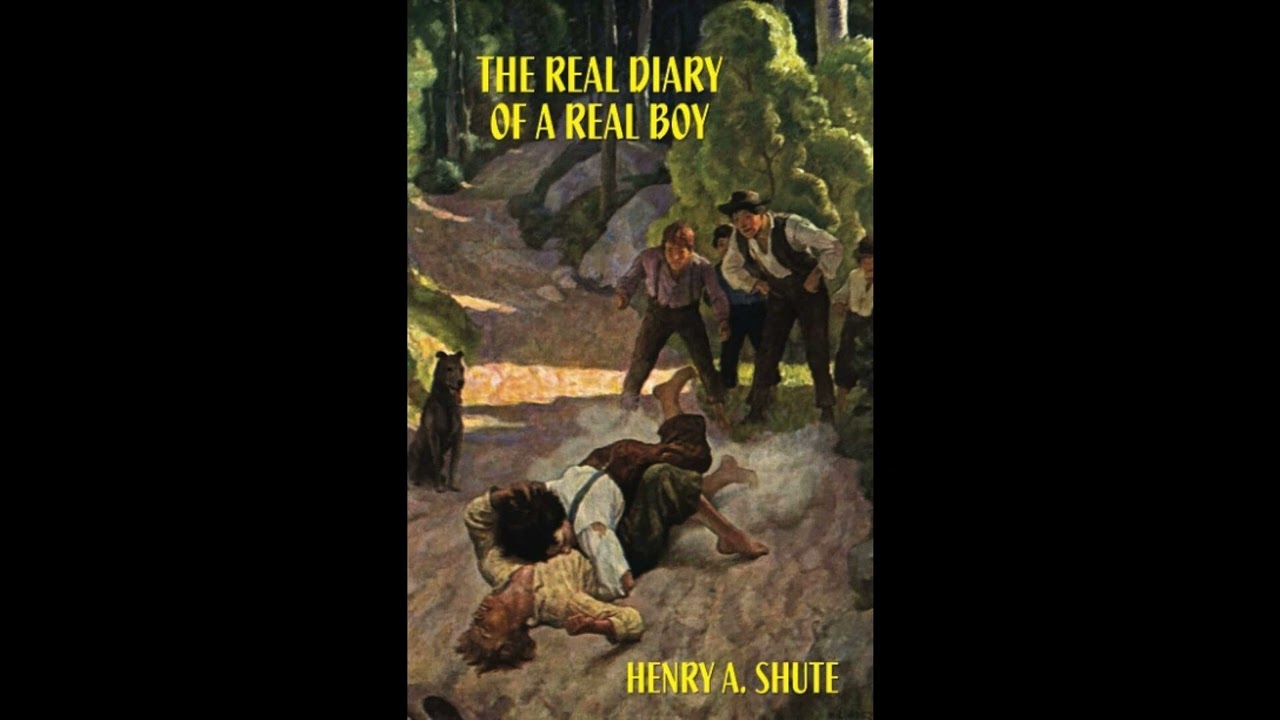
Step back in time to the turn of the twentieth century, to a world where childhood was a simpler, albeit equally bewildering, affair. The Real Diary of a Real Boy presents an unfiltered glimpse into the mind of a young boy named Plupy, as he navigates the everyday dramas and delights of growing up in a small New England town. This is not a grand epic or a sweeping historical saga; instead, it offers something far more intimate and universally resonant: the authentic, often hilariously misinformed, perspective of a child trying to make sense of the adult world around him. Its enduring charm lies in its honest humor, its warmth, and its uncanny ability to transport listeners back to the innocence and awkwardness of their own formative years, proving that the trials and triumphs of boyhood are truly universal, no matter the era. The story unfolds through the daily, sometimes weekly, entries of Plupy's personal diary, each penned with earnest sincerity and a charming disregard for conventional spelling and grammar. Our protagonist, Plupy, is a boy of indeterminate but impressionable age—likely somewhere around ten or twelve—whose days are filled with the pursuits typical of youth in his era: school lessons, fishing expeditions, neighborhood pranks, and the inevitable chore avoidance. He lives in a quiet, fictional New England community, a place much like Exeter, New Hampshire, where the rhythms of life are dictated by seasons, school bells, and the watchful eyes of parents and local elders. Plupy's world is populated by his long-suffering parents, his equally mischievous friends, and the various grown-ups who dispense wisdom, often unheeded, and occasionally punishment. Through Plupy's eyes, we witness a year of small-town life. We read about his struggles with arithmetic, his attempts to understand the baffling logic of girls, his often ill-fated schemes to avoid household duties, and his triumphs in contests of skill with his pals. The book's gentle arc follows the natural progression of a boy's year, from the freedom of summer vacations to the rigors of school, through holiday celebrations and the changing seasons. There is no singular, overarching "conflict" in the traditional literary sense; rather, the narrative tension arises from Plupy's constant, amusing battle with understanding the world, from decoding adult euphemisms to explaining away broken windows. Listeners will find themselves chuckling at his earnest observations and his innocent, yet profound, misinterpretations of the events shaping his young life. The creator of this delightful character, Henry A. Shute, was a fascinating figure whose own life echoed the grounded New England setting of his stories. Born in Exeter, New Hampshire, in 1851, Shute pursued a distinguished legal career before becoming a beloved humorist. After graduating from Harvard Law School in 1874, he returned to his hometown, where he practiced law and served as a judge for many years, even becoming a justice of the Exeter Municipal Court. This professional life, steeped in observation of human nature and community interactions, provided a fertile ground for the witty and keenly observed narratives that would eventually bring him widespread literary acclaim. Shute initially wrote for local newspapers and magazines, often crafting humorous sketches based on his own childhood experiences and the antics of his own children. The Real Diary of a Real Boy, published in 1902, was his breakout success, quickly followed by popular sequels such as Sequil; or Things Which Aint Finished in the First and Brite and Fair. His literary output, though largely centered on the Plupy character and his small-town milieu, secured his place as a significant voice in American humor writing of the early twentieth century. He became known for his ability to capture the authentic voice of childhood, a skill that resonated deeply with readers and offered a nostalgic look at a bygone era, yet his works remained popular until his death in 1942. One of the central themes that runs through The Real Diary of a Real Boy is the enduring humor derived from the gap between child and adult understanding. Plupy’s diary entries consistently highlight how children process information, often literally, leading to comedic misunderstandings. For instance, when his father advises him to "keep a stiff upper lip," Plupy might ponder the mechanics of physically maintaining such a posture, entirely missing the figurative meaning. This recurring comedic device allows Shute to gently poke fun at the earnest attempts of children to navigate a world governed by adult rules and complex social cues they are not yet equipped to decipher. Another significant theme is the celebration of childhood innocence and the simple joys of growing up. The book acts as a nostalgic window into a time when entertainment was self-made, friendships were forged through shared adventures in fields and streams, and life's biggest concerns might involve a particularly challenging spelling bee or the outcome of a neighborhood baseball game. The episodic nature of the diary entries perfectly illustrates this, presenting small, self-contained moments of discovery, mischief, and wonder, all colored by Plupy's naive but endearing perspective. It is a testament to the idea that profound human experiences can be found in the smallest, most ordinary moments of a young life. When The Real Diary of a Real Boy appeared in 1902, America was experiencing a period of significant cultural transformation. The turn of the century saw the nation grappling with the effects of rapid industrialization and urbanization, leading to profound social changes. Amidst this progress, there was often a cultural yearning for simpler times, a nostalgic glance back at rural or small-town life that felt increasingly distant. Shute's book emerged into this environment, providing a comforting, humorous antidote to the anxieties of modernity. It offered readers a chance to revisit an idealized version of childhood, free from the complexities of an accelerating world, resonating with a public that was both embracing the future and reflecting on its past. This period in literature also saw a growing interest in American realism and regionalism, with authors seeking to capture authentic voices and specific cultural landscapes. While Shute's work leaned more into humor than the social commentary of some of his contemporaries, it nonetheless contributed to this broader literary current by faithfully recording the speech patterns, customs, and daily routines of a particular place and time. It stands as a lighthearted counterpoint to the more dramatic narratives of American life, reminding readers that everyday experiences, told with wit and charm, hold their own distinct power and appeal. Listening to The Real Diary of a Real Boy as an audiobook offers a particularly rewarding experience, amplifying the inherent humor and charm of Plupy's voice. The diary format lends itself beautifully to an intimate, first-person narration, allowing the listener to truly inhabit the boy's perspective. A skilled narrator can bring Plupy's misspellings and grammatical quirks to life through vocal inflections, turning simple sentences into comedic gems. The several hours of run time make it an ideal companion for relaxed afternoons, quiet evenings, or even short commutes, inviting listeners to immerse themselves in a bygone world. Pay close attention to the pacing and the subtle vocal shifts, which highlight the innocence, frustration, and occasional flashes of insight within Plupy’s observations, creating an atmospheric and thoroughly enjoyable journey back to childhood.
Enjoyed The Real Diary of a Real Boy? A few ways to support us
Audible & Amazon links are affiliate; we may earn a small commission at no extra cost.
About this production
Human narration by a volunteer reader from LibriVox.org, the public-domain audiobook project. LibriVox volunteers record literary works whose copyright has expired in the United States, releasing the resulting recordings into the public domain.
The Real Diary of a Real Boy by Henry A. Shute. The underlying text is in the U.S. public domain. We do not republish any modern copyrighted edition, translation, or commentary.
The 4K cinematic visuals accompanying this audiobook are generated by an AI image model from prompts derived from the source text. No copyrighted photos, paintings, or stock footage are used. AI generation is disclosed on every video on our YouTube channel as required by YouTube's altered/synthetic content policy.
English subtitles are transcribed from the LibriVox recording with OpenAI Whisper. Translations into the 11 other supported languages are produced by Meta's NLLB-200 neural translation model. No human translator's copyrighted translation is used.
Questions about sourcing or rights? See our DMCA & Sourcing policy or contact us.
Enjoyed this audiobook?
If you'd like to own a copy of The Real Diary of a Real Boy or hear a professionally produced edition, the links below help support free audiobook production at no extra cost to you.
As an Amazon Associate we earn from qualifying purchases. Audible / print links are affiliate.
![Children's Classics in Dramatic Form, Book Two. [1909] by Augusta Stevenson — free full audiobook](https://img.youtube.com/vi/h4bTKUeuO7U/maxresdefault.jpg)