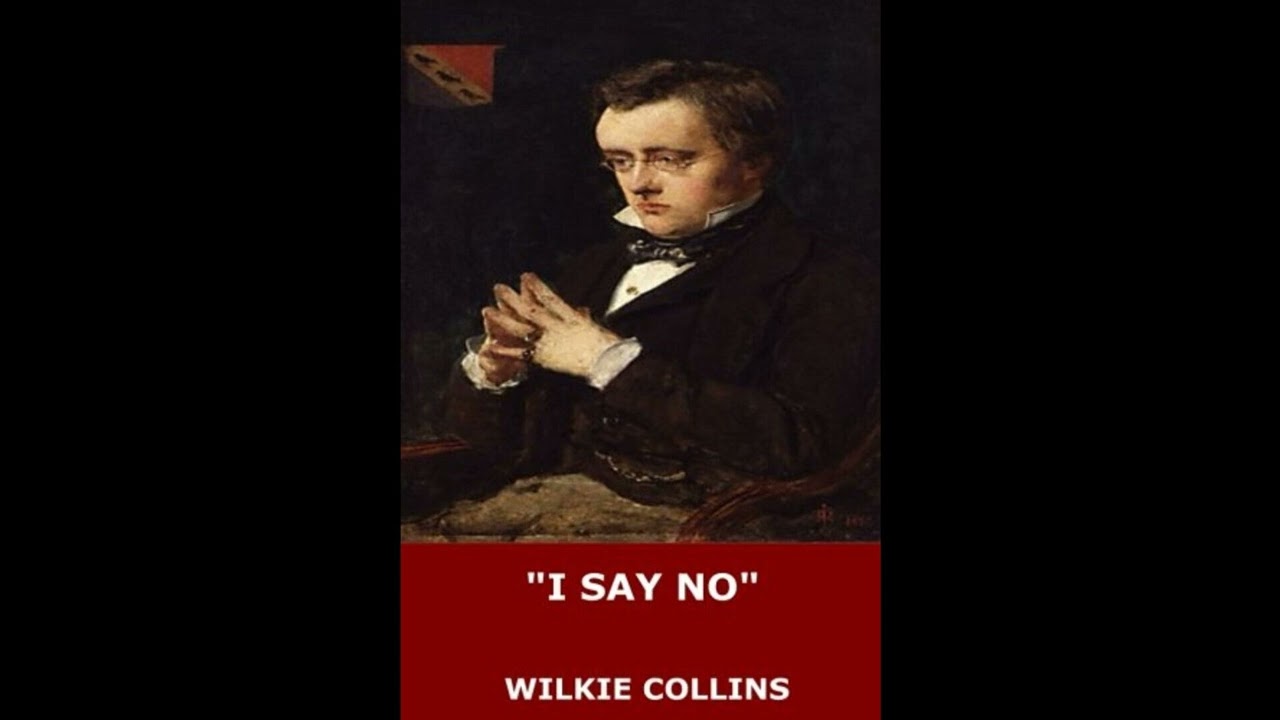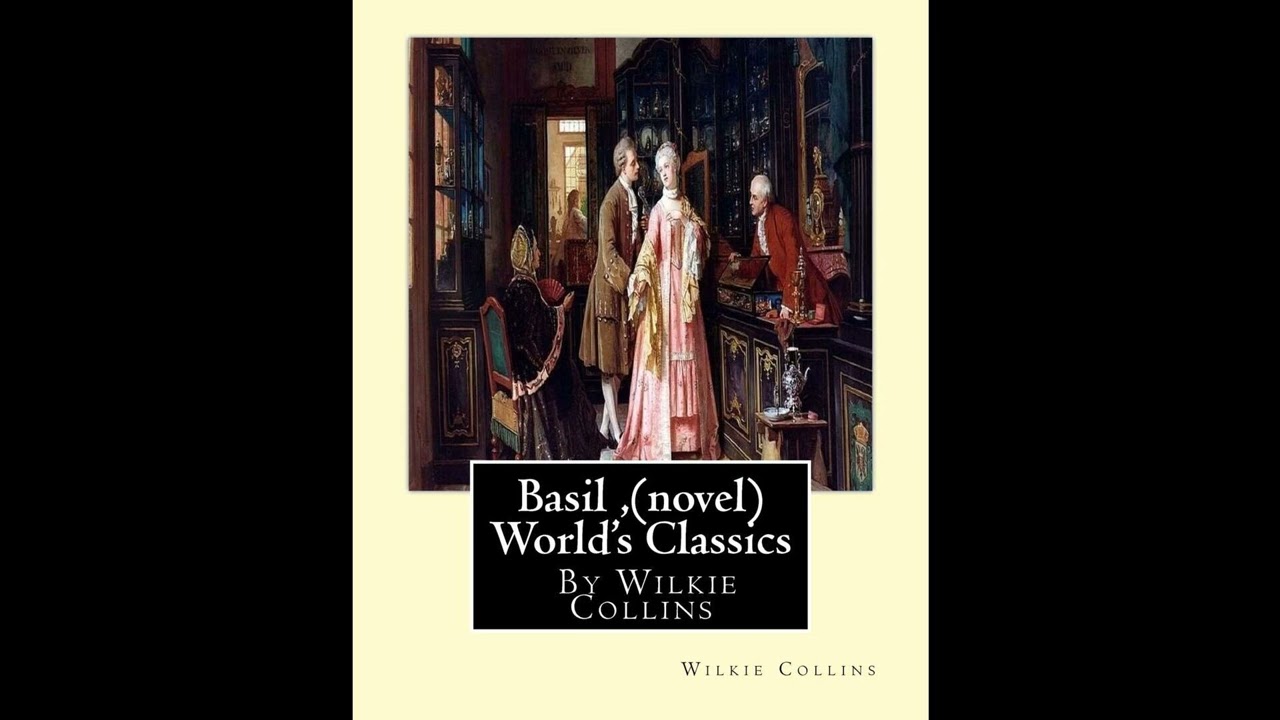
Basil , By Wilkie Collins (novel) World's Classics
Wilkie Collins’s Basil, a novel from the mid-nineteenth century, pulses with a dark, psychological energy that belies its relative obscurity compared to its author's more famous works. Published in 1852, this early work stands as a bold declaration of the "sensation novel" to come, a genre Collins would largely define. It plunges into the forbidden depths of a young man’s obsession, a secret marriage, and the catastrophic consequences of defying societal expectations. Listeners today will find themselves drawn into a story where love turns to torment, secrets fester, and the boundaries of sanity blur, offering a stark reminder that the human heart, left unchecked, can be its own undoing. It's a gripping narrative that questions the very foundations of Victorian morality and reveals the fragile nature of reputation and happiness. The story introduces us to Basil, a young man of privilege and romantic ideals, whose life is rigidly structured by his aristocratic, class-conscious father. Basil’s youthful impetuousness leads him to a fateful encounter on a London omnibus with Margaret Sherwin, a girl whose beauty instantly consumes him. Overwhelmed by an intense, almost feverish infatuation, Basil pursues Margaret, despite the vast social chasm separating them. She is the daughter of a draper, a tradesman, a background utterly unacceptable to Basil’s family. Driven by a desire he cannot control and a romantic vision that blinds him to the potential perils, he proposes a clandestine marriage. Margaret’s father, a figure of unsettling composure, agrees to the union under one peculiar condition: the marriage must remain a secret for a full year, during which the couple must live separately, meeting only by permission. This enforced separation, after an initial period of blissful but secretive union, slowly begins to fray Basil’s nerves and test the true nature of his attachment. He struggles with the deception, the constant anxiety of discovery, and the ambiguous behavior of those around him, particularly Robert Mannion, his father-in-law's clerk, whose watchful presence becomes increasingly unnerving. As the year progresses, Basil’s initial passion gives way to a gnawing suspicion and a mounting sense of dread. The carefully constructed world of his secret love begins to show cracks, leading him down a path of jealousy, paranoia, and eventually, a shattering revelation that irrevocably changes his life, forcing him to confront the devastating repercussions of his rash actions and the darkness that lurks beneath the surface of polite society. The story escalates into a gripping unraveling of betrayal and a desperate search for vengeance, all while hinting at the profound psychological damage inflicted upon its protagonist. Wilkie Collins, born William Wilkie Collins in London in 1824, was the eldest son of landscape painter William Collins. His early life involved travels through Europe, which exposed him to different cultures and fueled his imaginative spirit, though he later trained in law. Despite a brief career as a lawyer, literature called to him, and he published his first novel in 1850. Collins is perhaps best known for his close friendship and collaborations with Charles Dickens, a relationship that profoundly influenced both authors’ careers. However, Collins forged his own path as a novelist, becoming a master of plot construction and suspense, a skill often attributed to his legal background and his keen observation of human nature. His personal life was as unconventional as some of his plots. He maintained a long-term relationship with Caroline Graves, a widow, and later had three children with another woman, Martha Rudd, living with both women at different times, often under pseudonyms, in defiance of Victorian social norms. These experiences likely informed his critiques of social hypocrisy and the constraints placed upon individuals by rigid moral codes. Collins suffered from chronic illness, particularly severe gout, which he managed with laudanum, an opium derivative, a habit that some believe contributed to the dreamlike or hallucinatory quality in parts of his later fiction. He died in 1889, leaving behind a legacy of pioneering detective fiction and sensation novels, including The Woman in White (1860) and The Moonstone (1868), works often credited with laying the groundwork for the modern mystery genre. At its core, Basil dissects the powerful, often destructive, themes of social class and its indelible impact on individual lives. Basil’s father embodies the rigid Victorian class system, rejecting any thought of a union outside their aristocratic circle, thereby forcing Basil into secrecy and deception. The novel demonstrates how this social stratification can warp relationships and dictate destinies, presenting Basil’s illicit marriage not just as a romantic transgression but as an act of social rebellion with dire consequences. Another prominent theme is the corrosive power of secrets and betrayal. The entire premise of Basil’s marriage rests on concealment, and this secret becomes a heavy burden, breeding distrust, suspicion, and ultimately, a devastating betrayal that shatters Basil’s world. The slow revelation of deceit highlights how hidden truths can fester and erupt with catastrophic force, changing the very fabric of one’s identity and perception of reality. Furthermore, the novel subtly examines the fine line between passionate love and psychological obsession. Basil’s initial devotion to Margaret quickly spirals into a consuming fixation, clouding his judgment and making him vulnerable to manipulation. His inner turmoil, marked by intense jealousy and a growing paranoia, paints a vivid picture of a mind unhinging under pressure. Collins uses Basil’s internal monologue and increasingly erratic behavior to show how unchecked desire can lead to a profound loss of self and a descent into madness. This focus on the psychological states of characters was groundbreaking for its time, paving the way for more nuanced portrayals of human psychology in fiction. The atmosphere of impending doom, palpable from the first pages, serves as a constant reminder of how fate, or perhaps simply poor choices, can trap individuals in circumstances of their own making. When Basil was published in 1852, Victorian England was a society grappling with rapid industrialization, burgeoning cities, and a strict moral code that often masked deep-seated hypocrisies. The novel emerged in a literary landscape dominated by authors like Dickens and Thackeray, who often focused on social realism and moral instruction. Collins, however, pushed the boundaries by focusing on elements of psychological suspense, forbidden desire, and social transgression. This was a nascent period for the sensation novel, which would fully blossom a decade later, often involving crimes, secrets, and an exploration of the darker side of human nature, particularly within domestic spheres. Basil, with its frank portrayal of an illicit marriage and the subsequent scandal and violence, was considered daring, even shocking, by contemporary audiences. It challenged the prevailing narratives of moral uprightness and domestic bliss, hinting at the unsettling truths that lay beneath the veneer of Victorian respectability and the potential for chaos within ordinary lives. To experience Basil as an audiobook is to truly immerse oneself in the claustrophobic atmosphere of secrets and escalating tension. The narrator’s voice becomes paramount, distinguishing between Basil’s youthful idealism, his growing paranoia, and the chilling composure of characters like Margaret’s father or the enigmatic Mannion. The run length, several hours, is ideal for extended periods of listening, allowing the story’s slow-burn suspense to gradually envelop the listener, building discomfort and dread with each chapter. Pay close attention to the pacing, which mirrors Basil’s spiraling mental state, moving from moments of intense passion to periods of agonizing anxiety and dramatic revelation. The nuanced delivery of dialogue brings a vital dimension to the characters, revealing their hidden motives and inner conflicts, making the whispered secrets and desperate confessions all the more impactful. The audiobook format breathes life into Collins’s evocative prose, enhancing the gothic undertones and the sense of inevitable tragedy that permeates this foundational work of sensation fiction.
Enjoyed Basil , By Wilkie Collins (novel) World's Classics? A few ways to support us
Audible & Amazon links are affiliate; we may earn a small commission at no extra cost.
About this production
Human narration by a volunteer reader from LibriVox.org, the public-domain audiobook project. LibriVox volunteers record literary works whose copyright has expired in the United States, releasing the resulting recordings into the public domain.
Basil , By Wilkie Collins (novel) World's Classics by Wilkie Collins. The underlying text is in the U.S. public domain. We do not republish any modern copyrighted edition, translation, or commentary.
The 4K cinematic visuals accompanying this audiobook are generated by an AI image model from prompts derived from the source text. No copyrighted photos, paintings, or stock footage are used. AI generation is disclosed on every video on our YouTube channel as required by YouTube's altered/synthetic content policy.
English subtitles are transcribed from the LibriVox recording with OpenAI Whisper. Translations into the 11 other supported languages are produced by Meta's NLLB-200 neural translation model. No human translator's copyrighted translation is used.
Questions about sourcing or rights? See our DMCA & Sourcing policy or contact us.
Enjoyed this audiobook?
If you'd like to own a copy of Basil , By Wilkie Collins (novel) World's Classics or hear a professionally produced edition, the links below help support free audiobook production at no extra cost to you.
As an Amazon Associate we earn from qualifying purchases. Audible / print links are affiliate.