Also Sprach Zarathustra
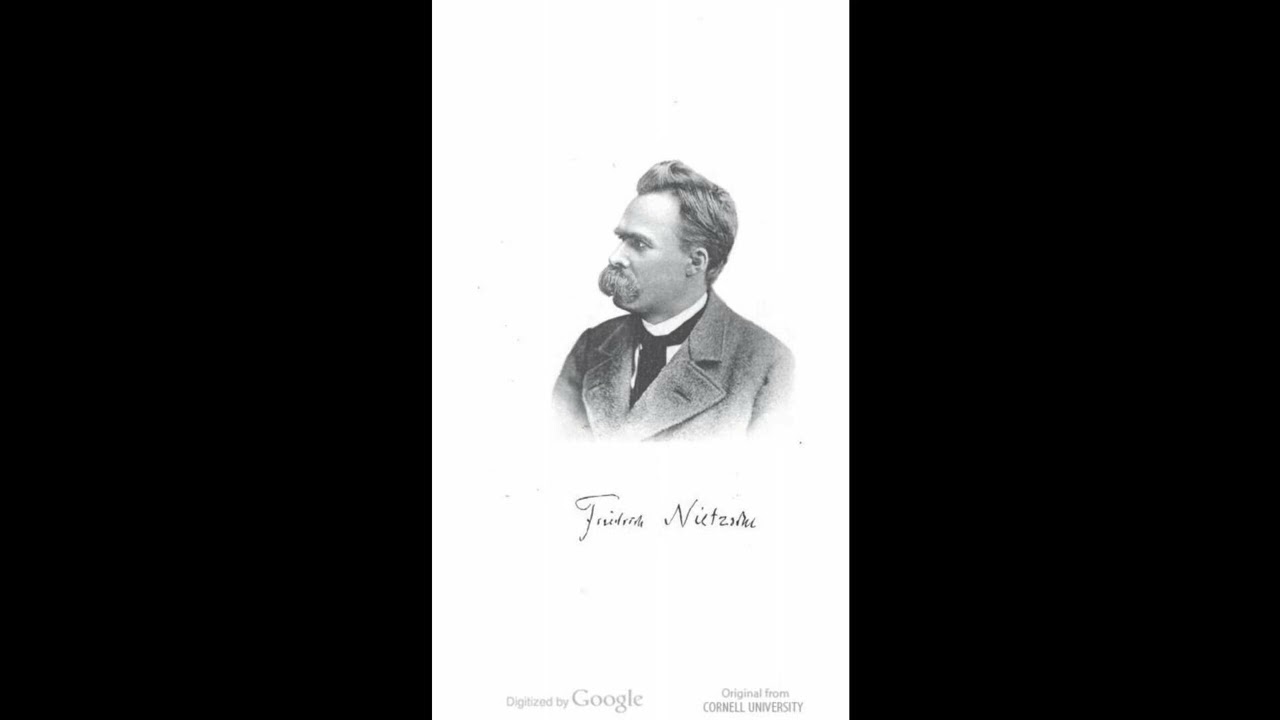
Imagine a book so utterly defiant of convention, so unapologetically individualistic, that it continues to provoke, inspire, and confound more than a century after its creation. Friedrich Nietzsche's Also Sprach Zarathustra stands as one of the most enigmatic and influential works of philosophy and literature, a prophetic declaration disguised as a saga. This is not a passive reading experience; it's an intellectual wrestling match, a call to examine the very foundations of meaning, morality, and selfhood. For anyone grappling with questions of purpose in a world where old certainties have crumbled, or for those seeking a profound challenge to conventional thinking, Zarathustra offers a voice that is both ancient and startlingly contemporary, urging a radical transformation of the human spirit. The narrative unfolds around the figure of Zarathustra, a sage who has spent ten years in solitude on a mountain, contemplating humanity and his own wisdom. At the outset, he descends, like a prophet from old, to share his accumulated insights with the people. His initial encounters are with the common folk in the marketplace, where he finds himself misunderstood, ridiculed, or ignored, his profound pronouncements about the "overman" falling on ears accustomed only to mundane concerns. He often speaks in parables and aphorisms, confronting the prevailing values of his time – the worship of God, the comforts of society, the complacency of the "last man" who desires only security and mediocrity. As his teaching progresses, Zarathustra gathers a small band of disciples, but even they struggle to grasp the radical implications of his thought. He travels through various allegorical landscapes and encounters diverse characters, each representing a facet of humanity's strengths and weaknesses, its aspirations and limitations. There is the "ugliest man," the "sorcerer," the "shadow," and a host of other symbolic figures who challenge Zarathustra's resolve and force him to refine his teachings. His inner conflict is as central as his external mission: he grapples with pity for humanity, the immense solitude of his vision, and the burden of his own revolutionary ideas. The story progresses as a series of lessons, speeches, and meditations, chronicling Zarathustra's efforts to prepare humanity for a new way of living, a new estimation of values, culminating in his quiet anticipation of a great spiritual "noontide." Friedrich Wilhelm Nietzsche, born in 1844 in Röcken, Prussia, was a scholar whose brilliance was evident from a young age. He became a professor of classical philology at the University of Basel at just twenty-four, a remarkably early appointment. His early career was marked by a close, though ultimately tumultuous, friendship with the composer Richard Wagner, an association that profoundly shaped Nietzsche's initial thoughts on art and culture. However, a significant turning point came with his growing disenchantment with conventional academia and the pervasive influence of Christian morality and traditional metaphysics, leading him to pursue his own radical philosophical path. Nietzsche's life was plagued by severe and persistent health issues, including chronic migraines, poor eyesight, and digestive problems, which eventually forced him to resign his professorship in 1879. He spent the remainder of his active life traveling across Europe, seeking relief for his ailments and solitude for his intense periods of writing. His other celebrated works include The Birth of Tragedy, where he distinguished between Apollonian and Dionysian forces in art; Beyond Good and Evil, a critical examination of traditional morality; and On the Genealogy of Morality, which traced the historical origins of moral concepts. Tragically, Nietzsche suffered a complete mental collapse in 1889 and spent his final decade in a state of intellectual incapacitation, cared for by his family until his death in 1900 in Weimar, Germany. He is recognized as a foundational figure in existentialism and a profound influence on 20th-century thought, though often subject to misinterpretation. At the core of Zarathustra's message are several provocative themes that continue to resonate. One central concept is the "Übermensch," often translated as "Overman" or "Superman." This figure is not a genetic or racial ideal, but rather a spiritual and intellectual goal for humanity: a being who overcomes conventional morality, creates their own values, and affirms life in all its struggles. Zarathustra challenges his audiences to strive beyond their current limitations, to be a bridge, not an end, as he observes, "Man is something that shall be overcome." Another critical idea is the "death of God," which Nietzsche presented not as a celebration of atheism, but as a cultural diagnosis: the decline of traditional religious belief and objective moral frameworks, leaving humanity without a pre-given meaning or purpose. This realization, Zarathustra suggests, is a profound crisis but also an opportunity for humanity to create new values, to become creators rather than followers. He also presents the challenging thought experiment of "eternal recurrence," proposing that if every moment of life were to repeat infinitely, one should live each moment in such a way that they would desire its perpetual return. This idea functions as a powerful test of one's affirmation of life, compelling one to embrace existence with such vigor and joy that even the suffering is affirmed as part of the whole. Zarathustra’s exhortations often implicitly touch upon what later became known as the "Will to Power," the fundamental drive in all living things to grow, overcome, and assert themselves, a creative force rather than mere domination. Through these intertwined themes, the text offers a radical revaluation of all values, pushing the reader to question ingrained beliefs and forge a unique path. Also Sprach Zarathustra emerged during a period of immense intellectual and cultural ferment in late 19th-century Europe. The era was characterized by rapid scientific advancements, particularly Darwin's theories of evolution, which challenged traditional religious narratives about human origins and purpose. Industrialization was transforming societies, leading to new social structures and anxieties. Politically, nationalist movements were gaining strength, and the existing monarchical orders were under increasing pressure. Philosophically, the certainties of Hegelian idealism were giving way to new forms of materialism and a growing sense of spiritual disenchantment. Nietzsche saw Europe at a crossroads, facing a crisis of nihilism resulting from the erosion of religious and moral foundations. He believed that traditional systems of belief were no longer tenable and were, in fact, stifling humanity's potential for greatness. The work, with its poetic and prophetic style, was his attempt to offer a new vision for humanity in this shifting landscape—a response to the perceived spiritual emptiness, aiming to inspire individuals to create their own meaning and values in a world devoid of objective, external directives. Listening to Also Sprach Zarathustra as an audiobook offers a unique and particularly fitting way to absorb its complex ideas and lyrical prose. The spoken word can fully convey the dramatic weight and emotional intensity of Zarathustra's speeches, which are replete with metaphors, parables, and a near-biblical cadence. A skilled narrator can distinguish the varying tones—the prophet's declarations, the sage's contemplation, the occasional bursts of frustration or despair—making the allegorical encounters and philosophical debates more immediate. The extended run length of several hours provides ample opportunity for immersion, allowing the listener to truly dwell on Zarathustra's radical pronouncements and absorb the subtle nuances of his thought, whether during a focused listening session or throughout the backdrop of daily activities. The pacing can highlight the gravitas of key passages, while the voice inflections bring to life the diverse characters Zarathustra meets, transforming a challenging philosophical text into a compelling sonic experience that resonates long after the final words.
Enjoyed Also Sprach Zarathustra? A few ways to support us
Audible & Amazon links are affiliate; we may earn a small commission at no extra cost.
About this production
Human narration by a volunteer reader from LibriVox.org, the public-domain audiobook project. LibriVox volunteers record literary works whose copyright has expired in the United States, releasing the resulting recordings into the public domain.
Also Sprach Zarathustra by Nietzsche, Friedrich Wilhelm. The underlying text is in the U.S. public domain. We do not republish any modern copyrighted edition, translation, or commentary.
The 4K cinematic visuals accompanying this audiobook are generated by an AI image model from prompts derived from the source text. No copyrighted photos, paintings, or stock footage are used. AI generation is disclosed on every video on our YouTube channel as required by YouTube's altered/synthetic content policy.
English subtitles are transcribed from the LibriVox recording with OpenAI Whisper. Translations into the 11 other supported languages are produced by Meta's NLLB-200 neural translation model. No human translator's copyrighted translation is used.
Questions about sourcing or rights? See our DMCA & Sourcing policy or contact us.
Enjoyed this audiobook?
If you'd like to own a copy of Also Sprach Zarathustra or hear a professionally produced edition, the links below help support free audiobook production at no extra cost to you.
As an Amazon Associate we earn from qualifying purchases. Audible / print links are affiliate.