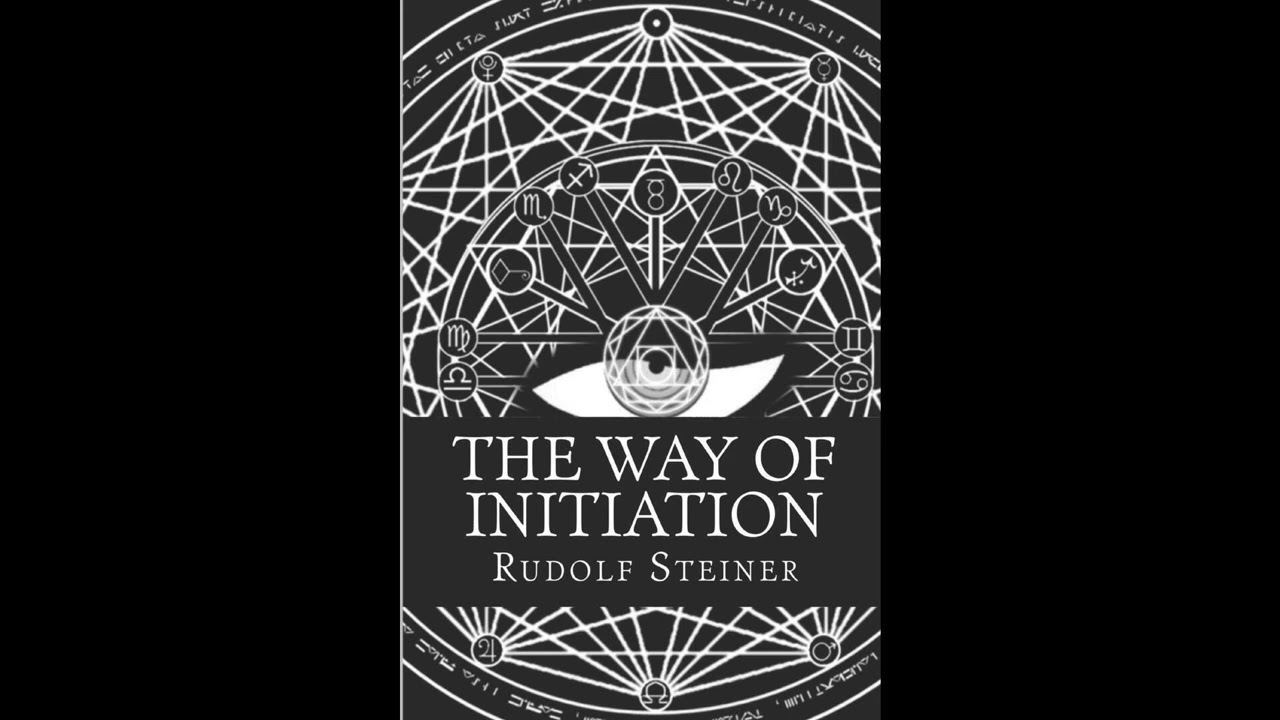
The Way of Initiation
In a world increasingly shaped by external forces and surface-level information, many find themselves yearning for deeper understanding, a clearer sense of purpose, and a genuine connection to the spiritual dimensions of existence. Rudolf Steiner's The Way of Initiation offers a profound and practical guide for those ready to undertake such a quest, providing a systematic approach to developing inner capacities that extend beyond ordinary sense perception and intellectual thought. This book is not merely a collection of philosophical ideas; it presents a rigorous methodology for self-transformation, outlining specific exercises and disciplines designed to awaken dormant spiritual faculties within the human being. It asks listeners to consider that knowledge of the spiritual world is not reserved for a select few, but is accessible to anyone willing to cultivate the necessary inner conditions. Today, as we grapple with the complexities of modern life, the principles laid out here provide a powerful antidote to cynicism and materialism, pointing toward a path of genuine inner experience and a fuller apprehension of reality. This significant work unfolds not as a conventional story with characters and external events, but as a meticulously charted path for the spiritual aspirant. The "setting" is the inner landscape of human consciousness itself, and the primary "protagonist" is the individual who earnestly seeks knowledge of the spiritual worlds. The central focus is the systematic training of the human soul to perceive and interact with realities that lie beyond the physical senses. The book begins by establishing fundamental conditions for this development: the cultivation of inner peace, controlled thinking, and the ability to observe one's own inner life with detachment. It then introduces a series of contemplative practices and exercises, guiding the student to develop concentration, memory, and an enhanced capacity for objective observation, particularly of their own thoughts and feelings. This initial phase involves a careful process of inner purification and stabilization, laying the groundwork for more advanced experiences. As the instruction proceeds, the book introduces the concept of higher cognitive faculties, explaining how consistent effort can lead to the "awakening" of what Steiner calls the "supersensible organs" of perception. It outlines how one can begin to experience the etheric and astral bodies, which constitute subtle layers of human existence beyond the physical form. The arc of the instruction builds steadily, moving from basic disciplines like the observation of natural forms with heightened reverence, to the more profound cultivation of virtues such as devotion, courage, and inner balance. These moral qualities are not presented as abstract ideals but as essential prerequisites for accurate spiritual perception. The ultimate aim is a complete transformation of consciousness, allowing the seeker to gain direct insight into the spiritual foundations of the cosmos and the deeper meaning of human life, without ever resorting to sensationalism or vague mysticism. Rudolf Steiner (1861-1925), the author of this seminal text, was an Austrian philosopher, social reformer, architect, and esotericist, renowned for founding Anthroposophy, a spiritual science that aims to unite science, art, and religion. Born in Kraljevec, then part of the Austrian Empire, Steiner displayed a natural ability to perceive spiritual realities from a very young age, an experience that shaped his life's work. His early academic career focused on science and philosophy at the Vienna University of Technology, where he became deeply immersed in the scientific methodology of his time. He later gained prominence as an editor of Johann Wolfgang von Goethe's scientific writings, a task that allowed him to synthesize his scientific and spiritual insights. Steiner's reputation grew rapidly in the late nineteenth and early twentieth centuries. He initially served as a leading figure within the German section of the Theosophical Society, but his unique insights and specific methods for spiritual research led him to establish the Anthroposophical Society in 1912. Through Anthroposophy, Steiner sought to provide a structured, Western-oriented path to spiritual knowledge that was both systematic and rigorous, akin to scientific inquiry. His vast body of work extends far beyond philosophy and spiritual development, encompassing practical applications in education (the Waldorf schools), agriculture (biodynamic farming), medicine, art (eurythmy), and architecture. His other notable works include Occult Science - An Outline and The Philosophy of Freedom, all contributing to his singular place in the history of thought, standing as a bridge-builder between empirical science and verifiable spiritual experience. The Way of Initiation enacts several profound themes. One primary theme is the achievability of supersensible knowledge through systematic training. The book consistently shows that spiritual perception is not a gift for the chosen few, but a faculty that can be awakened and refined in every human being through disciplined inner work. For example, it details precise exercises for concentration and inner calm, which, when diligently practiced, allow one to perceive the subtle, living forces—the etheric body—that give form and vitality to the physical world, moving beyond abstract belief to direct cognition. A second crucial theme is the interconnection between ethical development and spiritual insight. Steiner makes it clear that moral purification is not merely an adjunct to spiritual progress but its essential foundation. He illustrates this by emphasizing that virtues like self-control, impartiality, and devotion must be cultivated alongside meditative practices; without an inner purity of soul, any perception of higher worlds risks being distorted by personal biases and desires. Another important theme is the re-evaluation of scientific method to encompass spiritual realities. Rather than rejecting science, the text proposes an expansion of its domain, suggesting that the same rigor applied to external phenomena can be directed inward. For instance, the book instructs the reader to observe their own thoughts and feelings with the same objectivity a botanist applies to a plant specimen. This inner observation, free from judgment, gradually leads to a deeper understanding of the soul's own constitution and its relationship to universal spiritual laws. Finally, the book stresses the concept of the human being as a microcosm of the cosmos. Through detailed descriptions of the human constitution—physical body, etheric body, astral body, and the "I" or ego—Steiner demonstrates how the individual human being reflects the structure and processes of the entire universe. By understanding and working with one's own inner principles, one can gain genuine insight into the fundamental nature of existence itself. The period in which The Way of Initiation was written, the late nineteenth and early twentieth centuries, was a time of immense cultural and intellectual ferment in Europe. It was an era dominated by the ascendance of scientific materialism, where traditional religious narratives were increasingly challenged by empirical discoveries and a growing emphasis on quantifiable data. Figures like Charles Darwin and Karl Marx reshaped understandings of humanity and society, while industrialization rapidly transformed daily life. Yet, alongside this scientific and material progress, there was a widespread yearning for spiritual meaning and purpose, often manifesting as a renewed interest in occultism, spiritualism, and Eastern philosophies. Many found the established churches unable to address the intellectual and spiritual crises of the age. Within this dynamic environment, Rudolf Steiner offered a unique response. He recognized the profound human need for spiritual understanding but insisted that such understanding must be pursued with the same intellectual rigor and clarity that characterized modern science. His work emerged as a direct challenge to the dualistic thinking that separated matter from spirit, seeking instead to build a bridge between the two. The Way of Initiation provided a systematic framework for spiritual research that appealed to those who felt alienated by both dogmatic religion and reductionist science, offering a path to direct spiritual experience that was neither superstitious nor vague, but systematic, verifiable, and deeply integrated with a comprehensive worldview. It presented a practical form of spiritual education for a modern world, bridging a perceived gap between the empirical and the spiritual. Listening to The Way of Initiation as an audiobook offers a distinct advantage, particularly for a work of this nature. With several hours of content, it allows for a sustained immersion in Steiner’s profound concepts. A skilled narrator can bring a measured pace and clarity to the often-dense philosophical and spiritual explanations, creating an atmosphere conducive to contemplation. The listener is freed from the visual demands of reading, enabling a deeper internal engagement with the ideas. The narration can guide one through the intricate steps of inner development and the descriptions of spiritual phenomena with a steady voice, allowing the principles to resonate more deeply. This format is ideal for absorbing complex information during periods of quiet reflection, during walks, or while performing routine tasks, allowing the listener to revisit particular sections or ponder specific exercises at their own speed. The spoken word helps transform the solitary act of learning into a guided meditation, fostering a more direct and personal experience of Steiner's instructions.
Enjoyed The Way of Initiation? A few ways to support us
Audible & Amazon links are affiliate; we may earn a small commission at no extra cost.
About this production
Human narration by a volunteer reader from LibriVox.org, the public-domain audiobook project. LibriVox volunteers record literary works whose copyright has expired in the United States, releasing the resulting recordings into the public domain.
The Way of Initiation by Rudolf Steiner. The underlying text is in the U.S. public domain. We do not republish any modern copyrighted edition, translation, or commentary.
The 4K cinematic visuals accompanying this audiobook are generated by an AI image model from prompts derived from the source text. No copyrighted photos, paintings, or stock footage are used. AI generation is disclosed on every video on our YouTube channel as required by YouTube's altered/synthetic content policy.
English subtitles are transcribed from the LibriVox recording with OpenAI Whisper. Translations into the 11 other supported languages are produced by Meta's NLLB-200 neural translation model. No human translator's copyrighted translation is used.
Questions about sourcing or rights? See our DMCA & Sourcing policy or contact us.
View 10 famous quotes from this book →
Enjoyed this audiobook?
If you'd like to own a copy of The Way of Initiation or hear a professionally produced edition, the links below help support free audiobook production at no extra cost to you.
As an Amazon Associate we earn from qualifying purchases. Audible / print links are affiliate.