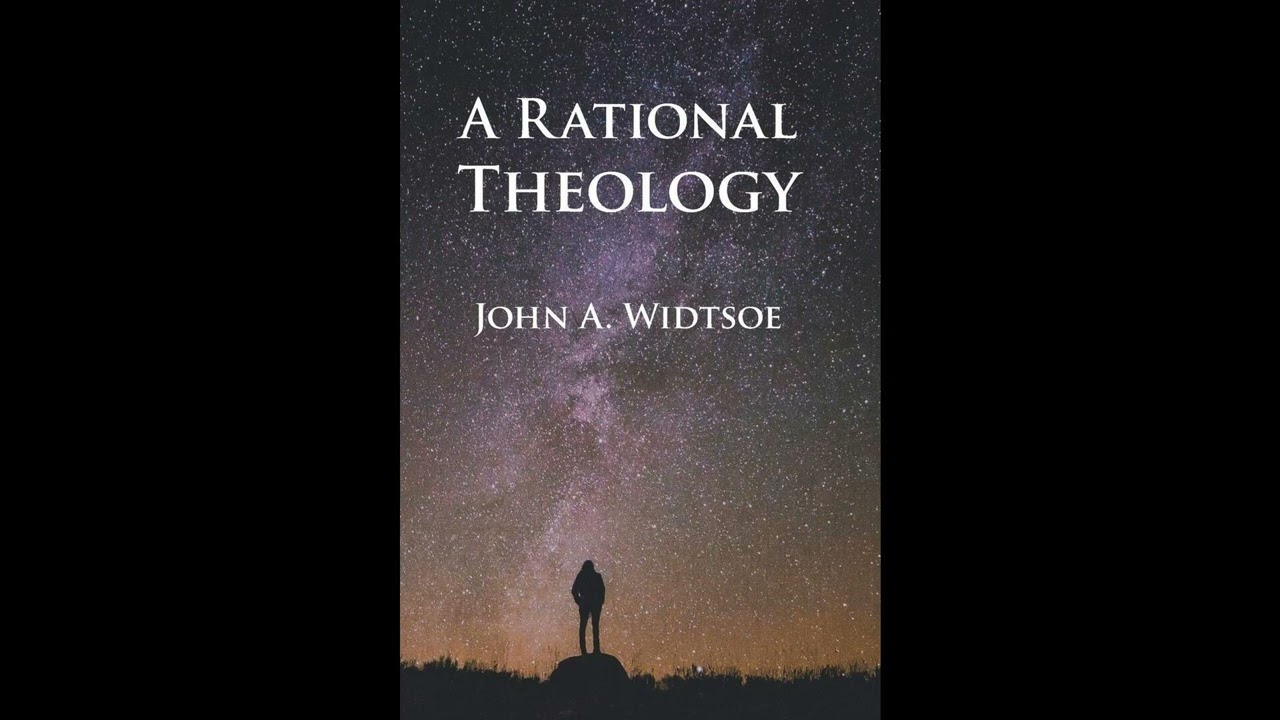
A Rational Theology: As Taught
Within the vast realm of spiritual inquiry, where humanity grapples with the profound mysteries of existence, "A Rational Theology: As Taught" stands as a foundational statement, a systematic presentation of the core doctrines and beliefs of The Church of Jesus Christ of Latter-day Saints. Far from a mere collection of abstract dogmas, this work offers a coherent, internally consistent framework for understanding God, humanity's purpose, and the grand scope of eternity. It endeavors to answer life's most persistent questions—where did we come from, why are we here, and where are we going—through a lens that seeks to harmonize faith with reason, presenting a divine order that is both awe-inspiring and intimately comprehensible. For anyone seeking to grasp the intellectual and spiritual foundations of one of the world's most distinctive religious traditions, or simply to consider a unique perspective on universal theological concerns, this text offers a perspective that remains compellingly relevant in a world still searching for meaning. The conceptual "story" presented in "A Rational Theology" unfolds not as a linear narrative of fictional characters, but as the unfolding drama of divine plan and human experience across eternity. The setting for this cosmic narrative is a universe governed by an intelligent, organized, and benevolent God, a Heavenly Father who presides over an ordered creation. The primary "characters" are God the Father, His Son Jesus Christ, the Holy Spirit, and the countless spirit children of God—humanity—who existed in a pre-mortal state. The central conflict arises from the necessity of opposition, the choice between good and evil, and the challenges inherent in a mortal probation designed to facilitate growth. This "plot" begins with the Council in Heaven, where spirit children of God gathered to consider a divine plan for their progression, a plan that included a mortal life with agency, a Redeemer to overcome sin and death, and the potential for eternal exaltation. The arc of this theological narrative moves from our pre-earthly spiritual existence, through the veil of forgetfulness into a physical, mortal life where experience, learning, and the exercise of agency are paramount. It details the necessity of the Fall of Adam and Eve, not as an unmitigated disaster, but as a crucial step in the plan, allowing for opposition, choice, and the potential for joy and growth. The "story" then focuses intensely on the central figure of Jesus Christ, His divine mission, His atoning sacrifice, and His resurrection, which provides the means for all humanity to overcome the effects of the Fall and to return to God's presence. Without spoiling any final twist, the culmination of this "plot" involves the resurrection of all individuals, a final judgment based on deeds and desires, and the allocation of blessings commensurate with one's choices and acceptance of the divine plan, leading to various degrees of eternal glory and the continuing progression of the soul. The "author" of this work, The Church of Jesus Christ of Latter-day Saints, is not an individual person but a religious organization founded in the early nineteenth century amidst the fervent religious landscape of upstate New York, often referred to as the "Burned-over District" due to its intense revivalism. Its genesis is closely tied to Joseph Smith, a young man who, seeking answers to the spiritual confusion of his time, reported a series of divine manifestations beginning in 1820 with the First Vision, an appearance of God the Father and Jesus Christ. This inaugurated what adherents believe to be a "restoration" of ancient truths, priesthood authority, and the original organization of Christ's church. Smith's subsequent translation and publication of the Book of Mormon in 1830 solidified the theological foundation of the nascent church and established its unique scriptural canon. Throughout the nineteenth century, under Smith's leadership and later under Brigham Young's, the Church established communities in Ohio, Missouri, and Illinois, often facing severe persecution before undertaking a monumental migration westward to the Salt Lake Valley in what is now Utah. This period saw the formalization of doctrines, the organization of a distinctive ecclesiastical structure, and the expansion of missionary work. The Church's theological tradition is documented not only in the Book of Mormon but also in other standard works such as the Doctrine and Covenants, a collection of revelations, and the Pearl of Great Price, which includes selections from the writings of Moses and Abraham, alongside an account of Joseph Smith's history. These texts, collectively, form the literary bedrock upon which "A Rational Theology" is constructed, representing the ongoing revelation and intellectual tradition of a faith that has grown into a global presence. Several powerful themes resonate throughout "A Rational Theology." One prominent theme is the rationality and order of God's universe. This theology posits a God whose attributes—intelligence, wisdom, and love—are not merely abstract but manifest in an orderly creation and a comprehensible plan for His children. For instance, the doctrine of a pre-mortal life isn't just a poetic idea; it serves as a logical precursor to mortal existence, explaining innate human spiritual yearning and differing capacities. Another significant theme is human potential and agency. The text emphasizes that humans are literally spirit children of God, endowed with immense potential for growth, learning, and even becoming like their divine parents. This is enacted in the choice presented to individuals in the pre-mortal council, the necessity of personal agency in mortality to learn and progress, and the eventual striving for exaltation, a state of continuing spiritual development and eternal family relationships. A third key theme is the restoration of lost truth. This work repeatedly frames its teachings as a re-establishment of doctrines and practices that were once known but lost through centuries of apostasy following the death of the ancient apostles. The concept of modern revelation, through prophets, is integral to this theme, providing updated guidance and clarifying previously obscured principles. For example, the detailed explanation of the nature of God, not as an incomprehensible mystery but as a glorified, corporeal being, directly challenges centuries of post-apostolic theological developments, presenting a renewed understanding of the divine. Finally, the theme of covenant and community is central, highlighting the importance of making and keeping sacred promises with God, and the role of a divinely organized church in fostering a collective, supportive environment for spiritual progression. This is seen in the emphasis on ordinances like baptism, temple covenants, and the communal worship that binds believers together in a common purpose. "A Rational Theology" emerged during a period of profound religious ferment in the United States, particularly in the early to mid-nineteenth century. This era, known as the Second Great Awakening, saw a proliferation of new religious movements, intense revivals, and a widespread questioning of established theological traditions. American society was characterized by democratic ideals, frontier expansion, and a spirit of innovation and individualism that extended to spiritual matters. Many people felt a yearning for a more personal, direct relationship with the divine and sought religious experiences that provided clearer answers than the often-conflicting denominations of the day. The Church of Jesus Christ of Latter-day Saints and its theological output can be understood as a response to this cultural and spiritual landscape. It offered a comprehensive and seemingly coherent narrative that addressed widespread anxieties about the nature of God, the purpose of suffering, and the afterlife. Its claims of modern revelation provided a sense of spiritual authority in an age of competing doctrines, while its emphasis on a literal, anthropomorphic God and a plan for human progression resonated with the American spirit of optimism and self-improvement. The work’s very title, "A Rational Theology," speaks to this era’s desire for systematic understanding and intellectual grounding in religious matters, providing a structured worldview for those disillusioned with traditional complexities or fragmented beliefs. Listening to "A Rational Theology: As Taught" in audiobook format provides a distinct and advantageous experience for engaging with its substantial content. The several hours of run time allow for a thoughtful, measured presentation of complex theological concepts, making it ideal for attentive listening during commutes, quiet study, or even during reflective moments. A skilled narrator will bring a clear, articulate cadence to the exposition, allowing the listener to absorb the intricate arguments and interconnected doctrines without the visual demands of reading. Pay particular attention to the pacing, which will likely be designed to allow ideas to sink in, and to the narrator's subtle vocalizations that can highlight the significance of certain theological points or scriptural references. The auditory experience can cultivate a contemplative atmosphere, fostering a deeper, more immersive understanding of this influential and distinctive faith tradition.
Enjoyed A Rational Theology: As Taught? A few ways to support us
Audible & Amazon links are affiliate; we may earn a small commission at no extra cost.
About this production
Human narration by a volunteer reader from LibriVox.org, the public-domain audiobook project. LibriVox volunteers record literary works whose copyright has expired in the United States, releasing the resulting recordings into the public domain.
A Rational Theology: As Taught by The Church of Jesus Christ of Latter-day Saints. The underlying text is in the U.S. public domain. We do not republish any modern copyrighted edition, translation, or commentary.
The 4K cinematic visuals accompanying this audiobook are generated by an AI image model from prompts derived from the source text. No copyrighted photos, paintings, or stock footage are used. AI generation is disclosed on every video on our YouTube channel as required by YouTube's altered/synthetic content policy.
English subtitles are transcribed from the LibriVox recording with OpenAI Whisper. Translations into the 11 other supported languages are produced by Meta's NLLB-200 neural translation model. No human translator's copyrighted translation is used.
Questions about sourcing or rights? See our DMCA & Sourcing policy or contact us.
View 10 famous quotes from this book →
Enjoyed this audiobook?
If you'd like to own a copy of A Rational Theology: As Taught or hear a professionally produced edition, the links below help support free audiobook production at no extra cost to you.
As an Amazon Associate we earn from qualifying purchases. Audible / print links are affiliate.