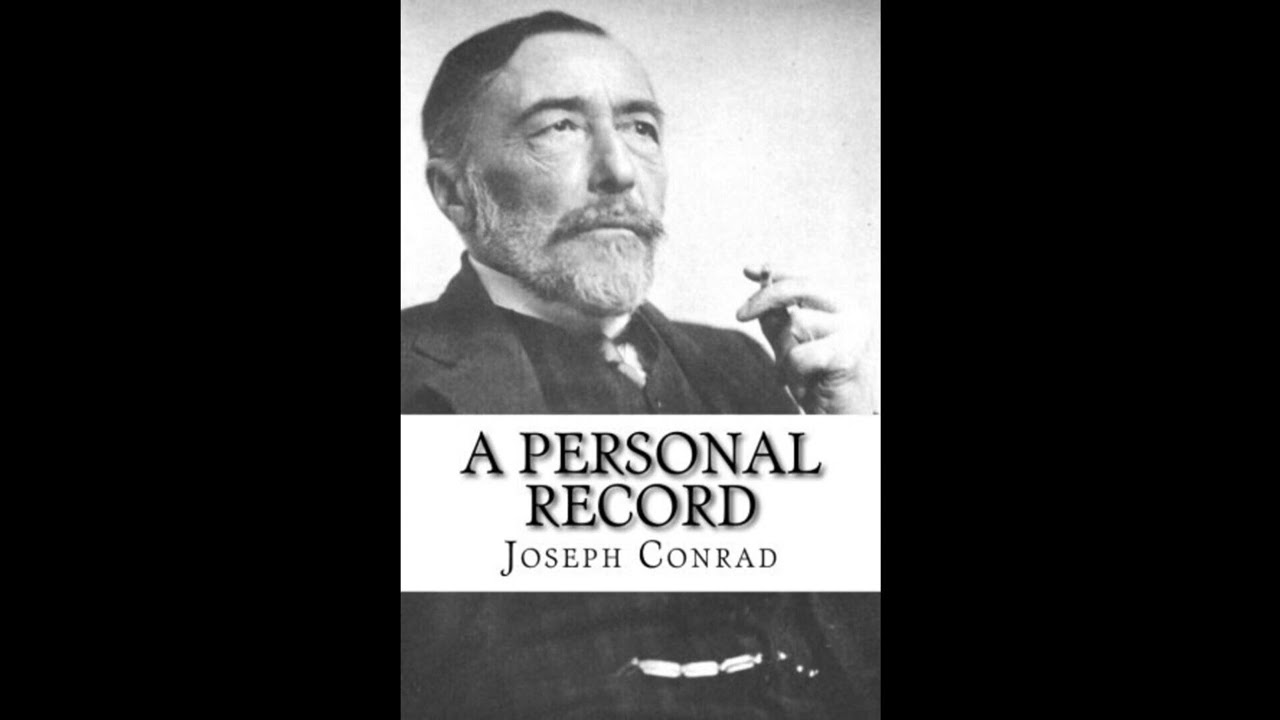
A Personal Record
Step into the singular mind of Joseph Conrad with A Personal Record, an unusual and deeply revealing memoir from one of the English language's most revered stylists. Far from a straightforward autobiography, this book presents a series of meditations and recollections, offering the listener a privileged glimpse into the origins of a literary giant. Why did a Polish nobleman, orphaned at a young age, decide to spend two decades at sea and then, remarkably, choose to write his profoundly English novels in an acquired language? This is not merely the story of a life; it is the story of how a particular consciousness, shaped by displacement, duty, and an unshakeable dream, forged itself into the author whose works continue to resonate with universal questions of identity, morality, and the human condition. For anyone who has ever pondered the paths that lead to a calling, or sought to understand the wellsprings of genius, this record offers both illumination and profound intimacy. The narrative of A Personal Record does not unfold chronologically, but rather as a series of interconnected reflections, beginning with Conrad's decision to recount his past from the vantage point of his writing desk. He transports us first to his childhood in Polish Ukraine, painting a poignant picture of a sensitive boy marked by the early loss of his parents, who were exiled for their political activities against the Russian Empire. This early trauma instilled in him a powerful sense of inherited responsibility and a yearning for an independent destiny. The book then meanders through his adolescence, leading to his audacious, almost impulsive choice to leave his homeland at age sixteen and go to sea, much to the consternation of his devoted guardian, his uncle Tadeusz Bobrowski, whose wise and pragmatic influence is a steady current throughout Conrad's early life. Conrad describes his early days as a merchant mariner, learning the ropes on French vessels before eventually joining the British merchant navy. He recounts anecdotes from his years sailing the world's oceans—moments of camaraderie, the rigors of seafaring, and the slow, immersive process of becoming an Englishman not by birth, but by choice and sustained engagement. He touches upon the practicalities of a life at sea, the various ships he served on, and the characters he met, all while continually circling back to the deeper psychological motives behind his dramatic life changes. The book culminates not with a grand resolution, but with a quiet, almost accidental discovery of his true vocation, the moment when, after years spent commanding ships, he turned his hand to writing, finding a new kind of command over language itself. Joseph Conrad, born Józef Teodor Konrad Korzeniowski in 1857 in what is now Ukraine, lived a life as dramatic and internationally situated as any of his fictional characters. Orphaned by the age of eleven, he was raised by his maternal uncle, who tried to steer him towards a more conventional path. Yet, at sixteen, against his family's wishes, Conrad left Poland to pursue a career as a sailor, a decision that would define the next two decades of his life and profoundly shape his literary output. He spent time in the French merchant marine before joining the British merchant navy in 1878, eventually becoming a naturalized British citizen and earning his master's certificate. Though he spoke Polish and French fluently, he began learning English in his twenties, eventually mastering it to such a degree that it became the language of his enduring literary genius. His writing career began relatively late, in his late thirties, after a storm nearly destroyed his ship and effectively ended his active seafaring days. His first novel, Almayer's Folly, was published in 1895. Conrad quickly established himself as a distinct voice, known for his psychological depth and complex narrative structures. His other celebrated works include the novellas Heart of Darkness and Typhoon, and the novels Lord Jim, Nostromo, and The Secret Agent. He is considered a pivotal figure in English literature, often bridging the realism of the Victorian era with the emerging modernist sensibilities of the early twentieth century. His unique background as an outsider who adopted English and became one of its greatest prose stylists cemented his unique and enduring place in the literary canon. A Personal Record enacts several significant themes, perhaps none more central than identity and belonging. Conrad repeatedly revisits the puzzle of his own transformations—from a Polish aristocrat to an English sailor and, finally, to an English novelist. He grapples with the concept of his "adoption" of England and its language, pondering whether his Polish roots could truly be shed or simply layered over. For example, he reflects on the moment he decided to go to sea, not merely as an adventure, but as a deliberate turning away from the perceived "futility" of his inherited national destiny, a profound act of self-creation that illuminates the enduring human struggle to define oneself against or within a given heritage. Another vital theme is memory and the construction of narrative. Conrad does not pretend to offer an objective or exhaustive account of his life. Instead, he highlights the selective and subjective nature of remembrance, the way certain moments acquire heightened significance over time, and how the act of writing itself shapes the past. His non-linear approach, jumping across years and continents, serves as a concrete example of this. The book also quietly underscores the theme of duty and loyalty, evident in his steadfast respect for his uncle Tadeusz Bobrowski, whose letters, filled with practical advice and moral guidance, acted as a lifelong anchor. Conrad’s loyalty extends to the sea itself and, eventually, to the demands of his chosen craft, literature. When A Personal Record was published in 1912, the world stood on the precipice of immense change. The Edwardian era was drawing to a close, and the shadows of the First World War were beginning to lengthen across Europe. Colonial empires, though still vast, faced increasing scrutiny and unrest, themes Conrad himself had powerfully addressed in his fiction. In the literary world, modernism was gaining momentum, with writers experimenting with new forms, psychological realism, and challenging traditional narrative structures. Conrad, already a well-established and critically acclaimed author, wrote this memoir as a response to public interest in his unusual background and to offer his own perspective on the sources of his literary imagination. It emerged at a moment when personal narratives were becoming increasingly valued as keys to understanding a complex and rapidly evolving world, offering a sense of stability by reflecting on the origins of a unique self. Listening to A Personal Record as an audiobook offers a singular opportunity to connect with Conrad's distinctive prose. The meditative quality of his writing, often characterized by long, reflective sentences and a keen sense of irony, truly comes alive when interpreted by a skilled narrator. The run length of several hours makes it perfect for concentrated listening sessions, allowing the listener to settle into Conrad's thoughtful rhythm. A good voice artist will bring out the nuances of Conrad's perspective, emphasizing the wistfulness of his recollections, the subtle humor in his self-assessment, and the underlying sense of quiet determination that propelled him through such an unconventional life. The absence of traditional dialogue means the narration focuses on Conrad's internal monologue, creating an intimate atmosphere that mimics the experience of sitting down with the author himself as he reflects on the remarkable turns of his past.
Enjoyed A Personal Record? A few ways to support us
Audible & Amazon links are affiliate; we may earn a small commission at no extra cost.
About this production
Human narration by a volunteer reader from LibriVox.org, the public-domain audiobook project. LibriVox volunteers record literary works whose copyright has expired in the United States, releasing the resulting recordings into the public domain.
A Personal Record by Joseph Conrad. The underlying text is in the U.S. public domain. We do not republish any modern copyrighted edition, translation, or commentary.
The 4K cinematic visuals accompanying this audiobook are generated by an AI image model from prompts derived from the source text. No copyrighted photos, paintings, or stock footage are used. AI generation is disclosed on every video on our YouTube channel as required by YouTube's altered/synthetic content policy.
English subtitles are transcribed from the LibriVox recording with OpenAI Whisper. Translations into the 11 other supported languages are produced by Meta's NLLB-200 neural translation model. No human translator's copyrighted translation is used.
Questions about sourcing or rights? See our DMCA & Sourcing policy or contact us.
Enjoyed this audiobook?
If you'd like to own a copy of A Personal Record or hear a professionally produced edition, the links below help support free audiobook production at no extra cost to you.
As an Amazon Associate we earn from qualifying purchases. Audible / print links are affiliate.