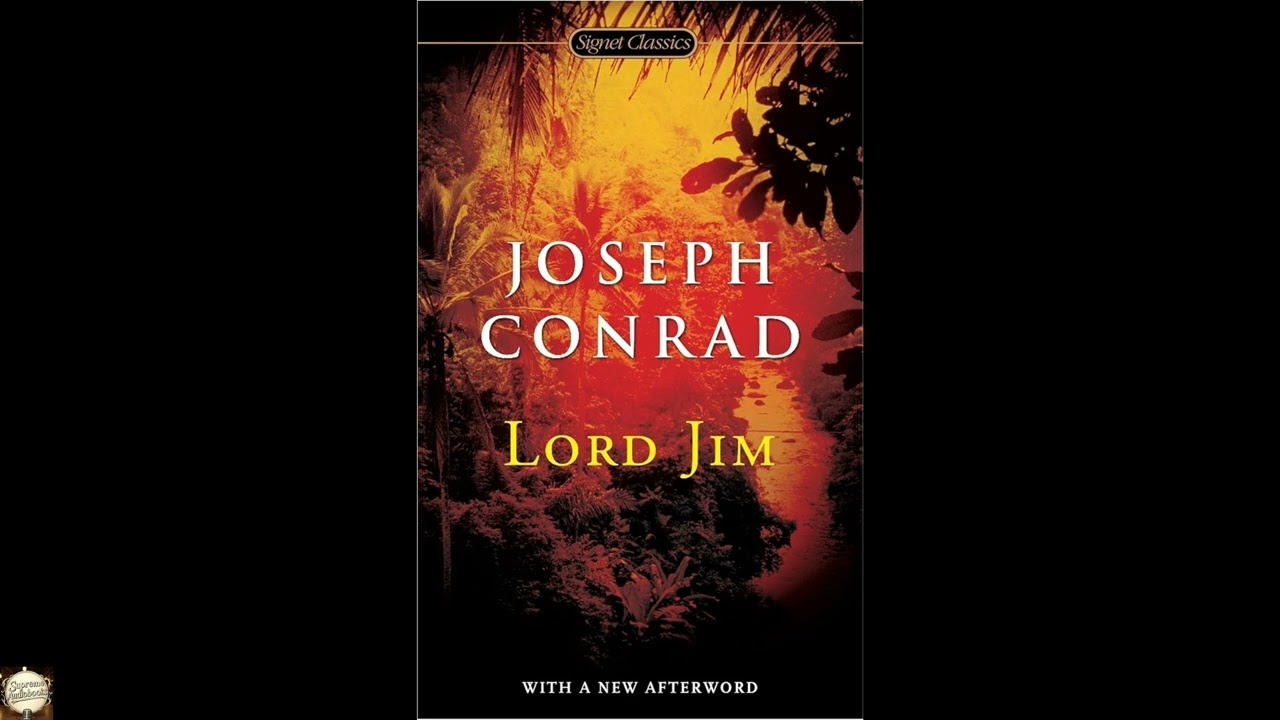
Lord Jim
What happens when a single moment of cowardice shatters a man's future, his honor, and his very sense of self? Joseph Conrad's Lord Jim asks this question with unrelenting intensity, following a young British seaman whose life unravels after a split-second decision. This book is a profound examination of guilt, redemption, and the elusive nature of courage, resonating as powerfully today as it did over a century ago. It forces us to confront our own ideals, our potential for failure, and the relentless pursuit of a second chance in a world that seldom forgets a lapse. The story captures the eternal struggle to reconcile a heroic self-image with a stark, imperfect reality. The story introduces Jim, a promising first mate on the steamship Patna, which carries hundreds of Muslim pilgrims across the Indian Ocean. Jim, a man with a romantic vision of himself as a hero, dreams of performing a grand act of bravery. However, when the Patna strikes a submerged derelict in calm seas, appearing to be on the verge of sinking, Jim finds himself in an unimaginable predicament. In the chaos and panic, he sees the ship's other European officers abandon the vessel and its sleeping passengers. In a moment of pure, unthinking terror, Jim follows them, jumping into a lifeboat and leaving the pilgrims to their fate. Miraculously, the Patna does not sink, and the abandoned pilgrims are rescued. Jim is subsequently tried in a court of inquiry for dereliction of duty. Stripped of his officer's certificate and publicly shamed, Jim's life as he knew it is over. Unable to outrun his past or the crippling shame that defines him, Jim drifts from port to port across the East, taking on various menial jobs, always moving on as soon as his true history is discovered. He seeks an escape from his own conscience, a place where he can forget his ignominious fall and perhaps, through sheer force of will, reinvent himself. His desperate search eventually leads him to the remote, isolated settlement of Patusan, a territory deep in the Malay Archipelago, where he is introduced by the enigmatic Marlow. In Patusan, Jim finds a new role, becoming a respected leader and protector among the native population, earning the title "Tuan Jim" or "Lord Jim." He builds a new reputation, seemingly at peace, revered and trusted, but the shadow of his past, the memory of that single jump from the Patna, perpetually looms, threatening his fragile equilibrium. Joseph Conrad, born Jozef Teodor Konrad Korzeniowski in 1857 in Berdychiv, Ukraine, then part of the Russian Empire, experienced a childhood marked by political upheaval and personal tragedy. His Polish parents, ardent patriots, were exiled to remote parts of Russia, where both died when Conrad was young, leaving him an orphan. This early trauma deeply shaped his skeptical, often pessimistic view of human nature and society. Eschewing a conventional path, Conrad went to sea at age sixteen, first in the French merchant navy and later for the British, where he spent nearly two decades. He commanded ships, navigated distant waters, and witnessed firsthand the complexities and brutalities of the colonial world, experiences that would profoundly inform his later fiction. Remarkably, Conrad began his literary career in his late thirties, teaching himself English, his third language, to a level of unparalleled expressive power. His first novel, Almayer's Folly, was published in 1895. He swiftly established himself as a master of prose, known for his psychological depth and vivid portrayals of exotic locales. His contributions to literature are immense, positioning him as a transitional figure between Victorian realism and early modernism. Other notable works include Heart of Darkness, a chilling examination of imperialism and the darkness within the human psyche, and Nostromo, a sweeping political novel set in South America. Conrad’s work consistently grapples with moral dilemmas, the limits of human endurance, and the ambiguities of good and evil. He passed away in 1924, leaving behind a body of work that continues to challenge and provoke readers. At its core, Lord Jim is a penetrating examination of honor and guilt. Jim's initial act of abandoning the Patna defines him, becoming an inescapable burden. His subsequent life is a tireless, often futile, attempt to regain his lost honor, not just in the eyes of others, but more importantly, within himself. The constant reappearance of the Patna incident, like a recurring nightmare, demonstrates how a single lapse can haunt a person indefinitely, no matter how far they flee or how much good they do afterward. For example, when Jim achieves respect and power in Patusan, he still cannot shake the internal judge who reminds him of his unheroic past, suggesting that true honor must be earned through consistent integrity, not just through isolated acts. The book also grapples with themes of identity and self-deception. Jim creates a romanticized image of himself as a heroic figure, capable of great deeds, yet his actions contradict this self-perception. His entire life after the Patna incident becomes an effort to live up to his idealized self, often through acts of genuine bravery in Patusan, but always under the shadow of his initial failure. His struggle highlights the internal conflict between who we believe we are and who we truly prove to be under pressure. Furthermore, Conrad uses the narrative framework of Marlow, the observer who pieces together Jim's story from various accounts, to question the very nature of truth and perception. Marlow’s quest to understand Jim's motives and character reflects our own attempts to comprehend human complexity, recognizing that no single account can fully capture the essence of a person. When Lord Jim was published in 1900, the British Empire was at its zenith, and the concept of "chivalry" and the "white man's burden" were still pervasive ideals. Yet, the late nineteenth and early twentieth centuries also witnessed growing disillusionment with imperial ambitions and the emergence of more cynical perspectives on human nature, often spurred by advancements in psychology and a changing world order. The novel emerged from a period of intense societal self-reflection, following decades of rapid industrialization and colonial expansion, which brought different cultures into often violent contact. Authors were beginning to move beyond simple adventure stories, looking inward at the psychological costs of empire and the internal conflicts faced by individuals caught between grand ideals and harsh realities. Conrad's work, situated within this milieu, reflects a broader literary shift towards psychological realism, focusing on interiority and moral ambiguity rather than straightforward heroic narratives. Listening to Lord Jim as an audiobook offers a uniquely immersive experience, perfectly suited to Conrad's layered narrative style. The voice of the narrator becomes Marlow's own, guiding listeners through the various testimonies and observations, allowing the nuances of his reflective tone to truly resonate. Conrad’s long, carefully constructed sentences, which can sometimes feel dense on the page, gain clarity and rhythm when spoken, revealing their poetic beauty and thematic depth. The lengthy run time, encompassing several hours, encourages a deep dive into Jim's tormented psyche and the vivid, often oppressive atmosphere of the distant colonial settings. The pacing, the shifts in perspective, and the intricate dialogue come alive through performance, making it easier to absorb the complex moral questions and the profound sense of isolation and yearning that permeate every aspect of Jim's story.
Enjoyed Lord Jim? A few ways to support us
Audible & Amazon links are affiliate; we may earn a small commission at no extra cost.
About this production
Human narration by a volunteer reader from LibriVox.org, the public-domain audiobook project. LibriVox volunteers record literary works whose copyright has expired in the United States, releasing the resulting recordings into the public domain.
Lord Jim by Joseph Conrad. The underlying text is in the U.S. public domain. We do not republish any modern copyrighted edition, translation, or commentary.
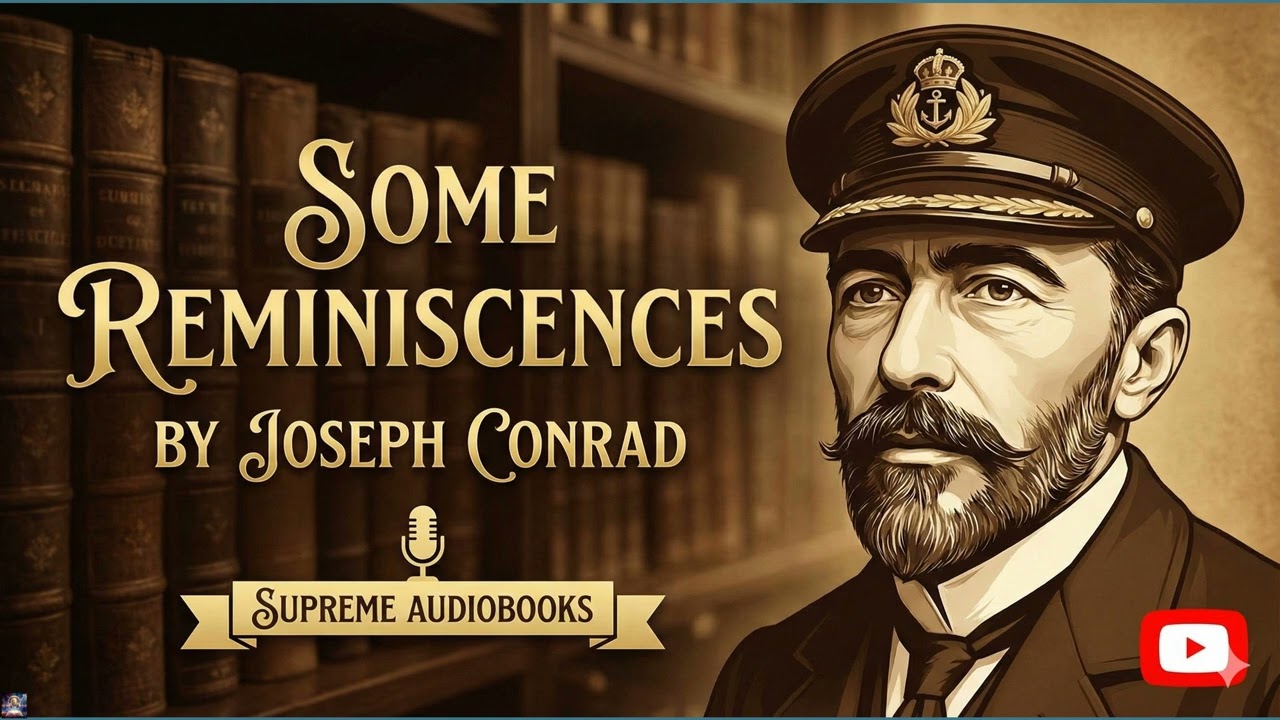
The 4K cinematic visuals accompanying this audiobook are generated by an AI image model from prompts derived from the source text. No copyrighted photos, paintings, or stock footage are used. AI generation is disclosed on every video on our YouTube channel as required by YouTube's altered/synthetic content policy.
English subtitles are transcribed from the LibriVox recording with OpenAI Whisper. Translations into the 11 other supported languages are produced by Meta's NLLB-200 neural translation model. No human translator's copyrighted translation is used.
Questions about sourcing or rights? See our DMCA & Sourcing policy or contact us.
Enjoyed this audiobook?
If you'd like to own a copy of Lord Jim or hear a professionally produced edition, the links below help support free audiobook production at no extra cost to you.
As an Amazon Associate we earn from qualifying purchases. Audible / print links are affiliate.