Recollections and Letters
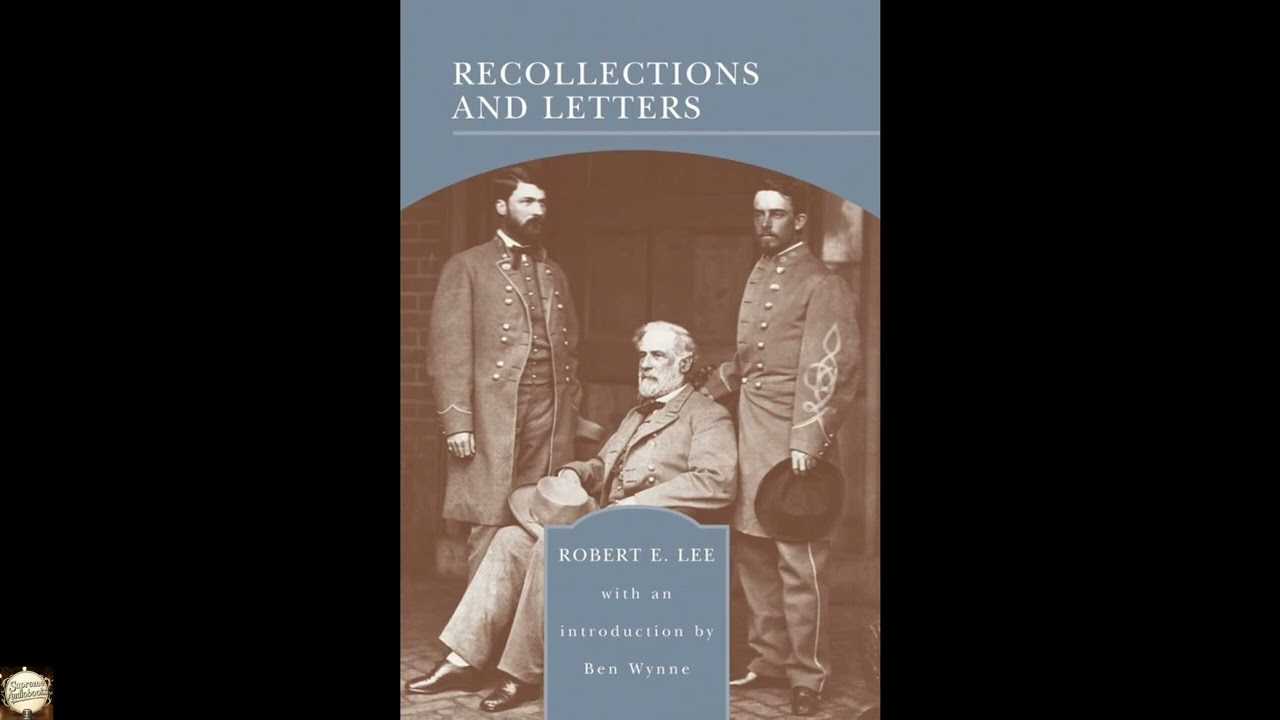
"Recollections and Letters" offers an intimate portal into the mind of Robert E. Lee, a profoundly consequential historical figure. This collection reveals his private thoughts, daily concerns, and moral compass as he grappled with national upheaval and immense personal responsibility. Listening today provides a clearer understanding of the American Civil War and its aftermath, and a lens to examine enduring questions of loyalty and duty. It is a testament to the human spirit facing impossible choices, making it a compelling listen for anyone seeking to understand history's complexities. The collection generally arranges Lee's personal correspondence and notes, tracing his life from pre-war years through the agonizing conflict and into his quiet final years. Listeners gain access to his early reflections as a dedicated military engineer, his deep affection for family—especially his wife, Mary Custis Lee—and his thoughtful observations on the Southern way of life. These letters convey a man rooted in tradition and public service, possessing a keen intellect, setting the stage for his monumental decisions when civil war loomed. He articulates his opposition to secession, yet ultimately aligns with Virginia. This pivot marks the central conflict: a man torn between his oath to the United States and his deep allegiance to his native land. The correspondence then shifts to wartime, detailing logistical challenges, strategic considerations, and the immense weight of command. These writings offer a general's direct perspective on combat's realities and human cost, glimpsing his constant concern for his soldiers. Following the surrender at Appomattox, the letters reflect Lee's determined efforts to foster reconciliation and reconstruction. He counsels patience and industry, discouraging animosity and encouraging former soldiers to return home and rebuild their lives. His post-war period as president of Washington College (now Washington and Lee University) shows him dedicating energies to education, instilling values of hard work and civic responsibility in a new generation. The arc moves from a promising peacetime career, through a nation divided, to a quiet commitment to healing, revealing a deeply reflective man who maintained his dignity despite his immense position. Robert Edward Lee was born at Stratford Hall, Virginia, in 1807, into a prominent family with a distinguished lineage. Graduating second in his class from the United States Military Academy at West Point without a single demerit, he served a distinguished career in the U.S. Army Corps of Engineers. His early military achievements included service during the Mexican-American War, where he earned three brevets for gallantry, and a term as superintendent of West Point. These experiences honed his strategic mind and leadership abilities, solidifying his reputation as one of the most capable officers in the U.S. military. His defining period began in 1861, when he was offered command of the Union army. Following Virginia's secession, he famously declined, resigning his commission to accept command of Virginia's forces. This ultimately led to his appointment as commander of the Army of Northern Virginia, leading pivotal Civil War campaigns like Gettysburg. Despite his tactical brilliance, the Union's overwhelming advantages eventually led to his surrender to Ulysses S. Grant at Appomattox Court House in April 1865. After the war, Lee chose not to accept offers of wealth or political influence, instead devoting himself to rebuilding the South through education. He became president of Washington College in Lexington, Virginia, a position he held until his passing in 1870. During this time, he tirelessly expanded the curriculum, emphasizing practical subjects like engineering and journalism alongside classical studies, believing education was vital for the nation's recovery. "Recollections and Letters" represents his most direct contribution to understanding his personal thoughts and motivations, offering a primary source window into his life, unmediated by later biographers. His writings, though not conventional literature, stand as historical documents, shaping perceptions of the Civil War. One prominent theme woven through Lee's correspondence is duty and loyalty. His letters frequently grapple with where his ultimate allegiance lay, particularly in the lead-up to the Civil War. Listeners encounter his deep love for the Union and personal distress over its dissolution, often contrasted with a powerful, almost filial, devotion to his native Virginia. This tension is palpable in his eloquent letters explaining his decision to resign from the U.S. Army, where he articulates a heartbreaking choice dictated by what he perceived as an inescapable obligation to his home state, rather than a desire to dismantle the nation. Another significant theme is leadership under duress and the burden of command. Throughout the Civil War, Lee's letters often reveal the immense pressure he felt, from military strategy to caring for his soldiers and managing logistical challenges. For instance, in communications to his family or Confederate officials, he discusses supplying his army, maintaining morale, and his personal sorrow over casualties. These passages offer a glimpse into the emotional and intellectual fortitude required to lead armies through devastating campaigns, showing a general deeply invested in the welfare of those under his command, even amidst the toughest decisions. The letters and recollections comprising this collection span immense transformation in American history, from the relatively settled antebellum years through the cataclysm of the Civil War and into the initial, fraught years of Reconstruction. Lee's personal writings offer a unique perspective on the forces that were tearing the nation apart and subsequent attempts to mend it. They were written when sectionalism reached its breaking point, slavery was the burning moral question, and the United States' very definition was violently contested. His observations reflect the prevailing social norms, honor codes, and political rhetoric of the Southern aristocracy, even as they reveal his distinct moral compass. Their compilation and eventual publication, likely after his passing in 1870 by his son, responded to a pressing need to contextualize his legacy for an America struggling to understand the conflict and its key players, becoming a foundational text for understanding the man behind the myth. Listening to "Recollections and Letters" as an audiobook transforms it from a historical document into an intimate encounter with a pivotal figure. The several hours of narration allow ample time for immersion, enabling listeners to slowly absorb the unfolding narrative of Lee's life and the changing landscape of his world. A skilled narrator brings a measured dignity to Lee's prose, giving voice to the formal yet deeply personal tone of his correspondence. The careful pacing allows for contemplation of his often formal, sometimes emotional words, highlighting the gravity of his circumstances and the weight of his responsibilities. The atmosphere conjured is one of profound reflection and historical weight, offering a unique opportunity to understand the personal dimension of grand historical events through the very cadences of his thought.
Enjoyed Recollections and Letters? A few ways to support us
Audible & Amazon links are affiliate; we may earn a small commission at no extra cost.
About this production
Human narration by a volunteer reader from LibriVox.org, the public-domain audiobook project. LibriVox volunteers record literary works whose copyright has expired in the United States, releasing the resulting recordings into the public domain.
Recollections and Letters by Robert Lee. The underlying text is in the U.S. public domain. We do not republish any modern copyrighted edition, translation, or commentary.
The 4K cinematic visuals accompanying this audiobook are generated by an AI image model from prompts derived from the source text. No copyrighted photos, paintings, or stock footage are used. AI generation is disclosed on every video on our YouTube channel as required by YouTube's altered/synthetic content policy.
English subtitles are transcribed from the LibriVox recording with OpenAI Whisper. Translations into the 11 other supported languages are produced by Meta's NLLB-200 neural translation model. No human translator's copyrighted translation is used.
Questions about sourcing or rights? See our DMCA & Sourcing policy or contact us.
Enjoyed this audiobook?
If you'd like to own a copy of Recollections and Letters or hear a professionally produced edition, the links below help support free audiobook production at no extra cost to you.
As an Amazon Associate we earn from qualifying purchases. Audible / print links are affiliate.