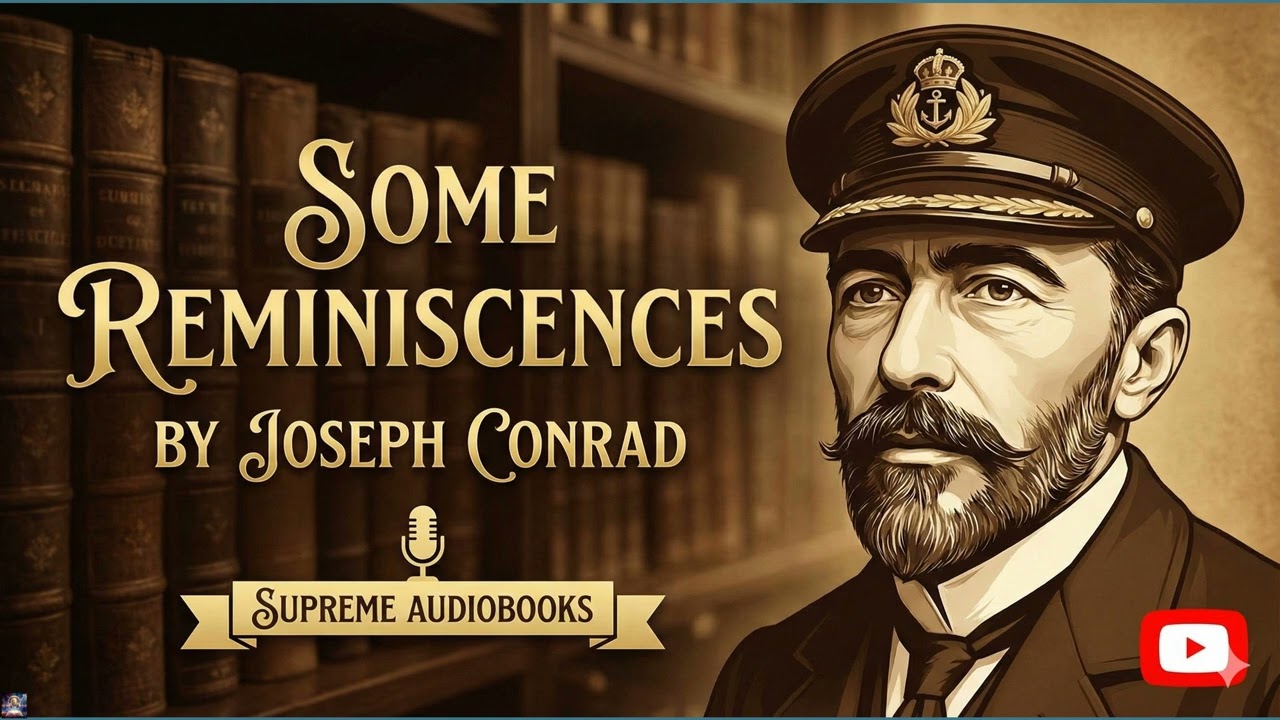
Some Reminiscences
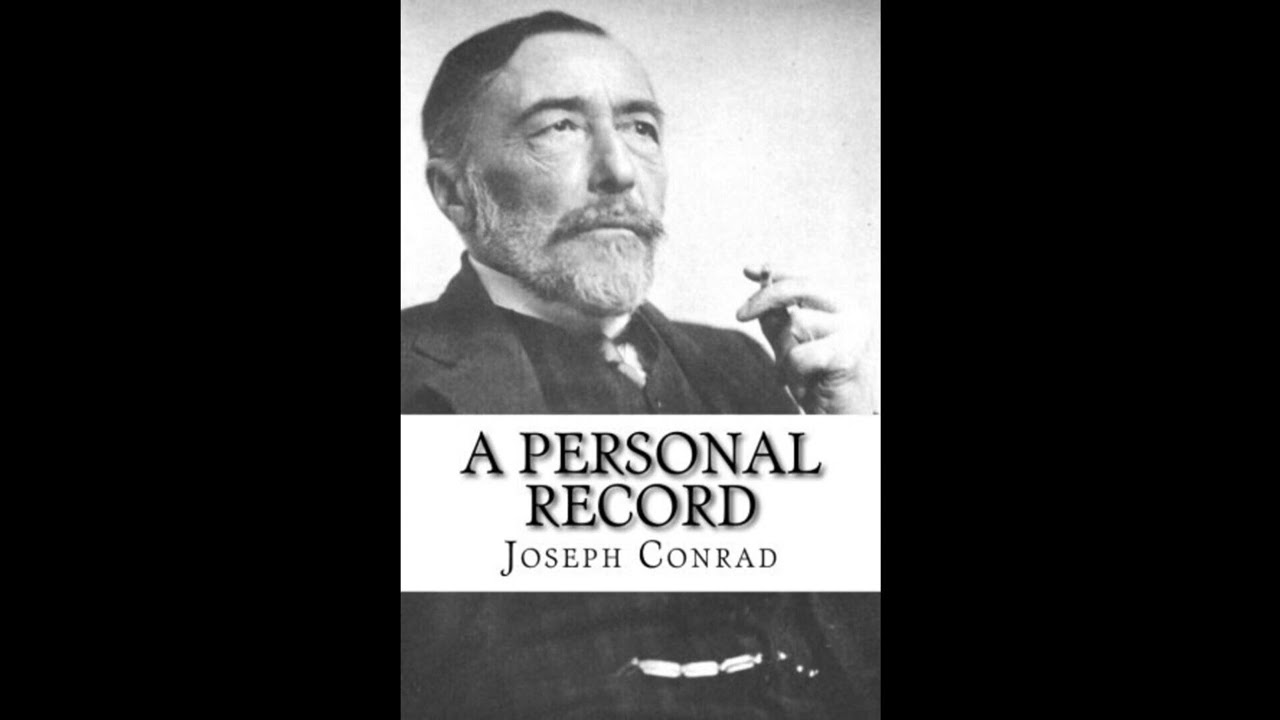
What does it mean to become an artist, especially when your life has been shaped by the vast, unpredictable expanses of the sea? Joseph Conrad’s Some Reminiscences offers not merely an autobiography, but a profound and often poignant contemplation on the origins of a literary mind. This extraordinary collection of personal essays and reflections invites listeners into the very making of one of English literature’s most enigmatic figures. It lays bare the path from a landlocked Polish childhood to a life at sea, and eventually, to the demanding solitude of a writer’s desk. For anyone who has ever felt the pull of a destiny seemingly at odds with their past, or sought to understand how experience transforms into art, these personal anecdotes and philosophical musings resonate with an enduring power, revealing the deeply human struggles and triumphs that forge a creative spirit. The narrative arc within Some Reminiscences is less a linear plot and more a series of vivid, interconnected memories, charting the trajectory of a singular life. The story begins in the somewhat austere, culturally rich confines of nineteenth-century Poland, where Józef Teodor Konrad Korzeniowski – the future Joseph Conrad – spent his early years, marked by political upheaval and personal loss. We witness his formative experiences, influenced by his patriotic and intellectual parents, and his almost inexplicable, yet overwhelming, desire to abandon the land for the sea. This yearning takes him first to Marseilles, France, where he begins his maritime career, learning the complexities of sailing and the nuances of a new language. The central "conflict" here is internal: the struggle to define himself against inherited expectations and an uncertain future, all while pursuing a solitary ambition that seems to defy logic. As the essays unfold, the scene shifts from the ports of the Mediterranean to the distant oceans, placing the young Conrad amidst the rigors and camaraderie of life aboard sailing ships. He recalls significant figures, fleeting encounters, and the profound lessons learned from the indifferent power of the sea. These years are portrayed as a crucible, shaping his character and worldview. The "story" culminates not with a definitive end to his sea life, but with the dawning realization of a different, equally compelling call—the compulsion to write. His accounts detail the seemingly disparate threads of his existence—his Polish heritage, his mastery of French, and his eventual adoption of English—all converging towards his unlikely transformation from master mariner to literary stylist, driven by an inner necessity he struggles to fully articulate. It is the story of how a man, through sheer force of will and an unyielding spirit, built an entirely new identity. Joseph Conrad, born Józef Teodor Konrad Korzeniowski on December 3, 1857, in what is now Ukraine, was a towering figure in English literature, despite not being a native speaker of the language. Orphaned early in life, he was steeped in Polish romanticism and patriotism, a background that profoundly shaped his moral sensibility. At seventeen, he abandoned his landlocked origins to pursue a career in the merchant marine, serving for some two decades, first with the French and then the British. It was during these years that he learned English, his third language, eventually mastering it to a degree that allowed him to compose some of the most enduring prose in the canon. Retiring from the sea in his late thirties, he turned to writing, a decision that would lead to novels such as Heart of Darkness, a haunting psychological study of colonialism, and Lord Jim, which probes themes of duty, honor, and redemption. Other notable works include Nostromo, a sweeping political novel, and The Secret Agent, a chilling tale of anarchism and espionage. Conrad is often considered a proto-modernist, known for his psychological depth, narrative experimentation, and his piercing critiques of imperialism and human fallibility. His unique perspective, as an outsider looking in on British society and the global maritime world, secured his lasting place as a pivotal voice in the literary landscape. One prominent theme threading through Some Reminiscences is the complex nature of identity and belonging. Conrad, a Pole by birth, a Frenchman by early maritime training, and an Englishman by literary adoption, consistently grapples with where he truly belongs. He recounts, for instance, the profound strangeness of arriving in England and the conscious decision to make English his literary language, a tongue "foreign enough to be a great, an august, an almost sacred thing." This demonstrates not merely a practical choice, but an act of self-creation, an embrace of a new persona forged from disparate parts of his past. Another central theme is the idea of vocation and the irresistible call of destiny. Conrad repeatedly reflects on his youthful, almost irrational, compulsion to go to sea, despite having no clear connection to it. He describes this as an innate, almost mystical urge, a "vision of a world" that he could not ignore. This echoes in his later turn to writing, presented not as a calculated career move, but as an internal necessity, an imperative that superseded his active life as a mariner. The significance of memory and the act of storytelling itself also figures prominently. These are not merely memories recounted, but memories shaped, analyzed, and presented as a narrative of self-discovery. Conrad, as the author, becomes both the subject and the architect of his own story, constantly reflecting on how the past is constructed through recollection. He illustrates this when discussing how certain episodes from his youth became clear and meaningful only much later, through the lens of reflection, almost as if he were reviewing a draft of his own life. Finally, the collection touches on the profound influence of language and its expressive power. Conrad, writing in an acquired tongue, offers insights into the struggle and triumph of articulating complex thoughts and emotions in a language not his own. He notes the specific challenges of finding the exact English word to convey a particular nuance, revealing his reverence for the precision and beauty of his chosen medium. These themes are not just abstract ideas; they are made tangible through Conrad's specific experiences, his struggles, and his ultimate transformation. Some Reminiscences emerges from a fascinating confluence of historical and literary currents at the turn of the twentieth century. Culturally, it was a time when the British Empire spanned the globe, and the merchant marine, though slowly transitioning to steam, still represented a vast network of human connection and commerce. Conrad's experiences at sea put him directly in touch with this expansive world, offering him a unique perspective on colonialism, human isolation, and the moral ambiguities of power that would later fuel his fictional works. Politically, Europe was experiencing shifting alliances and the rising tide of nationalism, a context against which Conrad's own Polish background and his observations of European imperial ambitions gain added poignancy. Literarily, the period saw a gradual departure from Victorian realism towards more introspective, psychologically driven forms of writing, paving the way for Modernism. Conrad, with his innovative narrative structures and focus on internal states, was very much a part of this evolving landscape. His memoirs, written as he solidified his reputation as a novelist, reflect a writer looking back at a life that bridged these two worlds—the practical, outward-facing life of a sailor and the contemplative, inward-facing life of an artist—offering a singular account of how one man navigated and synthesized these profound changes. Listening to Some Reminiscences as an audiobook brings an added layer of immediacy and intimacy to Conrad's already powerful prose. The several hours of runtime allow for a sustained immersion in his reflections, perfect for quiet afternoons, long commutes, or whenever you seek the company of a thoughtful voice. A skilled narrator can truly bring out the subtle shifts in Conrad's tone—from the matter-of-fact observations of a mariner to the philosophical musings of an artist. Pay attention to the pacing, which can mirror Conrad's own deliberate and sometimes circular thought process, allowing his profound insights to unfurl gradually. The narration will highlight his distinctive use of language, showcasing the remarkable achievement of a writer who mastered a foreign tongue to express some of the deepest human truths. You will hear the inherent gravitas, the subtle wit, and the deep emotional resonance in his descriptions of a life lived on the edge of the known world, transforming personal history into a compelling and enduring narrative.
Enjoyed Some Reminiscences? A few ways to support us
Audible & Amazon links are affiliate; we may earn a small commission at no extra cost.
About this production
Human narration by a volunteer reader from LibriVox.org, the public-domain audiobook project. LibriVox volunteers record literary works whose copyright has expired in the United States, releasing the resulting recordings into the public domain.
Some Reminiscences by Joseph Conrad. The underlying text is in the U.S. public domain. We do not republish any modern copyrighted edition, translation, or commentary.
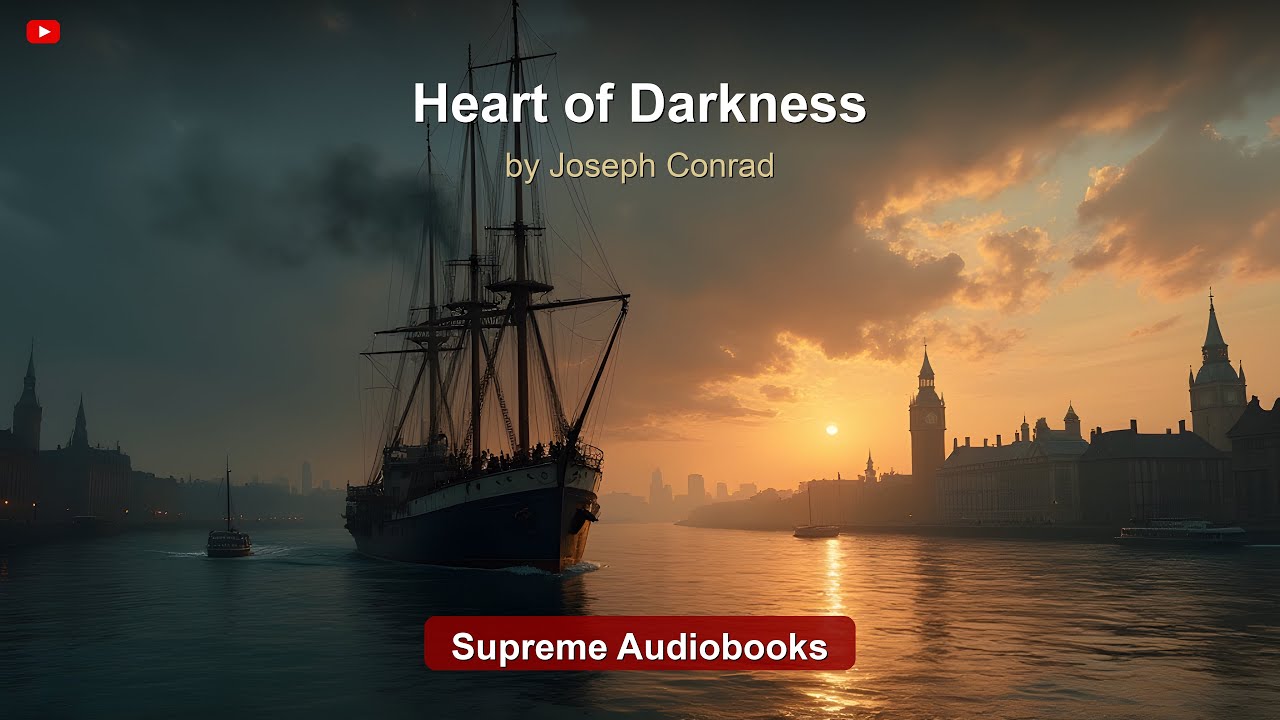
The 4K cinematic visuals accompanying this audiobook are generated by an AI image model from prompts derived from the source text. No copyrighted photos, paintings, or stock footage are used. AI generation is disclosed on every video on our YouTube channel as required by YouTube's altered/synthetic content policy.
English subtitles are transcribed from the LibriVox recording with OpenAI Whisper. Translations into the 11 other supported languages are produced by Meta's NLLB-200 neural translation model. No human translator's copyrighted translation is used.
Questions about sourcing or rights? See our DMCA & Sourcing policy or contact us.
Enjoyed this audiobook?
If you'd like to own a copy of Some Reminiscences or hear a professionally produced edition, the links below help support free audiobook production at no extra cost to you.
As an Amazon Associate we earn from qualifying purchases. Audible / print links are affiliate.