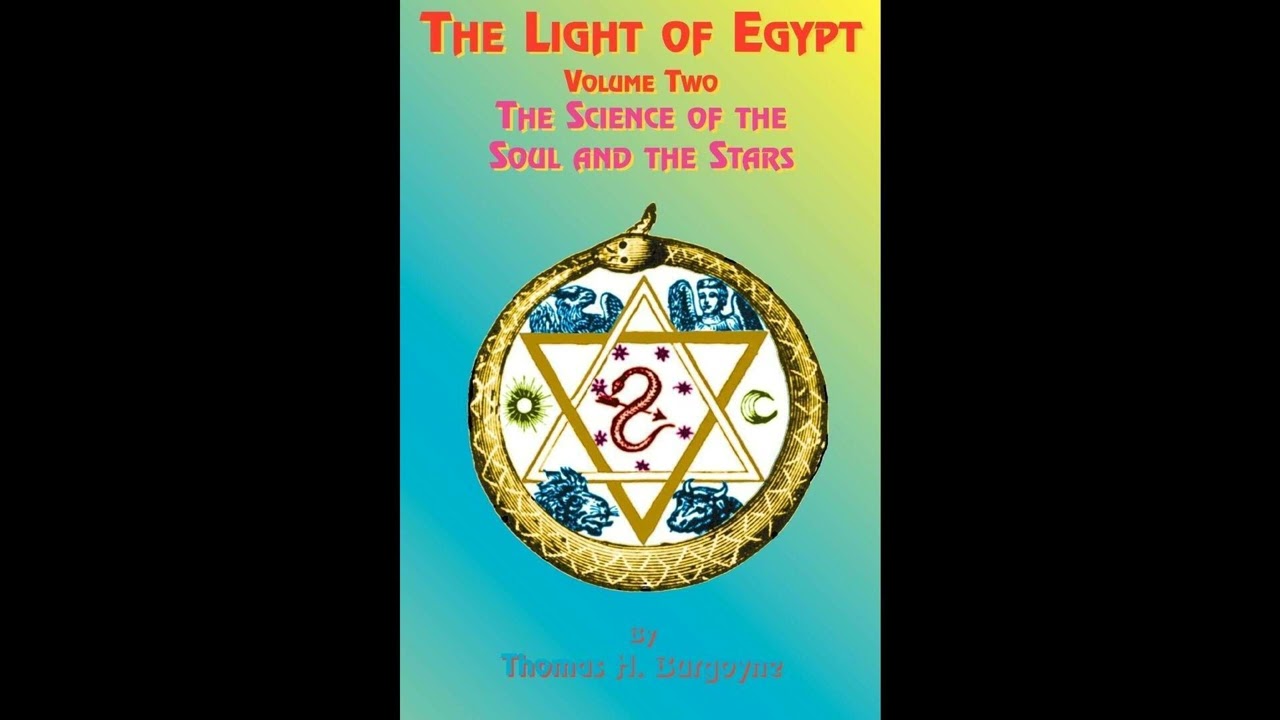
The Light of Egypt: Volume Two, the Science of the Soul and the Stars
Step into a profound exposition of cosmic wisdom and the unseen architecture of existence with "The Light of Egypt: Volume Two, the Science of the Soul and the Stars." This book offers an intricate mapping of the spiritual universe, revealing how the movements of celestial bodies mirror and influence the depths of the human psyche. For anyone who has ever gazed at the night sky and sensed a deeper connection to their inner life, or pondered the perennial questions of destiny and free will, this volume presents a structured framework for understanding these profound relationships. It stands as a vital touchstone in the Western esoteric tradition, challenging listeners to look beyond the surface of reality and discern the underlying spiritual laws that govern both individual experience and the grand sweep of universal cycles. In an era often characterized by superficiality, this work provides a rare opportunity for profound introspection and a return to fundamental spiritual truths. The central aim of "The Science of the Soul and the Stars" is to systematically unveil the hidden dynamics between the celestial realm and human spiritual development. The book guides its audience through a comprehensive conceptual landscape, beginning with foundational principles of the soul's nature and its inherent potential. Listeners are introduced to the idea of the soul not merely as a temporary aspect of personality, but as an evolving entity, subject to cosmic influences and striving toward higher states of being. The narrative then meticulously details the correspondences between specific planets, zodiacal signs, and various facets of human character, emotion, and destiny. It explains how these stellar configurations at the moment of an individual's genesis contribute to their inherent strengths, weaknesses, and life's overarching purpose. As the exposition unfolds, the conceptual arc leads listeners from understanding individual planetary effects to grasping the complex interplay of cosmic forces. The book describes how the "main characters" – the planets, signs, and houses of astrology – function as symbolic keys to deciphering the larger drama of the human spirit. The central intellectual conflict is the reconciliation of what appears to be random chance or preordained fate with the concept of conscious choice and spiritual growth. The work progressively builds a framework showing how knowledge of these cosmic laws empowers the seeker, transforming an individual from a passive recipient of destiny into an active participant in their own spiritual evolution. It does not provide a conventional story with a single protagonist, but rather invites the listener to become the protagonist in their own quest for self-mastery, using the insights provided as a map for navigating the complex terrain of the inner and outer worlds. The identity of the author of "The Light of Egypt" remains veiled in mystery, a common characteristic among many foundational texts within the esoteric tradition. Such works often emerge not from a single, named genius, but are presented as compilations or transmissions of ancient, perennial wisdom, passed down through generations or revealed through higher channels. This anonymity lends the text a distinct authority, suggesting that its insights stem from a source beyond individual human invention, tapping into a collective spiritual heritage. The very absence of a personal biography invites the listener to focus solely on the profundity of the teachings themselves, rather than the personality of their vessel. Like many significant works in the classical occult canon, "The Light of Egypt" stands as a testament to the enduring human quest for understanding divine law and cosmic order. Its "authorship" represents a tradition of wisdom that values the truth of the message over the messenger. This approach ensures that the insights offered are considered on their intrinsic merit, fostering a direct and unmediated engagement with the ancient knowledge presented. This method of attribution, or lack thereof, places it squarely within a lineage of texts—from the Hermetica to various alchemical and magical treatises—where the authority is derived from the antiquity and perceived truth of the wisdom, rather than from a modern, identifiable figure. "The Light of Egypt: Volume Two" enacts several profound themes. One central idea is the principle of cosmic correspondence, often summarized as "as above, so below." The book continually illustrates this by showing how the positions and movements of distant celestial bodies—the "stars"—are directly reflected in the temperament, challenges, and spiritual lessons of the human "soul." For example, it might describe how a specific planetary alignment at birth signifies a propensity for artistic expression or a tendency towards introspection, directly linking universal patterns to individual psychological traits. Another significant theme is spiritual evolution, depicting the soul not as static, but as undergoing a continuous process of growth and refinement across multiple lifetimes. This is often shown by explaining how certain astrological challenges represent opportunities for the soul to overcome limitations and achieve greater self-awareness, urging the listener to view adversity as a catalyst for transformation. The book also addresses the theme of self-knowledge as a path to mastery. It posits that by understanding the specific cosmic influences imprinted upon an individual at birth, one gains vital insights into their inherent strengths and weaknesses, allowing for conscious cultivation of virtues and mitigation of destructive tendencies. This pursuit of self-knowledge is presented as a form of spiritual initiation, guiding the listener toward greater personal agency. Finally, "The Light of Egypt" strongly evokes the theme of ancient wisdom and its lineage. The very title suggests a connection to the profound spiritual traditions of antiquity, positing that the fundamental truths about the soul and the cosmos were understood by ancient civilizations and are now being re-presented. This theme reinforces the idea that true wisdom is perennial and universal, merely waiting to be rediscovered by each generation. The emergence of a text like "The Light of Egypt" speaks to enduring human curiosity, but also resonates strongly with specific historical periods. While the wisdom itself may be ancient, its publication and dissemination often coincide with moments of societal introspection or cultural shifts. The late nineteenth and early twentieth centuries, for instance, witnessed a significant resurgence of interest in esotericism, occultism, and spiritualism, often fueled by rapid scientific advancements that, for some, left a spiritual void. In such an era, texts purporting to reveal hidden truths or ancient knowledge from civilizations like Egypt, often romanticized as the cradle of wisdom, found a receptive audience. This period saw the rise of various movements seeking to bridge science and spirituality, exploring realms beyond empirical observation. "The Light of Egypt" would have emerged as a significant voice within this intellectual and spiritual landscape, offering a systematic approach to understanding the unseen forces influencing human life at a time when traditional religious frameworks were being questioned and new spiritual paradigms sought. Listening to "The Light of Egypt: Volume Two" as an audiobook offers a unique and intimate engagement with its profound subject matter. The act of hearing the complex ideas articulated through a skilled narrator allows the concepts of the soul, celestial influences, and esoteric laws to sink in with a contemplative depth that reading alone sometimes cannot achieve. With its runtime of several hours, it becomes an ideal companion for sustained periods of reflection, whether during long commutes, focused study sessions, or quiet evenings dedicated to personal growth. A thoughtful narration will provide a consistent, measured pacing, giving each concept the space it needs to be absorbed, rather than rushed. The voice itself becomes a steady guide, authoritative yet inviting, allowing the listener to focus entirely on the intellectual and spiritual content without the distraction of decoding text. This auditory experience fosters an atmosphere of revelation and deep introspection, transforming a complex philosophical system into an accessible and transformative teaching.
Enjoyed The Light of Egypt: Volume Two, the Science of the Soul and the Stars? A few ways to support us
Audible & Amazon links are affiliate; we may earn a small commission at no extra cost.
About this production
Human narration by a volunteer reader from LibriVox.org, the public-domain audiobook project. LibriVox volunteers record literary works whose copyright has expired in the United States, releasing the resulting recordings into the public domain.
The Light of Egypt: Volume Two, the Science of the Soul and the Stars. The underlying text is in the U.S. public domain. We do not republish any modern copyrighted edition, translation, or commentary.
The 4K cinematic visuals accompanying this audiobook are generated by an AI image model from prompts derived from the source text. No copyrighted photos, paintings, or stock footage are used. AI generation is disclosed on every video on our YouTube channel as required by YouTube's altered/synthetic content policy.
English subtitles are transcribed from the LibriVox recording with OpenAI Whisper. Translations into the 11 other supported languages are produced by Meta's NLLB-200 neural translation model. No human translator's copyrighted translation is used.
Questions about sourcing or rights? See our DMCA & Sourcing policy or contact us.
Enjoyed this audiobook?
If you'd like to own a copy of The Light of Egypt: Volume Two, the Science of the Soul and the Stars or hear a professionally produced edition, the links below help support free audiobook production at no extra cost to you.
As an Amazon Associate we earn from qualifying purchases. Audible / print links are affiliate.
More by Unknown
Notes and Queries, Number 169, January 22, 1853
Graining And Marbling: A Series Of Practical Treatises On Material, Tools And Applia- Full Audiobook
Secret Enemies of True Republicanism: Most Important Developments Regarding the Inn