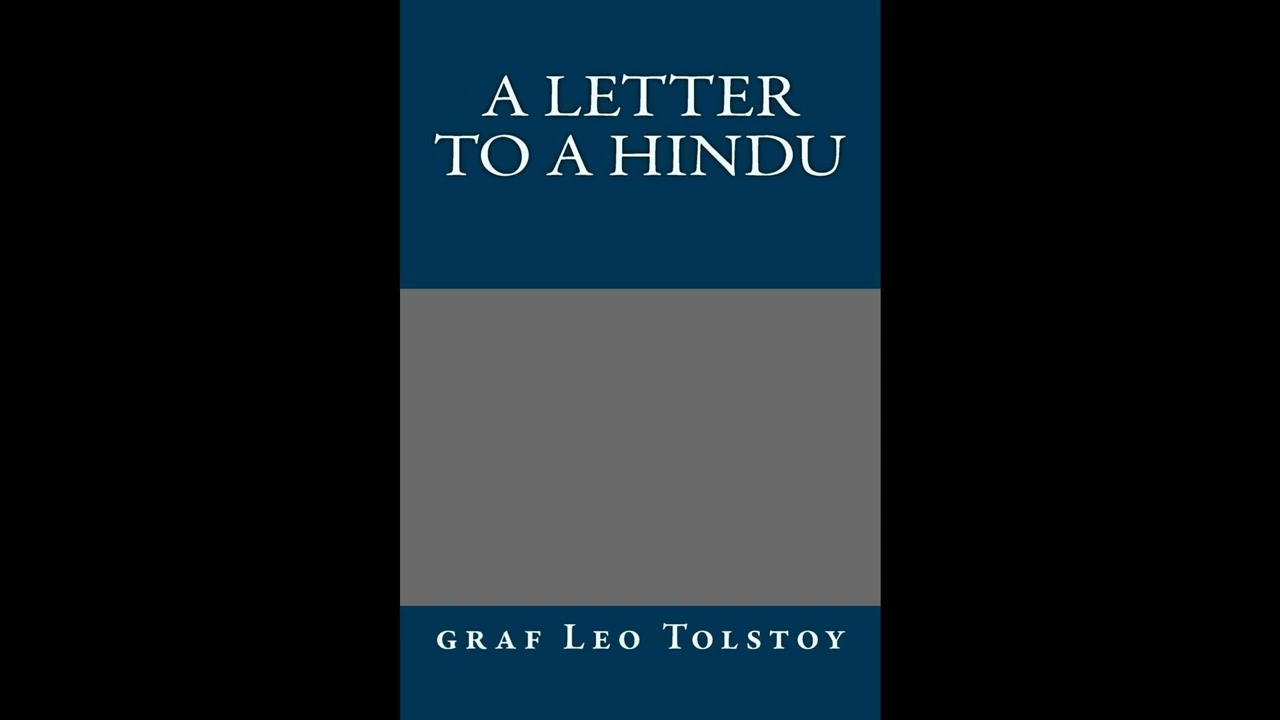
A Letter to a Hindu
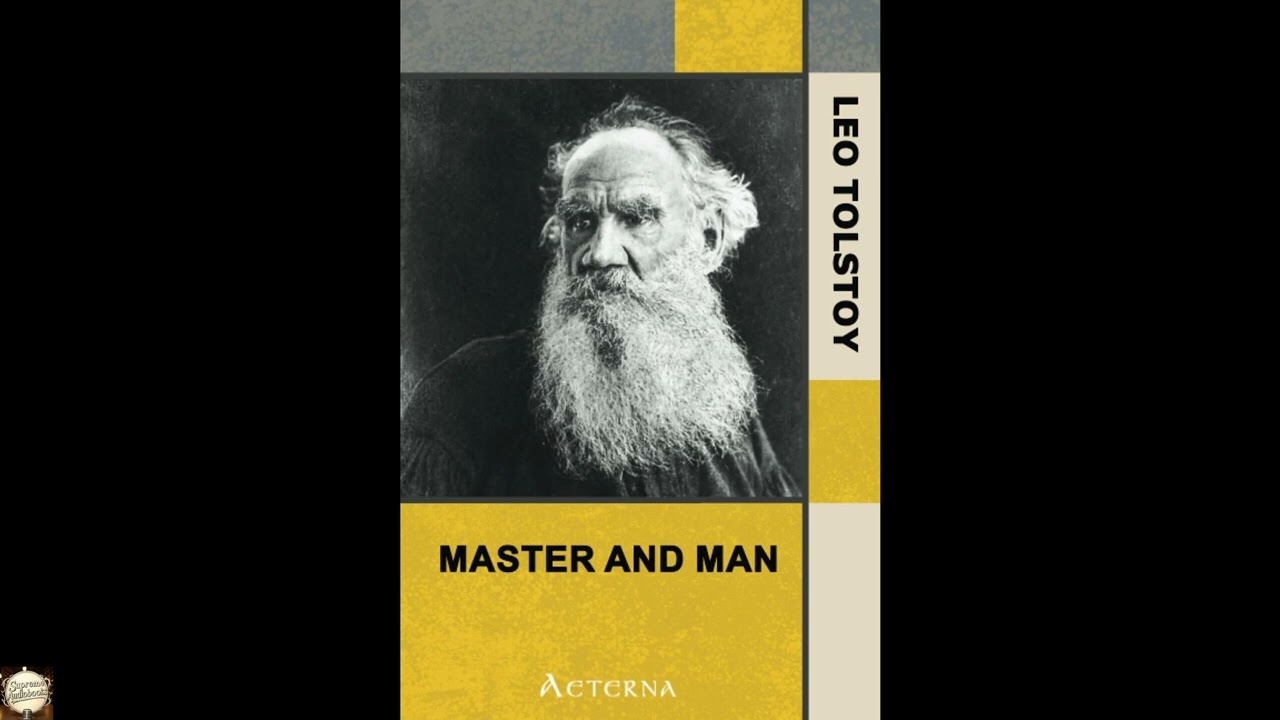
In an age rife with global tension, conflict, and the enduring quest for genuine freedom, certain voices echo across the decades with renewed urgency. Graf Leo Tolstoy’s "A Letter to a Hindu" is precisely such a voice, a profound and impassioned missive penned more than a century ago, yet strikingly relevant for anyone seeking to understand the deep roots of non-violent resistance and the spiritual foundations of true liberation. This short but immensely impactful work directly addresses the challenges of oppression and the path to self-rule, not through external force or political maneuvering, but through a radical transformation of individual and collective consciousness. It is a document that continues to provoke thought, inspire action, and challenge conventional notions of power, a vital listen for those grappling with contemporary struggles for justice and peace. The letter itself unfolds as a powerful dialogue, written by the elderly Russian sage to Taraknath Das, an Indian revolutionary and editor residing in Canada, who had sought Tolstoy’s insights on how India might achieve independence from British colonial rule. Tolstoy begins by acknowledging the seemingly insurmountable power of the British Empire, which held millions of Indians in subjugation, seemingly with little effort. He establishes the central paradox: how can so few foreigners control so many, unless the subjugated themselves are, in some fundamental way, complicit in their own oppression? He gently, yet firmly, dismisses the notion that India’s path to freedom lies in adopting the very methods of violence and materialism that characterize their oppressors. Instead, Tolstoy guides his recipient, and by extension, the listener, through a deeply philosophical argument that turns the conventional understanding of power on its head. The arc of the letter moves from this initial observation to a sweeping exposition on the nature of spiritual truth and its practical implications for societal change. Tolstoy posits that true power resides not in military might or economic leverage, but in the inherent, God-given principle of love and non-resistance that underpins all genuine religious teachings, from the Vedas and Krishna's teachings to Buddhism and Christ's Sermon on the Mount. He argues that the moment individuals recognize this universal truth within themselves and refuse to participate in any acts of violence or coercion, the entire edifice of oppressive state and religious institutions—which rely entirely on force—will crumble. The narrative progression of the letter, therefore, is not one of external events, but of an escalating intellectual and spiritual argument, culminating in a powerful call for introspection and adherence to an inner moral law as the only genuine path to freedom, both individual and national. Born in 1828 to an aristocratic Russian family on his estate, Yasnaya Polyana, Lev Nikolaevich Tolstoy lived a life of immense privilege, but also profound moral searching. His early years included service in the Crimean War, an experience that deeply shaped his worldview and led to a profound skepticism of state authority and organized violence. Following his military career, he became a celebrated novelist, creating works that stand as pinnacles of world literature. His lengthy, panoramic novels like War and Peace, an epic chronicle of Russian society during the Napoleonic era, and Anna Karenina, a piercing social commentary on marriage, adultery, and societal expectations in 19th-century Russia, cemented his literary fame. Yet, even amidst this acclaim, Tolstoy grappled with existential questions, undergoing a spiritual crisis in his fifties that led him to a radical embrace of Christian anarchism and non-violent principles. This spiritual transformation saw Tolstoy renounce much of his personal wealth, attempt to live as a simple peasant, and devote himself to philosophical and religious writings that often put him at odds with the Russian Orthodox Church and the Tsarist government. He advocated for a literal interpretation of Christ's teachings, particularly the Sermon on the Mount, and passionately championed vegetarianism, abstinence, and pacifism. His later works, such as The Death of Ivan Ilyich and Resurrection, continued to critique societal hypocrisy and champion the cause of the poor and oppressed, but with an increasingly explicit moral and spiritual agenda. By the time he wrote "A Letter to a Hindu" in the early 20th century, shortly before his death in 1910, Tolstoy had become a globally revered, almost prophet-like figure, whose moral authority transcended national borders and religious divides. One of the central themes permeating "A Letter to a Hindu" is the profound efficacy of non-violent resistance, a concept often associated with Mahatma Gandhi, who himself cited Tolstoy as a major influence and correspondent. Tolstoy illustrates this theme by arguing that true liberation for India cannot come from mimicking the violent tactics of their British oppressors. He points out that if Indians were to achieve independence through force, they would simply replace one form of oppression with another, perpetuating the cycle of violence and ultimately failing to achieve genuine freedom. Instead, he insists that by refusing to participate in violence, by declining military service, by rejecting unjust laws, and by simply living according to the principle of love, individuals can dismantle oppressive systems from within, rendering them powerless. This insistence on individual moral fortitude over collective armed struggle stands as a cornerstone of the letter’s argument. Another significant theme is spiritual universalism and the critique of institutional religion and state authority. Tolstoy painstakingly draws parallels between the core spiritual teachings of Hinduism, particularly the principle of Ahimsa (non-harm), and his understanding of Christ's commandment to love one's neighbor and resist evil with non-resistance. He argues that beneath the dogma and ritual of organized religions and state-sanctioned morality lies a universal truth of love and unity, which is often corrupted by those in power to maintain control. He demonstrates how both the British Empire and, implicitly, the established Russian Church, use coercive force and distorted interpretations of faith to justify their authority, rather than upholding the simple, unifying truth of brotherly love. This powerful critique urges the reader to look beyond superficial differences and recognize the shared spiritual heritage of humanity. "A Letter to a Hindu" emerged at a critical juncture in world history, specifically in the context of growing nationalist movements against colonial powers. In the early 20th century, the British Raj in India was firmly established, but Indian nationalist sentiments were intensifying, fueled by figures like Taraknath Das who sought to galvanize support for independence, sometimes advocating armed struggle. Tolstoy, having witnessed the injustices of his own government and having undergone his own profound spiritual awakening, felt compelled to offer a different path. He was deeply concerned by what he saw as the self-destructive nature of violence, both on a personal and political level. The letter, published in 1908, represented his attempt to intervene in a significant global struggle, not as a political strategist, but as a moral guide, sharing his conviction that true power and freedom could only be found through spiritual means. At the same time, Tolstoy's own philosophical and religious development positioned him perfectly to articulate this message. Having spent decades wrestling with the meaning of life, the nature of God, and the practical application of Christ's teachings, he had arrived at a deeply personal and radical understanding of non-resistance. He saw in the plight of India a universal lesson: that liberation from any form of tyranny—be it political, economic, or spiritual—begins with the individual's unwavering commitment to love and truth, and their absolute refusal to participate in violence. The letter thus stands not merely as a commentary on Indian politics, but as a concise summary of Tolstoy's mature philosophical and ethical framework, offering a blueprint for non-violent social change that resonated far beyond its initial recipient. Listening to "A Letter to a Hindu" as an audiobook brings the full weight and intimacy of Tolstoy's personal address directly to the listener. The medium transforms a philosophical essay into a direct conversation, allowing the listener to truly inhabit the role of Taraknath Das, the intended recipient of this earnest plea. The narrator's voice carries the persuasive tone and deep conviction that characterized Tolstoy in his later years, making his complex arguments accessible and profoundly moving. With a run length of several hours, this audiobook provides ample opportunity for sustained engagement with Tolstoy's reasoning, allowing his ideas about non-violence, spiritual truth, and the nature of power to sink in and resonate. Pay attention to the measured pacing and the thoughtful articulation, which underscore the gravity of Tolstoy's message and reveal the genuine concern of a wise elder speaking to a younger generation struggling with immense challenges. It is a powerful experience, revealing the continued relevance of a voice that profoundly shaped the course of modern history.
Enjoyed A Letter to a Hindu? A few ways to support us
Audible & Amazon links are affiliate; we may earn a small commission at no extra cost.
About this production
Human narration by a volunteer reader from LibriVox.org, the public-domain audiobook project. LibriVox volunteers record literary works whose copyright has expired in the United States, releasing the resulting recordings into the public domain.
A Letter to a Hindu by Leo graf Tolstoy. The underlying text is in the U.S. public domain. We do not republish any modern copyrighted edition, translation, or commentary.
The 4K cinematic visuals accompanying this audiobook are generated by an AI image model from prompts derived from the source text. No copyrighted photos, paintings, or stock footage are used. AI generation is disclosed on every video on our YouTube channel as required by YouTube's altered/synthetic content policy.
English subtitles are transcribed from the LibriVox recording with OpenAI Whisper. Translations into the 11 other supported languages are produced by Meta's NLLB-200 neural translation model. No human translator's copyrighted translation is used.
Questions about sourcing or rights? See our DMCA & Sourcing policy or contact us.
View 10 famous quotes from this book →
Enjoyed this audiobook?
If you'd like to own a copy of A Letter to a Hindu or hear a professionally produced edition, the links below help support free audiobook production at no extra cost to you.
As an Amazon Associate we earn from qualifying purchases. Audible / print links are affiliate.