Kept for the Master's Use
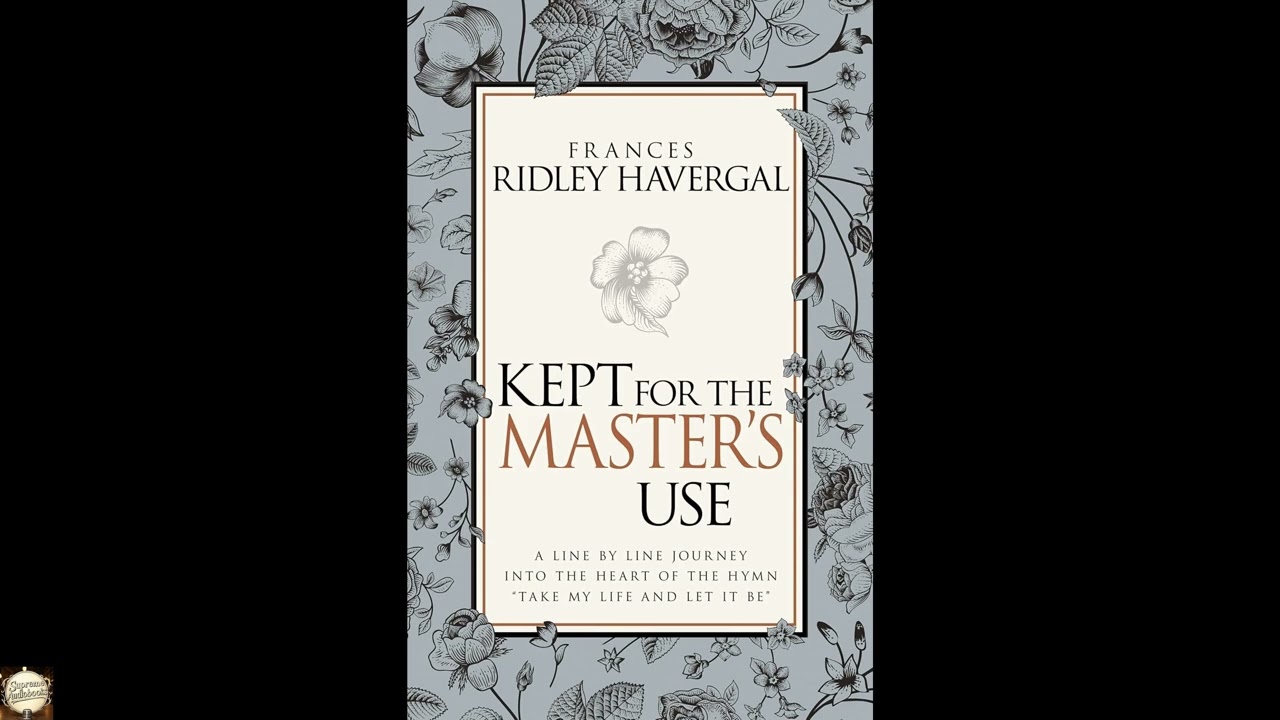
"Kept for the Master's Use" by Frances Ridley Havergal offers more than simple devotional reading; it is an earnest invitation to live a life fully consecrated to a higher purpose. For generations of readers and listeners, this profound collection of reflections has served as both a compass and a balm, guiding individuals toward a deeper understanding of spiritual commitment and the profound peace found in surrender. In an age often defined by distraction and the relentless pursuit of self, Havergal's clear-eyed prose speaks with a refreshing directness, reminding us that true fulfillment often lies in offering our talents, time, and very being to something beyond ourselves. This is a text that calls for introspection, encourages self-examination, and ultimately promises a life of greater meaning and quiet joy for those who answer its call. The book lays out a methodical path for the believer seeking to align their life with divine will. It begins by establishing the fundamental concept of consecration – not as a rigid set of rules, but as an overflow of loving devotion. Havergal introduces the "Master" not as a distant authority, but as a loving guide who desires the best for those He calls. The initial sections illuminate the internal struggles many face: the hesitation to let go of personal ambitions, the fear of inadequacy, or the difficulty in discerning one's specific calling. Havergal acknowledges these anxieties with a compassionate understanding, then proceeds to dismantle them with gentle logic and scripture-backed assurances. From this foundation, the narrative arc of the book moves from aspiration to practical application. It systematically addresses various aspects of life, from our thoughts and words to our actions and possessions, showing how each can be brought into the service of a higher calling. The central conflict, if one can call it that, is the internal battle against the self – the human tendency toward independence and pride versus the spiritual call to submission and humility. Havergal offers concrete ways to overcome these internal obstacles, demonstrating how small, daily acts of faith and obedience build into a powerful and purposeful existence. She does not promise an easy road, but rather a fulfilling one, where the individual finds their true identity and utility in dedicated service. The unfolding message of the book is one of gradual transformation, moving from a desire for consecration to the joyous reality of living it out day by day. Frances Ridley Havergal, born in 1836 in Astley, Worcestershire, England, was a prominent figure in Victorian sacred literature, known primarily for her prolific output of hymns and devotional poetry. The youngest daughter of a clergyman, William Henry Havergal, himself a respected hymn writer and composer, Frances inherited a deep love for both music and Christian ministry. Her early life showed remarkable intellectual and artistic promise; she learned Greek, Hebrew, and several modern languages, and was a gifted pianist and singer. Despite struggles with delicate health throughout her life, a challenge that often confined her to her home, her pen remained an active and powerful instrument for expressing her fervent faith. Havergal’s personal conviction was one of complete dedication to Christ, a theme that resounds throughout her extensive body of work. She wrote over one hundred hymns, many of which remain popular today, including "Take My Life, and Let It Be," "Like a River Glorious," and "I Gave My Life for Thee." Her poetry and prose were characterized by their simplicity, sincerity, and direct appeal to the heart, reflecting the earnest evangelical spirit of her era. She lived in various parts of England and even spent time studying in Düsseldorf, Germany, but her spiritual focus was always clear and unwavering. Her writings offered comfort and instruction to countless individuals, shaping the devotional landscape of the late nineteenth century and beyond. She passed away in 1879, leaving behind a profound legacy of spiritual inspiration. One of the central themes that Havergal addresses here is the idea of total consecration or complete surrender to God. She articulates this not as a grim sacrifice, but as a liberating act, a joyful giving of one's entire self — faculties, time, possessions, and future — to divine use. For instance, she might suggest that our daily duties, no matter how mundane, become opportunities for service when performed with a heart dedicated to the Master. Another prominent theme is the concept of divine guidance and trust. Havergal often points out that fear and anxiety dissipate when one places full reliance on God's leading, using metaphors of a shepherd guiding his flock or a captain steering a ship, assuring the reader that the Master knows the way even through uncertain waters. Furthermore, the book consistently reinforces the theme of holiness and purity, presenting it as an attainable state for the believer, not through their own striving alone, but through Christ's enabling power. Havergal champions the idea of practical holiness, meaning that one's inner spiritual state should manifest in outward actions and character. She might illustrate this by contrasting idle gossip with words of encouragement, or selfish pursuits with acts of humble service, showing how every interaction can either reflect or diminish one's consecrated walk. The book also often touches upon the theme of joy in service, moving beyond duty to a profound delight found in living a life that aligns with spiritual purpose, arguing that true happiness is found not in self-gratification but in selfless giving. The era in which Frances Ridley Havergal wrote was a period of significant social and spiritual transformation in Victorian England. The Industrial Revolution had drastically altered the social fabric, leading to both immense wealth and widespread poverty, while scientific advancements challenged traditional religious views. In response, there was a robust resurgence of evangelical fervor and a renewed emphasis on personal piety, moral uprightness, and missionary endeavors. Religious literature flourished, offering guidance and comfort in a rapidly changing world. Havergal's work emerged from this context, providing an anchor for believers seeking personal spiritual depth amidst societal upheaval and intellectual questioning. Her writings resonated deeply with a public yearning for spiritual authenticity and practical guidance for Christian living. Her direct, accessible style, coupled with a profound personal conviction, made her an ideal voice for the devotional movements of the late nineteenth century. "Kept for the Master's Use" specifically offered a blueprint for individuals to live out their faith in concrete ways, addressing anxieties about purpose and usefulness in an increasingly complex society. It was a call to personal revival, urging individuals to actively participate in their faith rather than merely observing it, and it found a ready audience among those seeking a more meaningful spiritual existence. Listening to "Kept for the Master's Use" as an audiobook brings Havergal's timeless wisdom directly to your ears, allowing for a deeply personal and meditative experience. The run length of several hours makes it ideal for extended listening sessions, perhaps during quiet moments of reflection, while commuting, or during evening relaxation. A skilled narrator breathes life into Havergal's earnest prose, emphasizing the gentle cadence of her sentences and the sincerity of her counsel. Listen for the nuanced pacing, which allows ample time for spiritual truths to sink in, creating an atmosphere conducive to contemplation. The voice, often warm and encouraging, yet firm in its divine message, makes the experience feel less like reading a book and more like receiving counsel from a trusted friend, guiding you through the profound spiritual landscape Havergal so eloquently describes.
Enjoyed Kept for the Master's Use? A few ways to support us
Audible & Amazon links are affiliate; we may earn a small commission at no extra cost.
About this production
Human narration by a volunteer reader from LibriVox.org, the public-domain audiobook project. LibriVox volunteers record literary works whose copyright has expired in the United States, releasing the resulting recordings into the public domain.
Kept for the Master's Use by Frances Ridley Havergal. The underlying text is in the U.S. public domain. We do not republish any modern copyrighted edition, translation, or commentary.
The 4K cinematic visuals accompanying this audiobook are generated by an AI image model from prompts derived from the source text. No copyrighted photos, paintings, or stock footage are used. AI generation is disclosed on every video on our YouTube channel as required by YouTube's altered/synthetic content policy.
English subtitles are transcribed from the LibriVox recording with OpenAI Whisper. Translations into the 11 other supported languages are produced by Meta's NLLB-200 neural translation model. No human translator's copyrighted translation is used.
Questions about sourcing or rights? See our DMCA & Sourcing policy or contact us.
Enjoyed this audiobook?
If you'd like to own a copy of Kept for the Master's Use or hear a professionally produced edition, the links below help support free audiobook production at no extra cost to you.
As an Amazon Associate we earn from qualifying purchases. Audible / print links are affiliate.