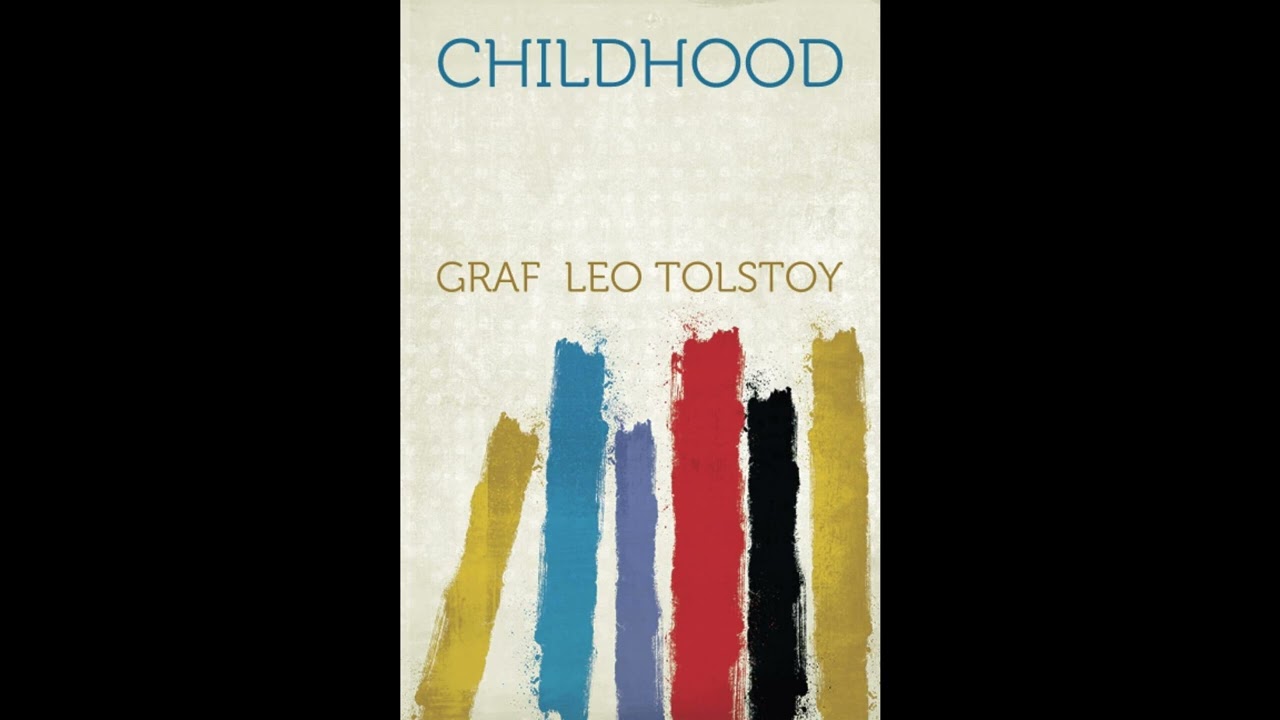
Childhood
Before the monumental canvases of War and Peace and the searing psychological insight of Anna Karenina, before the towering moral pronouncements that would define his later years, Leo Tolstoy began his literary career by turning his immense gaze inward, towards the tender, fragile world of early life. His debut work, simply titled Childhood, published when he was just twenty-four, offers a remarkable window into the dawning consciousness of a young boy in 19th-century Russia. This isn't just a nostalgic reminiscence; it is a meticulously observed, profoundly felt evocation of the first stirrings of self-awareness, love, loss, and the subtle complexities of the human heart. To listen to Childhood today is to revisit the universal truths of our own beginnings, to remember the vivid sensations and intense emotions that shape us long before we understand their full significance. It is a foundational text that reveals the nascent genius of one of the world's most celebrated authors, an essential prelude to the grander narratives that would follow, yet utterly complete in its own delicate scope. We meet Nikolenka Irtenyev, a young boy of ten, living a privileged life on his family’s tranquil country estate in Russia. His world is initially one of warmth, comfort, and the security of a loving household. The narrative unfolds through his eyes, moving between vivid present moments and the powerful, sometimes idealized, recollections of even earlier days. Key figures populate this nascent world: his gentle, beloved mother, whose image remains a beacon of purity and affection; his often distant but respected father; his older brother Volodya and younger sister Lyubochka, who are constant companions in play and minor squabbles. His stern but devoted German tutor, Karl Ivanych, also plays a significant role, providing a touchstone for Nikolenka's early intellectual and moral development, even as the boy sometimes resents his strictures. The story establishes the rhythm of rural aristocratic life, filled with lessons, games, family meals, and interactions with the array of household staff and serfs who maintain the estate. As the narrative progresses, Nikolenka’s idyllic existence begins to show its first cracks. His observations grow sharper, his emotions more nuanced and often conflicted. He experiences the confusion of social interactions, the pangs of pride and shame, the stirrings of first infatuations, and the bewildering nature of adult hypocrisy. A pivotal event involving the family’s departure for Moscow introduces Nikolenka to a wider, more challenging social sphere beyond the familiar confines of his estate. It is here that he confronts new faces, new judgments, and a growing awareness of his own imperfections and vulnerabilities. The central arc of the story is not a dramatic external conflict, but an internal unfolding—the subtle, profound shifts that mark a child's transition from innocent, egocentric absorption to a dawning, often painful, understanding of the world’s complexities and his place within it. His journey is one of increasing self-awareness, marked by moments of pure joy, deep sorrow, and the quiet, persistent education of the heart. Leo graf Tolstoy, born in 1828 at Yasnaya Polyana in the Tula Province of Russia, came from an ancient, aristocratic family. Orphaned at a young age, he was raised by relatives, a circumstance that undoubtedly influenced his later literary preoccupation with family dynamics and the search for meaning. His formal education at Kazan University was largely incomplete, as he found academic life unsuited to his restless spirit. A period of dissipation and gambling followed, before he joined the army, serving with distinction in the Crimean War. It was during this military service that he began to write, drawing on his experiences for his early Sevastopol Sketches, which brought him his first taste of literary recognition. Childhood, however, predates these, having been published in 1852 after a period of intense personal reflection. This early success set him on a literary path that would see him become one of the most towering figures in world literature. He returned to Yasnaya Polyana, attempting to improve the lives of the serfs on his estate, even establishing a school for peasant children based on his progressive educational theories. His personal life was marked by passionate convictions and profound spiritual crises, particularly in his later years, which led him to develop a radical form of Christian anarchism, advocating for non-violence and simple living. Tolstoy’s extraordinary career also produced the epic historical novel War and Peace, a sweeping panorama of Russian society during the Napoleonic Wars; Anna Karenina, a profound exploration of love, adultery, and social hypocrisy; and numerous shorter works like The Death of Ivan Ilyich and The Kreutzer Sonata, each delving into the moral and psychological depths of human existence. He is recognized as a master of realism, celebrated for his psychological acuity, moral probity, and the sheer scope and ambition of his narratives. One central idea that threads through Childhood is the loss of innocence and the power of memory and nostalgia. Nikolenka’s vivid recollections, filtered through the perspective of the mature author, highlight the precious, fleeting nature of childhood’s untroubled joys. He idealizes his mother’s pure love and the uncomplicated happiness of the estate, contrasting it with the disillusionments he later faces. For instance, his memory of his mother’s tender care, her voice, and her touch is rendered with such palpable warmth that it underscores the profound emotional impact of absence. Another theme is the formation of character and moral awakening. We witness Nikolenka grappling with his own burgeoning sense of right and wrong, the discomfort of guilt after a minor misdeed, or the tender stirrings of empathy for others. A particularly telling scene involves his internal struggle with vanity and honesty when faced with compliments, revealing his developing conscience and the complex interplay of pride and humility that shape his self-perception. Tolstoy also adeptly reveals the underlying class and social hierarchies of 19th-century Russia through the innocent yet observant eyes of a child. Nikolenka perceives the subtle distinctions between his privileged family, their German tutor, and the numerous servants and serfs who populate his world. His interactions with household staff, while often affectionate, subtly highlight the inherent inequalities of their society, demonstrating how ingrained these structures were, even in the private sphere. Lastly, the book touches upon the theme of nature versus civilization, with the freedom and sensory richness of the countryside contrasted against the more constrained, artificial, and often bewildering social conventions encountered in Moscow. Nikolenka's deep connection to his family's rural estate, its landscapes and rhythms, stands in quiet opposition to the more performative and judgment-laden world of urban society, representing a loss of a certain kind of purity as he transitions from one to the other. Published in 1852, Childhood emerged during a fascinating period in Russian history and literature. Russia was still under the autocratic rule of Tsar Nicholas I, a time characterized by strict censorship and the continued institution of serfdom, which wouldn't be abolished until 1861. This social backdrop subtly informs the novel, as the lives of Nikolenka and his family are inextricably linked to the labor and presence of their serfs. In the literary world, Russian realism was beginning to truly flourish, with writers like Nikolai Gogol and Ivan Turgenev already establishing a tradition of detailed observation and psychological depth. Fyodor Dostoevsky was also gaining prominence. Tolstoy's work, even in this early stage, shared a similar commitment to capturing the inner lives of characters and scrutinizing societal norms, yet it carried his unique philosophical and moral perspective. Childhood thus represented a fresh, introspective voice in a burgeoning national literature, drawing upon Tolstoy’s own aristocratic upbringing and his burgeoning interest in the universal human experience, filtered through the lens of a child’s expanding consciousness. It was a pioneering effort in psychological portraiture, setting a precedent for the depth and scope of character study that would define his later, more expansive novels. The very structure of Childhood, with its deeply personal, often reflective prose and its intimate focus on interiority, feels naturally suited to the auditory medium. A skilled narrator doesn't merely read the words; they inhabit Nikolenka’s consciousness, lending their voice to his internal monologues, his poignant observations, and his moments of childish confusion or burgeoning insight. The "several hours" run length makes it an ideal companion for a series of focused listening sessions—perhaps during a commute, an afternoon of quiet contemplation, or while engaged in domestic tasks. The listener can appreciate the careful pacing of Tolstoy’s unfolding narrative, the subtle shifts in tone as Nikolenka moves between joy and sorrow, and the distinct voices that bring to life his family, tutors, and servants. The spoken word allows the atmosphere of the 19th-century Russian estate and the bustling streets of Moscow to truly envelop the listener, creating an immersive experience that echoes the vividness of a child's own recollections, making the distant past feel remarkably present.
Enjoyed Childhood? A few ways to support us
Audible & Amazon links are affiliate; we may earn a small commission at no extra cost.
About this production
Human narration by a volunteer reader from LibriVox.org, the public-domain audiobook project. LibriVox volunteers record literary works whose copyright has expired in the United States, releasing the resulting recordings into the public domain.
Childhood by Leo graf Tolstoy. The underlying text is in the U.S. public domain. We do not republish any modern copyrighted edition, translation, or commentary.
The 4K cinematic visuals accompanying this audiobook are generated by an AI image model from prompts derived from the source text. No copyrighted photos, paintings, or stock footage are used. AI generation is disclosed on every video on our YouTube channel as required by YouTube's altered/synthetic content policy.
English subtitles are transcribed from the LibriVox recording with OpenAI Whisper. Translations into the 11 other supported languages are produced by Meta's NLLB-200 neural translation model. No human translator's copyrighted translation is used.
Questions about sourcing or rights? See our DMCA & Sourcing policy or contact us.
View 10 famous quotes from this book →
Enjoyed this audiobook?
If you'd like to own a copy of Childhood or hear a professionally produced edition, the links below help support free audiobook production at no extra cost to you.
As an Amazon Associate we earn from qualifying purchases. Audible / print links are affiliate.

![Children's Classics in Dramatic Form, Book Two. [1909] by Augusta Stevenson — free full audiobook](https://img.youtube.com/vi/h4bTKUeuO7U/maxresdefault.jpg)