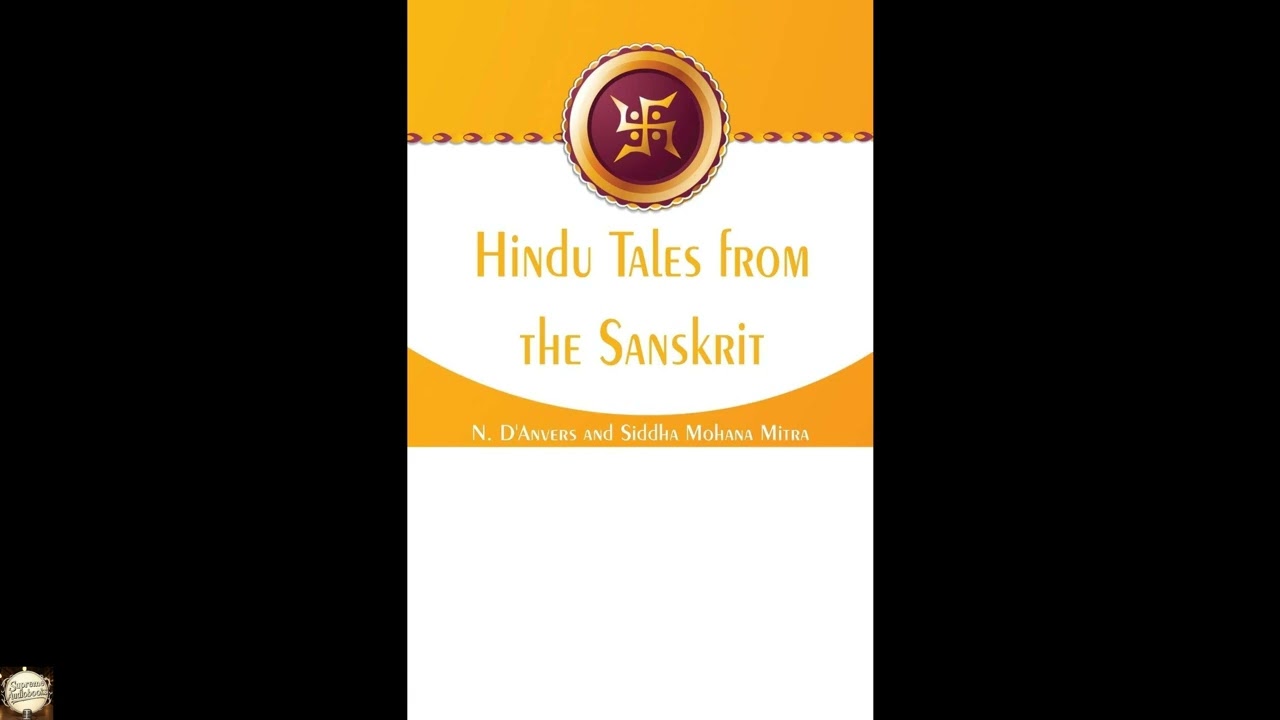
Hindu Tales from the Sanskrit
Step into a realm where wisdom whispers through the rustling leaves of ancient forests and gods walk among mortals, imparting lessons that echo through millennia. Hindu Tales from the Sanskrit invites listeners to rediscover the foundational narratives that have shaped a civilization and continue to resonate with universal truths. This collection offers more than mere entertainment; it is a gateway to the philosophical bedrock of India, a literary tradition where profound moral dilemmas, spiritual insights, and the whims of fate converge in stories both enchanting and instructive. These are tales that speak to the heart of what it means to be human, to navigate duty and desire, and to seek understanding in a complex world, making them as relevant to a contemporary audience as they were to their original listeners. The collection presents a kaleidoscope of narratives, drawing from the vast ocean of Sanskrit literature. Listeners will encounter parables featuring clever animals, much like those found in the Panchatantra and Hitopadesha, where a cunning jackal might outwit a prideful lion, or a wise bird offers counsel to a troubled king. Other stories introduce us to benevolent sages residing in secluded hermitages, offering guidance to weary travelers and powerful rulers alike, often through allegorical anecdotes that reveal deeper spiritual truths. We meet kings grappling with questions of governance and justice, queens navigating palace intrigue, and ordinary people facing extraordinary circumstances. Some stories recount the deeds of deities and demigods, illustrating the cosmic order and the interplay of divine will with human action. The narratives often unfold in a nested fashion, with one story leading into another, creating a layered and engaging experience where each tale serves as an example or explanation within a larger framework, much like a philosophical dialogue extended through generations. While there isn't a single overarching plot with a beginning, middle, and end in the traditional sense, the collection provides a narrative arc through its thematic progression. It moves from simpler fables illustrating basic ethical principles to more complex mythological accounts that grapple with existential questions and the nature of reality. Characters often face choices that test their integrity, their understanding of dharma—righteous conduct—and their capacity for selfless action. Conflict frequently arises from the clash between worldly desires and spiritual aspiration, or between differing interpretations of duty. We see individuals striving for liberation from suffering, grappling with the illusions of the material world, and seeking union with the divine. The resolution of these conflicts rarely involves simple victory; instead, it often comes through a deeper understanding, a shift in perspective, or the acceptance of one's place within the cosmic design, without revealing any specific conclusion from any particular story. The "authors," N D'Anvers and Siddha Mohana Mitra, serve as guides and translators for this compilation, rather than originators of the tales themselves. The stories gathered here descend from an oral tradition spanning millennia, eventually codified in the ancient Sanskrit language of India. Sanskrit literature is among the world's oldest and most extensive, encompassing the Vedas—hymns and rituals considered divine revelation—the Upanishads, which are profound philosophical treatises, and the grand epics such as the Ramayana and Mahabharata. These tales have for centuries served not only as entertainment but also as moral compasses, educational tools, and spiritual teachings within Indian society. N D'Anvers, a pseudonym for Clara Bell (1845-1923), was a prolific English translator and writer who dedicated much of her career to making significant foreign works accessible to an English-speaking audience. Her contributions often involved rendering complex academic or literary texts into clear, engaging prose. Siddha Mohana Mitra, an Indian scholar, provided the essential linguistic and cultural expertise necessary to accurately transmit the nuances and spiritual depths of the original Sanskrit texts. Their collaboration represents a crucial cross-cultural endeavor, bridging linguistic divides and introducing the profound wisdom of Indian storytelling to a wider Western audience during a period of burgeoning interest in Eastern thought. These collected tales are structured around several core themes that reappear across the diverse narratives, offering enduring insights into human experience. One central idea is karma, the principle of action and consequence. Many stories illustrate how every thought, word, and deed, whether good or ill, inevitably circles back to the doer, shaping their destiny. For instance, a tale might depict a king who, despite his power, faces a downfall due to his past injustices, while a humble devotee is rewarded for acts of kindness performed decades earlier. Another prominent theme is the distinction between wisdom and folly. Characters often learn through direct experience or through the advice of wise counselors that true intelligence lies not in worldly possessions or power, but in understanding the deeper spiritual laws that govern existence. A common narrative trope involves a seemingly insignificant character, perhaps a simple villager or a creature of the forest, imparting profound knowledge that eludes the learned or the mighty, demonstrating that insight can come from unexpected sources. The ephemeral nature of material attachments, often referred to as maya or illusion, is another recurring message. Many tales feature ascetics and sages who renounce worldly comforts to pursue spiritual realization, only to discover that true happiness lies beyond transient pleasures and possessions. A narrative might show a wealthy merchant losing everything, only to find peace in simplicity, or a proud prince humbled by the realization that his status is fleeting. Finally, the paramount importance of dharma, or righteous conduct, forms the ethical backbone of the collection. Whether it is a ruler upholding justice for his subjects, a child honoring their parents, or a sage adhering to their spiritual vows, the narratives consistently emphasize that living in accordance with one's moral and ethical duties is the path to spiritual merit and societal harmony. These tales use relatable scenarios to dramatize these abstract concepts, making them tangible and memorable. The emergence of Hindu Tales from the Sanskrit reflects a specific historical and cultural moment in the late nineteenth and early twentieth centuries. This period saw a significant growth in Western scholarship and interest in Eastern cultures, often termed Orientalism, which sought to catalogue, translate, and understand the vast literary and philosophical traditions of India. Figures like Max Müller spearheaded projects to translate the "Sacred Books of the East," making ancient texts accessible to a global audience. Against the backdrop of the British Raj in India, there was a complex interplay of colonial administration and intellectual curiosity, leading to efforts to bridge cultural understanding, albeit sometimes through a Western lens. This collection by D'Anvers and Mitra specifically caters to this burgeoning interest, providing a curated selection that would appeal to readers seeking spiritual wisdom, ethical guidance, and an introduction to Indian mythology and folklore, demonstrating a growing appreciation for the non-Western literary canon in the West. Listening to Hindu Tales from the Sanskrit as an audiobook offers a uniquely immersive way to experience these ancient narratives. With a listening experience spanning several hours, it provides ample time to settle into the rhythms and wisdom of each story. A skilled narrator brings the diverse cast of characters to life, from the booming pronouncements of gods to the subtle whispers of sages, the cunning words of animals, and the earnest pleas of mortals. The performance allows for a natural pacing, allowing listeners to absorb the philosophical weight of certain passages while enjoying the rapid unfolding of others. Listen for the subtle shifts in vocal tone that distinguish character types, and the atmospheric qualities created through the narrator's interpretation of ancient settings—the tranquility of a forest ashram, the grandeur of a royal court, or the intensity of a spiritual quest. This oral presentation reinforces the very tradition from which many of these stories emerged, inviting contemplation and making the wisdom of the ages accessible with a simple play button.
Enjoyed Hindu Tales from the Sanskrit? A few ways to support us
Audible & Amazon links are affiliate; we may earn a small commission at no extra cost.
About this production
Human narration by a volunteer reader from LibriVox.org, the public-domain audiobook project. LibriVox volunteers record literary works whose copyright has expired in the United States, releasing the resulting recordings into the public domain.
Hindu Tales from the Sanskrit by N D'Anvers and Siddha Mohana Mitra. The underlying text is in the U.S. public domain. We do not republish any modern copyrighted edition, translation, or commentary.
The 4K cinematic visuals accompanying this audiobook are generated by an AI image model from prompts derived from the source text. No copyrighted photos, paintings, or stock footage are used. AI generation is disclosed on every video on our YouTube channel as required by YouTube's altered/synthetic content policy.
English subtitles are transcribed from the LibriVox recording with OpenAI Whisper. Translations into the 11 other supported languages are produced by Meta's NLLB-200 neural translation model. No human translator's copyrighted translation is used.
Questions about sourcing or rights? See our DMCA & Sourcing policy or contact us.
Enjoyed this audiobook?
If you'd like to own a copy of Hindu Tales from the Sanskrit or hear a professionally produced edition, the links below help support free audiobook production at no extra cost to you.
As an Amazon Associate we earn from qualifying purchases. Audible / print links are affiliate.