A First Family of Tasajara
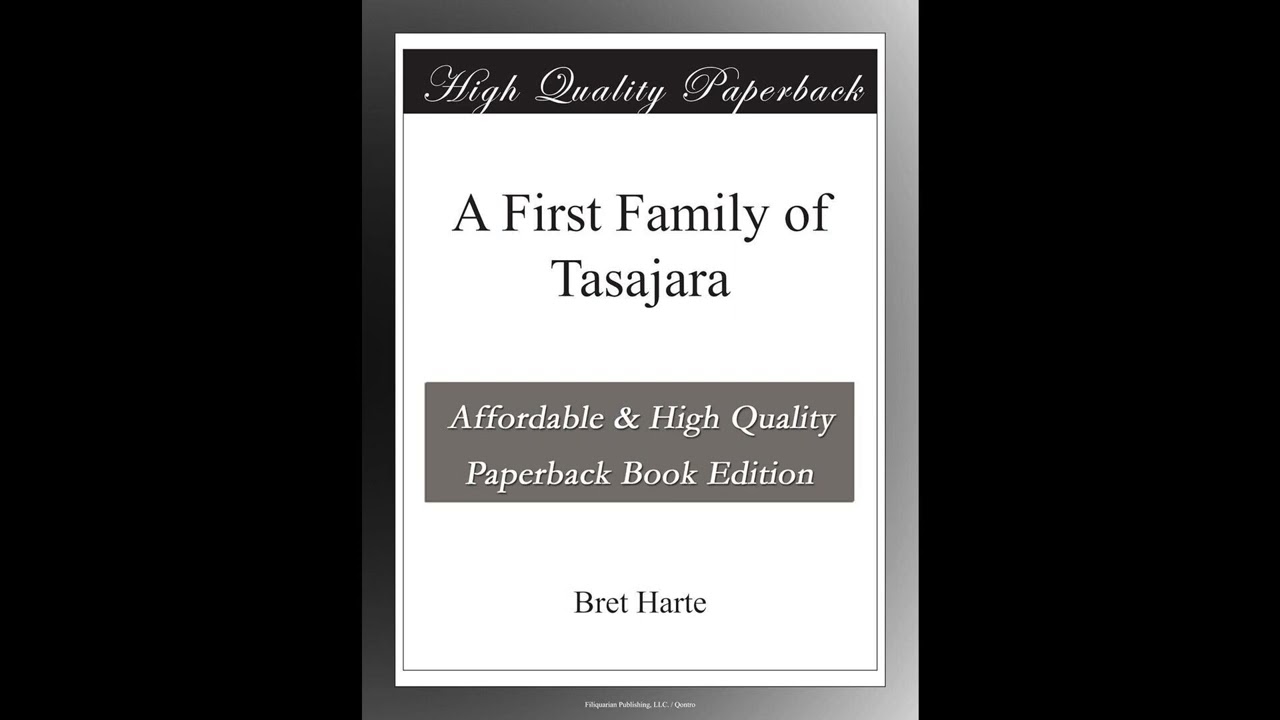
Bret Harte’s “A First Family of Tasajara” throws open a window onto a fascinating, often turbulent period of American history – the expansion into California and the forging of new societies from the raw elements of ambition, hope, and hidden pasts. This novel, a compelling extension of the vivid character studies Harte pioneered in his famous short stories, invites listeners into a world where status is both earned and inherited, where the untamed landscape mirrors the human heart, and where the veneer of civilization often cracks to reveal surprising truths. It speaks to the enduring human desire for belonging, for legacy, and for the kind of self-discovery that only arises when old certainties crumble. For anyone drawn to the dramatic birth pangs of the American West, or to narratives where personal struggles intersect with the grand sweep of history, Harte offers a uniquely insightful and moving experience that remains remarkably pertinent today. The story unfolds in the burgeoning, yet still wild, region of Tasajara, California, a place where fortunes are made and lost with bewildering speed, and where social hierarchies are constantly in flux. At the center of this world stands the Atherton family, the titular "First Family" whose established wealth and position seem unshakable. They represent the old guard, a vestige of eastern gentility transplanted to the rough-and-tumble West, yet beneath their polished surface lie secrets and vulnerabilities that threaten to unravel their carefully constructed world. The patriarch, John Atherton, a man of considerable influence and rigid principles, grapples with the challenges of maintaining his family’s prominence amidst the shifting sands of a rapidly developing society. The arrival of new individuals, with their own ambitions and mysterious backgrounds, introduces the central conflict. Young, eager, and often unburdened by the Atherton’s rigid traditions, these newcomers challenge the established order, vying for land, for love, and for a place in Tasajara’s future. Harte skillfully portrays the intricate dance between these competing forces, as relationships form and fracture, loyalties are tested, and the true character of each individual is laid bare against the backdrop of California’s majestic, often unforgiving, natural beauty. The novel meticulously builds towards a dramatic series of revelations, forcing characters to confront their pasts and make difficult choices that will redefine their futures and the very fabric of Tasajara itself, without ever fully revealing the ultimate fate of its key players until the very end. Francis Bret Harte, born in Albany, New York, in 1836, carved an indelible niche in American literature as the premier chronicler of the California Gold Rush era. His life was as adventurous as many of his stories. After moving to California in 1854, Harte held a variety of jobs—miner, expressman, teacher, journalist—experiences that deeply informed his writing. This direct contact with the frontier shaped his keen observations of character, dialect, and the unique social dynamics of the period. His breakthrough came in 1868 with the publication of "The Luck of Roaring Camp" in the Overland Monthly, a literary journal he edited. The story’s raw realism and sympathetic portrayal of rough-hewn characters captivated readers across the nation and in Europe, instantly establishing his reputation. Following his initial success, Harte continued to produce a steady stream of popular short stories, including "The Outcasts of Poker Flat" and "Tennessee's Partner," which further cemented his status as a pioneer of American local color writing. These works, along with "Miggles" and "Gabriel Conroy," showcased his blend of sentimentalism, humor, and unflinching realism. Despite his fame, Harte struggled with financial stability and eventually left America in the late 1870s, serving as a United States consul in Germany and later in Scotland. He spent the remainder of his life in England, where he continued to write prolifically until his death in 1902, forever linking his name with the romantic yet gritty spirit of the American West. “A First Family of Tasajara” enacts several compelling themes. One central idea is the conflict between established social order and the forces of change. The Athertons, representing old money and traditional values, find their authority and prestige challenged by the influx of new prospectors, entrepreneurs, and dreamers. Harte illustrates this through the family’s rigid adherence to decorum versus the rougher, more pragmatic approach of those building Tasajara from the ground up, often showing how even the most carefully constructed social façade can crack under pressure. Another significant theme is the power of reputation and the burden of secrets. Characters in Tasajara live in a society where one's past, whether real or rumored, can determine their future. Harte adeptly uses instances of whispered gossip and carefully guarded personal histories to demonstrate how much characters struggle to maintain a specific image, or conversely, to shed an unwanted one. The novel also thoughtfully considers the theme of identity forged in a new world. Many characters are transplants, attempting to redefine themselves away from their origins. This struggle for self-definition is particularly poignant in the younger generation of Athertons, who must reconcile their inherited status with their own desires and the evolving realities of Tasajara. Furthermore, Harte touches upon the enduring allure and corrupting influence of ambition, revealing how the pursuit of power, wealth, or love can lead individuals to both noble and ignoble acts. Through the interwoven storylines of the "First Family" and those who orbit them, Harte paints a picture of a society where personal growth often comes at a high cost, and where the promise of a fresh start is complicated by human frailty and the weight of the past. When "A First Family of Tasajara" was penned, America was in the throes of rapid expansion and transformation. The late nineteenth century saw the closing of the frontier, though the myths and realities of the West remained deeply embedded in the national consciousness. The economic boom following the Civil War, coupled with increasing immigration, fueled a desire for stories that captured the unique flavor of regional experiences. Bret Harte emerged as a leading voice in this literary landscape, popularizing the "local color" movement, which emphasized specific dialects, customs, and landscapes of particular regions. He, along with authors like Mark Twain, helped define an authentically American literary style, moving away from purely European models. This was a time when the romanticized image of the rugged individualist met the encroaching realities of civilization, law, and established communities. Harte's novel directly reflects this tension. It appeared during a period of intense public interest in the West, providing readers with narratives that were both exotic and familiar, filled with adventure, but also with profound human drama. His work filled a cultural need for stories that grappled with what it meant to build a society from scratch, to reconcile conflicting values, and to define American identity in a vast, diverse, and rapidly changing nation. Listening to "A First Family of Tasajara" as an audiobook brings Harte's nuanced characterizations and evocative descriptions to life in a distinct way. The narrator’s skill in differentiating voices for the varied cast—from the stern Athertons to the more boisterous figures of Tasajara—allows the listener to fully appreciate the social distinctions and personal struggles at play. Harte's prose, often marked by a blend of wit, pathos, and keen observation, gains an added layer of immediacy when spoken. The several hours of listening provide ample time to immerse oneself in the developing atmosphere of the California frontier, making the slow reveal of secrets and the building tension all the more impactful. Pay attention to the subtle shifts in tone during dialogue, which often hint at underlying motives or unspoken feelings, and let the narrator’s pacing guide you through the intricate social dance of Harte’s memorable characters and the raw beauty of the Tasajaran landscape.
Enjoyed A First Family of Tasajara? A few ways to support us
Audible & Amazon links are affiliate; we may earn a small commission at no extra cost.
About this production
Human narration by a volunteer reader from LibriVox.org, the public-domain audiobook project. LibriVox volunteers record literary works whose copyright has expired in the United States, releasing the resulting recordings into the public domain.
A First Family of Tasajara by Bret Harte. The underlying text is in the U.S. public domain. We do not republish any modern copyrighted edition, translation, or commentary.
The 4K cinematic visuals accompanying this audiobook are generated by an AI image model from prompts derived from the source text. No copyrighted photos, paintings, or stock footage are used. AI generation is disclosed on every video on our YouTube channel as required by YouTube's altered/synthetic content policy.
English subtitles are transcribed from the LibriVox recording with OpenAI Whisper. Translations into the 11 other supported languages are produced by Meta's NLLB-200 neural translation model. No human translator's copyrighted translation is used.
Questions about sourcing or rights? See our DMCA & Sourcing policy or contact us.
Enjoyed this audiobook?
If you'd like to own a copy of A First Family of Tasajara or hear a professionally produced edition, the links below help support free audiobook production at no extra cost to you.
As an Amazon Associate we earn from qualifying purchases. Audible / print links are affiliate.