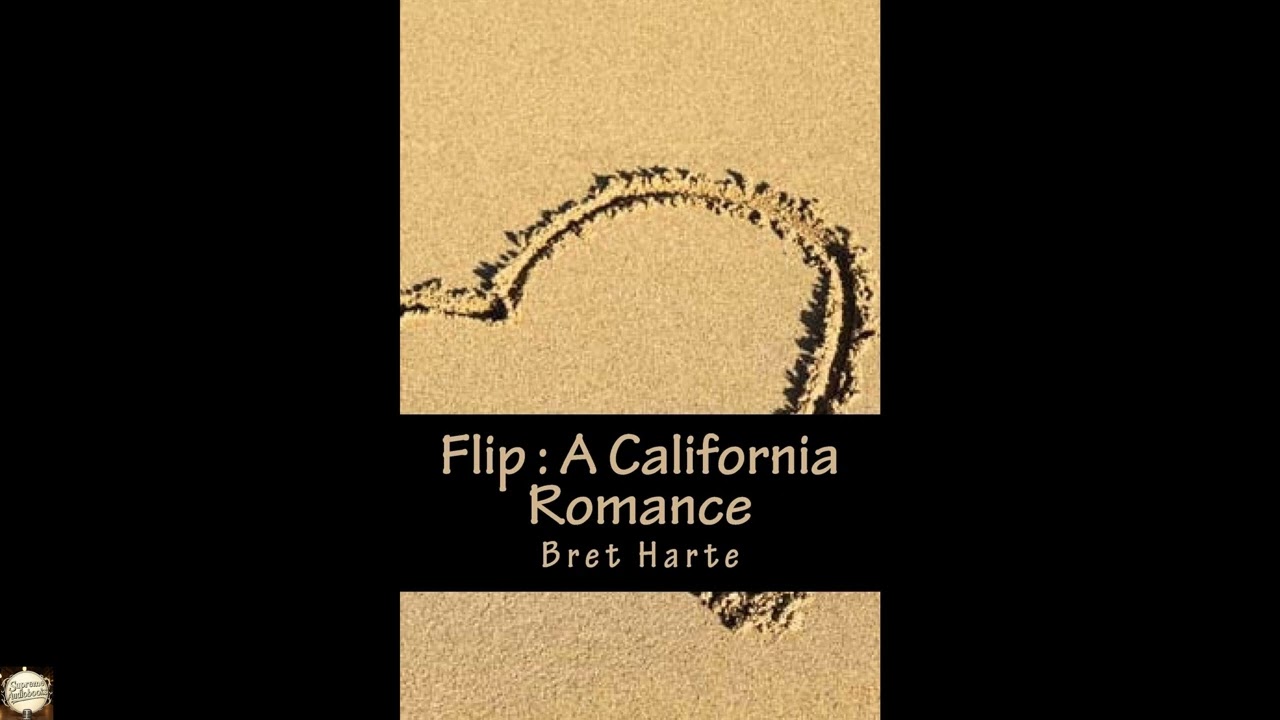
Flip : A California Romance
Step into the sun-drenched, dust-swept landscapes of Bret Harte's California with Flip : A California Romance, a compelling story that distills the rugged charm and untamed spirit of the American West. Harte, a foundational voice in American literature, was unmatched in his ability to capture the unique blend of hope, hardship, and humanity that characterized the Gold Rush era and its aftermath. This particular tale, while perhaps less widely known than some of his earlier short stories, offers a powerful testament to his enduring skill in crafting memorable characters and situations. It’s a narrative that speaks to the clash of wild independence with societal expectations, the surprising turns of the human heart, and the constant search for identity in a land still finding its own. Even today, the spirited protagonist and the dilemmas she faces resonate with anyone who has ever felt at odds with the world around them, making this a story as relevant for contemporary listeners as it was for those who first encountered it. The story unfolds in a relatively isolated corner of California, a place where the vestiges of the Gold Rush still linger in the rough-hewn communities and independent spirits of its inhabitants. At the heart of this setting is Flip, a young woman whose very name suggests her volatile and unpredictable nature. She is a creature of the wilderness, seemingly raised without the soft constraints of conventional society, possessing an almost feral grace and a fierce, unyielding will. Her background is shrouded in a tantalizing mystery, hinting at a past that has shaped her into the independent, often defiant, person she has become. Into Flip's world steps Father Arroyo, an earnest and compassionate Catholic priest dispatched to minister to the scattered populace. He arrives with a mission to bring order and moral guidance to a land where both can seem elusive, and his well-meaning intentions soon become deeply entangled with Flip's wild spirit. The central conflict quickly emerges from the stark contrast between Flip’s untamed existence and Father Arroyo’s devout mission. He sees in her a soul in need of salvation, a diamond in the rough that can be polished into a beacon of virtue. Flip, however, views his attempts with a mix of suspicion, amusement, and a surprising, almost reluctant, vulnerability. As the priest endeavors to teach her the ways of piety and decorum, an unspoken tension develops between them—a magnetic pull that challenges the boundaries of their respective roles. Their interactions are often charged with wit and pathos, as Flip tests the limits of Father Arroyo’s patience and convictions, while he, in turn, finds his own perceptions of faith and human nature continually broadened by her unconventional wisdom. The narrative builds around Flip's hidden history and the various pressures, both internal and external, that push her towards a pivotal revelation about who she truly is and where she belongs. Bret Harte, born Francis Bret Harte in Albany, New York, in 1836, left an indelible mark on American letters before his passing in London in 1902. His formative years in California, where he arrived at the age of eighteen in 1854, were crucial to his literary development. During his time in the Golden State, Harte held a remarkable array of jobs that exposed him to the diverse strata of frontier life: he worked as a miner, a teacher, an express messenger, a printer’s apprentice, and eventually, a journalist. This direct experience imbued his writing with an authenticity and vividness that captured the popular imagination. He rose to national prominence as the editor of The Overland Monthly, a magazine he helped found, and it was in its pages that he published his most famous short stories, including "The Luck of Roaring Camp" and "The Outcasts of Poker Flat." These stories, along with novels such as M'liss and Gabriel Conroy, established him as the preeminent chronicler of the California frontier. Harte played a pivotal role in the American Local Color movement, a literary trend that sought to depict the distinctive regional characteristics of American life. His work essentially created the literary archetype of the American West—its landscapes, its rough-and-ready inhabitants, its unique moral codes, and its underlying sense of optimism and opportunity. While often tinged with Romantic idealization, Harte's stories also contain elements of Realism, portraying his characters with a keen eye for their flaws and virtues. He brought the language and customs of the California mining camps and burgeoning towns to a wider national audience, essentially inventing a significant part of the American mythology surrounding the frontier. His early success led to a celebrated but ultimately challenging literary career, marked by both popular acclaim and personal struggles, as he spent later years living abroad, largely supported by his writing and various consular appointments. Flip : A California Romance exemplifies several key themes that run through Harte’s body of work. One prominent theme is that of identity and transformation. Flip herself is a compelling example of this, as she grapples with the expectations placed upon her by Father Arroyo and society, juxtaposed against her own wild, unburdened sense of self. Listeners witness her internal struggle between her natural inclinations and the potential for a different kind of life, a conflict perfectly illustrated when she shows fleeting moments of refinement that belie her rough exterior, only to revert to her spirited independence. Another strong theme is redemption and morality, which Harte presents not as a simple dichotomy of good and evil, but as a complex interplay of human will and circumstance. Father Arroyo, in his attempts to guide Flip, must confront his own rigid moral framework with the practical realities and unconventional goodness he finds in the frontier. His spiritual mission is continually tested and reshaped by Flip's unique, often disarming, moral compass. The novel also illuminates the distinct nature of frontier society and its social norms. In Harte's California, the established rules of older, more settled communities often give way to a pragmatic and often improvisational code of conduct. The independence of characters like Flip, who exists outside conventional expectations for women of her time, highlights the greater freedoms and looser structures of this burgeoning society. This societal fluidity is depicted through the interactions of various community members who, despite their rough edges, often display surprising generosity and a strong sense of communal loyalty. Finally, the story touches upon the theme of love and sacrifice, not just in a romantic sense, but in the broader context of human connection. The relationships formed, the difficult choices made for the sake of another, and the unexpected tenderness that can blossom in harsh environments all speak to the enduring power of human affection and selflessness. When Bret Harte was writing, the United States was still coming to terms with its post-Civil War identity and grappling with the implications of westward expansion. The California Gold Rush, though past its peak, had profoundly altered the state’s demography and character, creating a unique social environment that blended elements of lawlessness, innovation, and diverse cultures. There was a burgeoning national appetite for stories that captured distinct American experiences, moving beyond the literary models imported from Europe. Harte, along with other regional writers, stepped into this void, offering readers a glimpse into a world that felt distinctly American—a world of rugged individualism, sudden fortune and loss, and the forging of new communities in a vast, untamed landscape. His stories helped to define the popular image of the "Wild West" for generations, shaping the national narrative of pioneers and frontiersmen during a period of intense growth and self-discovery for the young nation. Flip : A California Romance emerged from this fertile literary and cultural ground, reflecting a keen interest in the personal dramas unfolding against the backdrop of an expanding and mythologized American frontier. Listening to Flip : A California Romance as an audiobook offers a singular opportunity to fully immerse oneself in Harte's vividly drawn world. A skilled narrator brings a crucial dimension to the story, conveying the subtle shifts in emotion and intention that might otherwise be missed. Listen for the narrator’s delivery of Flip’s spirited, often unpredictable dialogue, capturing her untamed essence and underlying vulnerability. Pay attention also to the quiet earnestness of Father Arroyo’s voice, allowing his internal struggles and growing affection to unfold. The pacing of the narration can truly bring out the story’s ebb and flow, from moments of tense mystery to scenes of poignant introspection, and even lighthearted banter. The auditory experience can bring the sounds and atmosphere of nineteenth-century California to life, from the whisper of the wind through chaparral to the distinct cadences of its frontier inhabitants, creating a truly atmospheric and engaging experience during the story's several hours of unfolding drama.
Enjoyed Flip : A California Romance? A few ways to support us
Audible & Amazon links are affiliate; we may earn a small commission at no extra cost.
About this production
Human narration by a volunteer reader from LibriVox.org, the public-domain audiobook project. LibriVox volunteers record literary works whose copyright has expired in the United States, releasing the resulting recordings into the public domain.
Flip : A California Romance by Bret Harte. The underlying text is in the U.S. public domain. We do not republish any modern copyrighted edition, translation, or commentary.
The 4K cinematic visuals accompanying this audiobook are generated by an AI image model from prompts derived from the source text. No copyrighted photos, paintings, or stock footage are used. AI generation is disclosed on every video on our YouTube channel as required by YouTube's altered/synthetic content policy.
English subtitles are transcribed from the LibriVox recording with OpenAI Whisper. Translations into the 11 other supported languages are produced by Meta's NLLB-200 neural translation model. No human translator's copyrighted translation is used.
Questions about sourcing or rights? See our DMCA & Sourcing policy or contact us.
View 10 famous quotes from this book →
Enjoyed this audiobook?
If you'd like to own a copy of Flip : A California Romance or hear a professionally produced edition, the links below help support free audiobook production at no extra cost to you.
As an Amazon Associate we earn from qualifying purchases. Audible / print links are affiliate.