A Select Party
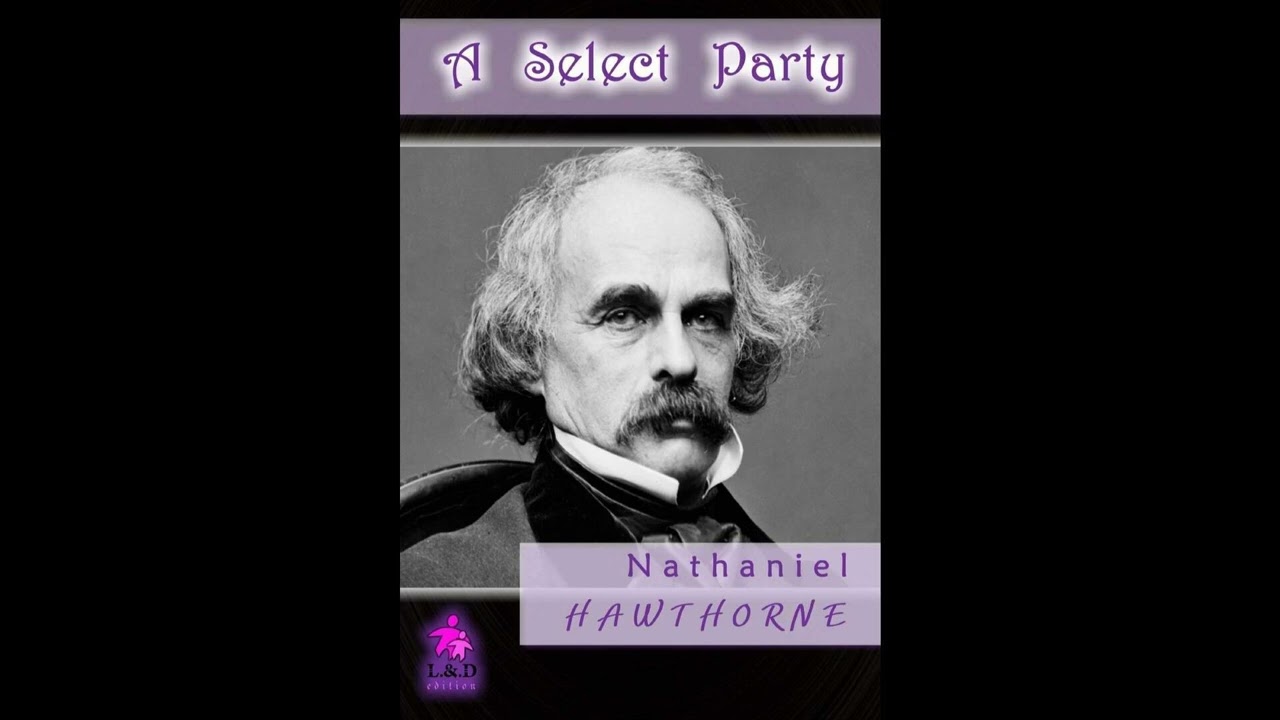
Imagine a gathering where the very fabric of human experience takes on flesh and converses, not as metaphor, but as actual guests within a grand, old mansion. Nathaniel Hawthorne's "A Select Party" invites you to just such an extraordinary nocturnal assembly, a literary salon unlike any other, conjured from the deep well of the author's imagination. This is more than a mere ghost story or a social satire; it is a profound meditation on existence itself, revealing how the abstract forces that shape our lives—from our fleeting joys to our abiding sorrows—mingle, interact, and define the essence of being. What makes a party "select," truly? Is it wealth, status, or something far more intrinsic? This timeless question, posed with Hawthorne's characteristic grace and psychological penetration, remains as relevant today as when this unique tale was first conceived, urging us to consider the hidden guests at the banquet of our own lives. The story unfolds on a cold, snow-laden winter's night, within the stately, somewhat melancholic confines of an ancient, ancestral house. Here, its aged and enigmatic proprietor has chosen to host an unparalleled gathering, extending invitations to a most peculiar roster of guests. Among those who arrive through the swirling snowflakes are figures representing the very pillars of human reality: Youth, radiating an almost painful freshness; Old Age, bearing the weight of countless years; the ethereal, ever-shifting presence of Fancy; the more grounded and observant Humour; and the quiet, persistent shadow of Gloom. Also present are the boisterous Laughter, the pensive Sorrow, the formidable Strength, and the radiant Beauty, each embodying their designated aspect with vivid, almost tangible reality. The central conflict, subtle yet pervasive, lies not in overt clashes but in the delicate interactions and underlying tensions between these personified concepts. The host, a keen observer, watches as his singular company assembles and begins its strange conviviality. He wonders about the true nature of his creation, the purpose of such a gathering, and whether these distinct aspects of life can ever truly harmonize or even comprehend one another. As the night progresses, the conversations flow, sometimes harmonious, often marked by the inherent friction of their disparate natures, creating an atmosphere that is at once fantastical and deeply reflective of the human condition. The narrative traces the gentle arc of the evening, from the first greetings to the quiet ebb of the festivities, leaving the reader to ponder the host's ultimate satisfaction—or disillusionment—with his grand experiment. Nathaniel Hawthorne, born in Salem, Massachusetts, in 1804, was a towering figure in nineteenth-century American literature, whose distinctive voice carved out a unique space in the literary landscape. His lineage traced back to the early Puritan settlers of New England, including a judge involved in the infamous Salem Witch Trials, a fact that deeply influenced his writing and his lifelong preoccupation with themes of ancestral guilt, sin, and morality. He added the "w" to his surname early in his career, perhaps to distance himself from this complicated family history. After graduating from Bowdoin College alongside figures like Henry Wadsworth Longfellow and future President Franklin Pierce, Hawthorne spent years honing his craft, often in relative obscurity, publishing short stories that would later be collected in volumes like Twice-Told Tales. His career took a significant turn with the publication of The Scarlet Letter in 1850, a novel that cemented his reputation and remains a cornerstone of American literature. This was followed by The House of the Seven Gables and The Blithedale Romance, each continuing his exploration of the psychological complexities beneath the surface of New England life. Hawthorne’s work is often categorized under American Romanticism, specifically Dark Romanticism, a subgenre that acknowledges the inherent darkness and potential for evil within humanity. His prose, known for its evocative imagery and subtle symbolism, consistently questioned societal norms, religious hypocrisy, and the enduring legacy of the past on the present. "A Select Party," like much of Hawthorne's short fiction, acts as a sophisticated allegory, with its very structure serving as a symbolic representation of profound ideas. One of the central themes enacted is the fragmentation and unity of human experience. By inviting Youth, Old Age, Fancy, and Gloom as distinct individuals, Hawthorne makes tangible the often-abstract components of our inner lives. The story shows how these elements, though seemingly separate, are constantly present and interact within each person, much like the conversations and silent understandings among the guests at the party. For instance, the dialogue between Youth and Old Age reveals not just the differences in their perspectives but also the cyclical nature of human life, where one inevitably gives way to or informs the other. Another significant theme is the power and limitations of the creative imagination. The host, in a sense, embodies the artist or the dreamer, capable of conceiving and bringing forth such a fantastical assembly. The character of Fancy, with her quicksilver changes and ability to conjure images, directly illustrates this theme. Yet, the story also hints at the limits of this power, suggesting that even the most elaborate imaginative construct must contend with the realities of human nature—represented by the less agreeable guests like Gloom or the weight of Old Age—and perhaps cannot truly control the outcome of its own creation. The very existence of such a party, born purely from an imaginative impulse, allows Hawthorne to ponder what it means to create and to witness one's own internal landscape made external. When Hawthorne was writing his influential short stories and novels in the mid-19th century, America was undergoing a period of profound cultural and intellectual ferment. The nation was grappling with its identity, moving away from its colonial past towards an increasingly complex future. This was the era of the Transcendentalist movement, with figures like Ralph Waldo Emerson and Henry David Thoreau championing individualism, intuition, and a mystical connection to nature. While Hawthorne shared some thematic ground with his Transcendentalist contemporaries, particularly in his focus on spiritual matters, he often diverged by emphasizing the darker aspects of human nature, sin, and the constraints of society, rather than pure optimism. His works emerged at a time when American authors were actively seeking to define a distinct national literature, one that could stand alongside European traditions while reflecting the unique historical and moral landscape of the New World, particularly the Puritan legacy of New England. Listening to "A Select Party" as an audiobook offers a singular opportunity to immerse yourself in Hawthorne's atmospheric prose and its rich allegorical depths. The narrator's voice becomes crucial in delineating the distinct personalities of the abstract guests—the youthful exuberance, the weary wisdom of age, the playful wit of humour, the quiet weight of sorrow. A skillful vocal performance can elevate the experience, allowing the subtle nuances of each character's interaction to resonate more deeply. The measured pacing of the narration permits reflection, inviting you to ponder the significance of each encounter and the broader implications of the host's unusual experiment. This brief, powerful tale is perfectly suited for audio, transforming a written meditation into a vivid, almost theatrical experience that unfolds within the quiet space of your own imagination, much like the party itself.
Enjoyed A Select Party? A few ways to support us
Audible & Amazon links are affiliate; we may earn a small commission at no extra cost.
About this production
Human narration by a volunteer reader from LibriVox.org, the public-domain audiobook project. LibriVox volunteers record literary works whose copyright has expired in the United States, releasing the resulting recordings into the public domain.
A Select Party by Nathaniel Hawthorne. The underlying text is in the U.S. public domain. We do not republish any modern copyrighted edition, translation, or commentary.
The 4K cinematic visuals accompanying this audiobook are generated by an AI image model from prompts derived from the source text. No copyrighted photos, paintings, or stock footage are used. AI generation is disclosed on every video on our YouTube channel as required by YouTube's altered/synthetic content policy.
English subtitles are transcribed from the LibriVox recording with OpenAI Whisper. Translations into the 11 other supported languages are produced by Meta's NLLB-200 neural translation model. No human translator's copyrighted translation is used.
Questions about sourcing or rights? See our DMCA & Sourcing policy or contact us.
Enjoyed this audiobook?
If you'd like to own a copy of A Select Party or hear a professionally produced edition, the links below help support free audiobook production at no extra cost to you.
As an Amazon Associate we earn from qualifying purchases. Audible / print links are affiliate.