The Well of the Saints: A Comedy in Three Acts
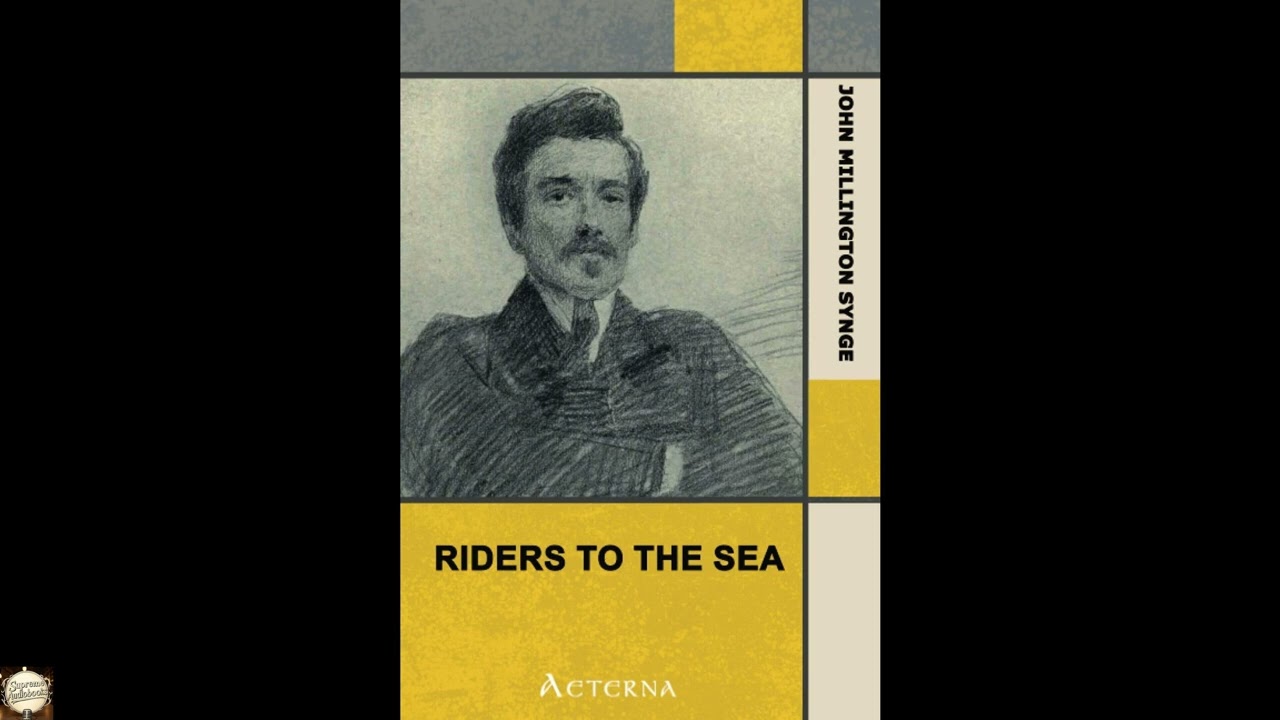
What if the truth, when finally revealed, shatters the very foundation of your happiness? This is the poignant, often darkly comedic question at the heart of John Millington Synge’s The Well of the Saints: A Comedy in Three Acts. Written during a pivotal era for Irish literature, this play doesn't just entertain; it challenges deeply held notions about beauty, perception, and the elusive nature of contentment. It asks whether it’s better to live in a comforting illusion or face an unvarnished, perhaps brutal, reality. For listeners today, Synge’s sharp, lyrical dialogue and his unflinching look at human frailty offer a resonant reflection on our own desires to shape the world to our liking, even as reality asserts its own stubborn form. The play opens in a remote, sparsely populated corner of rural Ireland, a world steeped in superstition and simple rhythms. Here we meet Martin and Mary Doul, an elderly, poverty-stricken couple. They are blind, and have been for many years, but far from being miserable, they live in a state of contented, if deluded, bliss. In their darkness, they have constructed idealized images of each other and their surroundings. Martin believes Mary to be a radiant beauty with golden hair, while Mary imagines Martin as a handsome, strong man. The local villagers, though often cruel in their daily dealings, maintain a pitying, almost benevolent front towards the couple, largely because of their blindness. This delicate balance of self-deception and communal pretense is abruptly disturbed by the arrival of a traveling Saint, renowned for his miraculous healing powers. The Saint, touched by the Douls’ apparent plight, offers them a cure from the holy water of the well. With their sight restored, the couple’s world is immediately, violently upended. The golden hair turns grey, the strong man appears aged and wizened. The perceived beauty of their youth crumbles into the harsh reality of their old age and poverty. Their idealizations of each other collapse, leading to immediate revulsion and bitter recrimination. The villagers, who had pitied their blindness, now mock their perceived ugliness and their inability to adapt to a world they once only dreamed of. Cast out from their former sanctuary of illusion, Martin and Mary find themselves truly alone, facing a world that is far uglier and more mundane than their imaginations had ever conjured. The story follows their subsequent struggles to navigate a sighted world that offers them little comfort or joy, longing instead for the peace of their former darkness. The play’s tension builds as they grapple with the consequences of their “cure,” ultimately leading to a profound choice about their future and the nature of their own happiness. The author, John Millington Synge, was a towering figure in the Irish Literary Revival, a movement that sought to create a distinctive Irish national drama. Born in 1871 near Dublin into a Protestant, Anglo-Irish family, Synge was initially drawn to music, studying violin, piano, and composition. However, his interests soon turned to literature and languages, leading him to travel extensively across Europe. His formative experience came in Paris in 1896, where he met W.B. Yeats, who famously urged him to abandon his cosmopolitan pursuits and return to Ireland, specifically to the Aran Islands, to "express a life that has never been expressed in literature." This encounter was a catalyst for Synge, sending him to the isolated western coast of Ireland, where he immersed himself in the lives and language of the Irish-speaking communities. Synge spent several summers observing and documenting the lives of the islanders, absorbing their unique dialect, folklore, and worldview. This period proved foundational for his dramatic output, allowing him to craft plays that captured the authentic voice and spirit of rural Ireland with unparalleled authenticity. He became a key figure in the Abbey Theatre, co-founding it with Yeats and Lady Augusta Gregory. His plays, including Riders to the Sea, a haunting one-act tragedy, and his most famous and controversial work, The Playboy of the Western World, revolutionized Irish drama. Synge’s work is characterized by its lyrical prose, often based on the cadences of Anglo-Irish speech, and its unsentimental portrayal of rural life, which sometimes sparked outrage among nationalists who felt he presented a derogatory image of the Irish peasantry. Despite his tragically early death in 1909 at the age of 37, Synge left behind a small but incredibly significant body of work that cemented his place as one of Ireland’s greatest playwrights. At its core, The Well of the Saints examines the stark contrast between illusion and reality. The Douls’ happiness is initially predicated on their imagined beauty, a beautiful fiction sustained by their blindness. Their distress upon gaining sight—seeing each other and the world as aged and harsh—powerfully demonstrates how our perceptions, and the stories we tell ourselves, can shape our contentment more profoundly than objective truth. Martin’s lament, "It was my grief to see my wife a withered hag," stands in stark opposition to his earlier belief in her radiant youth, laying bare the painful gap between his fantasy and the truth. Related to this is the theme of beauty and ugliness, and their subjective nature. The play suggests that beauty is often in the eye of the beholder, or more accurately, in the mind of the beholder. The villagers initially see the blind couple as worthy of pity and a degree of reverence, but once their “ugliness” is revealed by sight, that pity turns to scorn and ridicule, underscoring society’s often superficial judgments. A deeper consideration lies in the nature of happiness itself. Synge prompts us to question whether a happiness born of ignorance is less valid than one forged in the crucible of harsh truth. The Douls were undeniably content when blind, experiencing a peace that vanishes with their sight. Their subsequent despair forces us to ask if the pursuit of "truth" at all costs is always beneficial, or if there is value in the sustaining power of comfortable delusions. Furthermore, the play subtly touches upon the different forms of blindness, both literal and metaphorical. While Martin and Mary are literally blind, the sighted villagers often demonstrate a metaphorical blindness—to their own cruelty, to the Douls' previous inner peace, and to the true meaning of compassion. They cannot see beyond the surface, judging the Douls by their physical appearance rather than understanding their deeper struggles with identity and perceived worth. Synge wrote The Well of the Saints in 1905, a period of immense cultural and political ferment in Ireland. The turn of the 20th century saw a burgeoning sense of Irish nationalism, a movement striving for self-determination and a distinct cultural identity separate from British influence. Part of this effort involved the creation of a national literature and drama that reflected Irish life and folklore, giving rise to the Irish Literary Revival. Synge, along with Yeats and Lady Gregory, was instrumental in establishing the Abbey Theatre as a home for this new drama. The Well of the Saints emerged from this crucible, yet it did not always align perfectly with nationalist ideals. While many desired heroic or romantic portrayals of the Irish people, Synge’s realism, his portrayal of rural folk with their flaws, superstitions, and rough humor, often caused controversy. Some critics and audiences felt his work presented an unflattering image of the Irish peasantry, particularly The Playboy of the Western World, which caused riots. The Well of the Saints, though less incendiary, still reflected Synge's commitment to portraying the authentic, unvarnished life and speech of the people he encountered, rather than idealized archetypes, positioning it as a significant, and sometimes challenging, contribution to the emerging Irish cultural narrative. Listening to The Well of the Saints as an audiobook provides a unique opportunity to experience the play’s true theatricality and the distinctive genius of Synge’s dialogue. His language, often referred to as "Synge-song," is a carefully crafted Anglo-Irish idiom, rich with lyrical rhythms, vivid imagery, and a cadence that echoes the natural speech patterns he observed in western Ireland. An expert narration brings these voices to life, allowing the listener to truly appreciate the subtle humor, the deep pathos, and the dramatic shifts in tone that define the work. The run length of several hours makes it suitable for attentive listening, perhaps over a few sessions, allowing the listener to absorb the nuances of the characters’ emotional transformations and the profound questions the play raises. Pay close attention to how the narrators differentiate the characters, the way the dialogue flows between the bewildered Martin and Mary, the sanctimonious Saint, and the often-gossiping villagers. The spoken word reveals the play's unique atmosphere of isolation, disillusionment, and the eternal human struggle to find beauty and happiness, no matter the cost of truth.
Enjoyed The Well of the Saints: A Comedy in Three Acts? A few ways to support us
Audible & Amazon links are affiliate; we may earn a small commission at no extra cost.
About this production
Human narration by a volunteer reader from LibriVox.org, the public-domain audiobook project. LibriVox volunteers record literary works whose copyright has expired in the United States, releasing the resulting recordings into the public domain.
The Well of the Saints: A Comedy in Three Acts by John Millington Synge. The underlying text is in the U.S. public domain. We do not republish any modern copyrighted edition, translation, or commentary.
The 4K cinematic visuals accompanying this audiobook are generated by an AI image model from prompts derived from the source text. No copyrighted photos, paintings, or stock footage are used. AI generation is disclosed on every video on our YouTube channel as required by YouTube's altered/synthetic content policy.
English subtitles are transcribed from the LibriVox recording with OpenAI Whisper. Translations into the 11 other supported languages are produced by Meta's NLLB-200 neural translation model. No human translator's copyrighted translation is used.
Questions about sourcing or rights? See our DMCA & Sourcing policy or contact us.
View 10 famous quotes from this book →
Enjoyed this audiobook?
If you'd like to own a copy of The Well of the Saints: A Comedy in Three Acts or hear a professionally produced edition, the links below help support free audiobook production at no extra cost to you.
As an Amazon Associate we earn from qualifying purchases. Audible / print links are affiliate.