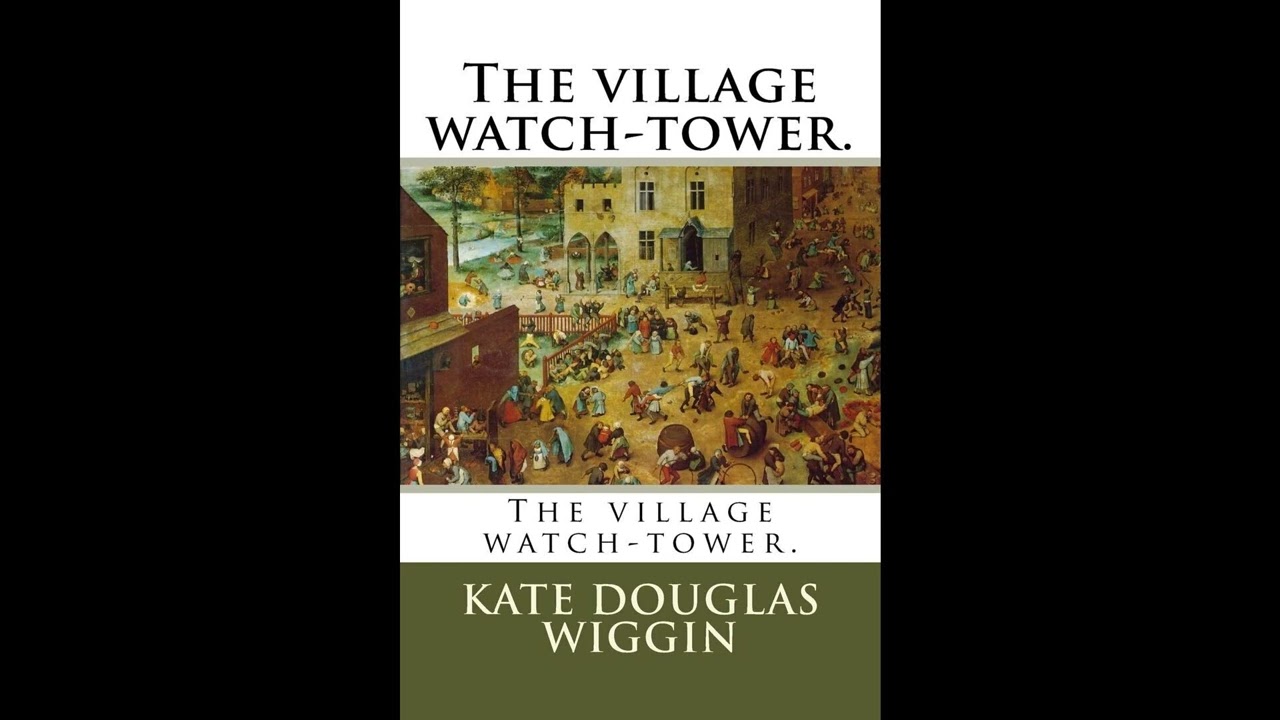
The village watch-tower
Step into a quiet corner of late nineteenth-century America, where the rhythms of life move with the seasons and human nature unfolds in all its simple, profound complexity. Kate Douglas Wiggin’s "The Village Watch-Tower" offers a collection of finely drawn sketches and novellas that serve as a gentle yet perceptive lens into the hearts and minds of small-town folk. This is not a sprawling epic or a rapid-fire thriller, but rather a series of intimate portraits – each story a window into a particular life or community, observed with a blend of warmth, wit, and wisdom. For listeners today, it provides not only a charming escape to a bygone era but also a resonant meditation on enduring human themes: the beauty of everyday grace, the subtle strengths found in quiet lives, and the enduring power of community to both challenge and sustain us. It reminds us that truth and drama are often found not in grand gestures, but in the small, often overlooked moments that shape character and destiny. The stories gathered within "The Village Watch-Tower" typically transport the listener to the verdant, often snow-dusted landscapes of rural New England, or occasionally to charming European locales through an American observer’s eyes. Wiggin’s settings are less backdrops and more active participants, shaping the daily routines and perspectives of her characters. We meet individuals who are often on the cusp of a decision, grappling with personal foibles, or simply living out their days under the collective eye of their neighbors. There is Mrs. Peterkin, whose quiet acts of kindness ripple through her community, or the earnest musicians whose passion for their craft transcends their humble surroundings. Each narrative centers on a distinct set of circumstances, presenting small domestic dramas or moral quandaries that illuminate the human condition without ever resorting to sensationalism. The central conflicts in these tales are rarely external battles against villainous forces; instead, they are often internal struggles of character, misunderstandings between well-meaning people, or the gentle clash between tradition and a budding desire for change. Whether it's a matter of misplaced pride, a moment of profound generosity, or the quiet courage to face a personal loss, Wiggin focuses on the psychological landscape of her subjects. Her characters, though varied, share a common thread of earnestness, striving to live meaningful lives within the confines and comforts of their communities. The overarching arc of the collection, rather than following a single plot, is one of cumulative understanding, slowly building a mosaic of human experience that is both specific to its time and universally recognizable. Each story, in its own way, resolves not with a thunderclap, but with a quiet, satisfying unfolding of truth and reconciliation, leaving the listener with a sense of completion and thoughtful reflection. The author behind these insightful observations, Kate Douglas Wiggin, was born Kate Douglas Smith in Philadelphia in 1856 and passed away in 1923. Her life was as varied and industrious as the characters she often depicted. After moving to California, she became a pioneer in kindergarten education, establishing the first free kindergarten on the West Coast in San Francisco in 1878. This foundational work with children deeply informed her writing, instilling in it a profound understanding of youthful innocence, development, and the power of nurturing environments. Later, she married Samuel Wiggin, and her literary career blossomed, often drawing inspiration from her native New England and her experiences both at home and during her travels abroad. Wiggin's literary output was considerable and widely beloved in her time. She is perhaps best known for "Rebecca of Sunnybrook Farm," a classic of children's literature that continues to charm readers with its spirited protagonist and heartfelt themes. Other notable works include "The Birds' Christmas Carol," a holiday favorite, and "Mother Carey's Chickens." Her place in the literary canon is often associated with the local color movement of the late nineteenth century, a style that emphasized detailed regional settings and dialect, capturing the unique character of specific American locales. She brought a distinctive blend of humor, sentiment, and moral instruction to her narratives, cementing her reputation as a voice of optimism and clear-eyed compassion during an era of rapid societal change. "The Village Watch-Tower" enacts several enduring themes, foremost among them the power of community and interconnectedness. In stories like "The Homing of Joanna," we see how the collective spirit of a village, with all its gossip and goodwill, acts as a protective, if sometimes stifling, force. Joanna’s longing for independence is met with the ingrained expectations of her neighbors, creating a poignant tension that reveals the delicate balance between individual desire and communal belonging. Another central theme is the quiet dignity found in ordinary lives. Wiggin consistently spotlights characters who, despite humble circumstances or perceived insignificance, possess a profound inner strength and a capacity for grace. The musician in "A Village Stradivarius," for instance, channels his passion and talent into his craft, finding meaning and transcendence in his art, regardless of whether it is recognized by the wider world. His quiet dedication speaks to the immense value of pursuing one's calling, however small. Kindness and empathy also emerge as recurring motifs. Wiggin’s narratives often hinge on moments of human understanding, where characters extend compassion or offer support without expectation of reward. These acts of generosity, often subtle, illuminate the moral fabric of her communities and highlight the transformative potential of simple human goodness. Furthermore, the collection subtly touches upon the resilience of the human spirit in the face of life’s inevitable disappointments. Characters often confront loss, unfulfilled dreams, or social pressures, yet they navigate these challenges with a quiet fortitude, finding solace in their faith, their work, or the unwavering support of those around them. Wiggin’s narrative lens never shies away from hardship but always seeks out the glimmer of hope and the inherent worth in simply enduring. When "The Village Watch-Tower" was published in 1895, America was nearing the close of the Gilded Age, a period marked by rapid industrialization, increasing urbanization, and significant social changes. While major cities were booming with new technologies and a growing divide between wealth and poverty, much of the country still functioned on the rhythms of rural life, particularly in New England, which had a long literary tradition of introspection and regional focus. Culturally, there was a widespread appreciation for literature that offered comfort, moral guidance, and a sense of shared values, often contrasting with the perceived complexities and anxieties of modern life. In the literary world, the local color movement was flourishing, with authors like Sarah Orne Jewett and Mary E. Wilkins Freeman gaining prominence for their realistic portrayals of specific regions. Wiggin fit comfortably within this tradition, though her tone often leaned towards the more sentimental and optimistic, offering a comforting antidote to the burgeoning realism and naturalism that were also gaining traction. Her work provided readers with a gentle escape, a reaffirmation of community spirit, and a celebration of the enduring virtues found in the fabric of everyday American life, appealing to a broad audience looking for narratives that affirmed goodness and resilience. Her stories emerged as a reflection of, and often a gentle counterpoint to, the societal transformations of her era, preserving a sense of simpler virtues amidst a world rapidly becoming more complicated. Listening to "The Village Watch-Tower" as an audiobook allows its gentle charm and perceptive insights to truly unfold. Its several hours of narration offer an ideal pace for immersion, inviting the listener to settle into the narratives rather than rush through them. A skilled narrator brings Wiggin’s characters to life with nuanced voice work, distinguishing between the various villagers and capturing the subtle humor, quiet determination, and genuine affection that pervade the stories. The pacing of the narration often mirrors the unhurried life of the villages depicted, allowing moments of reflection to breathe and significant observations to land with their full emotional weight. Pay particular attention to the dialogue, which is rendered with an authentic, period-appropriate cadence, enhancing the feeling of being transported to a specific time and place. The overall atmosphere created through careful narration transforms this collection into a soothing, yet thought-provoking, companion for quiet afternoons or contemplative evenings.
Enjoyed The village watch-tower? A few ways to support us
Audible & Amazon links are affiliate; we may earn a small commission at no extra cost.
About this production
Human narration by a volunteer reader from LibriVox.org, the public-domain audiobook project. LibriVox volunteers record literary works whose copyright has expired in the United States, releasing the resulting recordings into the public domain.
The village watch-tower by Kate Douglas Wiggin. The underlying text is in the U.S. public domain. We do not republish any modern copyrighted edition, translation, or commentary.
The 4K cinematic visuals accompanying this audiobook are generated by an AI image model from prompts derived from the source text. No copyrighted photos, paintings, or stock footage are used. AI generation is disclosed on every video on our YouTube channel as required by YouTube's altered/synthetic content policy.
English subtitles are transcribed from the LibriVox recording with OpenAI Whisper. Translations into the 11 other supported languages are produced by Meta's NLLB-200 neural translation model. No human translator's copyrighted translation is used.
Questions about sourcing or rights? See our DMCA & Sourcing policy or contact us.
Enjoyed this audiobook?
If you'd like to own a copy of The village watch-tower or hear a professionally produced edition, the links below help support free audiobook production at no extra cost to you.
As an Amazon Associate we earn from qualifying purchases. Audible / print links are affiliate.