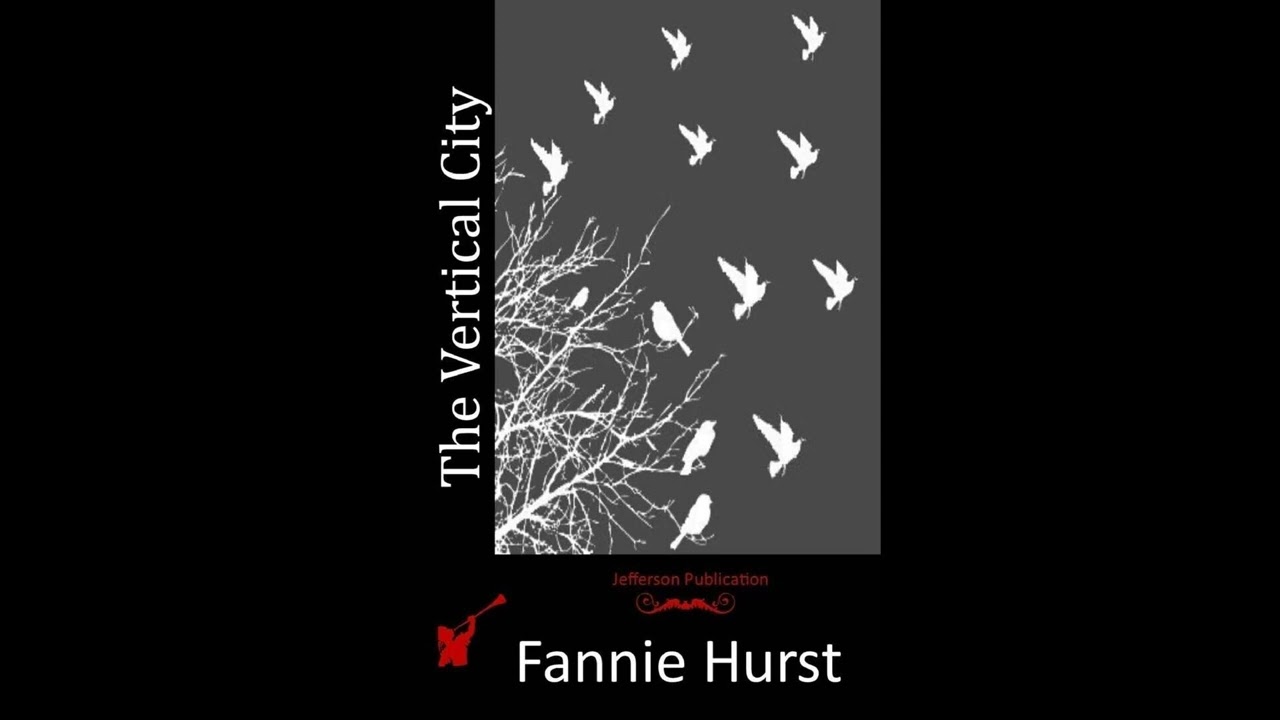
The Vertical City
Fannie Hurst's The Vertical City offers a striking portrait of a young woman navigating the thrilling and often brutal landscape of early 20th-century New York. More than just a story of ambition and romance, this novel, first published in 1922, acts as a cultural time capsule, illuminating the profound shifts in societal expectations for women, the relentless pulse of urban life, and the enduring human quest for identity and belonging. Its insights into the compromises demanded by progress, the allure of success, and the hidden costs of independence remain remarkably pertinent, speaking to anyone who has ever wrestled with the promise and peril of a sprawling metropolis or the delicate balance between personal desires and external pressures. The story centers on Victoria, a young woman who arrives in New York City with little more than her dreams and a fierce determination to make her mark. Fresh from a more conventional background, she finds herself immersed in a world of dizzying heights and crowded anonymity, a city that simultaneously promises boundless opportunity and threatens to swallow individual aspirations whole. Victoria is quickly drawn into the whirlwind of the burgeoning professional scene, discovering talents and strengths she never knew she possessed as she strives for independence. Her journey involves establishing a career and forging a new existence far removed from the domestic expectations of her upbringing. As Victoria builds her life in the metropolis, she encounters a range of characters who embody the city's diverse spirit – from ambitious professionals to struggling artists, from those who offer mentorship to those who represent the very forces she must contend with. Her relationships with these figures, particularly a complex romantic entanglement, form the core of her conflict. She grapples with the choices that arise when love, security, and personal achievement seem to pull in different directions. The narrative carefully traces her emotional growth and the difficult lessons she learns about herself and the world, all set against the backdrop of a city perpetually under construction, both literally and figuratively, mirroring Victoria's own ongoing transformation. Fannie Hurst, born in St. Louis, Missouri, in 1889, became one of America's most widely read and commercially successful authors of the early 20th century. After graduating from Washington University, she moved to New York City, determined to become a writer, a move that profoundly shaped her perspective and the settings for much of her fiction. Hurst possessed an uncanny ability to tap into the hopes and anxieties of ordinary people, particularly women, making her stories resonate deeply with a broad audience. Her keen observations of urban life and the social struggles of the period cemented her reputation as a powerful voice of her era. Hurst's literary output was prodigious, encompassing novels, short stories, and plays, many of which were adapted into hugely successful films, including Lummox, Back Street, and perhaps most famously, Imitation of Life. These adaptations helped to further disseminate her themes to an even wider public. Though sometimes critically dismissed by academic circles in favor of more experimental modernist writers, Hurst's work holds an undeniable place in the popular canon, demonstrating the power of accessible storytelling to illuminate complex social issues and to give voice to the experiences of those often overlooked by "high" literature. She was also a vocal advocate for social justice, lending her voice and influence to causes such as women's suffrage and racial equality. The Vertical City enacts several enduring themes, most notably the Modern Woman's Dilemma. Victoria's persistent striving for a career and financial autonomy directly confronts the societal expectation that a woman's primary role is domestic. For instance, a scene where she debates whether to accept a marriage proposal that would require her to abandon her burgeoning professional ambitions vividly illustrates this conflict, forcing her to choose between personal fulfillment through work and the perceived security of traditional partnership. Another potent theme is Urban Alienation and Opportunity. The novel often depicts New York City as a character in itself—a place of exhilarating energy and dazzling prospects, yet also one that can render individuals anonymous and isolated. Victoria often experiences moments of profound loneliness amidst the teeming crowds, finding solace only in her growing independence, which becomes both a shield and a source of her isolation. The narrative also subtly examines Class and Social Mobility. Victoria's journey is not just about carving out a space for herself in the city, but also about transcending her initial social standing through sheer grit and talent. She witnesses firsthand the stark contrast between the city's opulent towers and its struggling tenements, and her own rise highlights the fluid, yet often challenging, nature of social climbing in a rapidly developing society. Furthermore, the tension between Ambition and Personal Fulfillment resonates throughout the book. Victoria consistently weighs her desire for professional success against her longing for connection and love, illustrating the difficult choices many individuals, particularly women of her generation, faced when pursuing an independent life. Hurst shows how the pursuit of one aspiration often necessitates the compromise or sacrifice of another. This novel emerged during a fascinating and transformative period in American history: the Roaring Twenties. The years following World War I saw an unprecedented economic boom and a radical reshaping of American culture. Women had only recently secured the right to vote in 1920, and with this political advancement came a broader societal conversation about women's roles, their presence in the workforce, and their personal freedoms. Cities like New York were experiencing rapid expansion and immigration, becoming crucibles for new ideas and social structures. The Jazz Age brought with it a sense of liberation, hedonism, and a challenge to Victorian sensibilities. The Vertical City perfectly encapsulates the anxieties and exhilaration of this era, reflecting the new possibilities—and the new pressures—faced by young women seeking to define themselves beyond traditional confines in a world hurtling towards modernity. Listening to The Vertical City as an audiobook allows the listener to fully immerse themselves in the vibrant, sometimes overwhelming, atmosphere that Fannie Hurst so masterfully created. A skilled narrator can bring to life the cacophony of New York's streets, the hushed intensity of Victoria's personal reflections, and the nuanced dialogue between characters, giving each voice a distinct texture. Over its several hours of run time, the listener can settle into the rhythmic ebb and flow of Hurst's prose, appreciating the descriptive power that paints vivid images of towering buildings and bustling crowds. The narration's pacing can highlight the growing tension of Victoria's choices and the quiet moments of introspection that punctuate her ambitious life, allowing listeners to experience the city not just as a backdrop, but as a living, breathing entity influencing every facet of Victoria's unfolding story.
Enjoyed The Vertical City? A few ways to support us
Audible & Amazon links are affiliate; we may earn a small commission at no extra cost.
About this production
Human narration by a volunteer reader from LibriVox.org, the public-domain audiobook project. LibriVox volunteers record literary works whose copyright has expired in the United States, releasing the resulting recordings into the public domain.
The Vertical City by Fannie Hurst. The underlying text is in the U.S. public domain. We do not republish any modern copyrighted edition, translation, or commentary.
The 4K cinematic visuals accompanying this audiobook are generated by an AI image model from prompts derived from the source text. No copyrighted photos, paintings, or stock footage are used. AI generation is disclosed on every video on our YouTube channel as required by YouTube's altered/synthetic content policy.
English subtitles are transcribed from the LibriVox recording with OpenAI Whisper. Translations into the 11 other supported languages are produced by Meta's NLLB-200 neural translation model. No human translator's copyrighted translation is used.
Questions about sourcing or rights? See our DMCA & Sourcing policy or contact us.
Enjoyed this audiobook?
If you'd like to own a copy of The Vertical City or hear a professionally produced edition, the links below help support free audiobook production at no extra cost to you.
As an Amazon Associate we earn from qualifying purchases. Audible / print links are affiliate.

![Bylow Hill. [1902] by George Washington Cable — free full audiobook](https://img.youtube.com/vi/1D_sMd4QpZE/maxresdefault.jpg)