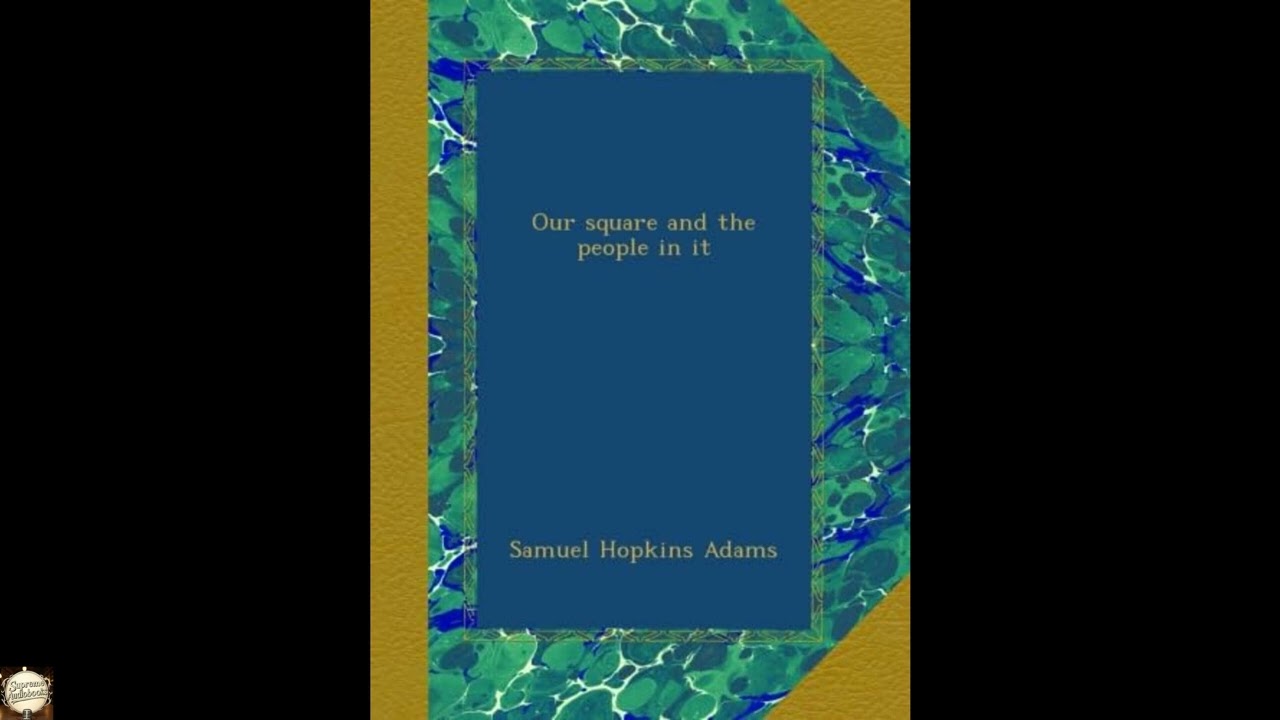
Our square and the people in it
Step into a lost world where the rhythms of urban life hummed with a different frequency, where a single square could contain an entire universe of human experience. Samuel Hopkins Adams's Our square and the people in it offers more than just a quaint portrait of a neighborhood; it presents a shrewd, often humorous, and ultimately deeply human look at community, change, and the enduring spirit of individuals. First published in 1917, this collection of interwoven sketches invites us to observe—and perhaps recognize ourselves in—the residents of a modest city square, their hopes, their foibles, and their quiet acts of resilience. In an age of increasing anonymity and digital connection, the book's gentle reminder of the power of local ties and personal interaction feels surprisingly relevant, urging us to look closer at the "squares" in our own lives and the stories held within them. The heart of the story beats in a small, residential square, nestled away from the city's frantic main arteries. This is not a grand, aristocratic park, but a cozy, lived-in space, bordered by brownstones and populated by a delightful array of characters who, through the keen eyes of our narrator, gradually become as familiar as our own neighbors. We meet the Putterings, a family whose name perfectly encapsulates their genteel struggles; the formidable Miss Peavey, a woman of unyielding opinions and surprising generosity; and young Mr. Petheridge, whose romantic aspirations often clash with the square's established order. The square itself acts as a living, breathing entity, witnessing seasons change, children grow, and secrets slowly unfold, its trees and benches silent chroniclers of everyday dramas. The central narrative thread follows the ebb and flow of life in this intimate setting, often focusing on how the larger world presses in on the square's insular charm. Small-scale conflicts arise—a dispute over a garden fence, a budding romance that challenges social conventions, the arrival of new residents with unfamiliar customs. These individual stories are expertly woven together, painting a composite picture of a community grappling with the subtle pressures of progress and modernity. The overall arc is not one of a single climactic event, but rather the cumulative effect of countless small moments, each revealing deeper layers of character and connection, all observed with a compassionate and wry gaze that never descends into sentimentality. We witness the square's inhabitants navigate personal setbacks, celebrate modest triumphs, and continually redefine what it means to belong to a place and to each other, without ever fully revealing the ultimate fate of this charming corner of the city. Samuel Hopkins Adams, born in 1871 in Dunkirk, New York, developed a reputation as a journalist and prolific writer whose career spanned several decades and saw him become a significant voice during the Progressive Era. His early professional life as a reporter for The New York Sun honed his observational skills and his ability to craft compelling narratives from real-world events. He later gained widespread recognition as a "muckraker," a term coined by Theodore Roosevelt, for his investigative journalism that fearlessly exposed social ills and corporate malfeasance. Adams's most famous exposé, "The Great American Fraud," published in Collier's Magazine in 1905, was a groundbreaking series that revealed the dangers and deceptive practices of the patent medicine industry, directly contributing to the passage of the Pure Food and Drug Act of 1906. Beyond his influential journalistic work, Adams was a gifted storyteller across various genres. He wrote numerous novels, short stories, and even biographies. His later career saw him turn to historical fiction and satires of political life, such as Revelry (1926), a thinly veiled account of the Harding administration scandals, and Incredible Era (1939), a biography of Harding himself. His facility with both factual reporting and fictional creation allowed him to craft stories that were grounded in reality yet imbued with a sharp understanding of human nature and societal dynamics. Our square and the people in it stands as a testament to this versatility, showcasing his ability to translate the incisive observation of a journalist into the warm, character-driven storytelling of a novelist, cementing his place as a chronicler of early 20th-century American life. He continued writing well into his later years, passing away in 1958 at the age of 87. A central theme radiating from Our square and the people in it is the fundamental nature of community and its inherent fragility. Adams illustrates this through the daily interactions within the square, showing how gossip, shared celebrations, and mutual assistance forge bonds that are both a source of strength and, at times, quiet contention. For instance, the recurring image of neighbors gathering on their stoops or exchanging pleasantries over garden fences underlines the constant, small investments in social fabric. This sense of collective identity is subtly challenged by another prominent theme: the gradual encroachment of modernity and the inevitability of change. We see characters resist new ideas or lament the passing of old traditions, such as when discussions arise about new building developments near the square, threatening its established character, or when a young person’s modern pursuits clash with the older residents’ expectations. The book also astutely examines the theme of appearance versus reality, a subtle undercurrent in many of Adams's works. Characters often present a composed or opinionated facade, only for their deeper vulnerabilities or surprising acts of kindness to be revealed through the unfolding narrative. A seemingly stern resident might secretly harbor a deep affection for a wayward youth, or a family struggling to maintain appearances might possess an inner resilience that belies their outward circumstances. This nuanced portrayal reminds readers that beneath the surface of everyday life, individual stories are far more complex and often contradictory than they first appear. It is this gentle peeling back of layers, revealing the human heart beneath the social masks, that gives the book its enduring appeal and its quiet wisdom. The period in which Our square and the people in it was published—1917—was a time of immense transformation for America. The nation had just entered World War I, ushering in a period of intense patriotism, but also significant social upheaval and uncertainty. At home, the Progressive Era was still in full swing, characterized by a widespread movement for social and political reform, addressing issues such as urbanization, industrialization, and corruption. Cities were growing rapidly, attracting diverse populations, and traditional notions of neighborhood and community were being reshaped by this influx and by emerging technologies. It was against this backdrop of both national mobilization and local metamorphosis that Adams offered his intimate portrayal of the square. The book reflects the anxieties and hopes of a society caught between an older, more insular way of life and the fast-approaching complexities of the modern world. His choice to focus on a contained urban space allowed him to metaphorically examine these larger societal shifts through the lens of individual lives, exploring how people adapted—or struggled to adapt—to a changing environment, making the book a quiet but potent commentary on American life in the early 20th century. Listening to Our square and the people in it as an audiobook offers a particularly immersive and delightful experience. The novel's structure, comprised of interconnected vignettes centered around a distinct locale and its inhabitants, lends itself beautifully to the spoken word. A skilled narrator can bring out the nuanced personalities of each resident, distinguishing Miss Peavey's firm pronouncements from Mr. Petheridge's youthful optimism through subtle changes in tone and cadence. The pacing of the narration should ideally match the book’s observational, unhurried prose, allowing listeners to savor Adams's witty asides and compassionate descriptions. The charm of the period dialogue, infused with the manners and expressions of the early 20th century, truly comes alive when read aloud, transporting you directly to the square, allowing its unique atmosphere to envelop you for several hours of thoughtful enjoyment.
Enjoyed Our square and the people in it? A few ways to support us
Audible & Amazon links are affiliate; we may earn a small commission at no extra cost.
About this production
Human narration by a volunteer reader from LibriVox.org, the public-domain audiobook project. LibriVox volunteers record literary works whose copyright has expired in the United States, releasing the resulting recordings into the public domain.
Our square and the people in it by Samuel Hopkins Adams. The underlying text is in the U.S. public domain. We do not republish any modern copyrighted edition, translation, or commentary.
The 4K cinematic visuals accompanying this audiobook are generated by an AI image model from prompts derived from the source text. No copyrighted photos, paintings, or stock footage are used. AI generation is disclosed on every video on our YouTube channel as required by YouTube's altered/synthetic content policy.
English subtitles are transcribed from the LibriVox recording with OpenAI Whisper. Translations into the 11 other supported languages are produced by Meta's NLLB-200 neural translation model. No human translator's copyrighted translation is used.
Questions about sourcing or rights? See our DMCA & Sourcing policy or contact us.
Enjoyed this audiobook?
If you'd like to own a copy of Our square and the people in it or hear a professionally produced edition, the links below help support free audiobook production at no extra cost to you.
As an Amazon Associate we earn from qualifying purchases. Audible / print links are affiliate.