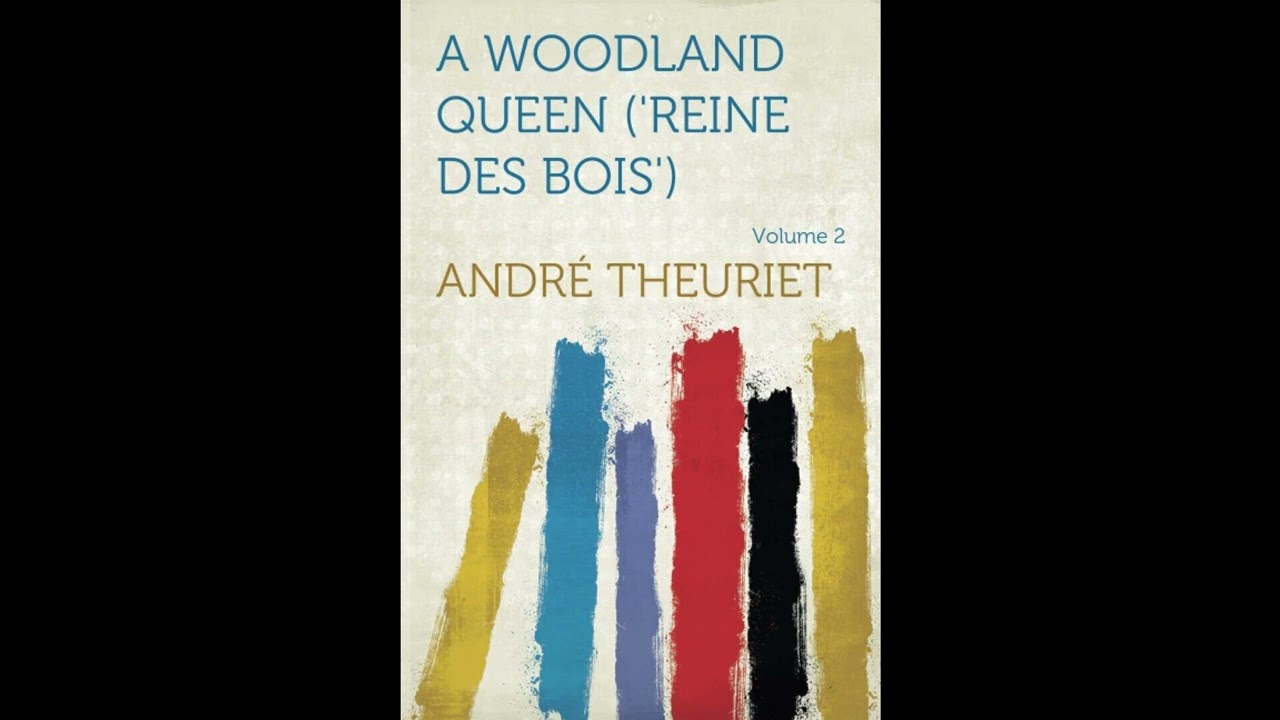
A Woodland Queen ('Reine Des Bois')
Step into a forgotten corner of rural France, a world of sun-dappled glades and whispering pines, where human hearts beat to the rhythm of the seasons. André Theuriet's A Woodland Queen (originally Reine Des Bois) offers a profound escape into a landscape as much a character as any person, presenting a poignant story of innocence, desire, and the enduring power of nature. This classic tale, written at a time of immense societal change, asks us to consider what truly defines a life well-lived and whether true happiness can survive the intrusion of external demands. It reminds us that the quiet strength found in simplicity often holds more truth than the clamor of ambition, a message that continues to resonate with striking clarity in our own complex modern world. The narrative unfolds in the heart of a vast, ancient forest in provincial France, a setting that instantly transports the listener to a realm apart from urban anxieties. Here, we meet the young woman known as Reine des Bois—the Woodland Queen herself—a creature of remarkable grace and natural wisdom, whose spirit seems interwoven with the trees and the wild creatures around her. Her life is one of tranquil harmony, guided by the rhythms of the forest, far removed from the conventions and artifice of city society. This idyllic existence is disrupted by the arrival of Monsieur de la Morinière, a sophisticated and somewhat world-weary artist or scholar from Paris, who seeks refuge and inspiration in the very woods Reine calls home. Their initial encounters are marked by a delicate dance of curiosity and reserve, as two vastly different worlds gently collide. As their acquaintance deepens, a tender connection begins to blossom between Reine and Monsieur de la Morinière, a bond forged in shared appreciation for the beauty of their surroundings and a growing understanding of each other's quiet complexities. However, their burgeoning affection faces formidable challenges. The expectations of society, the rigid dictates of class, and the inherent differences in their upbringings create a chasm that threatens to separate them. Reine's untamed spirit and rooted existence in the woods clash with Monsieur de la Morinière's sense of duty and the pull of his urban life. The story builds with a subtle tension, exploring whether genuine feeling can bridge these profound divides or if the world beyond the forest's edge is too powerful to defy. André Theuriet, the author of this lyrical novel, was a significant French literary figure of the late nineteenth and early twentieth centuries. Born in 1833 in Marly-le-Roi and passing away in 1907 in Bourg-la-Reine, he lived through a period of intense transformation in France. Initially trained for a career in the civil service, Theuriet eventually devoted himself entirely to writing, first gaining recognition as a poet with collections like Chemin des Bois (1867), which already showcased his deep affinity for nature. He transitioned successfully into novel writing, where his talent for evocative landscape description and sensitive portrayal of character truly shone. Theuriet’s novels often centered on provincial life, romantic entanglements, and the subtle interplay between human emotions and natural settings. Other notable works include Gérard's Marriage (1875) and Bigarreau (1886), which further cemented his reputation for combining realistic observation with a gentle, often melancholic, sensibility. He occupied a unique space in French literature, distinct from the more brutal naturalism of Émile Zola, offering instead a realism imbued with a poetic touch and a profound respect for the simple virtues of rural existence. He was elected to the Académie française in 1896, a testament to his esteemed place among his contemporaries. A Woodland Queen enacts several enduring themes, foremost among them the stark contrast between nature and civilization. Reine personifies the uncorrupted beauty and moral clarity of the natural world. Consider her serene confidence as she navigates the dense forest, a knowledge born not of books but of direct experience, standing in direct opposition to the often-conflicted sensibilities of Monsieur de la Morinière, burdened by societal expectations. The book also compellingly renders the theme of social class and its divisions. The unspoken rules that govern interactions between the forest-dwelling 'peasant' and the Parisian 'gentleman' create invisible barriers, constantly testing the authenticity of their feelings. A scene where Reine feels out of place in a more formal setting, or Monsieur de la Morinière struggles to adapt to the simplicity of her world, vividly illustrates these challenges. Furthermore, the novel meditates on the theme of idealism versus reality. The dream of a pure, untainted love blooming freely is pitted against the harsh truths of convention and the practicalities of differing lives, compelling characters to make difficult choices. The publication of A Woodland Queen in 1890 placed it squarely within a fascinating period of French history—the Belle Époque—a time of relative peace and prosperity following the Franco-Prussian War, yet also marked by rapid industrialization and urbanization. As cities swelled and modern life accelerated, a certain nostalgia for rural simplicity and the purity of the natural world began to take hold in the collective consciousness. Theuriet's work resonated with an audience increasingly distanced from their agricultural roots, offering a comforting, yet often unvarnished, look at provincial life. It was a period when literary realism and naturalism held sway, but Theuriet carved out his own niche, presenting a version of reality that, while honest about human weakness, also celebrated the enduring grace and moral fortitude found away from the corrupting influences of the metropolis. His focus on landscape as a mirror to the soul, and his empathetic portrayal of characters rooted in the land, provided a gentle counterpoint to the grittier depictions of urban poverty and social decay found in other contemporary novels. Listening to A Woodland Queen as an audiobook offers a particularly immersive experience, allowing the story’s unhurried pace to unfold organically. The narrator’s voice becomes the conduit for Theuriet’s exquisite descriptions of the natural world, painting vivid soundscapes of rustling leaves, birdsong, and the quiet dignity of the forest. Pay attention to how the voice modulates, reflecting the serene presence of Reine and the more conflicted inner thoughts of Monsieur de la Morinière. The dialogue, rendered with care, highlights the subtle differences in their worlds and the gradual unveiling of their feelings, often more through implication and tone than explicit declaration. The several hours of listening time allow you to truly sink into the atmosphere, letting the measured rhythm of the prose transport you directly into the heart of Theuriet's meticulously crafted woodland kingdom, where the most profound dramas often play out in the softest whispers.
Enjoyed A Woodland Queen ('Reine Des Bois')? A few ways to support us
Audible & Amazon links are affiliate; we may earn a small commission at no extra cost.
About this production
Human narration by a volunteer reader from LibriVox.org, the public-domain audiobook project. LibriVox volunteers record literary works whose copyright has expired in the United States, releasing the resulting recordings into the public domain.
A Woodland Queen ('Reine Des Bois') by André Theuriet. The underlying text is in the U.S. public domain. We do not republish any modern copyrighted edition, translation, or commentary.
The 4K cinematic visuals accompanying this audiobook are generated by an AI image model from prompts derived from the source text. No copyrighted photos, paintings, or stock footage are used. AI generation is disclosed on every video on our YouTube channel as required by YouTube's altered/synthetic content policy.
English subtitles are transcribed from the LibriVox recording with OpenAI Whisper. Translations into the 11 other supported languages are produced by Meta's NLLB-200 neural translation model. No human translator's copyrighted translation is used.
Questions about sourcing or rights? See our DMCA & Sourcing policy or contact us.
Enjoyed this audiobook?
If you'd like to own a copy of A Woodland Queen ('Reine Des Bois') or hear a professionally produced edition, the links below help support free audiobook production at no extra cost to you.
As an Amazon Associate we earn from qualifying purchases. Audible / print links are affiliate.