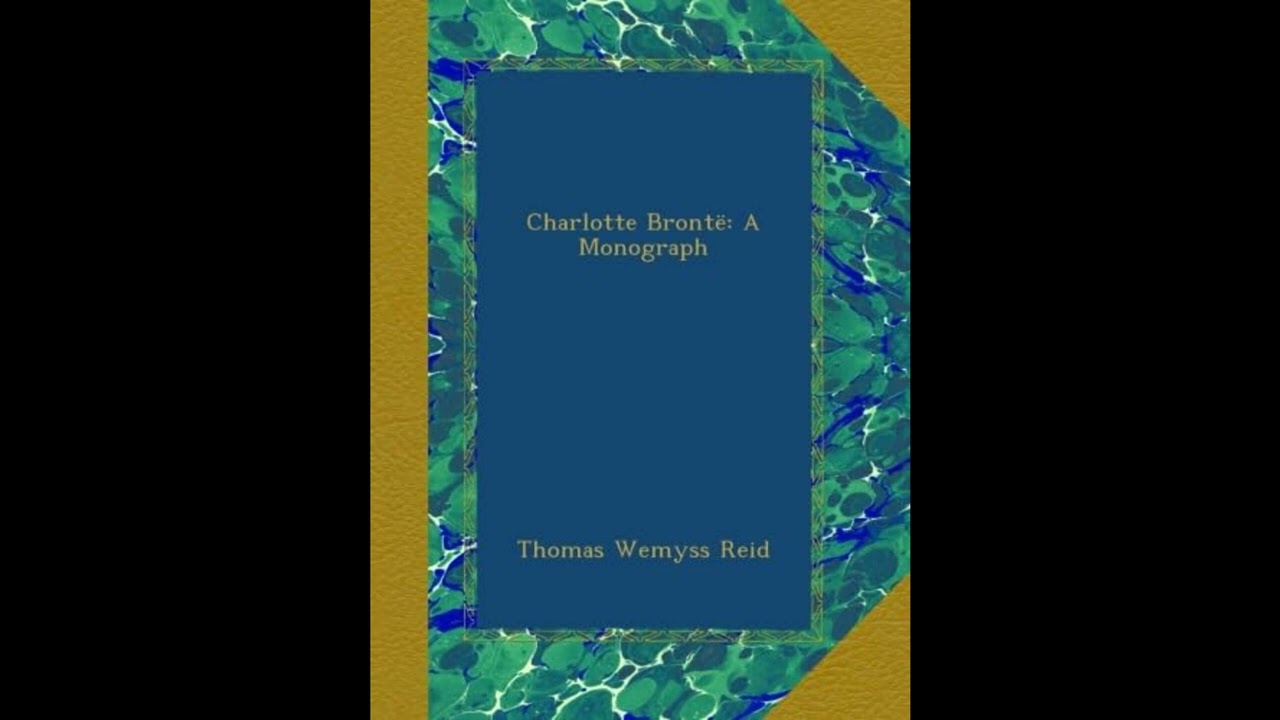
Charlotte Brontë: A Monograph
To understand a literary giant, sometimes one must turn to the voices that first sought to define her, to the biographers who wrestled with her legacy while the ink on her own pages was still fresh. Thomas Wemyss Reid's Charlotte Brontë: A Monograph is more than just another biography of the acclaimed author of Jane Eyre; it is a fascinating artifact in itself, a vivid snapshot of how one of Victorian England’s most enigmatic writers was perceived and understood by her contemporaries. Listening to this work today offers a unique dual perspective: not only do we gain insight into Charlotte Brontë’s remarkable life and literary contributions, but we also witness the very genesis of the Brontë myth, shaped by the sensibilities and inquiries of a period that was still grappling with the profound impact of her revolutionary novels. It is an opportunity to hear a voice from the late nineteenth century articulating what made Brontë so compelling, a voice that contributed significantly to the enduring image we hold of her. Reid’s account meticulously traces the life of Charlotte Brontë from her birth in Yorkshire, setting the scene in the remote and often harsh beauty of the Haworth moors, a landscape that would profoundly influence her literary output. The narrative follows young Charlotte through the various trials and formative experiences that would shape her character and artistic vision: the early deaths of her mother and elder sisters, Maria and Elizabeth, which cast a long shadow over the Brontë parsonage; her time at Cowan Bridge School, a grim institution whose conditions are famously echoed in Lowood School from Jane Eyre; and her subsequent stints as a governess, a role that brought her into close contact with the class distinctions and social expectations she would later so acutely dissect in her fiction. Listeners are invited into the quiet intensity of the parsonage, a world shared with her equally talented sisters, Emily and Anne, and their troubled brother, Branwell, where an imaginative and literary household flourished despite isolation and personal hardship. The monograph then shifts its focus to Brontë's burgeoning literary ambitions and her courageous decision, alongside her sisters, to pursue publication under male pseudonyms—Currer, Ellis, and Acton Bell. Reid recounts the initial struggles to find a publisher, the eventual triumph of Jane Eyre, and the subsequent, often intense, public scrutiny that followed its success and the eventual revelation of the sisters’ true identities. The narrative portrays Charlotte as a woman of immense intellectual vigor and fierce independence, navigating a literary world that was often unprepared for the raw emotional honesty and unconventional heroines that populated her novels. Reid's account carries the listener through the heartbreaking losses of Emily, Branwell, and Anne within a short span, events that left Charlotte as the sole surviving sibling, continuing to write amidst profound grief. The story culminates with her late marriage to Arthur Bell Nicholls, her father’s curate, and the final years of her life, marked by both a measure of personal happiness and continued literary endeavor, without revealing the ultimate endpoint of her existence. Thomas Wemyss Reid, born in 1842 in Newcastle-upon-Tyne, was a prominent English journalist, biographer, and novelist who left an indelible mark on Victorian literary and political life. He rose to significant influence as the editor of The Leeds Mercury, a major provincial newspaper, a position he held from 1870 to 1887. This role placed him at the heart of public discourse and regional cultural affairs, making him uniquely qualified to comment on figures of local and national importance like the Brontës. Reid's literary contributions extended beyond journalism; he authored numerous biographies, including well-regarded lives of William Edward Forster and Richard Monckton Milnes, Lord Houghton, establishing himself as a respected voice in the burgeoning field of biographical writing during the Victorian era. He was known for his clear, engaging prose and his meticulous research, qualities that are evident throughout Charlotte Brontë: A Monograph. Reid's work on Brontë, published in 1877, positioned him as one of the earlier biographers to build upon, and in some ways re-evaluate, Elizabeth Gaskell’s seminal 1857 Life of Charlotte Brontë. He contributed to the canon of Victorian non-fiction by offering a perspective that, while admiring, sought to present a more rounded and less overtly sympathetic portrait than some of the earlier accounts. His position as a Yorkshireman also gave him a unique regional lens through which to interpret the Brontë story, allowing for a certain degree of local knowledge and sensitivity to the particularities of their isolated lives. Later in his life, Reid received a knighthood in 1909 for his services to literature and journalism, cementing his place as an important figure in late Victorian and Edwardian letters. Reid's monograph brings to the fore several compelling themes, offering not only a narrative of Charlotte Brontë’s life but also a commentary on the societal currents of her time. One prominent theme is the struggle for female authorship and intellectual independence in the Victorian era. Reid shows how Brontë, through sheer will and talent, broke free from the conventional expectations of womanhood, which largely confined women to domestic roles. He illustrates this with her decision to pursue publishing despite societal norms and her use of a male pseudonym to ensure her work was judged on its own merits rather than through the lens of gender. The intensity of her creative output, as seen in the daring themes of Jane Eyre—such as its eponymous heroine’s declaration of self-worth and her refusal to settle for a lesser destiny—serves as a powerful testament to this struggle for autonomy. Another significant theme present in Reid’s biography is the interplay between personal suffering and artistic genius. The constant specter of loss and the profound isolation experienced by Charlotte and her siblings in Haworth are not merely recounted; they are presented as crucial catalysts for their extraordinary imaginative worlds. For instance, Reid details the early deaths of her sisters and brother, not as mere tragic events, but as deeply impactful experiences that, while devastating, fueled the emotional depth and moral urgency of her novels. The raw, often dark, psychological landscapes of Brontë's characters are shown to stem from a life lived intensely, marked by hardship and fervent internal life. Reid’s lens also touches upon the endurance of spirit in the face of adversity, depicting Charlotte’s remarkable resilience and her unwavering commitment to her craft despite immense personal sorrow. The cultural and literary landscape of 1877, when Reid’s monograph was published, provides a vital context for understanding its emergence. Victorian England was at its zenith, a period marked by tremendous social change, industrial expansion, and an enduring fascination with moral rectitude and domestic ideals, often at odds with the burgeoning voices of independent thought. The Brontë sisters, though gone, remained figures of intense public interest, their lives and works continually re-evaluated. Elizabeth Gaskell’s biography, published two decades earlier, had set a precedent but also generated controversy, particularly regarding its portrayal of Patrick Brontë and the more sensational aspects of the family’s history. Reid's work arrived at a moment when biographical writing was maturing, moving beyond mere eulogy to a more analytical and often corrective approach, seeking to clarify and deepen understanding of public figures. He wrote for a readership that was increasingly literate and eager for detailed, well-researched accounts of their literary heroes, particularly those who, like Charlotte Brontë, had challenged societal norms. The late 19th century was also a time of expanding opportunities for women in education and the arts, making Brontë’s story resonate even more powerfully as an emblem of female achievement against formidable odds. Listening to Charlotte Brontë: A Monograph as an audiobook transforms the experience of engaging with this important historical document. The run length, spread over several hours, makes it an ideal companion for a series of reflective walks, long commutes, or focused periods of listening at home. A thoughtful narrator can bring a nuanced reverence to Reid’s prose, allowing listeners to truly absorb the period’s particular tone and the respectful, yet analytical, approach to biography. Listen for the narrator’s pacing, which can emphasize the unfolding narrative of Brontë’s life and the thoughtful, almost investigative, nature of Reid’s research. The voice will carry the weight of Victorian literary history, creating an atmosphere that is both intimate and grand, drawing you into the world of one of England’s most celebrated literary families as seen through the eyes of an insightful contemporary. It’s an auditory window into the past, offering not just facts, but the very spirit of Victorian intellectual inquiry.
Enjoyed Charlotte Brontë: A Monograph? A few ways to support us
Audible & Amazon links are affiliate; we may earn a small commission at no extra cost.
About this production
Human narration by a volunteer reader from LibriVox.org, the public-domain audiobook project. LibriVox volunteers record literary works whose copyright has expired in the United States, releasing the resulting recordings into the public domain.
Charlotte Brontë: A Monograph by Thomas Wemyss Reid by Thomas Wemyss Reid. The underlying text is in the U.S. public domain. We do not republish any modern copyrighted edition, translation, or commentary.
The 4K cinematic visuals accompanying this audiobook are generated by an AI image model from prompts derived from the source text. No copyrighted photos, paintings, or stock footage are used. AI generation is disclosed on every video on our YouTube channel as required by YouTube's altered/synthetic content policy.
English subtitles are transcribed from the LibriVox recording with OpenAI Whisper. Translations into the 11 other supported languages are produced by Meta's NLLB-200 neural translation model. No human translator's copyrighted translation is used.
Questions about sourcing or rights? See our DMCA & Sourcing policy or contact us.
View 10 famous quotes from this book →
Enjoyed this audiobook?
If you'd like to own a copy of Charlotte Brontë: A Monograph or hear a professionally produced edition, the links below help support free audiobook production at no extra cost to you.
As an Amazon Associate we earn from qualifying purchases. Audible / print links are affiliate.