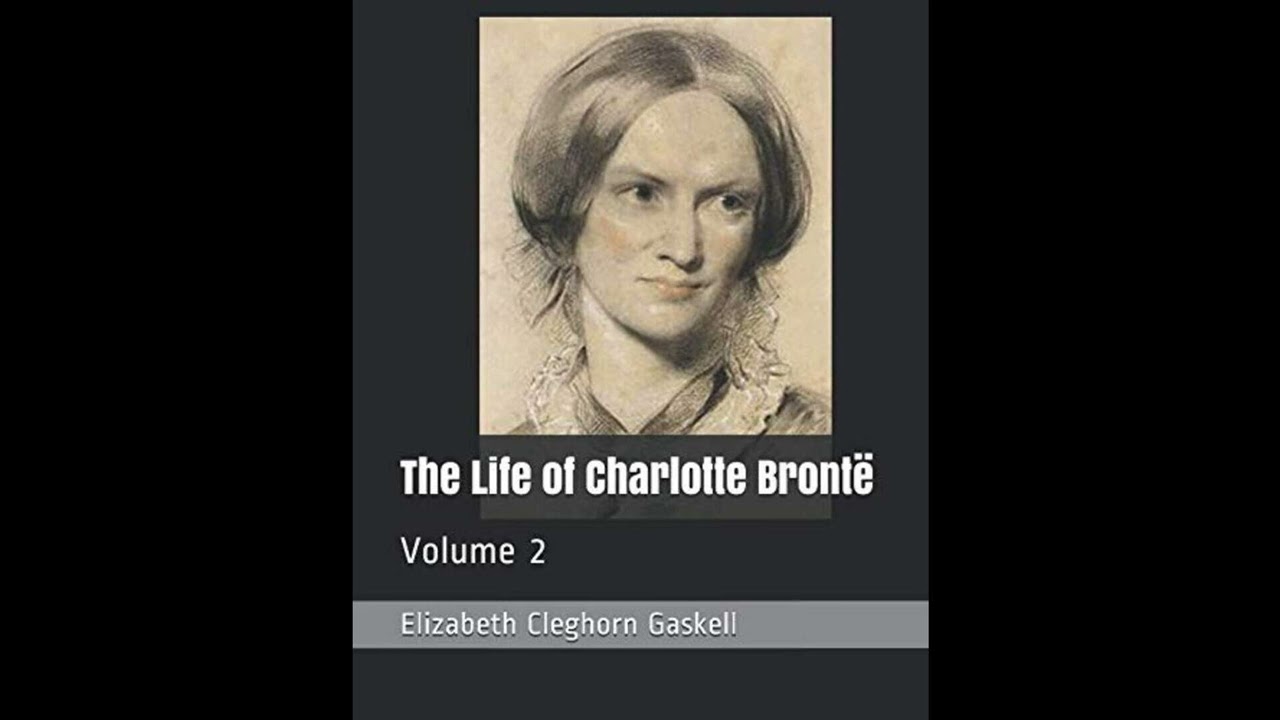
The Life of Charlotte Brontë: Volume 2
To immerse oneself in Elizabeth Gaskell’s The Life of Charlotte Brontë: Volume 2 is to step into a privileged, intimate circle, bearing witness to the dramatic unfolding of one of English literature’s most compelling lives. This is not merely a dry recounting of facts, but a deeply felt portrait, drawn by a fellow author and friend who understood the unique pressures and private sorrows that shaped Charlotte Brontë’s existence. For anyone who has been moved by the raw power of Jane Eyre or Villette, this biographical volume offers an unparalleled opportunity to understand the woman behind those powerful words—her struggles, her passions, and her unyielding spirit in a world often hostile to her genius. It serves as a vital bridge between the solitary genius of Haworth and the enduring legacy she left for all time. This second volume picks up the narrative at a pivotal, and increasingly tragic, point in Charlotte Brontë’s life, charting her reluctant emergence from anonymity into the full glare of literary celebrity. Having astonished the reading public with Jane Eyre, published under the pseudonym Currer Bell, Charlotte finds herself suddenly a figure of immense interest. The story details her cautious forays into London society, where she met literary luminaries like William Makepeace Thackeray, often feeling acutely uncomfortable and intensely private amidst the adulation. The narrative then descends into profound sorrow as it chronicles the rapid and devastating losses of her siblings: Branwell, her troubled brother, followed swiftly by her extraordinarily gifted sisters, Emily and Anne. These chapters portray a woman grappling with an almost unbearable burden of grief, left alone with her aging father in the isolated Haworth Parsonage. Despite this crushing emotional landscape, Charlotte’s intellectual life continues. The book documents her efforts to continue writing, eventually producing novels like Shirley and Villette, often under immense personal duress. Gaskell meticulously details Charlotte’s relationships—her fierce loyalty to her father, her attempts to secure recognition for her sisters' works, and, most significantly, her budding romance with Arthur Bell Nicholls, her father’s curate. This relationship unfolds with a tender, often hesitant grace, revealing a more domestic, yearning side of Charlotte. The volume culminates in her controversial decision to marry, a choice that challenged the prevailing notions of a literary woman’s independence and signaled a profound shift in her personal world, bringing both companionship and a new set of expectations. Elizabeth Cleghorn Gaskell, born in 1810 and passing away in 1865, stands as a formidable literary figure of the Victorian era herself. Raised largely in Knutsford, Cheshire—a town that would later inspire her beloved novel Cranford—Gaskell experienced early personal tragedy with the death of her mother and infant brother. She married William Gaskell, a Unitarian minister, and settled in Manchester, a city at the heart of the Industrial Revolution. This environment profoundly influenced her writing, leading to groundbreaking novels such as Mary Barton and North and South, which realistically depicted the harsh lives of the working class and the social unrest of the period. Her keen eye for social observation and her compassionate understanding of human nature earned her a significant place among her contemporaries like Charles Dickens, who admired her work. Gaskell was not only a distinguished novelist but also a pioneer of sympathetic realism, often using her fiction to shed light on societal injustices. Her other notable works include Sylvia's Lovers and the unfinished Wives and Daughters, each demonstrating her capacity for nuanced character development and insightful social commentary. When Patrick Brontë, Charlotte's father, sought a biographer after his daughter’s death, Gaskell was a natural choice—a respected author, a woman, and a personal acquaintance of Charlotte’s. The task was complex, requiring her to balance the truth of Charlotte’s often difficult existence with the desire to present a respectable image to the Victorian public. Gaskell’s biography, though controversial in its time for its candid revelations, remains a cornerstone of literary scholarship and a testament to her dedication to her friend’s memory. The life of Charlotte Brontë, as presented in this volume, enacts several profound themes. Grief and resilience stand out prominently; Gaskell painstakingly illustrates how Charlotte confronted the successive deaths of her siblings. One scene vividly portrays her sitting alone in the silent parsonage after Emily’s death, clinging to memories, yet slowly finding the strength to return to her writing, a testament to her profound inner fortitude even in the face of desolation. This period reveals her determined struggle to carve meaning and purpose from immense personal suffering, a struggle often reflected in the solitary, strong-willed heroines of her own novels. Another significant theme is the tension between private existence and public persona, especially for a female author in the 19th century. Charlotte, inherently reserved and sensitive, found the demands of literary fame burdensome. Gaskell details Charlotte's discomfort during her brief visits to London, where she was treated as a literary curiosity, revealing the immense pressure placed upon her to conform to societal expectations of a successful woman. This biographical volume further highlights the theme of female intellectual independence and the challenges of pursuing a creative life against a backdrop of limited opportunities for women. Charlotte's initial use of a male pseudonym, and her subsequent battles for recognition and respect as a woman writer, underscores the pioneering nature of her literary career. The mid-Victorian era, during which Gaskell compiled this biography, was a time of immense social and intellectual ferment. The industrial transformation of England was well underway, creating new wealth alongside stark poverty, a reality Gaskell often depicted in her own fiction. Culturally, there was a burgeoning interest in the lives of significant figures, especially those whose works had made a mark on the national consciousness. The literary world itself was undergoing changes, with the novel gaining increasing popularity and respectability, and women writers—often through aliases or against societal expectations—beginning to achieve recognition. Charlotte Brontë’s sudden rise to fame, and the subsequent revelation of her identity, created a sensation. It was against this backdrop of public fascination, and a desire to understand the "mystery" of the Brontë sisters, that Gaskell’s biography emerged. It served not only as a record of a remarkable life but also as an attempt to explain the origins of Charlotte’s fierce, unconventional heroines and the melancholic power of her prose, attributing it to her isolated upbringing and profound personal tragedies. Gaskell’s book thus became a crucial historical document, shaping the public perception of the Brontës and solidifying their place in the literary canon. Listening to The Life of Charlotte Brontë: Volume 2 as an audiobook offers a uniquely immersive experience. Gaskell’s prose, rich with detail and infused with deep empathy, becomes particularly moving when voiced by a skilled narrator. The several hours of content allow for a gradual unfolding of Charlotte’s later life, giving listeners ample time to absorb the emotional weight of her losses and triumphs. A narrator’s pacing can underscore the solemn atmosphere of the Haworth parsonage, contrast it with the occasional flashes of London’s literary bustle, and lend nuance to Gaskell's delicate observations of character. The performance brings to life the letters and reported conversations, making Charlotte Brontë’s voice, and the voices of those around her, resonate with immediacy. This is a chance to hear a cherished story unfold, to be drawn into the profound personal drama of a literary titan through the power of the spoken word.
Enjoyed The Life of Charlotte Brontë: Volume 2? A few ways to support us
Audible & Amazon links are affiliate; we may earn a small commission at no extra cost.
About this production
Human narration by a volunteer reader from LibriVox.org, the public-domain audiobook project. LibriVox volunteers record literary works whose copyright has expired in the United States, releasing the resulting recordings into the public domain.
The Life of Charlotte Brontë: Volume 2 by Elizabeth Cleghorn Gaskell. The underlying text is in the U.S. public domain. We do not republish any modern copyrighted edition, translation, or commentary.
The 4K cinematic visuals accompanying this audiobook are generated by an AI image model from prompts derived from the source text. No copyrighted photos, paintings, or stock footage are used. AI generation is disclosed on every video on our YouTube channel as required by YouTube's altered/synthetic content policy.
English subtitles are transcribed from the LibriVox recording with OpenAI Whisper. Translations into the 11 other supported languages are produced by Meta's NLLB-200 neural translation model. No human translator's copyrighted translation is used.
Questions about sourcing or rights? See our DMCA & Sourcing policy or contact us.
Enjoyed this audiobook?
If you'd like to own a copy of The Life of Charlotte Brontë: Volume 2 or hear a professionally produced edition, the links below help support free audiobook production at no extra cost to you.
As an Amazon Associate we earn from qualifying purchases. Audible / print links are affiliate.