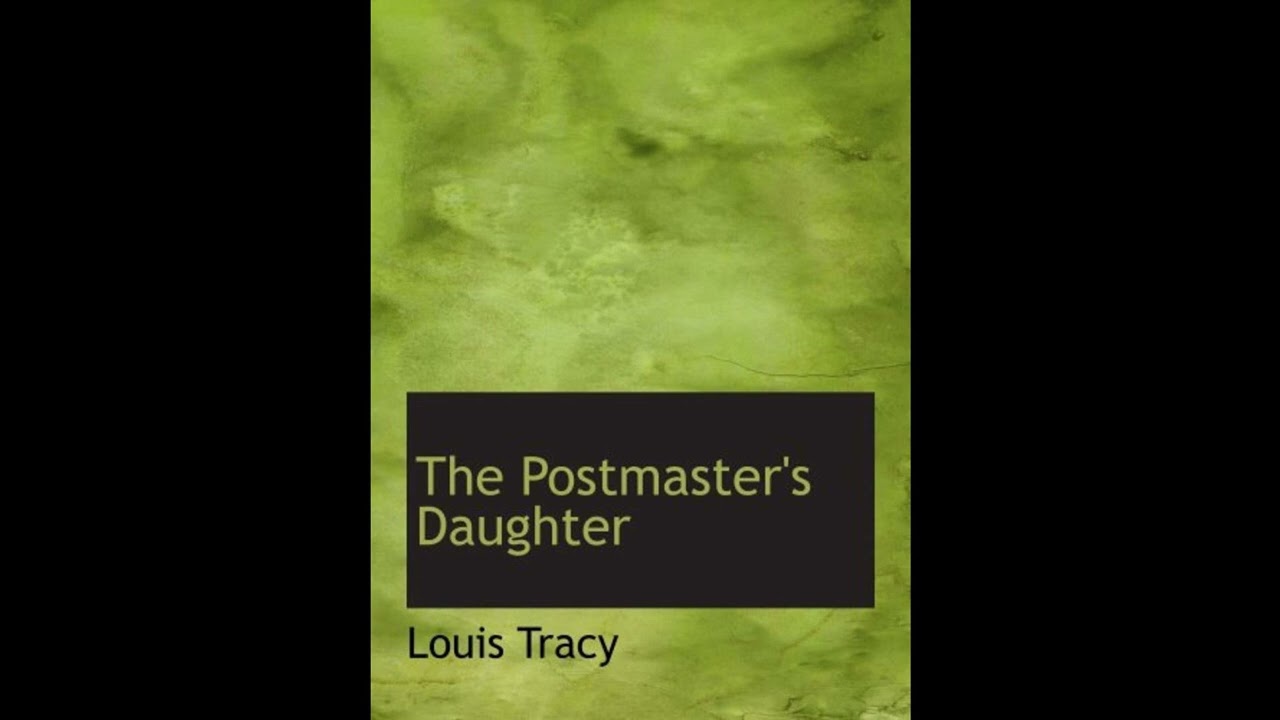
The Postmaster's Daughter
Step into a world where quiet village life holds surprising secrets and the heart of a young woman navigates both duty and desire. Louis Tracy’s The Postmaster's Daughter is a compelling piece of classic literature, offering a blend of suspense, romance, and social commentary that still resonates with listeners today. It’s a story that invites us to ponder the weight of reputation, the enduring power of truth, and the choices one makes when confronted with the unexpected. This isn't just a period piece; it’s a detailed study of character and circumstance, demonstrating how seemingly small lives can be touched by grand drama. The story unfolds in the seemingly idyllic English countryside, a place where everyone knows everyone—or so they believe. Our central figure is Emily Thorne, the dutiful and observant daughter of the local postmaster. Her life, though modest, is steeped in the rhythms of her community and the constant flow of letters and news that pass through her father’s office. This quiet existence is dramatically disrupted by the arrival of a mysterious stranger, Mr. Arthur Denby, whose sophisticated demeanor and guarded past immediately draw both fascination and suspicion from the townsfolk. Emily finds herself increasingly entangled in the stranger's affairs, discovering that Denby is not who he appears to be, and that his presence in their small corner of the world is connected to a larger, more perilous secret. As romance begins to blossom between Emily and the enigmatic newcomer, she must reconcile her growing affections with the mounting evidence that he might be involved in something illicit, perhaps even dangerous. The central conflict intensifies as Emily is torn between her loyalty to her family and community, her burgeoning feelings, and her innate desire to uncover the truth, whatever the personal cost. The narrative builds steadily, pulling the reader into a web of rumors, coded messages, and unexpected alliances, all leading to a pivotal confrontation that promises to unravel the quiet fabric of their lives. Louis Tracy, born Louis Trachsel in 1863, was a prolific and highly popular British journalist and author during the late 19th and early 20th centuries. His early career as a journalist, covering conflicts and reporting from various international locations, undoubtedly fueled his imagination and provided a keen eye for detail and plotting that would become hallmarks of his fiction. Tracy initially found success writing adventure stories and historical romances, often with a global scope, reflecting the British Empire's influence and the public's appetite for far-flung tales. He was particularly known for his detective and mystery novels, frequently publishing multiple titles in a single year. While not always considered "high literature" in the academic sense, Tracy’s works were immensely popular with the reading public and represent a significant part of the burgeoning genre fiction movement of his time. He was a master of suspense and intricate plotting, crafting narratives that kept readers turning pages late into the night. His literary output, encompassing over one hundred novels, cemented his place as one of the era’s most successful popular authors, and his work now provides a valuable window into the social and storytelling conventions of the Edwardian period. He passed away in 1928, leaving behind a substantial body of work that continues to attract new readers. The Postmaster's Daughter particularly highlights themes of identity and social standing. Emily's role as the postmaster's daughter places her at a distinct point in the village hierarchy, both privy to secrets and subject to scrutiny. Her reputation is inextricably linked to her father’s position and the community's perceptions, a burden she must carry when her affections stray from local expectations. A subtle scene, perhaps when Emily is sorting letters, silently observing the hopes and fears conveyed in each envelope, underscores her unique vantage point on the private lives of her neighbors, shaping her understanding of human nature. Another prominent theme is the nature of truth versus deception, and how appearances can be profoundly misleading. The arrival of Mr. Denby challenges the village's comfortable assumptions, forcing Emily to question not only his motives but also the trustworthiness of those around her. The narrative uses the physical setting of the post office—a place where communication is meant to be clear but can be easily intercepted or misconstrued—as a clever metaphor for how information, and therefore truth, is handled within a community. A crucial moment might involve a hidden letter or a coded telegram, directly embodying the story’s concern with what is revealed and what remains concealed. Furthermore, the book touches upon the tension between duty and personal desire, as Emily struggles to balance her filial responsibilities and societal expectations with her burgeoning individual feelings. This novel emerged during a pivotal period in British history, roughly coinciding with the turn of the 20th century—an era often referred to as the Edwardian period or the late Victorian afterglow. Culturally, it was a time of rapid change, marked by technological advancements like improved postal services, the telegraph, and expanding railway networks, which made cross-country travel and communication more accessible, yet also provided new avenues for crime and secrecy. Politically, the British Empire was at its zenith, but social anxieties simmered beneath the surface, including concerns about urban poverty, women's suffrage, and changing class structures. In the literary world, it was a golden age for popular fiction. The widespread availability of inexpensive books and magazines meant that authors like Louis Tracy could reach an enormous readership. There was a burgeoning appetite for thrillers, adventure stories, and romantic mysteries that offered escapism while often subtly addressing contemporary social issues. Works like The Postmaster's Daughter satisfied this demand, providing both entertainment and a reflection of the era's sensibilities regarding propriety, morality, and the unfolding drama of human relationships in a rapidly modernizing world. Listening to The Postmaster's Daughter as an audiobook transforms the experience, allowing the story to unfold with the natural pace of spoken word. The narrator's voice becomes a direct conduit to Emily Thorne's world, bringing to life the quiet rustle of a post office, the hushed tones of a secret conversation, or the bustling sounds of a village street. Over several hours of listening, the listener can immerse themselves fully in the unfolding drama, savoring the subtle shifts in characters' voices, the period-specific dialogue, and the atmospheric descriptions of the English countryside. The steady narrative flow of the reading lets the suspense build gradually, making each revelation all the more impactful as the layers of mystery are peeled back.
Enjoyed The Postmaster's Daughter? A few ways to support us
Audible & Amazon links are affiliate; we may earn a small commission at no extra cost.
About this production
Human narration by a volunteer reader from LibriVox.org, the public-domain audiobook project. LibriVox volunteers record literary works whose copyright has expired in the United States, releasing the resulting recordings into the public domain.
The Postmaster's Daughter by Louis Tracy. The underlying text is in the U.S. public domain. We do not republish any modern copyrighted edition, translation, or commentary.
The 4K cinematic visuals accompanying this audiobook are generated by an AI image model from prompts derived from the source text. No copyrighted photos, paintings, or stock footage are used. AI generation is disclosed on every video on our YouTube channel as required by YouTube's altered/synthetic content policy.
English subtitles are transcribed from the LibriVox recording with OpenAI Whisper. Translations into the 11 other supported languages are produced by Meta's NLLB-200 neural translation model. No human translator's copyrighted translation is used.
Questions about sourcing or rights? See our DMCA & Sourcing policy or contact us.
Enjoyed this audiobook?
If you'd like to own a copy of The Postmaster's Daughter or hear a professionally produced edition, the links below help support free audiobook production at no extra cost to you.
As an Amazon Associate we earn from qualifying purchases. Audible / print links are affiliate.