The Mystery of Edwin Drood Novel
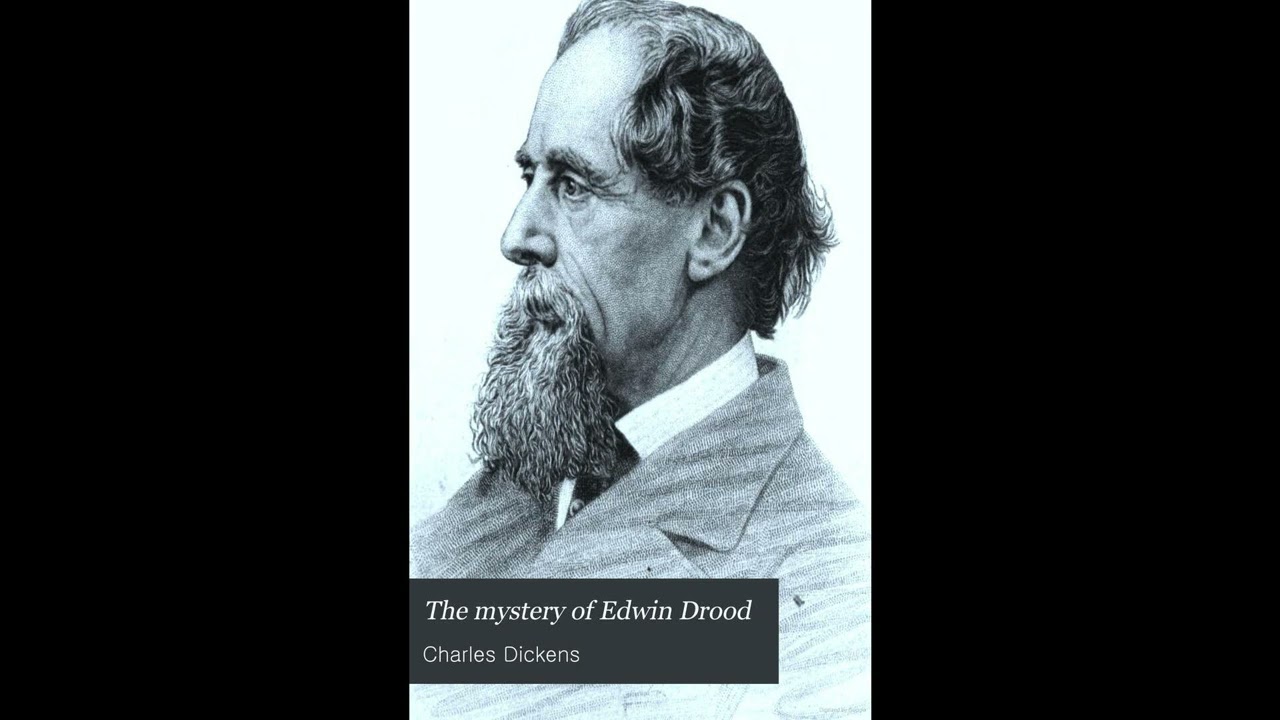
Among the grand catalog of Charles Dickens's literary creations, The Mystery of Edwin Drood stands apart, not merely as a final utterance but as an enduring question mark, a tantalizing puzzle left for posterity. This is a story half-told, a crime without a solution penned by its own author, inviting every listener to become a detective, to sift through clues and speculate on the fate of its namesake character. It is an extraordinary experience, offering not just a narrative to follow, but a mystery to participate in, a final, poignant testament to the brilliance of an author who, even in death, managed to leave his audience clamoring for more. Why listen today? Because the greatest mysteries are often the ones we get to solve for ourselves, and the enduring power of Dickens's prose makes the challenge all the more rewarding. The narrative unfolds in the sleepy cathedral city of Cloisterham, a setting where ancient stones and ecclesiastical calm belie the simmering passions beneath. Here we meet Edwin Drood, a young, somewhat irresponsible engineer, and his childhood fiancée, Rosa Bud, whose engagement was arranged years ago by their late fathers. Their bond is more one of familial affection than romantic love, and a quiet tension hangs over their pre-destined union. Overshadowing their youthful concerns is Edwin's uncle, John Jasper, the choirmaster of Cloisterham Cathedral. Jasper outwardly appears a model of Victorian respectability and devotion, but secretly battles a devastating opium addiction, and, more disturbingly, harbors a dark, obsessive love for Rosa Bud. The tranquil facade of Cloisterham begins to crack with the arrival of the fiery-tempered Neville Landless and his gentle sister, Helena, twins from Ceylon who have come to be educated in England. Neville takes an immediate, irrational dislike to Edwin, leading to a public confrontation skillfully exploited by the manipulative Jasper. As the strains between Edwin and Rosa reach a peak, they decide to quietly break off their engagement, a development that seems to remove one obstacle for Jasper. On a fateful Christmas Eve, after a dinner at Jasper's house and another tense exchange between Edwin and Neville, Edwin Drood vanishes without a trace. A frantic search ensues, uncovering only a few personal effects — his watch and a jeweled pin — near the river, and suspicion quickly falls upon the hot-headed Neville, setting the stage for a compelling, yet ultimately unresolved, criminal investigation. The author of this unfinished gem was Charles Dickens, born in Portsmouth, England, in 1812. His early life was profoundly shaped by hardship, particularly his father’s imprisonment for debt and young Charles’s subsequent employment in a blacking factory. These experiences instilled in him a lifelong empathy for the poor and a critical eye toward social injustice, themes that would infuse much of his later work. He began his career as a journalist, reporting for various newspapers, before publishing his first short stories. His talent for observation and vivid characterization soon became apparent, paving the way for his monumental literary achievements. Dickens's rise to prominence began with the publication of The Pickwick Papers in 1836, which captivated readers with its episodic humor and memorable characters. From that point, he produced an astonishing array of novels, becoming arguably the most celebrated author of his era. Works such as Oliver Twist, Nicholas Nickleby, A Christmas Carol, David Copperfield, Bleak House, Great Expectations, and A Tale of Two Cities not only entertained millions but also shone a harsh light on the social ills of Victorian England, from poverty and crime to the complexities of the legal system and the hypocrisy of the ruling classes. His unique style, characterized by detailed descriptions, dramatic dialogue, and an unparalleled ability to create indelible characters, established him as a giant of English literature. He captivated audiences worldwide with his public readings, touring extensively and further cementing his iconic status. The Mystery of Edwin Drood, even incomplete, offers a remarkable lens through which to consider several enduring themes. One significant thread is the stark contrast between appearance and reality. John Jasper serves as the quintessential example: outwardly a pious and respectable choirmaster, dedicated to his nephew and the church, he secretly descends into the depths of opium addiction and harbors a chilling, dark obsession. Dickens masterfully paints this dual nature, showing how a façade of genteel conformity can hide a core of sinister desires and manipulative intent, forcing characters – and listeners – to question what they truly perceive. Another prominent theme is obsession and its destructive power. Jasper's single-minded pursuit of Rosa Bud, fueled by jealousy and desire, drives much of the narrative’s tension. His calculated efforts to isolate Edwin and orchestrate events to his own advantage demonstrate the corrosive effects of unrequited passion and envy. Furthermore, the story implicitly questions the nature of justice and injustice, particularly with the immediate suspicion cast upon Neville Landless. Neville's foreign background and volatile temperament make him an easy scapegoat, highlighting the prejudices that often cloud the search for truth, a recurring concern for Dickens. The unfinished nature of the story itself underscores the unreliability of a singular narrative, inviting multiple interpretations and highlighting how facts can be twisted or missing entirely. The novel emerged during the latter half of the nineteenth century, a period of immense social and industrial change in Britain. It was an era marked by growing anxieties about urban crime, shifting moral codes, and a fascination with the darker aspects of human psychology. This was also the golden age of serialized literature, where readers eagerly awaited each new installment, and authors like Dickens were adept at crafting cliffhangers to maintain interest. Detective fiction, pioneered by authors such as Wilkie Collins and Edgar Allan Poe, was gaining significant traction, tapping into the public's appetite for puzzles and suspense. Dickens himself, a keen observer of society and a frequent visitor to police courts, had long been interested in the machinery of justice and the psychology of criminals. While his earlier works often focused on broader social critiques, The Mystery of Edwin Drood represented a pivot towards a more concentrated psychological mystery. He intended it to be a departure, a more tightly plotted crime story where the central puzzle would drive the narrative. The public’s widespread interest in criminal cases and the human mind provided fertile ground for this shift, and Dickens was poised to deliver a new kind of storytelling, blending his social consciousness with the burgeoning popularity of the whodunit. Listening to The Mystery of Edwin Drood as an audiobook offers a singular experience, perfectly suited to Dickens's narrative style. His prose, known for its rich characterizations and dramatic flair, truly comes alive when spoken. The narrator’s voice can fully convey the subtle shifts in tone – the ominous undercurrents surrounding Jasper, the youthful innocence of Rosa, the explosive temper of Neville, and the methodical pace of the investigation. The "several hours" run length allows for deep immersion, transforming commutes or quiet evenings into opportunities to step into Cloisterham’s gaslit streets and ponder the perplexing clues. The careful pacing of the narration, the distinct voices given to each character, and the ability to build atmosphere through sound alone enhance the suspense, making it an auditory quest to solve Dickens's final, lingering question.
Enjoyed The Mystery of Edwin Drood Novel? A few ways to support us
Audible & Amazon links are affiliate; we may earn a small commission at no extra cost.
About this production
Human narration by a volunteer reader from LibriVox.org, the public-domain audiobook project. LibriVox volunteers record literary works whose copyright has expired in the United States, releasing the resulting recordings into the public domain.
The Mystery of Edwin Drood Novel by Charles Dickens. The underlying text is in the U.S. public domain. We do not republish any modern copyrighted edition, translation, or commentary.
The 4K cinematic visuals accompanying this audiobook are generated by an AI image model from prompts derived from the source text. No copyrighted photos, paintings, or stock footage are used. AI generation is disclosed on every video on our YouTube channel as required by YouTube's altered/synthetic content policy.
English subtitles are transcribed from the LibriVox recording with OpenAI Whisper. Translations into the 11 other supported languages are produced by Meta's NLLB-200 neural translation model. No human translator's copyrighted translation is used.
Questions about sourcing or rights? See our DMCA & Sourcing policy or contact us.
Enjoyed this audiobook?
If you'd like to own a copy of The Mystery of Edwin Drood Novel or hear a professionally produced edition, the links below help support free audiobook production at no extra cost to you.
As an Amazon Associate we earn from qualifying purchases. Audible / print links are affiliate.