Castle Craney-Crow
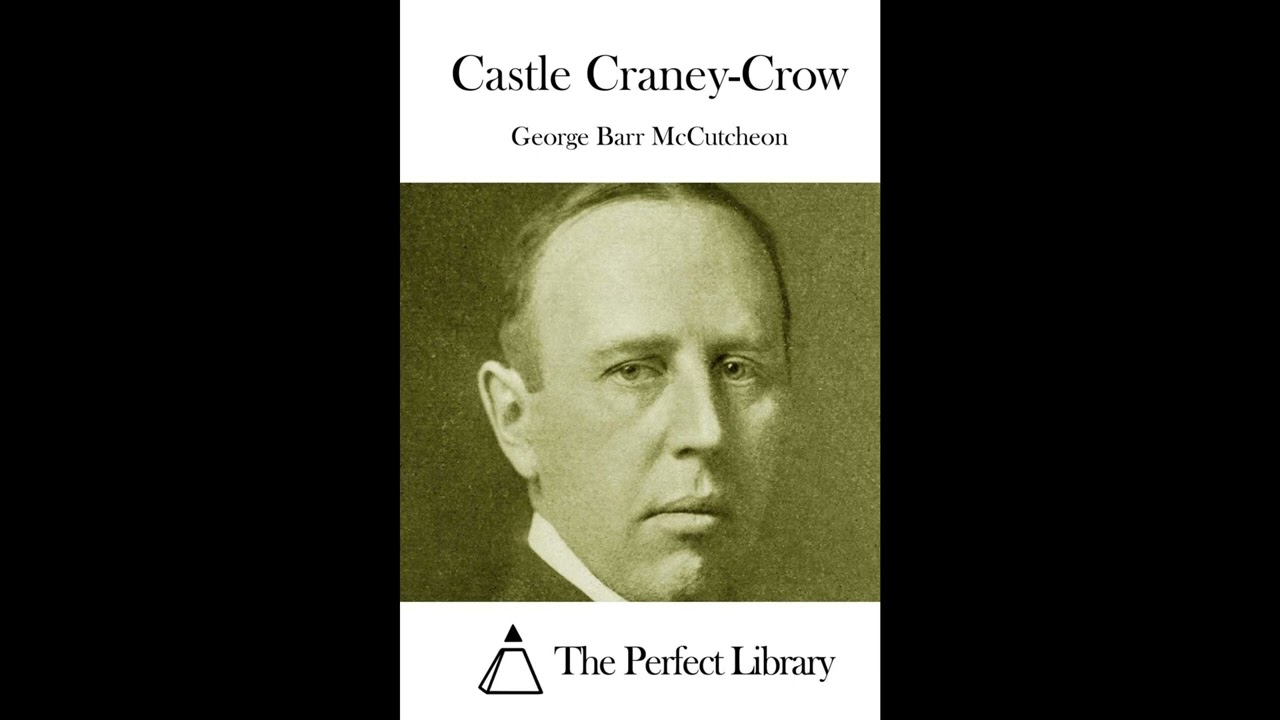
Step into a world where mystery shadows ancient castles and a daring American spirit confronts the secrets of European aristocracy. George Barr McCutcheon's Castle Craney-Crow, first published in 1902, invites listeners to lose themselves in a tale of romantic adventure, intrigue, and the irresistible charm of a bygone era. It's a story that perfectly embodies the spirit of early twentieth-century popular fiction—a delightful escapade designed to whisk readers away from the everyday into a realm of peril and passion. For anyone seeking a compelling narrative that blends suspense with a hint of swashbuckling heroics, this foundational example of the Ruritanian romance genre still holds its power to entertain and surprise, offering a window into the narrative pleasures that once captivated a nation. The story opens with the unexpected arrival of Philip Quentin, a young American, at the formidable Castle Craney-Crow, a structure shrouded in local legend and a sinister reputation. He finds himself drawn into a labyrinth of enigma almost immediately, learning that the castle is the ancestral seat of a powerful but secretive European family and is rumored to hold a beautiful, veiled princess within its walls. This mysterious noblewoman, known only as the Princess of Craney-Crow, is said to be either a prisoner, an heir, or perhaps even a ghost, her true identity and circumstances fiercely guarded by the castle’s stern occupants and its imposing architecture. Quentin, driven by a combination of curiosity, a sense of chivalry, and perhaps a touch of American adventurism, quickly determines to uncover the truth behind the castle’s legends and the fate of its hidden resident. As Quentin attempts to navigate the treacherous social landscape and the physical confines of Craney-Crow, he encounters a gallery of eccentric characters—loyal retainers, menacing guards, and distant relatives with their own agendas. He quickly learns that appearances are deceiving, and trust is a rare commodity within the castle’s ancient walls. His efforts to communicate with the princess, to understand her plight, and to challenge the authority that keeps her secluded, place him in constant peril. The narrative builds around his clever maneuvers, his narrow escapes, and the deepening connection he feels with the elusive princess, even as her true identity and the reasons for her concealment remain tantalizingly out of reach, pushing him toward a dramatic confrontation with the forces that govern Castle Craney-Crow. George Barr McCutcheon, the author responsible for this delightful concoction of romance and suspense, was born in Tippecanoe County, Indiana, in 1866. A prolific writer, he rose to prominence in the early 1900s, becoming one of America's best-selling novelists. Before his literary career took off, McCutcheon worked as a reporter for various newspapers, a profession that likely honed his storytelling abilities and his keen eye for engaging narratives. His breakthrough came in 1901 with Graustark: The Story of a Love Behind a Throne, a novel that established the popular "Ruritanian romance" trend, featuring fictional European principalities, hidden royalty, and dramatic love stories. Castle Craney-Crow, published just a year later, capitalized on this success, further cementing his reputation. McCutcheon continued to write for decades, producing over 40 novels before his death in 1928 in New York City. While Graustark remains his most famous work, and Castle Craney-Crow a strong contender, he also authored other popular books, including Brewster's Millions (1902), which has seen numerous film adaptations over the years. His style was marked by engaging plots, clear prose, and a strong emphasis on character and situation, making his books accessible and immensely popular with a broad readership. He was a master of the romantic adventure genre, offering readers an escape into worlds of heroism, glamour, and intrigue, placing him firmly among the leading popular novelists of the Progressive Era. At its core, Castle Craney-Crow enacts several enduring themes, most prominently that of romance and chivalry. Philip Quentin's entire presence at the castle is driven by a deep-seated desire to protect and liberate the mysterious Princess, a classic knight-errant motif recast for the modern age. His willingness to brave dangers and defy powerful figures for her sake underscores a foundational belief in heroic love. The novel also showcases mystery and hidden identity. The very premise revolves around the Princess's true name and the reasons for her isolation, compelling both Quentin and the listener to piece together clues from cryptic conversations and veiled suggestions. The castle itself becomes a symbol of concealed truths, its every shadow potentially harboring another secret. A further theme is the clash of American ingenuity with Old World aristocracy and its perceived decay. Quentin, as a pragmatic and resourceful American, constantly finds his direct approach and democratic sensibilities at odds with the rigid protocols, ancient traditions, and sometimes sinister machinations of the European nobility who guard the castle. He represents a new kind of hero, one who solves problems not just with a sword, but with wit and persistence, contrasting sharply with the crumbling grandeur and stagnant power structures of Craney-Crow. Through these narrative threads, McCutcheon crafts a story that is not merely an adventure, but also a reflection on cultural values and the enduring human desire for freedom and authentic connection. The early 1900s, when Castle Craney-Crow first appeared, was a fascinating period in American history, characterized by rapid industrialization, social reform movements known as the Progressive Era, and a growing sense of national identity. Culturally, there was a widespread hunger for entertainment and escapism. Magazines and book publishing were booming, and authors like McCutcheon satisfied a public appetite for stories that offered romance, adventure, and a departure from the often gritty realities of everyday life or the serious literary naturalism that was also gaining traction. This era saw a particular fascination with European royalty and aristocracy, often viewed through a romanticized lens. The "Ruritanian romance" genre, popularized by Anthony Hope's The Prisoner of Zenda a few years earlier, allowed American readers to indulge in fantasies of noble heroes, hidden identities, and dramatic political intrigue in fictional European kingdoms. Castle Craney-Crow emerged precisely from this cultural context, offering its audience a thrilling, often melodramatic, yet ultimately satisfying narrative that combined exotic settings with familiar themes of good triumphing over evil, and love conquering all. Listening to Castle Craney-Crow as an audiobook offers a particularly immersive way to experience McCutcheon's narrative. The narrator’s voice becomes crucial in differentiating the varied characters—from the earnest Philip Quentin to the enigmatic princess, and the many imposing figures within the castle’s walls. A skilled voice artist can truly animate the suspense of the unknown, giving weight to the castle’s legends and heightening the tension as Quentin ventures deeper into its secrets. With a run length of several hours, this format is ideal for extended listening sessions, whether during a long drive, while engaging in household tasks, or simply relaxing with a cup of tea. Pay close attention to the narrator’s pacing, which can emphasize the build-up of the mystery and the quick shifts into moments of daring action, allowing the rich atmosphere of the ancient castle and the dramatic dialogues to truly envelop the listener.
Enjoyed Castle Craney-Crow? A few ways to support us
Audible & Amazon links are affiliate; we may earn a small commission at no extra cost.
About this production
Human narration by a volunteer reader from LibriVox.org, the public-domain audiobook project. LibriVox volunteers record literary works whose copyright has expired in the United States, releasing the resulting recordings into the public domain.
Castle Craney-Crow by George Barr McCutcheon. The underlying text is in the U.S. public domain. We do not republish any modern copyrighted edition, translation, or commentary.
The 4K cinematic visuals accompanying this audiobook are generated by an AI image model from prompts derived from the source text. No copyrighted photos, paintings, or stock footage are used. AI generation is disclosed on every video on our YouTube channel as required by YouTube's altered/synthetic content policy.
English subtitles are transcribed from the LibriVox recording with OpenAI Whisper. Translations into the 11 other supported languages are produced by Meta's NLLB-200 neural translation model. No human translator's copyrighted translation is used.
Questions about sourcing or rights? See our DMCA & Sourcing policy or contact us.
Enjoyed this audiobook?
If you'd like to own a copy of Castle Craney-Crow or hear a professionally produced edition, the links below help support free audiobook production at no extra cost to you.
As an Amazon Associate we earn from qualifying purchases. Audible / print links are affiliate.