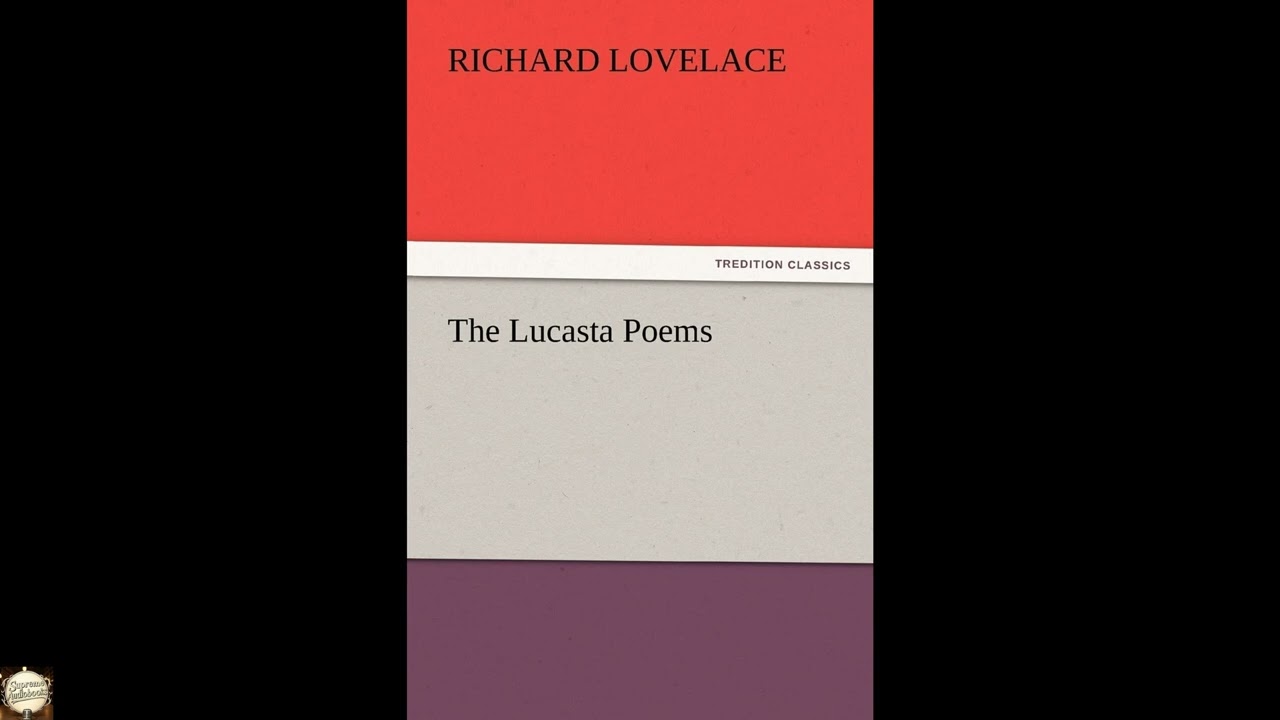
The Lucasta Poems
Step into the tumultuous world of seventeenth-century England, a time of profound division, fierce loyalties, and enduring love, through the eloquent verse of Richard Lovelace. His collection, known collectively as The Lucasta Poems, offers more than just a glimpse into a bygone era; it serves as a resonant testament to the human heart’s resilience, its capacity for devotion, and the steadfastness of honor in the face of conflict. These are not merely historical relics; they are vivid expressions of emotion and principle that continue to echo with profound relevance today, inviting listeners to ponder the price of loyalty, the nature of freedom, and the unwavering power of affection that transcends distance and hardship. While The Lucasta Poems does not unfold a conventional narrative with a singular plot, it presents a compelling emotional and philosophical arc through its speaker’s experiences. We find ourselves in an England teetering on the brink of civil war, a realm where courtly grace clashes with the harsh realities of political upheaval. The central figure is often a courtier and soldier, a man of refined sensibility and unshakeable principle, deeply devoted to his beloved, Lucasta. His world is one of elegant pursuits and fervent commitments, yet it is constantly shadowed by the looming threat of conflict and the sacrifices it demands. The collection traces the speaker’s movement from the warmth of personal affection and the pleasantries of courtly life to the grim duties of a soldier called to defend his king. We witness his poignant farewells, the pain of separation, and the stoic acceptance of a fate dictated by honor. As the political landscape grows darker, the speaker finds himself enduring not only the perils of the battlefield but also the confines of imprisonment, a direct consequence of his unyielding loyalty to the Royalist cause. Yet, even within these harsh circumstances, his spirit remains undimmed, his thoughts returning constantly to Lucasta and to the ideals that define his very being. The poems paint a picture of a man who, despite external pressures and physical restraints, maintains an internal freedom and an unwavering commitment to both love and duty. Richard Lovelace, born in 1618, was the quintessential Cavalier poet – a gentleman, a scholar, a soldier, and a passionate supporter of King Charles I. His life was inextricably bound to the fortunes of the Royalist cause during the English Civil War. Educated at Charterhouse School and Merton College, Oxford, Lovelace quickly became a prominent figure in the sophisticated circles of the court. His early life was marked by privilege and promise, a time when his poetic talents blossomed alongside his military ambitions. He participated in the Bishops’ Wars against the Scots and, with the outbreak of the Civil War in England, threw his full weight behind the King. This fervent loyalty, however, came at a steep personal cost. Lovelace was imprisoned multiple times for his Royalist petitions and actions, most notably in 1642 and again in 1648. It was during these periods of confinement that some of his most celebrated verses were composed, transforming the adversity of his circumstances into profound statements of spiritual freedom. While he penned a play, The Scholar, and other occasional pieces, it is his lyrical poetry, gathered posthumously and published as Lucasta in 1649 and a second collection in 1659, that secured his place in literary history. His works embody the elegance, wit, and idealism associated with the "Sons of Ben" – poets who admired and emulated Ben Jonson's classical style. Lovelace, who passed away in 1657, left behind a legacy of verse that articulates the Cavalier ethos with unparalleled grace and sincerity. At the heart of The Lucasta Poems lie several profound human themes that resonate across centuries. Perhaps most prominent is the intertwining of love and loyalty. Lovelace articulates a devotion so pure that it transcends physical presence and even overrides personal safety. In the iconic "To Lucasta, Going to the Wars," the speaker directly addresses his beloved, asserting, "I could not love thee, Dear, so much, / Loved I not Honor more." This declaration is not a diminishing of his love but rather an elevation of it, showing how his capacity for profound affection is inextricable from his adherence to a higher code of honor and duty, in this case, to his king. His love for Lucasta is shown as a reflection of his greater fidelity to principle. Another central theme is freedom versus imprisonment. Lovelace masterfully explores the paradox that true liberty resides not in physical circumstances but in the state of the mind and spirit. His most famous lines from "To Althea, from Prison," declare, "Stone walls do not a prison make, / Nor iron bars a cage." Here, the speaker, despite being literally confined, asserts a spiritual liberation found in his thoughts of Lucasta, his friends, and his king. This poem powerfully demonstrates how internal conviction and the power of imagination can surmount the most restrictive external conditions, proving that the human spirit can remain unbound even when the body is held captive. The emergence of The Lucasta Poems is deeply rooted in the turbulent political and social landscape of mid-seventeenth-century England. This was the era of the English Civil War, a devastating conflict between the Royalist forces of King Charles I and the Parliamentarian armies. Richard Lovelace, a staunch Royalist, found his life and art profoundly shaped by these events. The Cavalier poets, a loose group including Lovelace, Robert Herrick, and Sir John Suckling, stood in contrast to their Puritan contemporaries. Their verse celebrated beauty, love, loyalty to the monarchy, and often a bittersweet enjoyment of life’s pleasures, even as the world around them descended into chaos. They favored clarity, grace, and wit, often employing classical allusions and a more direct, less intellectually complex style than the Metaphysical poets who preceded them. Lovelace’s poems directly reflect the anxieties and allegiances of his time, serving as elegies for a fading courtly world and affirmations of a dying cause. They are a direct response to the era’s upheavals, giving voice to the Royalist perspective and embodying its ideals of chivalry and devotion. Experiencing The Lucasta Poems as an audiobook offers a singular opportunity to connect with the inherent musicality and emotional depth of Lovelace’s verse. Poetry, especially from this period, was often intended to be heard, its rhythms and sonic qualities carefully crafted. A skilled narrator brings these intricate elements to life, allowing the listener to fully appreciate the delicate cadence, the precise meter, and the subtle interplay of sound and meaning that might be missed in silent reading. The careful pacing of the reader allows the listener to absorb each carefully chosen word, the nuanced shifts in tone from declarations of passionate love to reflections on stoic duty, and the elegant flow of Lovelace's arguments. Over several hours, this auditory presentation creates an immersive atmosphere, transporting one directly into the elegant, yet fraught, world of a Cavalier poet whose enduring words continue to speak volumes about love, honor, and freedom.
Enjoyed The Lucasta Poems? A few ways to support us
Audible & Amazon links are affiliate; we may earn a small commission at no extra cost.
About this production
Human narration by a volunteer reader from LibriVox.org, the public-domain audiobook project. LibriVox volunteers record literary works whose copyright has expired in the United States, releasing the resulting recordings into the public domain.
The Lucasta Poems by Richard Lovelace. The underlying text is in the U.S. public domain. We do not republish any modern copyrighted edition, translation, or commentary.
The 4K cinematic visuals accompanying this audiobook are generated by an AI image model from prompts derived from the source text. No copyrighted photos, paintings, or stock footage are used. AI generation is disclosed on every video on our YouTube channel as required by YouTube's altered/synthetic content policy.
English subtitles are transcribed from the LibriVox recording with OpenAI Whisper. Translations into the 11 other supported languages are produced by Meta's NLLB-200 neural translation model. No human translator's copyrighted translation is used.
Questions about sourcing or rights? See our DMCA & Sourcing policy or contact us.
Enjoyed this audiobook?
If you'd like to own a copy of The Lucasta Poems or hear a professionally produced edition, the links below help support free audiobook production at no extra cost to you.
As an Amazon Associate we earn from qualifying purchases. Audible / print links are affiliate.