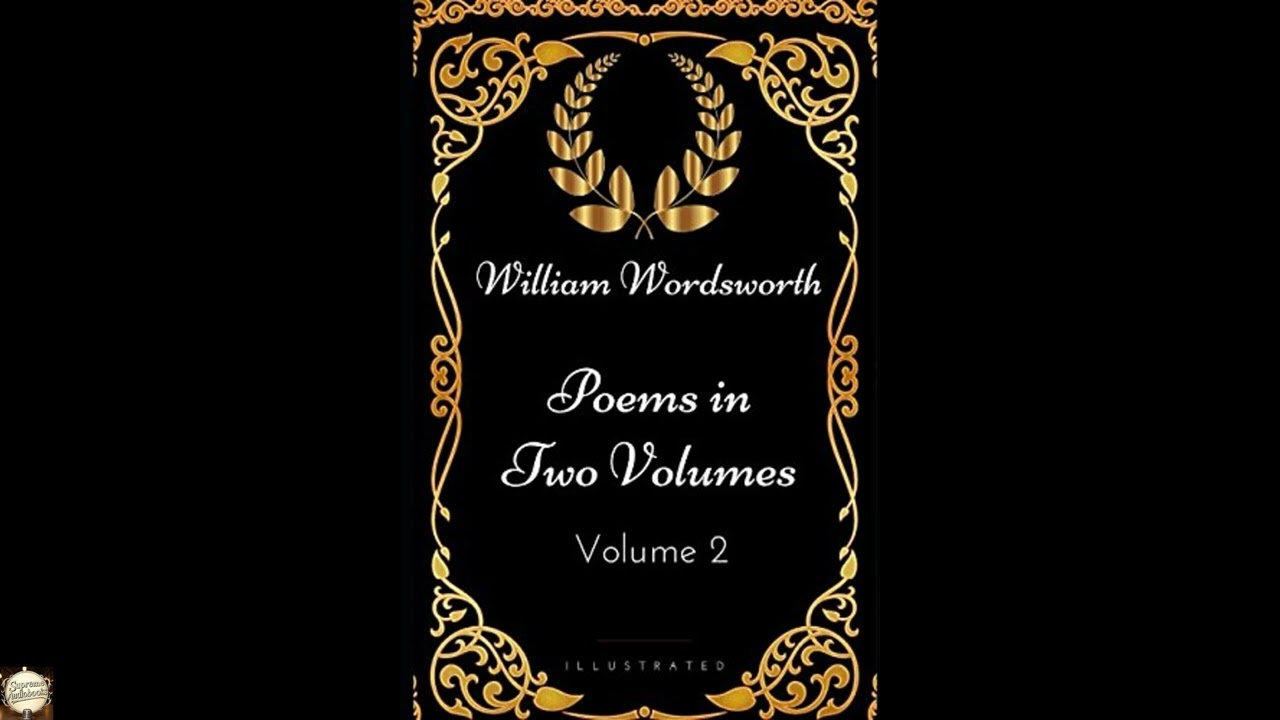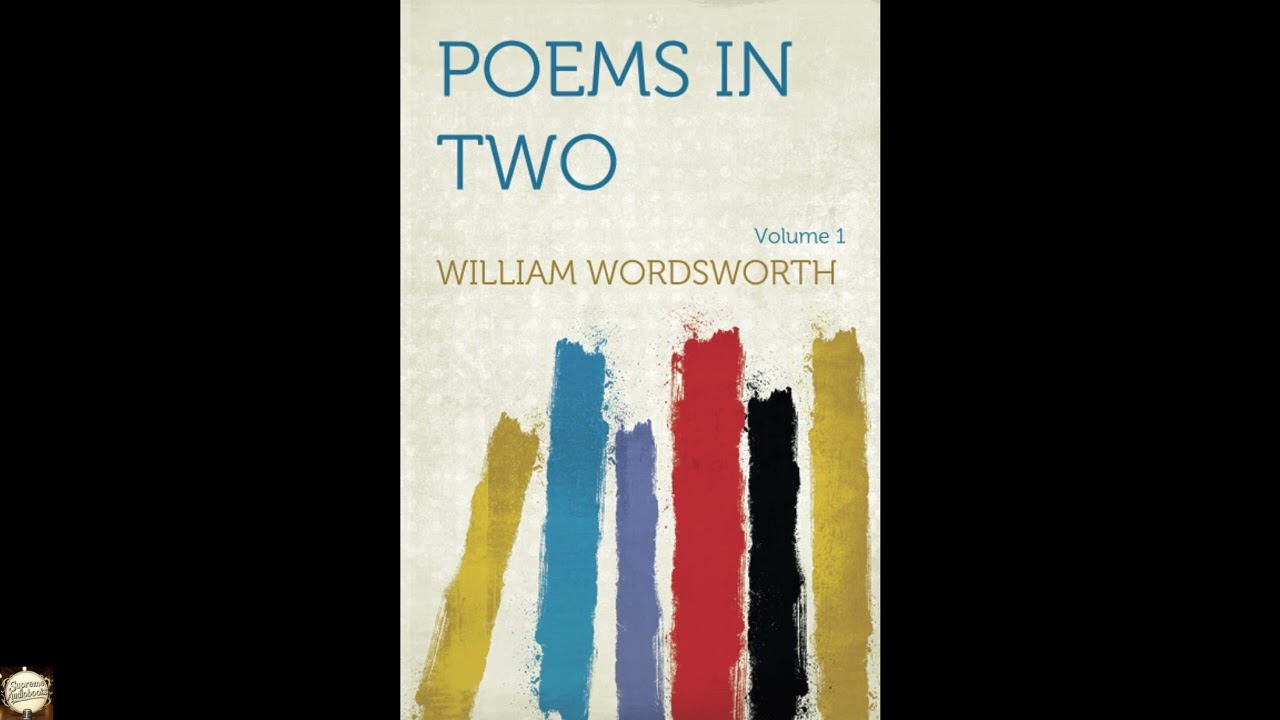
"Poems in Two Volumes, Volume 1"
For anyone seeking a profound connection with the inner self and the natural world, William Wordsworth’s Poems in Two Volumes, Volume 1 offers an essential portal. This collection, a cornerstone of English Romanticism, invites the listener into a mind deeply attuned to beauty, memory, and the spiritual resonance of everyday life. It is not merely a historical relic, but a living testament to the enduring power of language to elevate the ordinary, to find the sublime in a simple flower, and to articulate the complex workings of human emotion. By presenting these revolutionary verses in spoken form, we gain immediate access to the rhythms and sounds Wordsworth intended, making his vision as fresh and relevant today as it was over two centuries ago. It stands as a vital touchstone for understanding how we perceive our world and ourselves. The collection frequently places its speaker amidst the natural splendor of the English countryside, particularly the Lake District, observing its flora and fauna, its changing seasons, and its enduring presence. This speaker, often reflecting the author's own sensibilities, acts as a sensitive receptor to these external stimuli. He encounters common folk – reapers in fields, solitary wanderers, elderly men of the road – observing their simple lives with profound empathy and seeking universal truths in their existence. The focus consistently centers on the interplay between external nature and internal thought, the mind’s capacity to derive meaning, beauty, and solace from the world around it. There is no conventional story arc with rising action and resolution in this book. Instead, the arc is one of sensibility and perception, tracing the ebb and flow of human feeling as it interacts with the physical world. The "conflict," if it can be called that, arises from the human struggle to reconcile past joy with present reality, to hold onto innocence, and to find solace amid life's inevitable sorrows. The verses move through diverse landscapes and emotional states, from the quiet rapture inspired by daffodils swaying in the breeze to the poignant reflection on childhood's lost intensity. Each poem presents a miniature world, a carefully observed scene or a deeply felt moment, cumulatively building a portrait of a uniquely sensitive consciousness engaging deeply with existence. William Wordsworth, born in Cockermouth, Cumberland, England, in 1770, would become one of the most influential figures in English literature. Orphaned during his youth, he found solace and inspiration in the majestic landscapes of the Lake District, a region that would profoundly shape his poetic imagination. He studied at St. John's College, Cambridge, and later traveled to revolutionary France, where his initial idealism for democratic change eventually gave way to disillusionment. His move to Dorset, where he befriended Samuel Taylor Coleridge, marked a pivotal moment, leading to their groundbreaking collaboration, Lyrical Ballads, in 1798. This collection, with its revolutionary preface, declared a new poetic manifesto, championing common language and the lives of ordinary people. Wordsworth's most productive years were spent living in the Lake District, first in Grasmere and later at Rydal Mount, where he lived a long and prolific life, often accompanied by his devoted sister, Dorothy, whose detailed journals provided much inspiration. His personal experiences, from the loss of loved ones to the quiet contemplation of nature, became the wellspring of his creative output. Beyond Poems in Two Volumes and Lyrical Ballads, his enduring legacy includes his autobiographical epic poem, The Prelude, "Ode: Intimations of Immortality from Recollections of Early Childhood," and "Tintern Abbey." He became Poet Laureate in 1843, cementing his esteemed position within the literary establishment, though his most revolutionary work had long since been published. He passed away in 1850. A central theme running through these pages is nature’s profound spiritual power. Wordsworth consistently presents the natural world not merely as a backdrop, but as a living, breathing entity capable of offering solace, teaching moral lessons, and even revealing glimpses of the divine. Consider the celebrated lines where the speaker, recalling a field of dancing daffodils, finds that "oft, when on my couch I lie / In vacant or in pensive mood, / They flash upon that inward eye / Which is the bliss of solitude." Here, nature’s beauty becomes an internal, regenerative force, a spiritual wellspring that enriches the human spirit long after the physical encounter. Another prominent concern is the profound influence of memory and childhood, particularly the way early experiences shape adult perception and provide a repository of joy. The verses often reflect on the fading intensity of youthful vision and the effort to recapture that primal connection to the world, suggesting that our earliest interactions with nature hold a key to our later spiritual and emotional health. The collection also elevates the ordinary and finds the sublime in the mundane. Wordsworth deliberately turned away from the neoclassical conventions that favored heroic themes and lofty language, choosing instead to focus on the simple lives of country folk and the humble beauty of a single flower. In a poem like "The Solitary Reaper," the speaker is captivated by the song of a Highland girl toiling in a field, finding in her unadorned voice a beauty more profound and mysterious than any cultivated art. This act of finding grandeur in everyday scenes revolutionized poetic subject matter. Furthermore, the interplay between imagination and the mind’s shaping power is a recurring thread. It is not just what the eye sees, but how the mind perceives, interprets, and infuses external reality with meaning that truly matters. This collection, published in 1807, emerged from a period of immense change and upheaval in Britain and across Europe. The lingering shadow of the French Revolution, with its initial promise of liberty and subsequent slide into terror and Napoleonic imperial ambition, had profoundly shaken intellectual and political certainties. Simultaneously, the nascent Industrial Revolution began to transform the English landscape, drawing people from rural idylls to the burgeoning, often squalid, industrial towns. This era saw a growing disillusionment with the Enlightenment’s singular focus on reason and a yearning for a deeper connection to emotion, intuition, and the natural world. In the literary sphere, Wordsworth and his contemporaries actively rebelled against the formal, often didactic, poetry of the 18th century. They sought a more authentic, personal voice, a language closer to common speech, and a subject matter rooted in nature, individual experience, and the lives of ordinary people. Poems in Two Volumes represents a mature articulation of these Romantic ideals, offering an antidote to the anxieties of the age through an emphasis on nature's restorative power and the integrity of the individual human spirit. Listening to Wordsworth’s poetry read aloud offers a unique and deeply immersive way to appreciate his craft. The several hours of narration provide ample time to settle into his distinctive rhythms and to absorb the beauty of his language without the visual distraction of the printed page. A skilled narrator brings out the subtle meter and cadence, allowing the listener to experience the musicality often overlooked in silent reading. Pay attention to the pacing, which can reflect the contemplative strolls through the countryside or the sudden bursts of emotion that characterized Wordsworth’s verse. The narrator's voice, through its warmth and clarity, shapes the atmosphere, evoking the solitude of the fells, the murmuring of a stream, or the profound stillness of a reflective moment. The spoken word highlights the emotional nuances, making the speaker's awe, melancholy, or quiet joy immediately palpable, allowing the listener to truly inhabit the landscapes of both nature and the human mind that Wordsworth so brilliantly captured.
Enjoyed "Poems in Two Volumes, Volume 1"? A few ways to support us
Audible & Amazon links are affiliate; we may earn a small commission at no extra cost.
About this production
Human narration by a volunteer reader from LibriVox.org, the public-domain audiobook project. LibriVox volunteers record literary works whose copyright has expired in the United States, releasing the resulting recordings into the public domain.
"Poems in Two Volumes, Volume 1" by William Wordsworth. The underlying text is in the U.S. public domain. We do not republish any modern copyrighted edition, translation, or commentary.
The 4K cinematic visuals accompanying this audiobook are generated by an AI image model from prompts derived from the source text. No copyrighted photos, paintings, or stock footage are used. AI generation is disclosed on every video on our YouTube channel as required by YouTube's altered/synthetic content policy.
English subtitles are transcribed from the LibriVox recording with OpenAI Whisper. Translations into the 11 other supported languages are produced by Meta's NLLB-200 neural translation model. No human translator's copyrighted translation is used.
Questions about sourcing or rights? See our DMCA & Sourcing policy or contact us.
Enjoyed this audiobook?
If you'd like to own a copy of "Poems in Two Volumes, Volume 1" or hear a professionally produced edition, the links below help support free audiobook production at no extra cost to you.
As an Amazon Associate we earn from qualifying purchases. Audible / print links are affiliate.