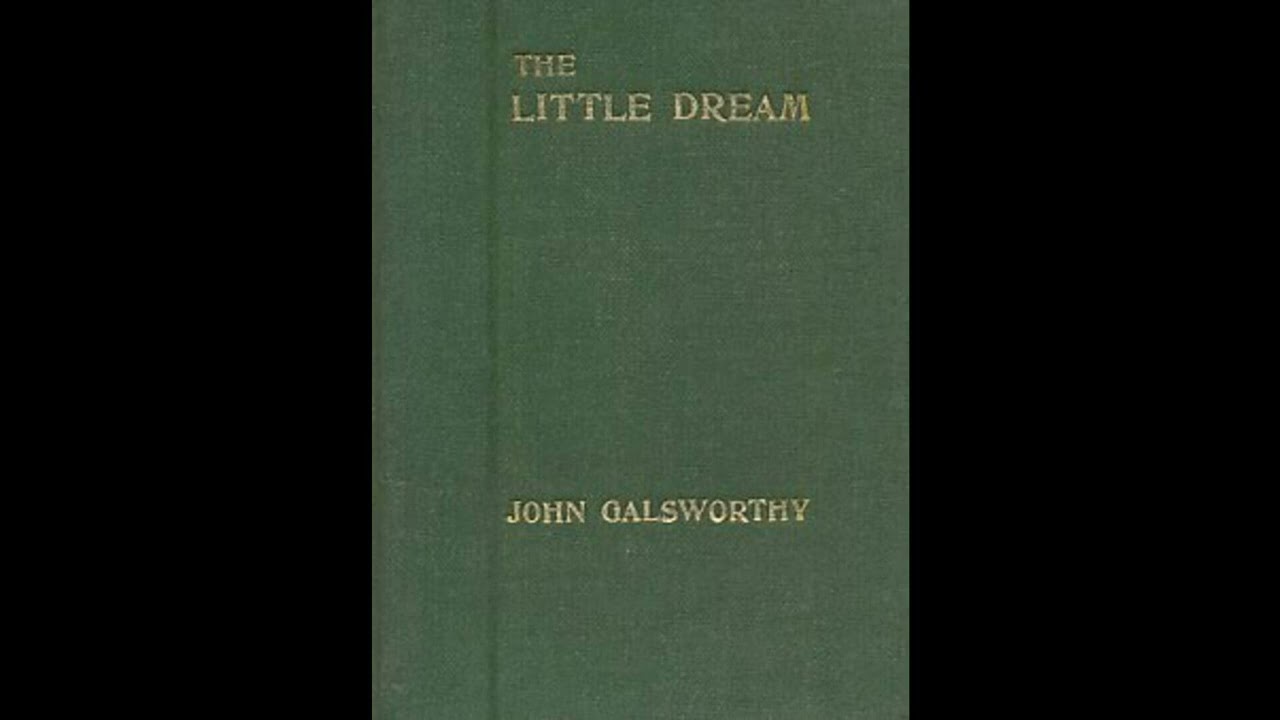
The Little Dream. An Allegory in Six Scenes
The Little Dream. An Allegory in Six Scenes by Nobel laureate John Galsworthy offers more than just a glimpse into the literary landscape of the early twentieth century; it presents a profound meditation on the human spirit's ceaseless quest for meaning and beauty amidst the often-harsh realities of life. This dramatic allegory, presented as a series of encounters, speaks directly to anyone who has ever wrestled with the tension between idealism and practicality, between the desire for pure truth and the compromises demanded by the world. It asks fundamental questions about where true happiness resides and whether the soul can ever find lasting contentment, making its deceptively simple narrative surprisingly relevant to contemporary listeners navigating their own complex aspirations. At the heart of The Little Dream is Seelchen, a young soul personifying innocence and aspiration, who dwells in an ethereal mountain sanctuary. Here, she lives in harmony with the natural world and the benign influence of the Spirit of the Mountain, who embodies pure beauty, idealism, and truth. Seelchen's existence is one of untroubled serenity, dedicated to the contemplation of perfection. However, a growing restlessness stirs within her, a yearning to experience the broader scope of existence beyond her tranquil peak. The lure of the world below, represented by the bustling and demanding Spirit of the Town, eventually proves irresistible, prompting Seelchen to descend from her idyllic haven into the clamor of human life. Her descent initiates a series of dramatic encounters, each scene acting as a symbolic representation of different facets of worldly experience. Seelchen first meets figures representing love and passion, then art and aesthetic pursuit, followed by the pursuit of wealth and material success, and finally, the transient pleasures of society. In each encounter, Seelchen seeks the enduring beauty and truth she knew on the mountain, hoping to find it manifested in human endeavors. However, with each interaction, she discovers limitations, compromises, and ultimately, a sense of disillusionment. The love she finds is fleeting, the art commercialized, the wealth hollow, and the pleasure superficial. As Seelchen navigates these experiences, her initial idealism gradually erodes, replaced by a growing awareness of the world's imperfections and the compromises inherent in human striving. The relentless pace and materialism of the Town contrast sharply with the serene beauty of her mountain home, leaving her increasingly adrift and questioning the path she chose. She grapples with the realization that the pure, unblemished truth she seeks seems elusive in the human realm, leading her to a moment of profound introspection about the nature of her quest and the true source of fulfillment. John Galsworthy (1867-1933) stands as a towering figure in early twentieth-century English literature, renowned for his incisive social commentary and his elegant, often melancholic, prose. Born into an affluent, conservative upper-middle-class family in Kingston upon Thames, Galsworthy initially pursued a legal career, studying at Harrow and Oxford, and was called to the Bar in 1890. However, his true calling lay in writing, a path he initially pursued in secret, adopting the pseudonym "John Sinjohn" for his early works. His legal background, combined with his privileged upbringing, afforded him a unique perspective on the customs, hypocrisies, and constraints of Edwardian society, which he would meticulously dissect in his fiction and drama. A pivotal turning point in Galsworthy's personal and professional life was his clandestine affair with Ada Nemesis Pearson Cooper, the estranged wife of his cousin. This illicit relationship, which eventually led to Ada's divorce and their marriage in 1905, deeply influenced his understanding of social injustice and the restrictive conventions of his class. His sympathetic portrayal of Ada's plight under Victorian marital law inspired some of his most significant works, particularly his plays such as Strife (1909) and Justice (1910), which brought him considerable critical acclaim and cemented his reputation as a socially conscious dramatist. Galsworthy's enduring legacy, however, is most closely associated with The Forsyte Saga, a monumental series of novels chronicling the lives of a wealthy, acquisitive English family from the Victorian era into the 1920s. This multi-volume family chronicle, for which he was awarded the Nobel Prize in Literature in 1932, established him as a master of realist fiction, capable of both broad social panorama and keen psychological insight. While The Forsyte Saga cemented his fame, his lesser-known allegorical plays like The Little Dream, published in 1911, demonstrate a different facet of his literary genius, showcasing his capacity for poetic introspection beyond the strictures of social realism. The Little Dream is rich with thematic resonance, perhaps most prominently the enduring struggle between idealism and reality. Seelchen's initial dwelling on the mountain, guided by the Spirit of the Mountain, represents a pure, unblemished ideal—a realm of untainted beauty and truth. Her decision to descend into the domain of the Spirit of the Town directly enacts the conflict, forcing her to confront the compromises and imperfections that inevitably arise when abstract ideals meet the tangible, often messy, details of human existence. The allegory suggests that while the pursuit of perfection is noble, its actualization in the physical world is fraught with disappointment. Another significant theme Galsworthy addresses is the search for meaning and fulfillment, specifically through the various avenues society offers. Seelchen's encounters with the "Lover," the "Artist," the "Man of Business," and the "Man of Pleasure" symbolize humanity's diverse attempts to find purpose and happiness. Each figure offers a seemingly complete path, yet Seelchen finds each one ultimately wanting, too narrow, or too tarnished by earthly concerns. For instance, the Artist, rather than creating for pure beauty, is concerned with selling his work, illustrating how even noble pursuits can become corrupted by material needs. This sequence underscores a profound sense of disillusionment, suggesting that no single worldly pursuit can fully satisfy the soul's deepest yearnings for transcendent truth. Published in 1911, The Little Dream emerged from the late Edwardian era, a period of significant social and intellectual ferment in Britain. The preceding Victorian age, with its strict moral codes and rapid industrialization, had given way to an era of questioning and introspection. Culturally, there was a growing awareness of urban squalor alongside unprecedented wealth, leading to anxieties about class divisions and the impact of materialism on the national character. Politically, the seeds of future conflict were being sown, both domestically with rising labor unrest and the women's suffrage movement, and internationally with escalating imperial rivalries that would soon erupt into the First World War. In the literary world, the early 20th century was a transitional period. Realism and naturalism, championed by writers like Galsworthy himself, were still potent forces, aiming to depict life truthfully and often expose social ills. However, there was also a burgeoning interest in psychology, symbolism, and a move towards modernism, challenging traditional narrative structures and perspectives. Galsworthy, while rooted in realism, demonstrated his versatility by engaging with allegorical forms in The Little Dream. This short dramatic piece, with its abstract characters and symbolic settings, reflects a broader cultural inclination to step back from mere factual depiction and consider deeper, often spiritual, questions about human purpose in a rapidly changing, increasingly secularized world. To experience The Little Dream as an audiobook is to gain a unique appreciation for Galsworthy's poetic language and the dramatic contours of his allegory. A skilled narrator can imbue the distinct voices of the allegorical characters—the ethereal Spirit of the Mountain, the bustling Spirit of the Town, and especially Seelchen herself—with the precise inflections that convey their symbolic weight and emotional states. The "several hours" run length is perfectly suited for focused listening, allowing the listener to absorb the profound questions posed by each scene without rushing. The pacing and voice chosen by the narrator become crucial tools, guiding the listener through Seelchen's gradual disillusionment and eventual quest for resolution, enhancing the atmospheric shift from the serene mountain peaks to the cacophony of human endeavor. Listening enables an immersion in the soundscape of the allegory, making the dialogue between abstract concepts feel immediate and personal, and allowing the listener to truly dwell within the symbolic landscape Galsworthy so carefully constructed.
Enjoyed The Little Dream. An Allegory in Six Scenes? A few ways to support us
Audible & Amazon links are affiliate; we may earn a small commission at no extra cost.
About this production
Human narration by a volunteer reader from LibriVox.org, the public-domain audiobook project. LibriVox volunteers record literary works whose copyright has expired in the United States, releasing the resulting recordings into the public domain.
The Little Dream. An Allegory in Six Scenes by John Galsworthy. The underlying text is in the U.S. public domain. We do not republish any modern copyrighted edition, translation, or commentary.
The 4K cinematic visuals accompanying this audiobook are generated by an AI image model from prompts derived from the source text. No copyrighted photos, paintings, or stock footage are used. AI generation is disclosed on every video on our YouTube channel as required by YouTube's altered/synthetic content policy.
English subtitles are transcribed from the LibriVox recording with OpenAI Whisper. Translations into the 11 other supported languages are produced by Meta's NLLB-200 neural translation model. No human translator's copyrighted translation is used.
Questions about sourcing or rights? See our DMCA & Sourcing policy or contact us.
Enjoyed this audiobook?
If you'd like to own a copy of The Little Dream. An Allegory in Six Scenes or hear a professionally produced edition, the links below help support free audiobook production at no extra cost to you.
As an Amazon Associate we earn from qualifying purchases. Audible / print links are affiliate.