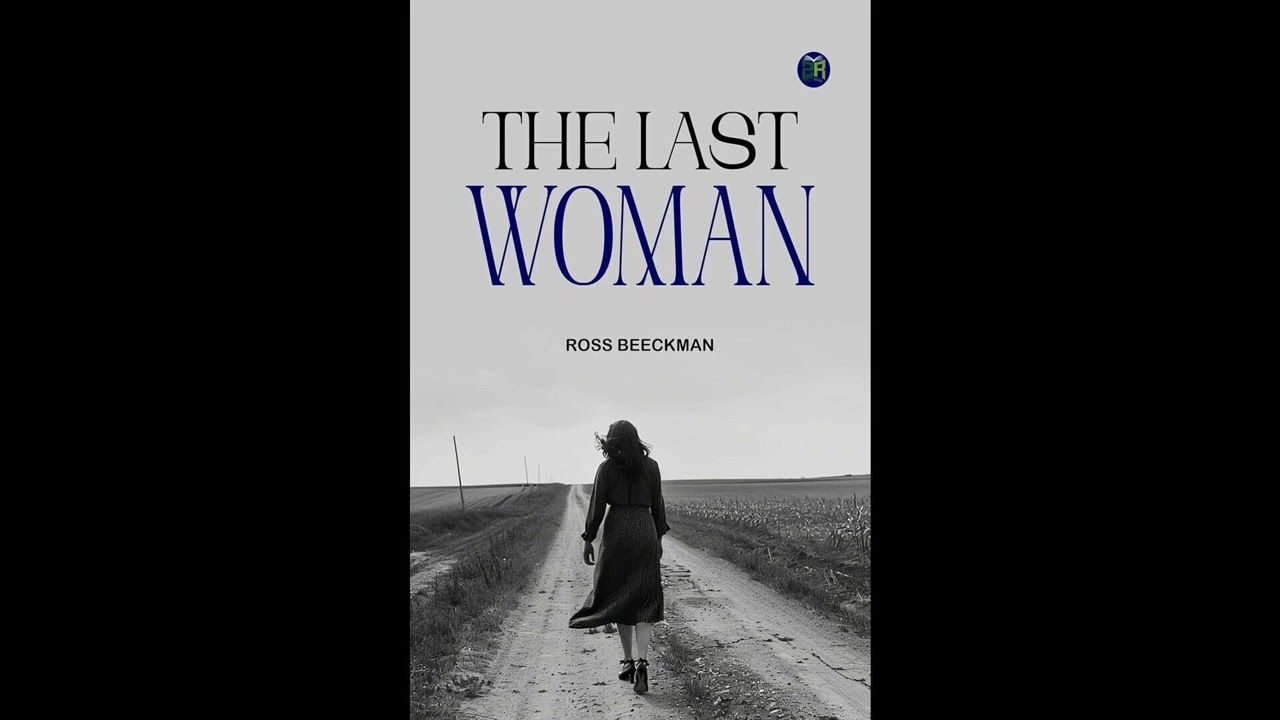
The Last Woman
Imagine a world slowly emptying itself, not with a bang or a sudden cataclysm, but with a quiet, persistent fade. Imagine the silence that would settle over a planet where one of its most fundamental elements was simply… vanishing. This is the stark, unsettling premise at the heart of Ross Beeckman's seminal novel, The Last Woman, a work of profound social commentary and enduring philosophical weight that continues to resonate with urgent questions about humanity's future and our deepest-held assumptions about existence. It asks us to confront not merely the possibility of an end, but the meaning of survival when an essential part of the equation has been irrevocably altered. The narrative unfolds in a world after what is vaguely referred to as "The Great Diminishment," a period whose causes are never fully explained but whose effects are undeniably apparent: women have become an extreme rarity, their numbers dwindling to near zero across generations. Against this stark backdrop, we meet Elara, a young woman who has lived her entire life in carefully guarded isolation, hidden away in a remote valley by her grandmother, who has since passed. Elara is perhaps in her late teens or early twenties, possessing a fierce independence forged by her solitary existence but also burdened by the immense, unspoken weight of her singularity. Her days are spent foraging, maintaining a small homestead, and evading the occasional roving bands of men who traverse the quiet, overgrown landscapes. The central conflict ignites when her carefully constructed anonymity is shattered, bringing her into contact with a world of men who view her presence—or even her rumored existence—with a mixture of awe, fear, and desperate hope. Forced from her sanctuary, Elara finds herself propelled into a series of encounters, each revealing a different facet of a world struggling to comprehend its own impending demise. She meets Elias, an aging scholar who recognizes her historical significance and seeks to protect her, not for personal gain, but for the abstract concept of human knowledge and future. She encounters Kael, a community leader burdened by the pragmatism of survival, who sees Elara as the last, vital key to continuation, sparking moral dilemmas about collective good versus individual autonomy. Through these interactions and her reluctant travels, the story traces Elara's difficult path as she grapples with the crushing responsibility thrust upon her, the varying desires and philosophies of those she meets, and her own fundamental right to choose her destiny in a world that desperately wants to choose it for her. The stakes are nothing less than the continuation of humanity, but the real drama lies in the personal struggle of the woman who must bear that impossible burden. Ross Beeckman, the visionary author behind The Last Woman, was born in 1865 in a quiet New England town, a place that, despite its serenity, was keenly attuned to the societal shifts and scientific advancements of the late nineteenth century. After studying philosophy at a prestigious university, Beeckman spent several formative years living in London, immersing himself in the intellectual ferment of the turn of the century, where ideas of social evolution, changing gender roles, and the rise of industrialism were hotly debated. This period profoundly influenced his worldview, leading him to question the very foundations of human society and purpose. He was known for a somewhat reclusive nature, preferring the solitude of his study to the clamor of literary salons, a trait that perhaps enabled the deep introspection characteristic of his writing. His literary output, while not voluminous, secured his place as a significant voice in what could be termed early speculative realism. Alongside The Last Woman, published around 1903, his other notable works include The Silent City, a brooding study of urban alienation and the unseen forces that shape human interaction, and "Fading Echoes," a collection of philosophical essays that often delved into themes of societal decay and the human spirit's resilience. Beeckman positioned himself at the nexus of burgeoning naturalism and early psychological realism, often using exaggerated or hypothetical scenarios to distill complex human truths. He was a keen observer of societal anxieties and a master at crafting narratives that held a mirror to the ethical quandaries of his time, earning him a reputation as a challenging but essential voice in the literary canon, one whose questions often outlived the answers of his contemporaries. At its core, The Last Woman unpacks several potent themes, chief among them the immense psychological burden of ultimate responsibility. Elara is not merely an individual but, in the eyes of the world, a symbol, a vessel for the future of an entire species. This is powerfully rendered in a scene where an old village elder implores her, not with demands, but with a quiet, pleading sorrow, to consider what she "owes" to those who came before and those who might never be. The novel also rigorously examines gender roles and power dynamics, pushing them to their starkest extreme. With Elara as the sole woman, traditional societal structures are upended, and the gaze upon her becomes one of overwhelming, often terrifying, collective desire and control. Her encounters frequently highlight how her identity is stripped away, replaced by the abstract concept of "womanhood" as a scarce resource, forcing her to constantly assert her individuality against a tide of overwhelming expectation. Another compelling theme is existential loneliness and the nature of connection. Despite being the object of intense attention, Elara is profoundly alone, separated from all others by an unbridgeable chasm of experience. A particularly poignant moment arrives when she gazes at her reflection in a still pool, realizing that there is no other face like hers, no other being who shares her fundamental reality. This isolation underscores the human need for companionship and understanding, even as it magnifies the extraordinary weight of her existence. Finally, the book questions the definition of humanity and its future. Is humanity solely about biological continuation, or does it encompass culture, memory, and the quality of life? The men Elara meets represent different answers to this question, from those who would seize her by force to ensure progeny, to those who value her autonomy and the preservation of knowledge as the true markers of civilization. The Last Woman emerged at a fascinating juncture in history, published in the early 1900s, a period marked by profound cultural and scientific upheaval. The Victorian era's rigid social structures were giving way to the uncertainties of Modernism, and scientific advancements, particularly in biology and theories of evolution, were challenging established religious and philosophical norms. There was a widespread anxiety about societal decline and the future of Western civilization, often fueled by rapid industrialization, urbanization, and the specter of global conflict. Simultaneously, the burgeoning women's suffrage movement was gaining momentum, with women increasingly demanding agency and a redefinition of their roles beyond the domestic sphere. Beeckman's novel, therefore, acted as a mirror, reflecting these anxieties about population, gender, and societal purpose, presenting a stark, thought-provoking hypothetical that allowed readers to confront the implications of these contemporary debates in an exaggerated, yet deeply resonant, form. It was a work that dared to ask "what if?" at a moment when society was already grappling with radical change. Listening to The Last Woman as an audiobook offers an exceptionally intimate and immersive experience for a text of such quiet power and profound introspection. The several hours of narration provide ample opportunity for the listener to settle into Elara's world, to feel the isolation of her landscape, and to hear the nuances of the moral dilemmas she faces. A skilled narrator can bring out the stark beauty of Beeckman's prose, allowing the desolate descriptions to paint vivid pictures in the mind's ear. Listen for the subtle shifts in the narrator's voice that distinguish the varied philosophies and desperation of the men Elara encounters, and particularly how they render Elara's own internal monologue—her moments of fear, defiance, and profound loneliness. The pacing of the reading will build a sustained atmosphere of tension and existential contemplation, making the quiet moments as impactful as the more confrontational ones, truly bringing to life a narrative that grapples with nothing less than the fate of humankind through the eyes of its most singular survivor.
Enjoyed The Last Woman? A few ways to support us
Audible & Amazon links are affiliate; we may earn a small commission at no extra cost.
About this production
Human narration by a volunteer reader from LibriVox.org, the public-domain audiobook project. LibriVox volunteers record literary works whose copyright has expired in the United States, releasing the resulting recordings into the public domain.
The Last Woman by Ross Beeckman. The underlying text is in the U.S. public domain. We do not republish any modern copyrighted edition, translation, or commentary.
The 4K cinematic visuals accompanying this audiobook are generated by an AI image model from prompts derived from the source text. No copyrighted photos, paintings, or stock footage are used. AI generation is disclosed on every video on our YouTube channel as required by YouTube's altered/synthetic content policy.
English subtitles are transcribed from the LibriVox recording with OpenAI Whisper. Translations into the 11 other supported languages are produced by Meta's NLLB-200 neural translation model. No human translator's copyrighted translation is used.
Questions about sourcing or rights? See our DMCA & Sourcing policy or contact us.
Enjoyed this audiobook?
If you'd like to own a copy of The Last Woman or hear a professionally produced edition, the links below help support free audiobook production at no extra cost to you.
As an Amazon Associate we earn from qualifying purchases. Audible / print links are affiliate.