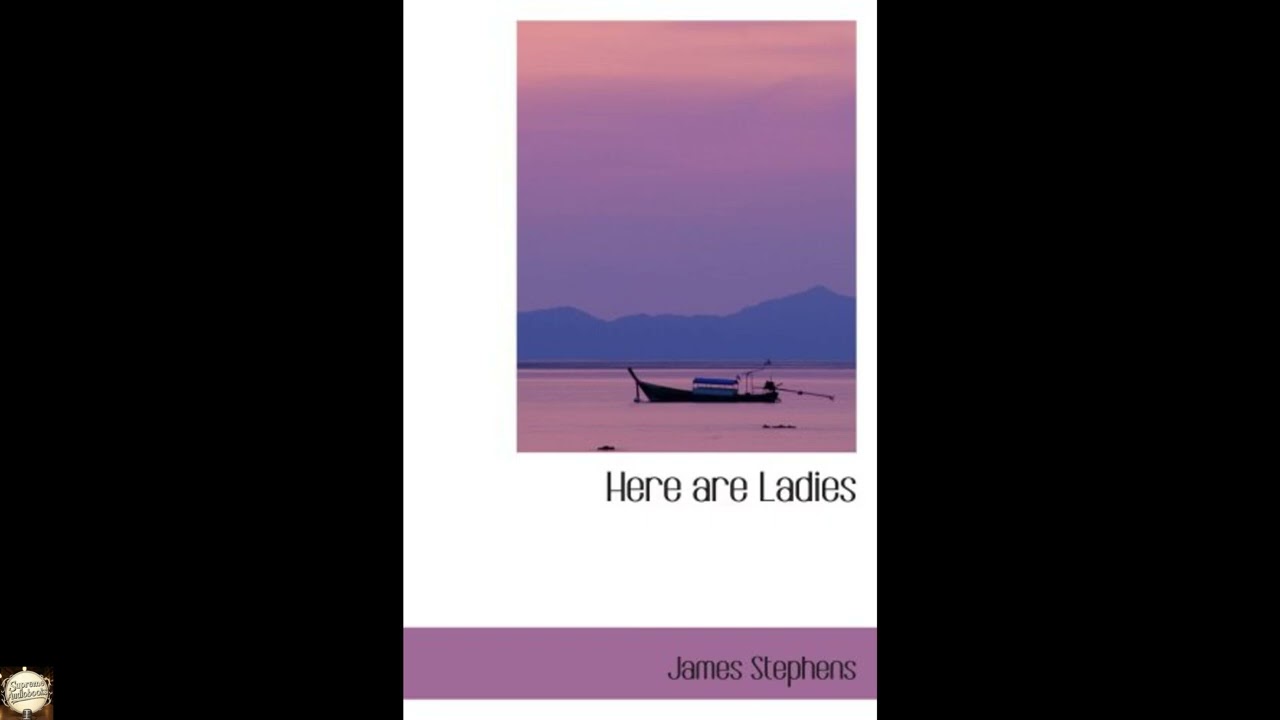
Here are Ladies
James Stephens’ Here are Ladies is not simply a book; it is an invitation into a literary carnival, a delightful miscellany of prose, poetry, and whimsical observations first presented to the world in 1913. This collection stands as a testament to a singular mind, offering a unique blend of sharp wit, profound philosophy, and an enduring sense of the fantastic that finds the magical in the mundane. For today’s listener, it offers a refreshing antidote to the serious and the prosaic, a chance to rediscover the joy of language and the unexpected wisdom found in laughter, fable, and keen human insight. It's a work that doesn't just entertain; it gently provokes thought, broadens perspective, and reminds us that imagination is the most potent lens through which to view existence. This distinctive work does not follow a conventional plot, but rather presents a mosaic of narratives and reflections that coalesce into a vibrant portrait of James Stephens' imagination. The setting is primarily Dublin, but it’s a Dublin where the everyday cobblestones might lead to a conversation with a faery or a profound debate on the nature of the universe in a bustling pub. The collection features a rotating cast of unnamed philosophers, poets, dreamers, and keen observers, each offering a distinct perspective on life, love, and the often-absurd human condition. Stephens himself, through his unmistakable narrative voice, becomes a central character, a genial guide through these varied landscapes of thought and feeling. The central dynamic often arises from the friction between logical thought and intuitive understanding, between the demands of reality and the liberating power of fantasy. One moment, a listener might encounter a fable about animals with human foibles; the next, a deep philosophical discourse on the meaning of beauty or the fleeting nature of happiness. The collection moves through diverse moods and styles, shifting effortlessly from the lighthearted to the reflective, from the anecdotal to the deeply poetic. There is no single overarching conflict or resolution in the traditional sense; instead, the arc of the collection is one of continuous discovery—of the author's mind, of the surprising truths hidden within simple observations, and of the many ways language can illuminate the human spirit. James Stephens, born in Dublin in 1880, emerged from humble beginnings to become a significant figure in Irish letters. Largely self-educated, he began his working life as a clerk but harbored a profound passion for literature. His prodigious talent was recognized and nurtured by prominent figures of the Irish Literary Revival, particularly AE (George William Russell), who saw the spark of genius in the young writer. Stephens quickly established himself as a poet, novelist, and short story writer, celebrated for his distinctive voice, which fused Irish folklore and myth with a deeply philosophical and often humorous outlook. Among his other renowned works are The Crock of Gold, a fantastical novel that blends pagan mythology with modern philosophy, and The Charwoman's Daughter (also known as Mary, Mary), a more realistic but still charming novel of Dublin life. His poetry collections, such as Reincarnations and Collected Poems, further cemented his reputation as a master of lyrical expression. Stephens maintained friendships and corresponded with many of his celebrated contemporaries, including W.B. Yeats and James Joyce, sharing in the dynamic literary ferment of early 20th-century Ireland. He spent a significant part of his later life in London, where he continued to write and broadcast, sharing his wisdom and wit with a wider audience until his passing in 1950. His unique blend of the real and the imaginary, the profound and the playful, earned him a special place in the canon of Irish literature. At its core, Here are Ladies engages with several enduring themes that make it resonate across generations. One prominent theme is the interplay between the ordinary and the mythic, demonstrating how easily the fantastical can surface within everyday existence. Stephens frequently places mythological figures or ancient legends into contemporary Dublin settings, blurring the lines between what is seen and what is imagined. For example, a seemingly mundane conversation between friends might suddenly pivot to a profound discussion about the nature of the 'little people' or the ancient spirits said to inhabit the Irish landscape, treating these figures with as much conversational respect as any living person. This serves to elevate the everyday, imbuing it with a sense of wonder and suggesting that magic is never far from reach. Another significant theme is the pursuit of wisdom and the nature of folly. Stephens often presents characters who, though outwardly simple or unconventional, possess a deep, intuitive understanding of life that eludes the more learned or conventional figures. He champions a kind of "wise foolishness," where true insight comes not from academic rigor but from a keen observation of the world and a willingness to embrace paradox. A piece might feature a seemingly naive character uttering a profound philosophical truth that the supposedly intelligent characters have overlooked, demonstrating Stephens' belief that genuine understanding often resides outside established conventions. Furthermore, the title itself hints at a recurring reflection on the feminine experience, offering observations and character sketches that celebrate women—their beauty, their resilience, their distinct perspectives on the world. Stephens portrays various ladies, from muses to everyday figures, with a gentle, appreciative, and often humorous eye, highlighting their varied roles and impact. Here are Ladies was published in 1913, a pivotal moment both culturally and politically for Ireland and the wider world. It emerged during the height of the Irish Literary Revival, a period characterized by an intense effort to forge a distinct Irish cultural identity through literature, drama, and folklore, often drawing on Celtic myth and legend. Writers like W.B. Yeats, Lady Gregory, and J.M. Synge were creating works that aimed to reclaim and celebrate an authentic Irish voice, distinct from English influence. Politically, the push for Home Rule for Ireland was gaining momentum, creating an atmosphere of nationalistic fervor and self-determination. In this context, Stephens' work, while sharing the Revival’s interest in Irish identity and folklore, also distinguished itself with a more universal, philosophical, and whimsical approach. While many contemporary works carried a weight of nationalistic aspiration or tragic realism, Stephens offered a refreshing lightness, a celebration of imagination and wit that transcended immediate political concerns. His blend of fantasy, humor, and philosophical reflection offered a unique contribution, demonstrating that the Irish voice could also be one of profound joy and intellectual playfulness, even as the world edged closer to the cataclysm of the First World War. Listening to Here are Ladies as an audiobook provides an exceptional means of engaging with James Stephens' unique artistry. The collection's varied nature – its short stories, poems, and philosophical musings – makes it an ideal companion for moments both brief and extended, allowing listeners to dip in and out at their leisure, or to become fully immersed in a longer session. A skilled narrator brings to life the diverse tones, from the lyrical cadence of the poetry to the conversational rhythm of the prose, and the distinct voices of the characters and the philosophical interlocutors. The subtle humor, the underlying warmth, and the profound wisdom embedded in Stephens' language truly come alive through spoken word, creating an intimate atmosphere where it feels as though the author himself is sharing his delightful observations directly with you. The pacing allows for contemplation, letting the listener savor the beauty of the language and the depth of the ideas as they unfold.
Enjoyed Here are Ladies? A few ways to support us
Audible & Amazon links are affiliate; we may earn a small commission at no extra cost.
About this production
Human narration by a volunteer reader from LibriVox.org, the public-domain audiobook project. LibriVox volunteers record literary works whose copyright has expired in the United States, releasing the resulting recordings into the public domain.
Here are Ladies by James Stephens. The underlying text is in the U.S. public domain. We do not republish any modern copyrighted edition, translation, or commentary.
The 4K cinematic visuals accompanying this audiobook are generated by an AI image model from prompts derived from the source text. No copyrighted photos, paintings, or stock footage are used. AI generation is disclosed on every video on our YouTube channel as required by YouTube's altered/synthetic content policy.
English subtitles are transcribed from the LibriVox recording with OpenAI Whisper. Translations into the 11 other supported languages are produced by Meta's NLLB-200 neural translation model. No human translator's copyrighted translation is used.
Questions about sourcing or rights? See our DMCA & Sourcing policy or contact us.
Enjoyed this audiobook?
If you'd like to own a copy of Here are Ladies or hear a professionally produced edition, the links below help support free audiobook production at no extra cost to you.
As an Amazon Associate we earn from qualifying purchases. Audible / print links are affiliate.