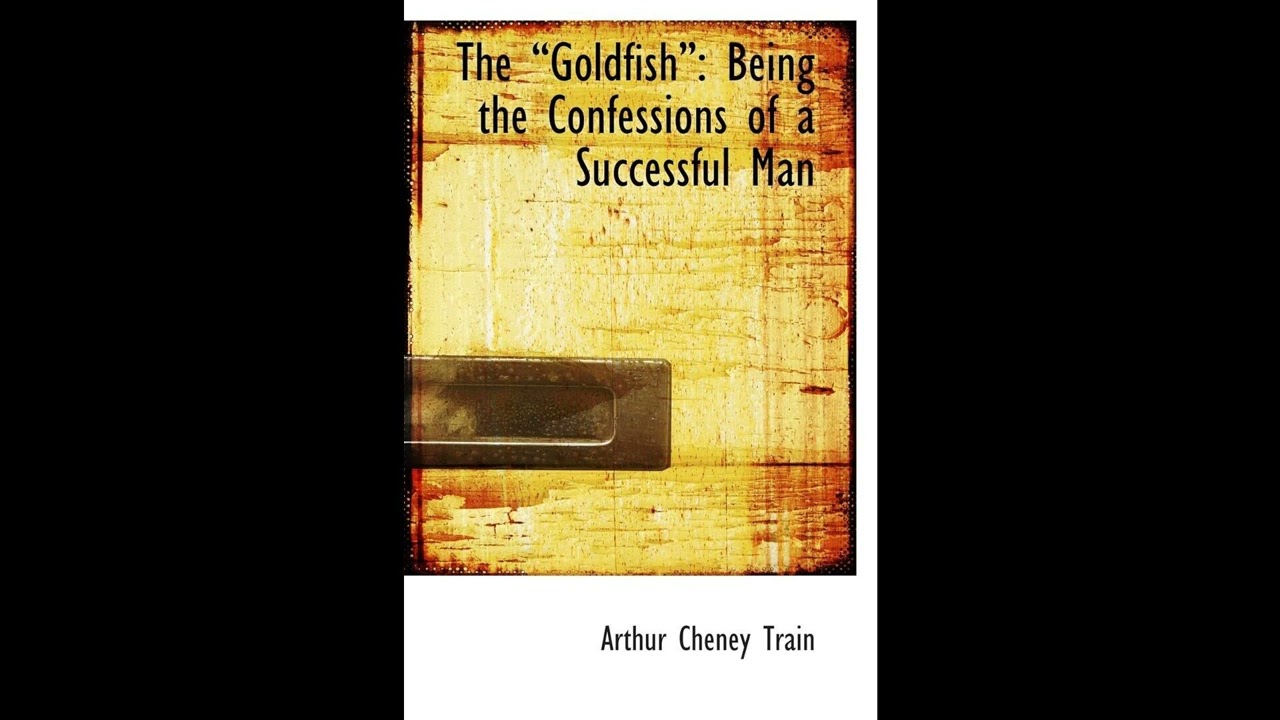
The Goldfish: Being the Confessions of a Successful Man
Arthur Cheney Train’s "The Goldfish: Being the Confessions of a Successful Man" casts a clear, often satiric, light on the elusive nature of true contentment, a subject as relevant today as it was in the early twentieth century. This piercing social commentary invites listeners to consider the true cost of material ambition and the psychological prisons we construct for ourselves in the pursuit of societal approval. Far from a simple tale of rags to riches, it is a profound examination of the spiritual emptiness that can accompany outward prosperity, making it a compelling listen for anyone grappling with the meaning of success in an increasingly consumer-driven world. The "goldfish" of the title becomes a potent metaphor for a life lived under scrutiny, admired yet isolated, a beautiful display but ultimately confined. The narrative unfolds as the intimate confessions of John R. Corliss, a man who, by all outward measures, has achieved the zenith of the American dream. He is a prominent New York financier, residing in a grand Fifth Avenue mansion, surrounded by every conceivable luxury. His days are filled with the rituals of high society, his name synonymous with power and influence. Corliss details his rise from modest beginnings, his shrewd business dealings, and the careful cultivation of his public image. He has a beautiful, socially active wife, a well-appointed yacht, and an impressive art collection – the trappings that define a life of enviable success in early twentieth-century America. Yet, beneath this glittering veneer, a deep disquiet gnaws at his soul, a sense that his carefully constructed world is less a palace and more an elaborate cage. Corliss finds himself increasingly disillusioned, feeling like an exotic fish in a gilded bowl. He is constantly on display, his actions and possessions scrutinized by his peers, his every move dictated by the expectations of his station. He confesses a growing weariness with the relentless pursuit of more, the superficiality of his social interactions, and the profound lack of genuine connection in his life. The very success he so diligently pursued has trapped him, severing him from deeper truths and simple joys. His "confessions" become a desperate, internal attempt to untangle himself from the web of his own making, to understand where happiness truly lies, and whether it can ever be found outside the material empire he has built. The story charts his internal struggle as he questions the value of everything he has acquired, seeking a path to authentic living that his wealth seems to obstruct at every turn. Arthur Cheney Train, born in Boston in 1875, was a figure of considerable intellectual breadth, whose legal background significantly shaped his literary output. A graduate of Harvard University and Harvard Law School, he initially practiced law as an Assistant District Attorney in New York, immersing himself in the intricacies of the legal system and the human dramas it revealed. This experience imbued his writing with a keen understanding of justice, morality, and the often-complex motivations behind human actions, laying a robust foundation for his career as a novelist and short story writer. Train was extraordinarily prolific, authoring over thirty novels and hundreds of short stories before his death in 1945. While perhaps best remembered for his popular legal series featuring the wily country lawyer Ephraim Tutt—a character who became a household name and offered trenchant critiques of the legal profession—Train's versatility extended to detective fiction, historical novels, and astute social satires like "The Goldfish." His work often reflected a fascination with the socio-economic transformations occurring in America during the first half of the twentieth century, establishing him as a prominent chronicler of his era, even if he did not align with a single specific literary movement. His place in the canon is that of a skilled storyteller who effectively blended entertainment with incisive commentary on the changing American landscape. "The Goldfish" keenly observes several enduring human themes, perhaps none more central than the stark contrast between material prosperity and genuine happiness. John R. Corliss lives in a mansion filled with priceless art and employs a retinue of servants, yet he expresses a profound spiritual emptiness. For instance, he details grand dinner parties where the conversation is superficial and the bonds are transactional, showing how his opulent surroundings merely highlight his internal void. His vast fortune, rather than freeing him, becomes a heavy burden, symbolizing the illusion that wealth alone can secure contentment. Another compelling theme is the deceptive nature of the American Dream itself. Corliss relentlessly pursued the classic ideal of success—financial independence, social status, and public admiration—only to discover that achieving this dream resulted in a gilded trap. He speaks of feeling like an automaton, performing the role expected of him, rather than living a life of his own choosing. This points to a deeper theme of identity and self-deception, as Corliss constructs an outward persona of success that ultimately alienates him from his authentic self, forcing him to confess, "I was merely a successful man, and a successful man has no rights, no personality, and no soul." Finally, the book powerfully illustrates the theme of social isolation, where Corliss, despite his wide circle of acquaintances, feels profoundly alone, his "fishbowl" existence preventing true intimacy. The early twentieth century, when Arthur Cheney Train was most active, was a period of immense change and introspection in America. Following the industrial boom of the Gilded Age and the unsettling experience of World War I, the nation was grappling with newfound wealth, rapid urbanization, and shifting social values. "The Goldfish" emerged from this cultural crucible, a time when the myth of unbridled progress and the pursuit of material gain were being increasingly scrutinized. Writers and thinkers began to question the moral implications of rampant capitalism and the potential for a society fixated on appearances to lose its ethical compass. This work fits into a broader literary trend of realism and social commentary that characterized American literature during this era. Authors were no longer content with romanticizing progress; instead, they turned a critical eye to the social structures and psychological toll of a modernizing nation. "The Goldfish" captures the burgeoning anxieties about the true meaning of success, depicting a new kind of "self-made man" who, having scaled the heights, found himself adrift in a sea of his own making. The book reflects a societal moment when the gloss of prosperity began to reveal its underlying emptiness, prompting a collective reevaluation of values. Listening to "The Goldfish: Being the Confessions of a Successful Man" as an audiobook offers a unique intimacy with John R. Corliss's internal struggles. The confessional format of the narrative is ideally suited to the spoken word, allowing the listener to become the sole confidant to Corliss's deepest anxieties and revelations. Over several hours, a skilled narrator can subtly convey the shifts in Corliss's state of mind—from the initial bravado of his recounting, through his growing weariness and disillusionment, to his poignant self-reflection. Listen for the nuanced pacing that allows Corliss's observations to sink in, the careful articulation of his often-ironic dialogue, and the atmospheric shifts that immerse you in the opulent yet increasingly suffocating world of early New York high society. The audiobook format brings to life the quiet desperation and the intellectual honesty of a man wrestling with the ultimate question: what does it truly mean to be successful?
Enjoyed The Goldfish: Being the Confessions of a Successful Man? A few ways to support us
Audible & Amazon links are affiliate; we may earn a small commission at no extra cost.
About this production
Human narration by a volunteer reader from LibriVox.org, the public-domain audiobook project. LibriVox volunteers record literary works whose copyright has expired in the United States, releasing the resulting recordings into the public domain.
The Goldfish: Being the Confessions of a Successful Man by Arthur Cheney Train. The underlying text is in the U.S. public domain. We do not republish any modern copyrighted edition, translation, or commentary.
The 4K cinematic visuals accompanying this audiobook are generated by an AI image model from prompts derived from the source text. No copyrighted photos, paintings, or stock footage are used. AI generation is disclosed on every video on our YouTube channel as required by YouTube's altered/synthetic content policy.
English subtitles are transcribed from the LibriVox recording with OpenAI Whisper. Translations into the 11 other supported languages are produced by Meta's NLLB-200 neural translation model. No human translator's copyrighted translation is used.
Questions about sourcing or rights? See our DMCA & Sourcing policy or contact us.
Enjoyed this audiobook?
If you'd like to own a copy of The Goldfish: Being the Confessions of a Successful Man or hear a professionally produced edition, the links below help support free audiobook production at no extra cost to you.
As an Amazon Associate we earn from qualifying purchases. Audible / print links are affiliate.